Amazon Prime Air Freighter Overruns Runway as Two Miami Airport Runways Remain Closed
Logistics News
 10-Sep-2026
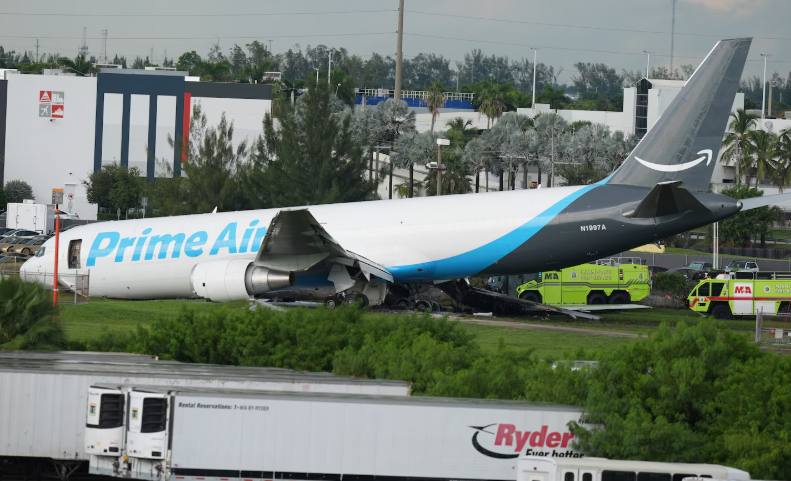
On September 6, a Boeing 767 operating an Amazon Prime Air cargo flight overran the runway while landing at Miami International Airport. The aircraft then struck vehicles on the ground and caught fire, leaving five people dead and five injured. The airport temporarily suspended all operations following the accident. As of September 9, two runways remained closed and flight operations had not fully returned to normal. Inbound and outbound cargo flows and onward connections may continue to be affected.
Key Highlights
• Fatal accident: An Amazon Prime Air freighter overran the runway, leaving five people dead and five injured.
• Runway closures: All four runways were initially closed, and two remain out of service.
• Cargo disruption: Flight operations have resumed, but air cargo movements and onward connections may continue to face delays in the near term.
Amazon Prime Air Freighter Overruns Runway, Leaving Five Dead
The aircraft was operating Amazon Prime Air Flight 7598 from San Juan, Puerto Rico, to Miami. The flight was operated by U.S. cargo airline 21 Air. On the afternoon of September 6, the aircraft overran the runway while landing at Miami International Airport, struck vehicles on airport property and nearby roads, and caught fire.
Five people were killed and five were injured. The two pilots survived, while all five fatalities were on the ground. The aircraft was a Boeing 767 freighter that had been in service for more than 30 years. It had previously operated as a passenger aircraft before being converted for cargo use.
The U.S. National Transportation Safety Board (NTSB) has opened an investigation focusing on the condition of the aircraft, flight operations, weather, and runway conditions. The aircraft’s age and ownership history form part of the investigation’s background information, but no findings currently indicate that either factor was directly related to the accident.
Two Miami Airport Runways Remain Closed as Operations Gradually Resume
Following the accident, Miami International Airport temporarily closed all four runways. The Federal Aviation Administration (FAA) subsequently issued a ground stop, suspending all arrivals and departures. Initial figures showed that more than 160 flights were canceled and nearly 325 delayed on the day of the accident, while some flights were diverted to Orlando International Airport.
The airport later began restoring operations and the ground stop was lifted. However, the ongoing response to the accident continues to affect overall airport operations. As of September 9, two of the airport’s four runways remained closed. Miami International Airport is therefore not fully closed, but its operating capacity has not yet returned to normal.
For air cargo, the impact of restricted runway capacity extends beyond flight delays. Changes to freighter schedules could also affect cargo handling, transfers, and onward truck pickup. Cargo transiting through Miami or connecting to flights and ground transportation serving other U.S. cities may face tighter connection times if inbound flights are delayed.
Cargo Status Remains Unclear as Shippers Monitor Near-Term Disruption
The NTSB has deployed an investigation team to the site and recovered the aircraft’s flight data recorder and cockpit voice recorder for further analysis of the landing sequence and the cause of the accident. Both 21 Air and Amazon are cooperating with the investigation.
Amazon has not disclosed details of the cargo carried on the aircraft or confirmed whether it was damaged or how it will be handled. The accident should therefore not be interpreted at this stage as evidence of widespread damage to Amazon air cargo or a shutdown of Miami’s air cargo network.
Companies with cargo moving through or transiting via Miami International Airport should confirm flight status, estimated arrival times, and onward arrangements. For time-sensitive shipments, companies should also monitor the reopening of the remaining runways and watch for any additional capacity or booking constraints as airlines work through the backlog of canceled and delayed flights.
There is currently no indication that air cargo operations at Miami International Airport have been suspended entirely. As runway capacity is gradually restored, however, clearing the backlog of flights and cargo will take time. Air cargo connections may therefore continue to require close attention in the near term.
Sources and Disclaimer
Sources include the NTSB, FAA, Miami International Airport, the Associated Press, CBS News, and other publicly available aviation and air cargo sources. This article is provided solely for reference by the international logistics and freight forwarding industry. Specific operational arrangements remain subject to the latest notices from the relevant authorities and companies.

Last
U.S. Spot Rates Near USD 10,000 While Schedule Reliability Drops to 29.4%
Container spot rates on U.S. trades have continued to climb since the beginning of September, with the Shanghai–New York rate reac

Next
T.S. Lines' First-Half Profit Rises 23.3% as Middle East Revenue Surges 130% and Red Sea Services Generate USD 13 Million
T.S. Lines reported lower volumes but higher earnings for the first half of 2026. Although its container volume edged down, both r
