Port of Los Angeles Handles Nearly 2 Million TEUs in Two Months as U.S. Import Peak Shifts Earlier
Logistics News
 26-Aug-2026
Latest data from the Port of Los Angeles shows that U.S. import volumes remain high. The port handled 960,464 TEUs in July 2026, its second-highest July volume on record, following 1,002,734 TEUs in June. Combined throughput for the two months reached approximately 1.963 million TEUs. Meanwhile, the U.S. import peak has shifted earlier, as some companies accelerated inventory shipments in response to tariff and supply chain uncertainty, bringing cargo into the United States earlier than usual.
Key Highlights
• July throughput: The Port of Los Angeles handled 960,464 TEUs in July, its second-highest total on record for the month.
• Two-month volume: Combined throughput in June and July approached 2 million TEUs.
• Earlier import peak: Tariff and supply chain uncertainty prompted companies to bring imports forward.
• August outlook: Import volumes are expected to remain high in August, although the rush to ship cargo early is beginning to ease.
Port of Los Angeles Handles 960,464 TEUs in July and Nearly 2 Million in Two Months
The Port of Los Angeles handled 960,464 TEUs in July, including 499,552 TEUs of loaded imports. Although total throughput was down 6% from July 2025, it remained 7.5% above the five-year average for the month, indicating that cargo volumes at this major U.S. West Coast container port remain high.
The result followed a strong performance in June, when the port handled 1,002,734 TEUs. This was the first time its monthly throughput exceeded 1 million TEUs and marked the highest June volume in the port’s history. Combined throughput for June and July reached approximately 1.963 million TEUs. By the end of July, the port had handled 6,083,067 TEUs year to date, up 1.8% from the same period last year.
The monthly figures show that cargo volumes at the Port of Los Angeles have recently remained high. Viewed over a longer period, however, they also indicate that the U.S. import peak has shifted noticeably earlier this year.
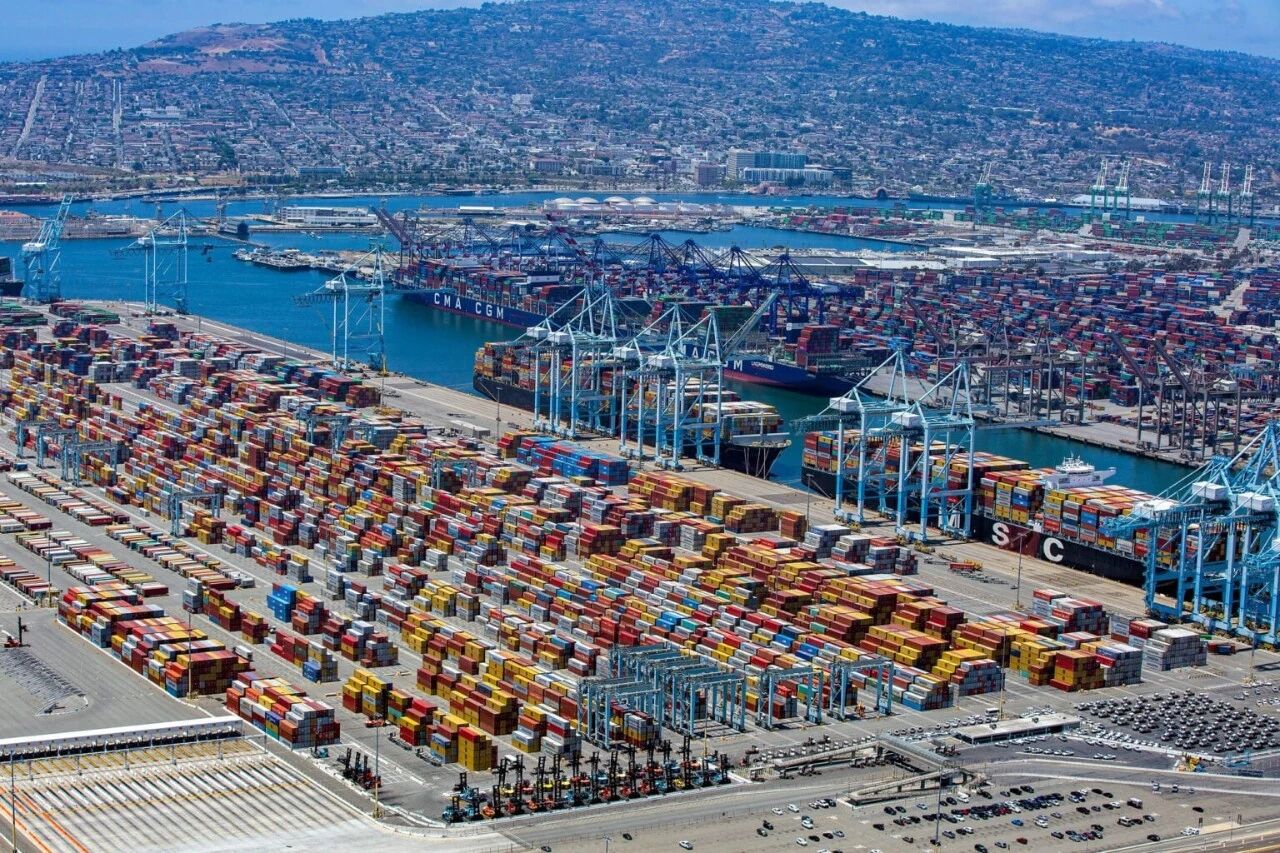
△ Pier 300 at the Port of Los Angeles
Why Has the U.S. Import Peak Shifted Earlier?
This year’s high cargo volumes do not simply reflect an earlier start to the traditional peak season. Instead, they are largely the result of import demand being brought forward. U.S. retailers and importers accelerated some shipments in response to tariff changes and uncertainty over supply chains and transportation costs arising from the Iran-related conflict.
The Global Port Tracker report published by the National Retail Federation (NRF) and Hackett Associates shows that the U.S. container import peak shifted significantly earlier this year, with May currently standing as the year’s highest-volume month. The NRF also said retailers imported goods early in preparation for tariff changes at the end of July and other supply chain risks.
This year’s market pattern is therefore better characterized by front-loaded inventory building and earlier cargo arrivals. Some goods that might otherwise have entered the United States in late summer or autumn had already been shipped, helping keep cargo volumes at the Port of Los Angeles high in June and July.
August Volumes to Remain High as Front-Loading Eases
The key question is how long U.S. ports can maintain high cargo volumes following the earlier wave of front-loaded imports.
Global Port Tracker forecasts that imports at major U.S. container ports will reach approximately 2.2 million TEUs in August, down 4.2% from the same period last year, before declining further in subsequent months. Reuters cited Ted Chen, head of ocean freight at Dimerco Express Group, as saying that the earlier rush to move cargo had already passed its peak.
This does not mean U.S. import demand has suddenly weakened. The NRF expects inventories to remain relatively well stocked because retailers have already brought forward part of their holiday-season imports. In other words, August volumes may remain high, but there is now limited scope for a further sharp increase during the traditional autumn peak season.
For freight forwarders, this change is more significant than the port’s high throughput alone. The earlier concentration of cargo arrivals may have created a temporary increase in space demand. As front-loading subsides, cargo volumes, capacity, and freight rates from September onward may begin to stabilize at different levels.
Suez and Panama Route Changes Remain Variables for U.S. West Coast Ports
In addition to U.S. import demand, changes to global shipping routes may affect future cargo flows. Routing via the Suez Canal, security conditions in the Red Sea, and transit conditions at the Panama Canal could alter carrier service arrangements and affect the distribution of cargo between U.S. East Coast and West Coast ports.
Current volumes at the Port of Los Angeles therefore cannot simply be projected across the rest of the year. Earlier front-loading may lead to a gradual slowdown in imports, while service adjustments could create new shifts in cargo flows. Strong July volumes at the Port of Los Angeles were also supported by imports of consumer goods and equipment for AI, manufacturing, and data-center projects.
Freight forwarders handling North American routes should monitor not only throughput at the ports of Los Angeles and Long Beach, but also carrier services, capacity, and ocean freight rates on U.S. West Coast routes. The key question for the U.S. import market this year is no longer simply how strong the peak season will be, but whether underlying transport demand can sustain volumes after front-loaded shipments subside.
Sources
The Port of Los Angeles, the National Retail Federation (NRF), Hackett Associates, Reuters, and other publicly available information.
Disclaimer
Figures in this article are based on information published by the relevant organizations. This article is provided solely for industry reference. Please refer to the latest official announcements.
Last
Philippine Customs Seizes 43 kg of Methamphetamine Hidden in Two Containers Declared as Talc
Two 20-foot containers from Afghanistan declared as talc products were found to contain approximately 43 kg of methamphetamine fol
Next
U.S. 50% Tariffs on Certain Canadian Goods Take Effect, Affecting About $20 Billion Worth of Goods
The latest round of trade negotiations between the United States and Canada failed to produce an agreement. The 50% tariffs on cer
