Philippine Customs Seizes 43 kg of Methamphetamine Hidden in Two Containers Declared as Talc
Logistics News
 26-Aug-2026
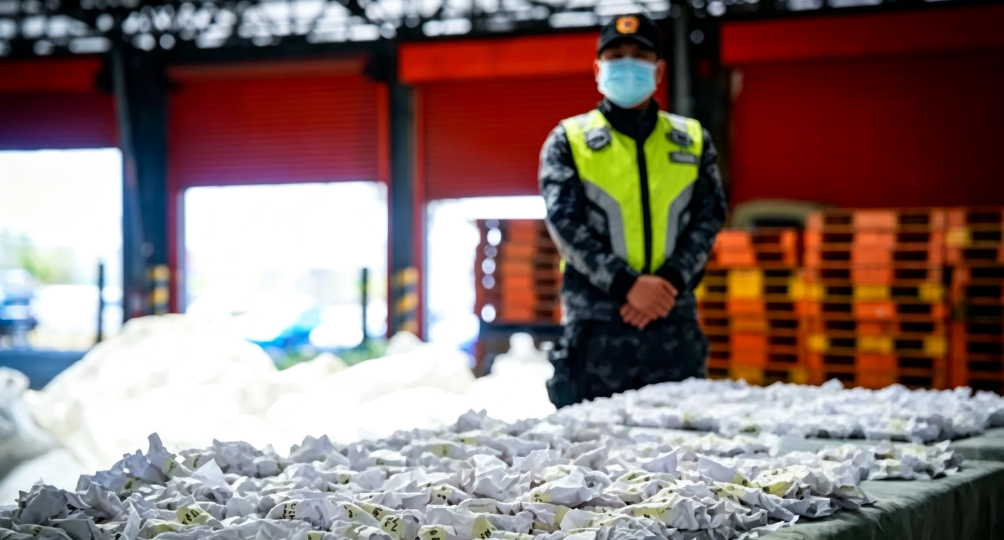
Two 20-foot containers from Afghanistan declared as talc products were found to contain approximately 43 kg of methamphetamine following a full physical inspection at Manila International Container Port (MICP). The Bureau of Customs (BOC) and the Philippine Drug Enforcement Agency (PDEA) recently conducted a joint operation involving cargo valued at approximately PHP 292.4 million.
Key Highlights
• Cargo declaration: Two 20-foot containers declared as talc products were found to contain approximately 43 kg of methamphetamine.
• Origin: The cargo originated in Afghanistan and was classified as high-risk after arriving at Manila International Container Port.
• Risk detection: Philippine Customs identified the containers through risk analysis and ongoing monitoring.
• Previous case: In February this year, a similar shipment from Afghanistan was seized at the same port.
• Inspection criteria: Container inspections are increasingly based on cargo declarations, origin, and historical risk information.
Why Were the Containers Declared as Talc Selected for a Full Inspection?
The shipment was carried in two 20-foot containers and declared as “talc stones.” After arriving in the Philippines from Afghanistan, the cargo was identified as high-risk through customs risk analysis and monitoring.
Philippine Customs subsequently conducted a full physical inspection of the containers. Inspectors found suspected prohibited substances packed in several woven bags and covered with a plaster-like material to blend in with the declared cargo.
Laboratory testing later confirmed that the samples contained methamphetamine. According to information released by Philippine Customs, approximately 43 kg was seized, with an estimated value of PHP 292.4 million. The case has been referred to the relevant authorities for further investigation.
Similar Cargo Was Seized at the Same Port in February
This was not the first similar case reported at Manila International Container Port this year.
In February 2026, Philippine customs and drug enforcement authorities seized another container shipment from Afghanistan. The cargo was declared as marble but was ultimately found to contain approximately 40 kg of methamphetamine, valued at around PHP 272 million.
Philippine Customs stated that the two cases shared similarities in cargo origin, declaration details, and concealment methods. Information from the earlier case also provided a reference for subsequent risk identification.
The cases show that customs risk management does not assess each container in isolation. Previous cases, cargo origin, and declaration details may all be incorporated into subsequent risk screening.
How Did Customs Identify the Shipment in Advance?
Of particular relevance to the logistics industry is the risk-identification method used by Philippine Customs.
According to official information, the containers had already been placed under risk analysis and monitoring before they were opened and were subsequently selected for a full physical inspection. This indicates that customs oversight of containerized cargo is increasingly based on data analysis and risk profiling rather than relying solely on random inspections after arrival.
For international logistics companies, this means that cargo declaration data may itself be an important factor in risk screening. Risk indicators involving the commodity description, origin, routing, and historical records may increase the likelihood of an inspection.
Freight Forwarding Risks Are Shifting from Cargo Inspection to Information Screening
For freight forwarders and cargo owners, the key issue raised by this case is not the specific prohibited substance involved, but whether the actual cargo matches the declared information.
When accepting a shipment, companies should verify that the commodity description, packing details, shipper and consignee information, and trade background are consistent. Additional checks are particularly important for first-time customers and shipments with vague cargo descriptions or no reasonable explanation of their origin and intended use.
In the past, many logistics risks were viewed primarily as inspection issues arising after cargo reached the destination port. As customs risk screening becomes increasingly data-driven, however, risk control is extending to the pre-shipment stage.
Any material discrepancy between the actual cargo and the declaration may result not only in inspection and transport delays, but also in cargo detention and further investigation. Additional verification of cargo and customer information therefore remains an important part of reducing container shipping risks.
Sources
The Bureau of Customs (BOC), the Philippine Drug Enforcement Agency (PDEA), and other publicly available information.
Disclaimer
Figures in this article are based on official disclosures. This article is provided solely for industry reference. Please refer to the latest official announcements.
Last
Maersk Announces China Golden Week Blank Sailings, Affecting Three Far East-Europe Voyages
As China’s National Day Golden Week approaches, Maersk has announced service adjustments on its Far East–Europe routes. With lower
Next
Port of Los Angeles Handles Nearly 2 Million TEUs in Two Months as U.S. Import Peak Shifts Earlier
Latest data from the Port of Los Angeles shows that U.S. import volumes remain high. The port handled 960,464 TEUs in July 2026, i
