How international ocean liners calculate what quarterly clean fuel price shifts trigger a revised lss maritime low sulfur surcharge tariff
Freight Knowledge
 10-Jun-2026
What is LSS Low Sulfur Surcharge? It refers to a flexible maritime compliance charge adjusted by ocean carriers on a recurring schedule to cover incremental operational costs of low-sulfur fuel adoption, with quarterly clean fuel market movements acting as a core factor driving tariff updates across global liner service networks.
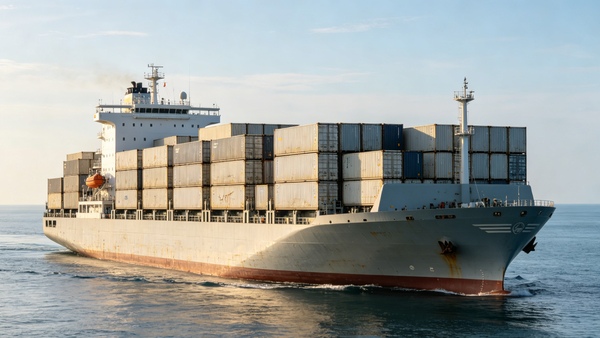
What core variables define carrier LSS calculation frameworks?
Standardized fuel price differentials and route-specific consumption metrics form the foundational variables of modern LSS calculation systems for major ocean carriers. These structured indicators support data-driven surcharge formulation and align fees with actual maritime compliance expenditures.
Carrier LSS calculations mainly rely on the price gap between two industry-standard compliant marine fuels under MARPOL Annex VI rules. Vessels operating within Emission Control Areas use 0.1% sulfur Low Sulfur Marine Gas Oil (LSMGO), while open-ocean voyages adopt 0.5% sulfur Very Low Sulfur Fuel Oil (VLSFO). LSS serves as a pass-through cost for the extra expenses generated by low-emission fuel switching.
According to S&P Global Commodity Insights 2026 quarterly bunker monitoring data, the price spread between LSMGO and VLSFO at major global bunkering ports maintains a stable floating range. Continuous changes in this spread prompt liner companies to adjust LSS tariffs regularly to sustain reasonable operational profit margins for compliant vessel voyages.
A common mistake is evaluating LSS adjustment logic through absolute fuel price fluctuations alone. Many logistics practitioners fail to recognize that LSS calibration focuses on the differential gap between high-standard and standard-compliant marine fuels, rather than standalone price changes of single fuel types in the bunker market.
Forwarders should note that most liner operators apply customized trade lane coefficients in LSS computing. These parameters integrate average vessel fuel consumption, ECA navigation duration, and route load factor data, leading to minor but consistent LSS pricing variations among carriers on identical shipping routes.
Why do carriers adopt quarterly LSS revision cycles?
Quarterly LSS review cycles are widely adopted by ocean liners to balance freight pricing stability and cost calculation accuracy amid fluctuating clean fuel markets. This periodic adjustment mechanism represents one of the commonly applied industry practices for maritime environmental surcharge management.
Short-term monthly bunker price shifts often contain temporary market interference caused by regional port supply fluctuations, seasonal shipping demand volatility, and short-term refining capacity adjustments. Frequent monthly LSS revisions may amplify tariff instability and interfere with medium-term shipper budget planning and contract execution.
Annual LSS adjustment cycles present obvious limitations in reflecting medium-term market changes. Long fixed revision intervals may leave carriers under continuous cost pressure during sustained clean fuel price uptrends. Quarterly reviews deliver a balanced solution to filter transient market noise and capture effective cost trend variations.
According to Drewry 2025 global shipping industry surveys, a large proportion of mainstream international liner firms implement quarterly LSS recalibration protocols. This structured revision mode helps improve freight cost predictability for cross-border supply chain stakeholders.
The recommended approach for cost-focused forwarders is to synchronize client quarterly freight budget reviews with carrier LSS revision schedules. This matching workflow enables logistics teams to anticipate upcoming tariff adjustments and optimize customer quotation strategies in advance.
How do quarterly clean fuel price shifts trigger formal LSS tariff revisions?
Global liner carriers follow standardized, data-based procedures to monitor quarterly clean fuel benchmarks, assess cost deviations, and implement official LSS tariff revisions. This systematic workflow ensures full transparency and market consistency for all updated surcharge policies.
Collect quarterly benchmark bunker statistics: Carriers gather average quarterly fuel price data from authoritative third-party institutions including S&P Global Commodity Insights and mainstream hub port bunkering databases. The data covers major shipping regions across Asia, Europe, and North America to reduce regional statistical deviation.
Calculate standardized fuel price differentials: Carrier tariff and finance teams compute the average quarterly price gap between 0.1% sulfur LSMGO and 0.5% sulfur VLSFO. This quantified differential acts as the core numerical foundation for subsequent LSS rate conversion and modification.
Apply route-specific trade coefficients: Each global trade lane is assigned fixed operational coefficients based on historical per-container fuel consumption and ECA transit ratios. Teams multiply quarterly fuel differentials with lane-specific parameters to generate preliminary LSS rate figures.
Verify alignment with official tariff rules: Commercial and legal departments examine preliminary LSS rates to ensure compliance with published carrier tariff clauses and IMO environmental regulations. Unreasonable calculation results are revised before formal policy release.
Issue official quarterly LSS update notices: Finalized revised LSS tariffs are published on official carrier platforms and notified to authorized forwarding agents. Unified effective dates are applied for global route implementation to maintain consistent market execution standards.
Forwarders should note that carrier quarterly LSS revisions adopt a backward-looking calculation logic. Updated tariffs taking effect in a new quarter are calculated based on average fuel data from the prior quarter, instead of real-time spot bunker prices. This mechanism mitigates speculative tariff fluctuations and supports steady market operation.
What route-specific factors affect quarterly LSS adjustment ranges?
Multiple route-specific operational indicators lead to differentiated LSS adjustment magnitudes across global trade lanes. Variations in ECA coverage ratios and regional clean fuel supply conditions create inconsistent tariff fluctuation scopes under similar global market trends.
How does ECA transit proportion influence LSS fluctuations?
Trade lanes with extensive ECA navigation require continuous low-sulfur fuel usage, resulting in higher sensitivity to quarterly clean fuel price movements. Typical routes with high ECA exposure include Asia-Europe Mediterranean services and Transatlantic container shipping lines.
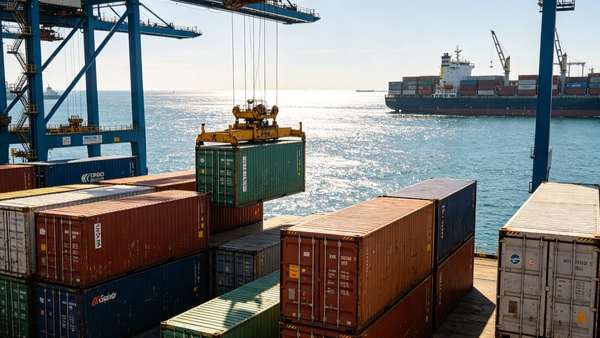
According to UNCTAD 2025 maritime transport statistical reports, trade routes with intensive ECA transits show LSS quarterly fluctuation ranges 30–40% higher than routes dominated by open-ocean navigation. Higher mandatory low-sulfur fuel consumption ratios amplify the impact of quarterly market changes on final surcharge levels.
How do regional bunker supply gaps shape local LSS rates?
Regional imbalances in low-sulfur fuel production, stocking, and transportation create localized price premiums in global bunker markets. Secondary ports in Oceania and South America generally face higher LSMGO procurement costs compared to core hub ports in Northern Europe and East Asia.
Carriers incorporate these regional supply cost gaps into quarterly route-specific LSS adjustments. This tailored calibration method helps reflect actual local operational expenditures and maintain reasonable cost-pass-through levels for different regional shipping networks.
How can forwarders optimize cost management amid quarterly LSS revisions?
Structured LSS cost monitoring and strategic adjustment help forwarders mitigate unplanned freight cost volatility for corporate shipper clients. Mastery of quarterly revision rules and market fluctuation patterns supports stable long-term logistics cost control.
A common mistake is treating quarterly LSS adjustments as sporadic, insignificant market changes. Many mid and small-sized forwarding teams lack systematic quarterly data accumulation on bunker fuel trends and LSS revisions, which may lead to biased quotation outputs and unstable client cooperation.
The recommended approach is to build a continuous quarterly LSS trend tracking system. Forwarders can archive official carrier revision notices, match adjusted rates with corresponding bunker differentials, and summarize route-specific fluctuation rules to form reliable quotation reference standards.
Forwarders should note that long-term fixed freight contracts and spot shipping transactions respond differently to quarterly LSS updates. Most annual framework contracts lock LSS rates for agreed periods, while spot shipments follow the latest revised tariffs, requiring differentiated cost accounting and client quotation strategies.
In recent years, global green shipping compliance frameworks have undergone steady optimization, making quarterly LSS adjustment mechanisms more standardized across the liner industry. Proficiency in LSS calculation and revision rules has become a fundamental professional competency for global freight forwarding practitioners.
In summary, in-depth understanding of the calculation logic and quarterly adjustment triggers of What is LSS Low Sulfur Surcharge allows global forwarders to predict tariff movements scientifically, refine client logistics cost solutions, and deliver stable, compliant services within evolving clean fuel market conditions.

Last
Bypassing spot billing disputes by tracking regional terminal berthing delays that alter the standard pcs port congestion surcharge calculation matrix
PCS Port Congestion Surcharge Calculationadopts fixed matrix benchmarks that undergo regular adjustments due to uneven regional te

Next
How extreme terminal vessel dwell times force an ocean liner line to apply an emergency PCS fee via sudden port congestion surcharge calculation
PCS Port Congestion Surcharge Calculationacts as the standardized pricing mechanism that ocean carriers adopt to formulate emergen
