How extreme terminal vessel dwell times force an ocean liner line to apply an emergency PCS fee via sudden port congestion surcharge calculation
Freight Knowledge
 10-Jun-2026
PCS Port Congestion Surcharge Calculation acts as the standardized pricing mechanism that ocean carriers adopt to formulate emergency congestion fees caused by prolonged vessel dwell times at overloaded global container terminals. As global supply chains encounter recurring port bottlenecks amid shifting trade routes and regional operational disruptions, this calculation framework has become a mainstream operational standard for most major liner companies worldwide. Freight forwarders need to master this mechanism to mitigate unplanned cost increments and operational delays in cross-border shipping arrangements.
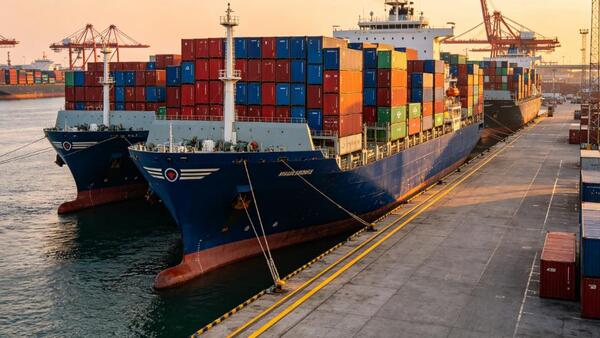
What defines extreme terminal vessel dwell times in modern maritime logistics?
Extreme terminal vessel dwell times represent unusually extended periods that container vessels stay at port anchorages and berthing zones, exceeding standard operational benchmarks and disrupting regular liner rotation schedules. These abnormal dwell durations trigger cascading operational frictions and financial burdens for ocean carriers across global shipping networks.
Industry institutions classify vessel dwell conditions based on verified port operational data. According to UNCTAD 2024 maritime transport statistics, the median port turnaround time for container vessels stood at 0.7 days in the first half of 2023 and 1.1 days in the second half of the year, marking a return to pre-pandemic baseline levels. Vessel dwell periods that exceed 1.5 consecutive days are widely recognized in the maritime sector as abnormal delays that may trigger carrier cost adjustment mechanisms.
Regional port efficiency variations contribute significantly to uneven dwell time performance. UNCTAD 2024 monitoring data shows that developed economies recorded an average port waiting time of 6.4 hours in December 2024, while developing economies registered 10.9 hours, reflecting notable gaps in terminal operational capacity and congestion resistance.
Many prolonged dwell incidents stem from systemic terminal operational constraints rather than isolated accidental disruptions. Structural issues including insufficient berth resources, limited container handling equipment, and backlogged container clearance procedures accumulate over time, forming sustained congestion status that prompts ocean liners to activate emergency PCS charge mechanisms.
How do verified congestion data distinguish routine delays from extreme dwell scenarios?
Maritime practitioners rely on multi-dimensional port monitoring data to differentiate ordinary operational delays from extreme vessel dwell events that qualify for emergency PCS activation. This data-based judgment standard ensures objective and consistent surcharge rule implementation across different ports and shipping routes.
Port waiting time fluctuations serve as a core judgment indicator. In 2024, multiple Asian hub ports experienced notable dwell time rises under external supply chain shocks. Singapore port’s average vessel waiting hours increased from 24 hours to 40 hours between March and May 2024, while Port Klang’s average waiting duration rose from 20 hours to 26 hours during the same period, according to regional maritime logistics monitoring records.
Sustained congestion duration acts as another key screening criterion. Short-term weather-induced delays or temporary equipment maintenance halts are categorized as routine disruptions. In contrast, congestion status lasting more than seven consecutive working days is commonly regarded as a systemic terminal breakdown, which supports reasonable emergency PCS fee formulation by ocean carriers.
Why do extreme dwell times necessitate emergency PCS fee implementation?
Extended terminal vessel dwell times break the stable operational and financial balance of ocean liner businesses, creating measurable incremental costs that cannot be covered by basic freight revenue. This operational pressure drives carriers to launch emergency PCS fees as a reasonable compensation method.
A common mistake is that many global freight forwarders regard port congestion surcharges as discretionary profit-raising tools for carriers, instead of recognizing them as compensatory charges for verifiable operational losses. This cognitive bias often leads to communication frictions in cargo cost settlement and inaccurate logistics budget planning.
Prolonged vessel anchorage and berthing generate multiple recurring operational costs for liner companies. Delayed vessel rotation schedules reduce the frequency of scheduled voyages within a fixed cycle, lowering predictable freight revenue. Stationary vessels also incur ongoing expenses such as crew operational maintenance, vessel wear depreciation, and official port anchorage usage fees.
Large-scale regional shipping disruptions amplify such cost pressures. The Red Sea operational disruptions throughout 2024 created extensive route detours and port congestion across adjacent regional hubs. Relevant shipping data indicates that frequent schedule resets and terminal backlogs in this period forced many liner operators to adjust their congestion surcharge strategies to offset accumulated operational losses.
Forwarders should note that emergency PCS fees triggered by extreme dwell times are standardized risk compensation measures adopted widely within the maritime industry. Carriers activate such fees only when port operational inefficiencies exceed controllable thresholds, to maintain basic operational sustainability for long-haul shipping services.
What core variables shape sudden PCS Port Congestion Surcharge Calculation?
Sudden emergency PCS Port Congestion Surcharge Calculation adopts a multi-factor quantitative model to convert abstract port congestion status into standardized cargo-based fee standards. This data-driven calculation logic helps carriers deliver transparent and fact-based surcharge adjustments.
Actual vessel dwell time deviation: This core variable calculates the numerical gap between real vessel dwell duration and the official baseline turnaround time released by target port authorities. A larger deviation range usually corresponds to higher compensatory surcharge rates, as extended staying time brings more incremental operational costs for carriers.
Vessel capacity specification: Vessels of different tonnage and container carrying capacity generate differentiated congestion costs during terminal stagnation. Medium and large container vessels require more berthing resources and longer handling cycles, leading most carriers to adopt tiered PCS calculation rules based on vessel capacity parameters.
Regional congestion severity coefficient: Carriers refer to continuous port congestion monitoring data from authoritative maritime institutions to set adjustment coefficients. Ports with recurring and long-term congestion are assigned higher coefficients, while ports with stable operational efficiency apply relatively moderate adjustment standards.
Continuous congestion cycle length: Temporary sporadic congestion triggers low-margin temporary surcharges, while congestion lasting for multiple consecutive working days activates emergency-level PCS calculation rules. This variable helps distinguish occasional operational fluctuations from persistent terminal capacity shortages.
The recommended approach for forwarders is to track these four calculation variables for core cooperative ports on a regular basis, rather than only focusing on final surcharge announcements. Timely data monitoring supports reasonable client quotation adjustment and stable cost control for logistics projects.
How do ocean liners execute emergency PCS calculation and fee activation?
Most ocean liner companies follow a standardized multi-step workflow to complete sudden PCS Port Congestion Surcharge Calculation and emergency fee activation when extreme vessel dwell times occur. This unified operational process ensures efficient risk response while maintaining industry compliance.
Multi-source congestion data verification: Carrier operational teams collect real-time dwell time data from official port announcements, and cross-check with UNCTAD and professional maritime analytics platforms. Multi-dimensional verification reduces data deviation and confirms whether current congestion status meets emergency surcharge trigger conditions.
Quantitative surcharge value computation: Professional operational analysts input verified dwell deviation data, vessel capacity parameters, and regional congestion coefficients into internal calculation systems. The platform generates standardized per-TEU or per-FEU surcharge amounts based on preset industry-aligned algorithms.
Formal notification and implementation arrangement: After internal financial and compliance review, carriers release official emergency PCS notices with clear calculation basis, effective date, and applicable cargo scope. Qualified inbound and outbound cargo will be charged accordingly starting from the specified effective time.
Regional port congestion cases in 2024 reflect this mature response mechanism. Facing continuous berthing backlogs and extended vessel waiting hours in multiple Asian hub ports, mainstream liner operators completed data verification, surcharge calculation and official notification within a short time window, forming standardized risk response procedures.
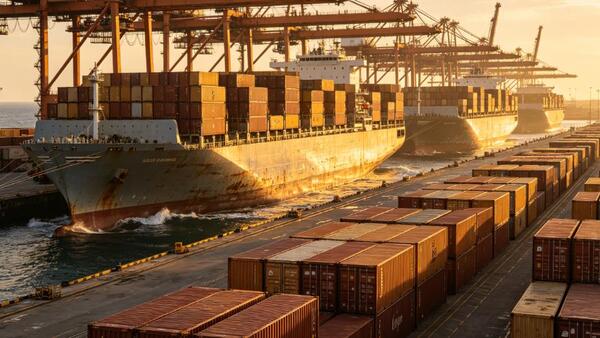
What operational impacts do emergency PCS fees bring to global forwarders?
Emergency PCS fees derived from scientific port congestion surcharge calculation change the conventional cost structure of cross-border freight forwarding businesses, bringing adjustable operational challenges for logistics enterprises of all scales.
Unplanned surcharge costs affect corporate profit planning to a certain extent. Small and medium-sized forwarding enterprises with relatively fixed client quotation systems face cost adjustment pressure when emergency PCS fees are activated, requiring flexible budget adjustment to maintain stable service profitability.
Forwarders should note that emergency PCS fees are industry-wide unified charges with low negotiation flexibility, different from market-adjustable basic ocean freight rates. Once implemented by carriers, the charges apply to all forwarding clients cooperating with the corresponding liner companies.
Cargo delivery schedule stability also faces potential risks. Extreme vessel dwell times and subsequent PCS fee adjustments are usually accompanied by terminal operation backlogs, which may lead to delayed cargo loading and delivery. Forwarders need to maintain smooth communication with cargo owners to synchronize cost and schedule risk information.
A common mistake is that many forwarders fail to associate seasonal operational fluctuations with potential PCS activation. Trade peak seasons, regional extreme weather and local port maintenance arrangements often cause dwell time rises. Insufficient risk pre-judgment may lead to passive cost bearing and weakened market competitiveness.
What proactive strategies help forwarders mitigate PCS cost risks?
Global freight forwarders can adopt multiple practical optimization strategies to mitigate cost and schedule risks caused by emergency PCS fees triggered by extreme vessel dwell times. These optimization measures fit well with the core logic of PCS Port Congestion Surcharge Calculation.
Optimize route and port selection schemes: Forwarders can properly avoid ports with sustained high congestion rates by adjusting transshipment and destination port arrangements. According to 2024 maritime monitoring data, mainstream Asian hub ports present relatively stable operational efficiency compared with some regional ports in other global zones, serving as reliable alternatives for long-term shipping arrangements.
Adopt flexible cargo shipment planning: Staggering cargo loading and vessel arrival schedules can help bypass port peak congestion periods. Reasonable schedule arrangement effectively reduces the probability of prolonged anchorage waiting and subsequent emergency surcharge imposition.
Improve long-term contract risk clauses: Forwarders can negotiate standardized congestion surcharge risk-sharing clauses with cooperative liner companies in long-term cooperation agreements. Clear risk allocation rules help reduce unilateral cost pressure from sudden PCS fee adjustments.
Build continuous congestion monitoring mechanisms: Tracking public data released by UNCTAD, port official platforms and third-party maritime institutions supports early judgment of dwell time changes and PCS activation trends. Early risk warning creates buffer space for client quotation and shipping plan adjustment.
The recommended approach is to build a standardized port congestion risk assessment system based on PCS calculation core variables. This systematic risk management method helps forwarding enterprises shift from passive cost acceptance to active risk prevention, improving overall business stability in the fluctuating global logistics market.
Against the backdrop of evolving global trade patterns, extreme terminal vessel dwell times have become a recurring operational challenge in maritime shipping. Grasping standardized PCS Port Congestion Surcharge Calculation rules and emergency fee activation logic enables ocean liners to achieve reasonable operational cost compensation, while assisting global freight forwarders in avoiding predictable logistics risks, stabilizing client service quality and sustaining steady market operation.
Last
How international ocean liners calculate what quarterly clean fuel price shifts trigger a revised lss maritime low sulfur surcharge tariff
What is LSS Low Sulfur Surcharge? It refers to a flexible maritime compliance charge adjusted by ocean carriers on a recurring sch
Next
Explaining to cost sensitive supply chain managers what environmental fuel regulations mandate when an lss item line shows a low sulfur surcharge
What is LSS Low Sulfur Surcharge? This prevalent ocean freight line item is a standard carrier surcharge designed to offset increm
