Bypassing spot billing disputes by tracking regional terminal berthing delays that alter the standard pcs port congestion surcharge calculation matrix
Freight Knowledge
 10-Jun-2026
PCS Port Congestion Surcharge Calculation adopts fixed matrix benchmarks that undergo regular adjustments due to uneven regional terminal berthing delays, leading to inconsistent spot billing outcomes and recurring disputes between freight forwarders and ocean carriers. Most short-term billing conflicts in contemporary maritime logistics arise from outdated surcharge matrices that fail to reflect real-time operational fluctuations across global container terminals. Proficiency in dynamic matrix adjustment mechanisms enables logistics professionals to clarify billing ambiguities and stabilize cross-border shipping cost budgeting.
What constitutes the standard PCS calculation matrix for global liner services?
The standard PCS calculation matrix refers to a standardized quantitative framework used by ocean carriers to quantify congestion-related operational losses and convert terminal delay durations into uniform container surcharge fees. It defines consistent baseline dwell thresholds, adjustable coefficient ranges, and cargo-based charging units for regular port operational scenarios.
Most mainstream liner operators develop baseline PCS matrices based on verified port efficiency benchmarks and historical congestion loss datasets. The framework covers three core operational dimensions: conventional vessel berthing waiting durations, per-unit capacity loss coefficients, and tiered charging protocols for different container equipment types. This structure delivers stable and replicable surcharge results for routine spot shipping transactions under normal terminal conditions.
According to UNCTAD 2024 maritime transport statistics, the global baseline vessel waiting time for standard PCS matrix calibration stands at 6.4 hours for ports in developed economies and 10.9 hours for ports in developing economies. These verified threshold values serve as fundamental judgment references for carriers to activate and compute congestion surcharges in daily shipping operations.
Forwarders should note that standard PCS matrix parameters apply exclusively to regular port operational states. When regional berthing delays exceed calibrated baseline ranges, traditional calculation parameters lose practical accuracy, which acts as a primary driver of spot billing discrepancies in commercial freight cooperation.

How do regional terminal berthing delays reshape PCS calculation parameters?
Regional terminal berthing delays disrupt the balanced parameter settings of standard PCS matrices by extending actual vessel anchorage and berthing cycles, which elevates unit operational losses for ocean carriers. Irregular delay fluctuations necessitate iterative revisions to core computational coefficients in congestion surcharge systems.
Berthing delay inconsistencies across global regions generate differentiated matrix adjustment scopes that universal standard rules cannot accommodate. Throughout 2024 and 2025, multiple regional port clusters experienced suboptimal berthing efficiency, triggered by localized labor allocation gaps, seasonal water level variations, and accumulated terminal equipment maintenance backlogs.
Drewry 2025 port performance monitoring data records measurable berthing delay expansions across European container terminals during mid-2025. The port of Bremerhaven saw a 77% rise in average vessel berthing waiting time, while Antwerp and Hamburg posted 37% and 49% delay increases respectively. Such regional performance variances require targeted PCS coefficient tuning rather than generalized standard computation.
Southeast Asian container hubs exhibit distinct congestion delay patterns compared with European counterparts. Verified 2025 terminal operational updates from regional port authorities show that Laem Chabang Port maintained average vessel waiting periods approaching nine days during peak congestion phases, which sits substantially above global baseline values and prompts participating carriers to deploy customized emergency matrix adjustments.
A common mistake is that many forwarding practitioners apply universal standard PCS calculation frameworks to all regional shipping routes without accounting for localized berthing delay deviations. This generalized analytical approach creates mismatched cost forecasting results and contributes to avoidable billing conflicts with liner service providers.
Why do matrix mismatches trigger recurring spot billing disputes?
PCS matrix mismatches emerge when real-time regional berthing delay data diverges from static baseline parameters embedded in standard calculation frameworks, producing inconsistent cost outcomes between forwarder budget estimations and carrier official billing statements. This operational information asymmetry generates repetitive spot billing conflicts in daily freight forwarding workflows.
Do static matrix update cycles lag behind port operational volatility?
Traditional PCS calculation systems adopt periodic parameter update schedules on a monthly or quarterly basis, which fail to capture short-term port operational volatility. Regional berthing efficiency can shift notably within one or two weeks during cargo peak seasons or localized terminal operational disruptions.
According to Shanghai Shipping Exchange 2025 port efficiency surveillance reports, major Chinese coastal container ports experienced unstable berthing conditions due to extreme weather events and pre-holiday cargo volume surges. The average vessel port dwell time reached 1.51 days in January 2025, forming temporary matrix deviation scopes that many forwarders did not integrate into routine cost forecasting models.
Do inconsistent carrier adjustment rhythms amplify billing conflicts?
Different liner brands maintain varied matrix adjustment frequencies for identical congested port facilities. Some carriers update computational coefficients promptly according to real-time delay metrics, while others retain baseline parameters for extended cycles. This industry-wide inconsistency complicates unified quotation formulation for cross-regional client projects.
Forwarders should note that most spot billing disputes correlate with outdated practitioner understanding of dynamic PCS matrix mechanisms, rather than unreasonable carrier charging behaviors. Consistent tracking of regional delay variations helps mitigate a large proportion of routine billing inconsistencies in spot shipping operations.
What key regional delay indicators influence PCS matrix adjustment?
Four measurable regional berthing delay indicators constitute primary adjustment foundations for revising standard PCS Port Congestion Surcharge Calculation matrices, delivering data-backed references for accurate spot cost evaluation.
Continuous berthing waiting duration: This metric quantifies the total timeframe from vessel anchorage arrival to successful terminal berthing. Any duration exceeding local port baseline thresholds drives proportional increases in PCS loss coefficients and lifts per-TEU surcharge values accordingly.
Terminal yard utilization rate: Elevated container yard occupancy restricts loading and unloading throughput efficiency, indirectly extending vessel berthing cycles. Official port operational data indicates that yard utilization above 85% frequently coincides with sustained berthing delays and subsequent PCS matrix recalibration.
Regional delay persistence cycle: Temporary delays lasting fewer than three working days only require minor parameter fine-tuning, whereas continuous congestion exceeding one week triggers emergency-tier matrix adjustment protocols with elevated surcharge ranges.
Route congestion correlation degree: Ports situated in high-frequency trade corridors with concentrated vessel arrivals display stronger delay spillover effects. Carriers assign differentiated matrix adjustment coefficients based on route congestion correlation to reflect variable operational loss magnitudes.
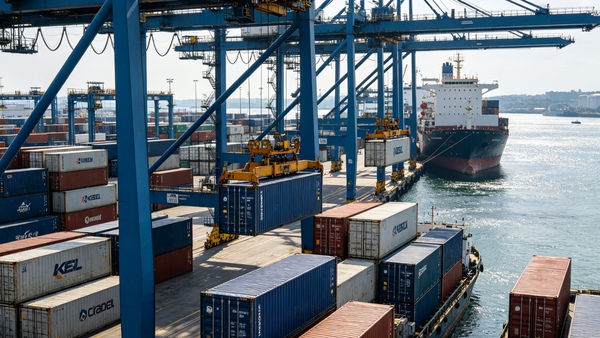
The recommended approach is one of the commonly adopted strategies for forwarders to establish a regional delay indicator monitoring checklist for core shipping lanes. Regular updates of PCS calculation references based on these four dimensions improve quotation accuracy and mitigate potential billing risks.
How can forwarders track delays to mitigate spot billing conflicts?
Structured regional berthing delay monitoring assists forwarders in aligning internal cost forecasting with carrier-updated PCS matrix standards, reducing the occurrence of spot billing disputes in routine shipping operations.
Adopt multi-source official data validation: Cross-reference berthing delay statistics from UNCTAD maritime reports, official port operational bulletins, and professional maritime analytics platforms. Multi-dimensional verification improves the reliability of delay data used for PCS calculation judgment.
Classify ports by matrix adjustment volatility: Categorize cooperative port terminals into stable and high-fluctuation groups. High-fluctuation ports require weekly delay monitoring and PCS parameter reviews, while stable ports suit monthly routine assessment cycles.
Reserve flexible cost floating margins: Configure reasonable floating ranges for spot quotations based on historical matrix adjustment records of target ports. Reserved margins accommodate temporary PCS surcharge fluctuations caused by unanticipated berthing delays.
Maintain carrier rule synchronization workflows: Sustain regular communication with carrier operational teams to synchronize newly released PCS matrix adjustment announcements and parameter revision logic. Timely information alignment eliminates cognitive gaps in spot billing procedures.
A common mistake is that many forwarders focus solely on final PCS charge figures released by carriers, without analyzing underlying delay datasets and matrix revision logic. Passive cost acceptance creates unstable profit margins and heightens the probability of billing discrepancies.
What long-term operational value does delay tracking bring to forwarding businesses?
Sustained regional berthing delay monitoring enhances cost control frameworks and operational stability for forwarding enterprises amid fluctuating spot shipping markets, supporting the development of differentiated service capabilities.
Dynamic matrix adjustment awareness enables forwarders to provide transparent, data-supported cost quotations for cargo owners. Traceable PCS cost variation evidence strengthens client cooperation confidence and lowers after-sales communication workload related to billing inconsistencies.
Beyond cost regulation, delay monitoring supports evidence-based shipping schedule optimization. Early identification of terminal berthing congestion trends allows forwarders to adjust cargo loading and vessel booking plans in advance, reducing dual risks of cost increment and delivery postponement.
The recommended approach for mid-sized and large forwarding firms is to integrate delay monitoring and PCS matrix analysis into standardized internal operational protocols. Institutionalized risk management replaces empirical judgment, improving overall business resilience in volatile market conditions.
As global port operational volatility becomes a recurring feature of modern maritime logistics, static surcharge computation frameworks struggle to adapt to diversified regional shipping scenarios. Proactive tracking of terminal berthing delays and adaptive optimization of PCS Port Congestion Surcharge Calculation frameworks serve as practical, industry-recognized methods for global forwarders to mitigate spot billing disputes and maintain steady business operations.

Last
Auditing final destination arrival invoices to verify what prepaid trading terms cover regarding origin lss fuel low sulfur surcharge components
What is LSS Low Sulfur Surcharge? It refers to a compliance-based maritime fuel fee charged at loading ports to offset carrier exp

Next
How international ocean liners calculate what quarterly clean fuel price shifts trigger a revised lss maritime low sulfur surcharge tariff
What is LSS Low Sulfur Surcharge? It refers to a flexible maritime compliance charge adjusted by ocean carriers on a recurring sch
