$35 Trillion, a Record High: Regional Dynamics Reshape Maritime Trade Flows
Logistics News
 10-Dec-2025
The final UNCTAD Global Trade Update for 2025 shows that, despite risingopolitical tensions and costs, global trade growth momentum began to slow as the year turned, the total value of global trade is expected to reach a record $35 trillion for the time, 7% higher than the value in 2025.
Maritime trade in goods was the major driver of this increase, accounting for about $15 trillion of the $2.2 trillion total increase, while trade in services contributed about $750 billion, up nearly 9%. However, UNCTAD expects trade growth to slow to 0.5% in the fourth quarter and growth in services trade to weaken to 2%, which portends further headwinds ahead.
Asia was the region that performed the strongest, with exports surging by 9% over the past four quarters and intraregional trade increasing by 10%. During the period, the growth in Africa’s imports was also strong, at 10%, and exports grew by 6%. This growth highlights a broader trend: South- trade among developing countries is expanding at a rate that exceeds the global average, at 8%, reflecting a growing resilience of emerging markets.
The expansion in North America and was more modest. Despite a 3% drop in exports in the third quarter, North America still grew by 2% over the past four quarters. European exports grew by % year-on-year, but slowed to 2% in the most recent quarter.
Manufacturing continued to be the main engine of global trade growth, with 10% increase over the past four quarters, led by electronics, which grew by an impressive 14%, propelled by demand related to artificial intelligence. Agricultural trade performed strongly, with an 8% increase in the third quarter, as trade in cereals, fruit, vegetables and oilseeds all expanded markedly.
The picture very different in the automotive sector, where trade volumes contracted by 4% over the past year. One bright spot was hybrid vehicles, with trade volumes surging by 22, while trade in internal combustion engine vehicles fell by 13%, and that in electric vehicles dropped by 5%. In commodities, steel trade volumes soared by an 40% since the third quarter of 2024, but overall natural resources trade remained depressed, as fuel prices fell.
Trade imbalances continued pose challenges for the shipping industry. The trade surplus in China’s merchandise trade narrowed in the third quarter, but was still about $300 billion higher than in the period of 2024. The trade deficit in the United States improved compared with the beginning of 2025.
UNCTAD noted that geopol fragmentation is actively reshaping the shipping landscape. Both the “friend-shoring” and “near-shoring” metrics strengthened in the third quarter, reversing previous declining trends approaching levels last seen in 2021. Trade concentration also increased among major economies, suggesting that a larger share of global merchandise trade is taking place through a smaller number key players.
Looking ahead to 2026, UNCTAD warned that the momentum is expected to weaken. Slowing global growth, worsening debt pressures, trade costs and continued uncertainties could all put pressure on the direction of maritime trade flows. While developing economies have shown some resilience, debt pressures continue to weigh on many emerging economies.
In the fourth quarter of 2025, global trade shifted from price-driven to quantity-driven growth, indicating that underlying demand remains strong despiteating commodity price volatility. For ship operators and port facilities, this shift means stable cargo throughput despite margin pressure from declining freight rates.
Last
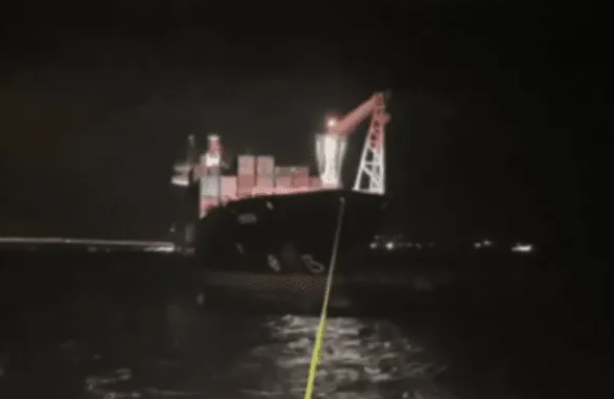
Breaking News: Container Ship Malfunctions During Navigation
On December 9th, the container ship "Orita" experienced engine failure while passing through the Dardanelles Strait on its from Al
Next
Top 15 EU Container Port Data Released: Port Growth Patterns Shift in First Three Quarters of 2025
Recently, PortEconomics member Theo Notteboom released a new analysis report covering the of the top 15 EU container ports in the
