24,188 TEU OOCL PORTUGAL Transits Suez as Asia-Europe Services Gradually Resume
Logistics News
 21-Sep-2026
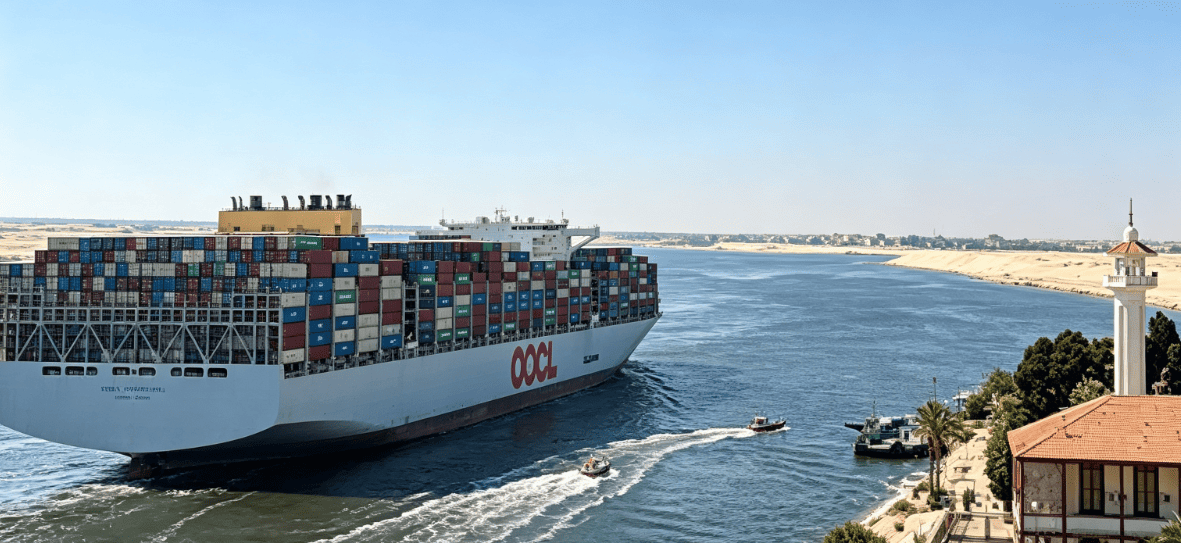
The transit of a 24,000 TEU containership through the Suez Canal provides a clearer sign that Asia–Europe services are beginning to recover. On September 16, local time, OOCL PORTUGAL made its first passage through the canal while sailing from Belgium to China. Maersk and Hapag-Lloyd have also announced that four services will return to Suez Canal routing. However, the current resumption remains limited to specific services and sailings and does not yet represent a full restoration of Asia–Europe services.
Key Highlights
• OOCL PORTUGAL transit: The 24,188 TEU vessel transited the Suez Canal on September 16.
• COSCO milestone: This was COSCO SHIPPING Lines’ first southbound Suez Canal transit since tensions escalated in the Red Sea and Bab el-Mandeb.
• Four Gemini services: Maersk and Hapag-Lloyd will switch the AE5, AE11, AE12, and ME2 services to Suez Canal routing.
• Container ship traffic: Total net tonnage increased by 54.2% year on year between January and August 2026, although a full recovery has yet to take place.
COSCO Resumes Suez Transits with 24,188 TEU Vessel
The Suez Canal Authority (SCA) said that OOCL PORTUGAL joined the southbound convoy through the canal on September 16 while sailing from Belgium to China. The vessel is part of the COSCO SHIPPING Lines fleet and measures approximately 400 metres in length, with a beam of 61.3 metres. According to the SCA, it has a gross tonnage of approximately 247,000 GT and a maximum capacity of 24,188 TEUs. The vessel is currently deployed on the OCEAN Alliance’s NEU2 service, which connects major ports in the Far East and Northwest Europe.
The SCA described the transit as an important milestone in COSCO SHIPPING Lines’ resumption of Suez Canal transits. It also indicates that more Asia–Europe services previously diverted around the Cape of Good Hope are beginning to return to the canal.
More Asia–Europe Services Return to Suez
As COSCO resumes Suez Canal transits, Maersk and Hapag-Lloyd are also expanding their use of the route.
On September 14, the two carriers announced that four Gemini Cooperation services—AE5, AE11, AE12, and ME2—would switch from routing via the Cape of Good Hope to the Suez Canal. AE5 connects Asia and North Europe, while AE11 and AE12 connect Asia and the Mediterranean. ME2 connects India and Europe. AE15 and AE19 had already returned to Suez Canal routing.
The changes indicate a gradual shift from individual vessel transits to the resumption of specific scheduled services. For the Asia–Europe market, this could shorten sailing distances and scheduled transit times on selected services. Actual changes will remain subject to the sailing arrangements announced by the carriers.
Container Ship Traffic Rebounds, but Full Recovery Remains Uncertain
Suez Canal traffic data also show a marked increase. According to the SCA, the total net tonnage of containerships transiting the canal reached approximately 72.1 million between January and August 2026, up from approximately 46.7 million during the same period in 2025—an increase of 54.2%. On September 16 alone, 39 vessels transited the canal, with a combined net tonnage of approximately 2.3 million.
However, the increase in containership traffic does not mean that Asia–Europe services have fully returned. Carriers and individual services are adjusting their routes at different rates, and some services continue to divert around the Cape of Good Hope. Maersk has also said that any further changes to Gemini services will depend on stability in the Red Sea and any new developments in the region.
The key issue is therefore not simply whether Suez Canal routing has resumed, but which services have switched back and whether their schedules, port rotations, and routing have also changed.
Schedules and Transit Times Require Close Attention as Routes Shift
Shippers and freight forwarders moving cargo on Asia–Europe services should recheck ETDs, ETAs, and port rotations if their booked services have switched from the Cape of Good Hope to the Suez Canal. For cargo already booked but not yet departed, they should also monitor any changes to the original sailing arrangements.
As Suez Canal services are still returning gradually, the extent of further resumptions will continue to depend on security conditions in the Red Sea. Long-term planning for Asia–Europe shipments should not be based on a single sailing. Shippers and freight forwarders should continue to monitor the latest carrier notices and actual sailing arrangements.
Sources and Disclaimer
Sources include the Suez Canal Authority, Maersk, OOCL, and other publicly available industry information. This article is provided solely for reference by the international logistics and freight forwarding industry. Specific operational arrangements remain subject to the latest notices from the relevant authorities and carriers.
Next
Maersk Overtakes COSCO to Top Intra-Asia Capacity Rankings
Maersk has moved to the top of the capacity rankings for international intra-Asia container services. According to Alphaliner’s la
