Car Carrier Catches Fire in the Eastern Pacific: Engine Room Fire on China-South America Route, 22 Crew Members Rescued After Abandoning Vessel
Logistics News
 13-Aug-2026
A car carrier operated by COSCO Shipping Specialized Carriers caught fire in the eastern Pacific while sailing from Tianjin, China, to Manta, Ecuador. The engine room fire aboard Min Jiang Kou escalated beyond control, forcing the crew to abandon the vessel. All 22 crew members were rescued.
The route is a major ocean shipping corridor for Chinese vehicle exports to South America. The incident highlights potential safety risks in long-distance roll-on/roll-off transportation and serves as a warning for cross-border freight forwarders and vehicle exporters to strengthen risk management for ocean shipments.
Key Highlights
• Emergency at sea: An engine room fire broke out aboard a car carrier approximately 630 nautical miles south of Costa Rica while it was sailing from Tianjin to Ecuador.
• Rescue outcome: All 22 crew members were rescued safely, with no casualties or marine pollution reported.
• Vessel profile: The vessel was delivered in 2024, showing that serious safety incidents can also occur aboard newly built ships.
• Rescue challenges: With no shore-based assistance available nearby, the response relied entirely on mutual assistance from merchant vessels.
• Industry impact: No widespread schedule disruptions have been reported, but risk assessments for the route need to be strengthened.
How Did a Newly Built Car Carrier Encounter a Serious Emergency?
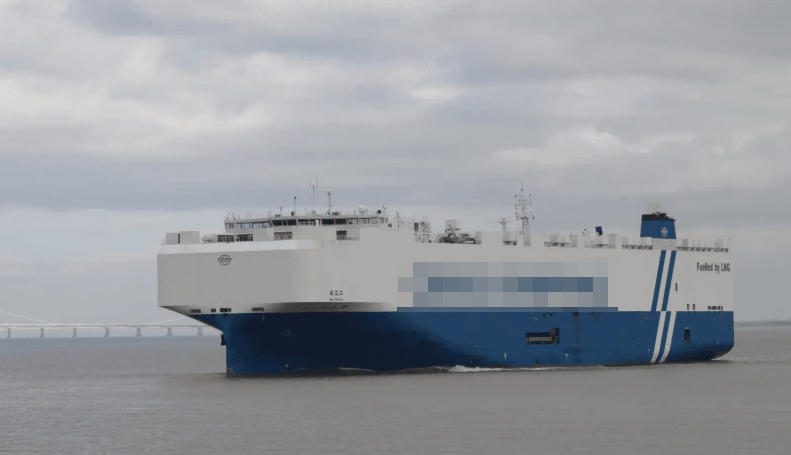
The vessel involved was Min Jiang Kou, a 7,500-vehicle-capacity LNG dual-fuel car carrier operated by COSCO Shipping Specialized Carriers. Delivered in 2024, the Marshall Islands-flagged vessel is used to transport vehicles from China to South America.
At the time of the incident, the vessel was sailing from Tianjin to the Port of Manta in Ecuador. An engine room fire broke out while it was in a remote area of the eastern Pacific, approximately 630 nautical miles south of Costa Rica.
The crew immediately activated the vessel’s fixed CO₂ fire-extinguishing system. Although the fire was initially brought under control, smoke subsequently continued to increase and the situation deteriorated. The master ordered the crew to abandon the vessel, and all 22 crew members boarded a lifeboat. The master remained on board to monitor the fire and the vessel’s condition.
Why Was the Deep-Sea Rescue Particularly Challenging?
The engine room fire and subsequent rescue operation were considerably more challenging than a typical incident in coastal waters. The vessel was far from land, with no shore-based rescue resources or nearby port of refuge. The crew’s onboard emergency response was therefore the first and, during the initial stage, only line of defence.
After the initial firefighting attempt failed to contain the situation, the U.S. Coast Guard issued an urgent request for assistance to nearby vessels through the Automated Mutual-Assistance Vessel Rescue system, or AMVER.
The bulk carrier Jin Hai Ping and the tanker Degu responded to the request and coordinated the rescue. Over more than ten hours, the two merchant vessels assisted with the transfer of personnel and monitored the scene. All crew members were rescued, with no casualties or marine pollution reported. The operation demonstrated the importance of mutual assistance between vessels operating far offshore.
What Does the Incident Mean for Freight Forwarders and Vehicle Exporters?
As China’s vehicle exports continue to grow, demand for roll-on/roll-off transportation to South America is also increasing. Many vehicle shipments are transported aboard newly built ocean-going vessels, which are generally considered safer. This incident shows, however, that mechanical failures and engine room emergencies can occur unexpectedly and are not necessarily linked to a vessel’s age.
The cause of the fire remains under investigation, while salvage and inspection work on the vessel is continuing. The incident has not yet had a significant impact on current sailing schedules or freight rates.
Freight forwarders specializing in South American routes and vehicle exporters should review their shipment risk-management strategies. They should avoid assuming that newly built vessels are free from operational risks, allow sufficient schedule buffers, closely monitor vessel movements and temporary carrier notices, and prepare contingency plans for high-value vehicle shipments to reduce the risk of cargo being held up or delayed by emergencies at sea.
Sources
U.S. Coast Guard announcements, international maritime media reports, and publicly available vessel rescue information
Timeliness Note
As of August 12, 2026, the rescue operation has been completed. The cause of the fire and the subsequent handling of the vessel remain under investigation.
Disclaimer
The information in this article is sourced from publicly available channels and is provided solely for industry reference. It does not constitute commercial advice, booking advice, or logistics operating guidance.
Last
Maersk Nokwanda Intercepted 640 Nautical Miles Off Portugal: 5 Tonnes of Cocaine Seized and Detained Crew Member Dies in Custody
A Maersk container ship was recently intercepted in the Atlantic Ocean, approximately 640 nautical miles off the coast of Portugal
Next
Seaspan Enters China's Capital Market with RMB 1.5 Billion Debut Panda Bond, Opening a New Financing Channel for International Shipowners
The ownership and financing structure behind global shipping capacity is changing. Major liner operators such as MSC and Maersk ma
