Seaspan Enters China's Capital Market with RMB 1.5 Billion Debut Panda Bond, Opening a New Financing Channel for International Shipowners
Logistics News
 13-Aug-2026
The ownership and financing structure behind global shipping capacity is changing. Major liner operators such as MSC and Maersk manage shipping services, while many of the vessels supporting those services are owned by independent shipowners. Seaspan, one of the world’s leading containership owners, recently completed its first Panda bond issuance in China, raising RMB 1.5 billion. The transaction marks a significant step by an international shipowner into China’s capital market.
Key Highlights
• Bond issuance: Seaspan issued RMB 1.5 billion in three-year Panda bonds with a coupon rate of 2.5%.
• Investor demand: Subscription orders reached 2.3 times the issuance amount, reflecting strong demand from domestic and international investors.
• Company profile: Seaspan is one of the world’s leading independent containership owners, with an operating fleet and newbuilding orderbook totalling 247 vessels and 2.5 million TEU in capacity.
• China partnerships: The company has established long-term relationships with Chinese shipyards and financial institutions.
• Industry significance: International shipowners are diversifying their financing channels, strengthening ties between China’s financial market and the global shipping industry.
How Does Seaspan Support Global Liner Shipping Capacity?
Seaspan is the world’s largest independent containership owner and a major provider of capacity to the global shipping industry. Rather than operating shipping services directly, the company focuses on vessel ownership and leasing, providing capacity to major liner operators such as MSC and Maersk.
As of June 2026, Seaspan’s operating fleet and newbuilding orderbook totalled 247 vessels. Once all vessels are delivered, its total capacity will reach 2.5 million TEU. This places Seaspan among the world’s leading independent shipowners and makes it an important provider of global shipping capacity.
Why Did Seaspan Choose to Issue Bonds in China?
Seaspan’s decision to issue bonds in China reflects both its long-term strategy and the shipping industry’s financing needs rather than a short-term capital move. The company has maintained long-standing relationships with Chinese shipyards and financial institutions, and some of its newbuilding projects already use renminbi settlement.
Shipping is a capital-intensive industry, and fleet renewal and green retrofits require substantial long-term funding. Reliance on bank financing alone can create concentration risk. Access to China’s bond market allows the company to broaden its financing channels, improve its funding structure, and reduce its overall financing costs.
Why Is the Global Shipping Industry Increasingly Turning to China’s Capital Market?
The shipping industry is entering another cycle of fleet renewal. The retirement of ageing vessels, the implementation of new environmental regulations, and changes in fleet composition are requiring shipowners to increase capital expenditure. As traditional credit channels tighten, direct financing in renminbi is emerging as a new option for shipping companies.
Seaspan’s bonds were 2.3 times oversubscribed, demonstrating the appeal of China’s capital market and the increasingly close ties between international shipping companies and China’s financial market.
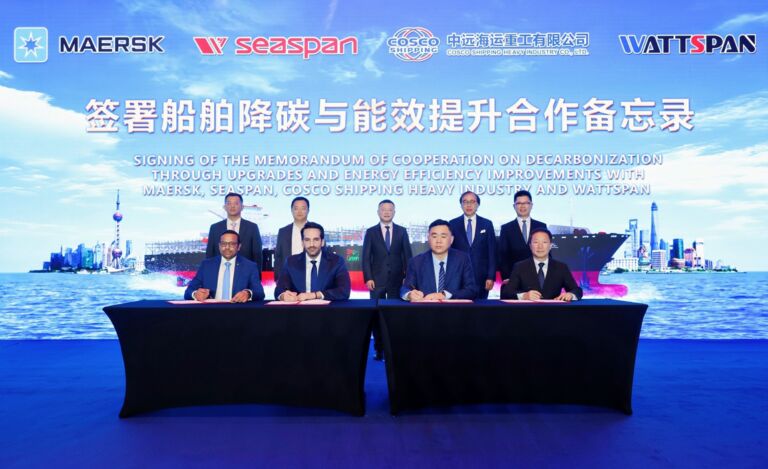
Maersk and Seaspan improve fleet efficiency through a strategic vessel upgrade programme.
What Could Increased Investment in Shipping Capacity Mean for Cross-Border Logistics?
The bond issuance is unlikely to affect current service networks or freight rates in the short term and has no direct impact on the daily operations of freight forwarders or trading companies. Over the longer term, however, the transaction indicates that international shipowners are increasingly turning to China’s capital market for renminbi financing.
This financing could support green fleet upgrades and help maintain a stable supply of shipping capacity, contributing to the long-term stability of cross-border supply chains.
Sources
Official disclosures from Bank of China, Seaspan corporate announcements, and publicly available reports from international shipping finance media
Timeliness Note
As of August 12, 2026, the Panda bond issuance has been completed. The use of proceeds and future fleet plans remain subject to official company disclosures.
Disclaimer
The information in this article is sourced from publicly available channels and is provided solely for industry reference. It does not constitute commercial advice, booking advice, or logistics operating guidance.
Last
Car Carrier Catches Fire in the Eastern Pacific: Engine Room Fire on China-South America Route, 22 Crew Members Rescued After Abandoning Vessel
A car carrier operated by COSCO Shipping Specialized Carriers caught fire in the eastern Pacific while sailing from Tianjin, China
Next
MSC SILVANA VIII Remains in Distress After Grounding Near Zhoushan as Hull Continues to Sink
The 8,401 TEU container ship MSC SILVANA VIII remains in distress after grounding in waters off Zhoushan, Zhejiang. The vessel has
