New Asia-Europe Route: South Korea Launches Its First Commercial Arctic Container Service, with an August Trial Voyage Set to Reshape Europe-Bound Logistics for Freight Forwarders
Logistics News
 4-Aug-2026
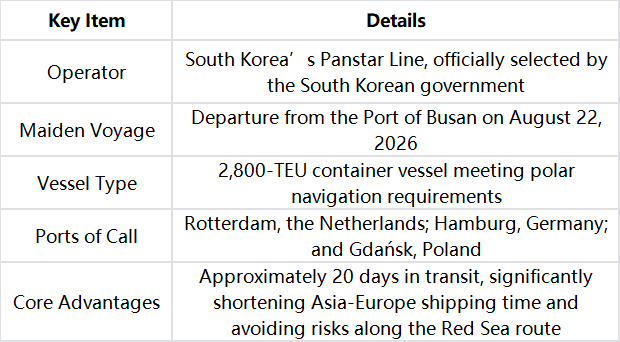
A new development is taking place in Asia-Europe cross-border logistics. South Korea’s Panstar Line has announced a commercial trial voyage via the Arctic Northern Sea Route. The vessel will depart from the Port of Busan on August 22 and sail directly to European ports. As South Korea’s first commercial Arctic container service, the route will significantly shorten Asia-Europe shipping time, reduce exposure to geopolitical risks along the Red Sea route, and provide cross-border freight forwarders and foreign trade companies with a new lower-cost and faster option for shipments to Europe.
Key Highlights
• Maiden Voyage: Supported by the South Korean government, the country’s first commercial Arctic container service is set to begin
• Shorter Transit Time: Approximately 20 days, half the transit time of conventional Asia-Europe routes
• Broad Cargo Coverage: Suitable for various cargo types from South Korea and Japan, with potential for intermodal connections across Northeast Asia
• Additional Risk Management Option: Avoids instability in the Red Sea and expands shipping options for Europe-bound cargo
Key Information on the Arctic Trial Voyage
South Korea’s Commercial Arctic Route Takes Shape
Introduction: The government-backed Arctic trial voyage marks a further diversification of Northeast Asia-Europe shipping routes and reduces reliance on conventional services.
The trial voyage is being led and supported by South Korea’s Ministry of Oceans and Fisheries, together with several relevant organizations. Panstar Line was officially selected as the exclusive operator in May. Since booking and rate quotations opened on July 22, market inquiries have continued to increase. Suitable cargo types include automotive parts, cosmetics, steel products, liquid cargo, and other major foreign trade commodities.
In addition to cargo originating in South Korea, inquiries concerning transshipment from several Japanese ports have also increased. The route has considerable potential for intermodal development across Northeast Asia and may eventually consolidate cargo from China, Japan, and South Korea for direct shipment to Europe. Freight forwarders planning to develop this new Europe-bound route and connect with quality cross-border cargo sources may use the platform’s Inquiry Board to match with stable logistics resources and prepare for business opportunities arising from the new service.
Arctic Route Gains Attention as an Alternative to Conventional Services and a Way to Avoid Geopolitical Risk
Introduction: Shorter transit times and the ability to avoid high-risk areas are making the Arctic route a popular alternative for Asia-Europe cross-border logistics.
Traditional Asia-Europe shipping routes rely on the Suez Canal and the Red Sea and have long been affected by congestion, high transit fees, and geopolitical conflict. In recent years, instability in the Red Sea has forced vessels to reroute around the Cape of Good Hope, substantially increasing shipping costs and transit times and placing greater risk management pressure on freight forwarders handling Europe-bound cargo.
The Arctic Northern Sea Route avoids high-risk waters and requires only around 20 days in transit, cutting the shipping time by approximately half. As demand for supply chain risk mitigation continues to increase, this faster and lower-risk route is becoming an important option for foreign trade companies and logistics providers seeking to optimize their Europe-bound shipping arrangements.
Multiple Limitations Remain, and Regular Operations Still Face Challenges
Introduction: Due to seasonal navigation, vessel qualification requirements, and geopolitical controls, the Arctic route can only serve as a supplementary option and cannot replace conventional mainstream services.
Commercial operations on the Arctic route face clear limitations. The main constraint is seasonal navigation, as the route is generally accessible only during summer and autumn and cannot support stable year-round shipments. Polar navigation also imposes strict requirements on vessel qualifications, specialized insurance, and emergency supplies, meaning that conventional container vessels cannot meet the required operating standards.
In addition, the route is under Russian jurisdiction, and changes in geopolitical policies may directly affect navigation stability. At this stage, the route can only serve as an effective supplement to conventional Asia-Europe services and is unlikely to support regular, large-scale operations in the short term.
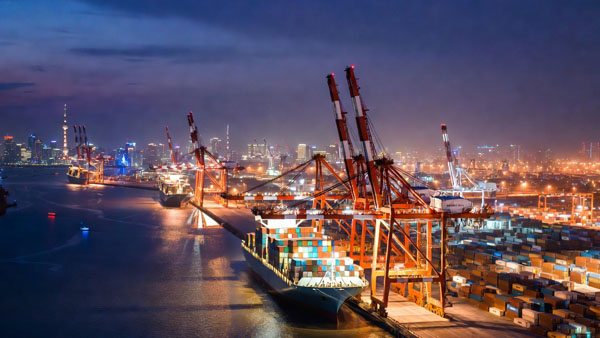
Operational Self-Check List for Freight Forwarders
• Do you understand the Arctic route’s transit time, suitable cargo types, and navigation restrictions well enough to respond accurately to customer inquiries?
• Have you compared the costs, transit times, and risks of the Arctic route with conventional services to optimize your quotation plan?
• Are you continuing to monitor the maiden voyage’s operating data and assess the potential timeline for regular services?
• Have you secured resources for the new route in advance to expand Europe-bound shipping options and offset geopolitical risks?
Industry Summary: South Korea’s Arctic trial voyage provides Asia-Europe cross-border logistics with a new lower-risk and faster option. Freight forwarders should monitor the route’s operations, understand its advantages and limitations, and combine it flexibly with conventional services to expand their Europe-bound shipping arrangements and reduce geopolitical risks arising from reliance on a single route.
Sources: South Korea’s Ministry of Oceans and Fisheries, official announcements from Panstar Line, gCaptain, and authoritative cross-border logistics industry platforms
Disclaimer: All information is sourced from publicly available channels and is provided for industry reference only. It does not constitute commercial or logistics operational guidance.
Last
Shipping Risks Spill Over: Drone Attack at Egypt's Damietta Port Causes Fires on Two LNG Vessels, Raising Risk Concerns on Mediterranean Routes
Shipping risks linked to the Middle East continue to spread. On July 29, fires broke out on two LNG vessels at Damietta Port, a ke
Next
Sudden Reversal: Houthis Deny General Red Sea Transit Fee Plan as Bab el-Mandeb Controls Tighten, Raising Route Risks and Costs for Freight Forwarders
The Red Sea shipping situation has taken a sudden turn. On July 29, Reuters reported that Yemen’s Houthis were considering chargin
