Maiden Sailing on August 15: China's First Weekly China-Europe Arctic Container Service Set to Reshape Asia-Europe Ocean Transit Times
Logistics News
 22-Jul-2026
Introduction: The “Polar Silk Road” has reached a major milestone. Following last year’s successful trial voyage, a Chinese shipping company is now launching a regular Arctic shipping service. Sealegend Shipping has officially announced that China’s first weekly China–Europe Arctic container service will commence on August 15, 2026, marking a departure from the experimental and one-off voyages that have previously characterized Arctic container shipping. With an approximately 20-day transit to Europe, carbon emissions reduced by up to half and fixed weekly sailings, the service provides a new time-sensitive option for peak-season China–Europe cross-border logistics and changes the traditional cost and transit-time equation for Asia–Europe ocean shipping.
01 Launch of a New Weekly Arctic Service: Fixed Sailings, Multi-Port Cargo Consolidation and Regular Operations
According to authoritative information from gCaptain, World Ports and the Ningbo Municipal Government, Sealegend Shipping has officially released its 2026 operating plan for the China–Europe Arctic Express service, or CAX. Regular weekly operations will run from August to October, with eight fixed sailings scheduled for the year and seven small and medium-sized container vessels deployed on rotation. This marks the transition of China–Europe Arctic container shipping from individual trial voyages to regular commercial operations.
The service will adopt the established domestic operating model of consolidating cargo from multiple ports for departure from Ningbo, bringing together export cargo from major ports across China. Cargo from Dalian, Taicang, Qingdao, Fuzhou, Shanghai, Nansha and other ports can be consolidated at Ningbo-Zhoushan Port for shipment, providing broad coverage of China’s main export regions.
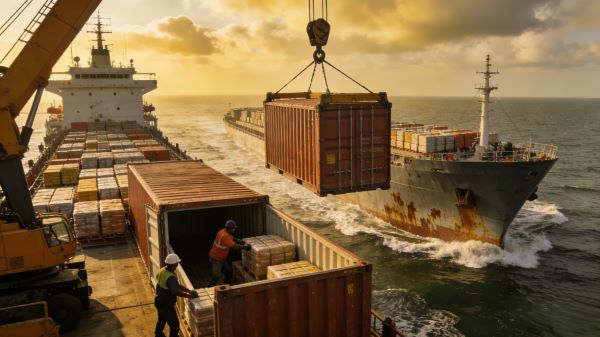
The maiden sailing schedule has been confirmed. The vessel will depart from Ningbo-Zhoushan Port on August 15, 2026, transit the Northern Sea Route and complete the voyage in approximately 20 days. It is scheduled to arrive directly at the Port of Felixstowe in the United Kingdom on September 5.
After reaching this major European hub, cargo can be distributed to more than ten European countries, including France, Germany, Belgium, the Netherlands, Poland, Sweden, Latvia, Denmark and Estonia, covering major markets in Western, Eastern and Northern Europe.
02 Clear Advantages over Conventional Routes: Transit Times Nearly Halved, Lower Carbon Emissions and Peak-Season Capacity Support
Compared with conventional services via the Suez Canal and the Cape of Good Hope, the weekly Arctic service offers three principal advantages: shorter transit times, lower carbon emissions and more stable sailing schedules. It directly addresses peak-season congestion, unpredictable transit times and high logistics costs in China–Europe trade.
Substantially Shorter Transit Times, Approaching China–Europe Freight Train Levels
Transit times between China and Europe via the Suez Canal generally range from 30 to 40 days, while voyages via the Cape of Good Hope may take 40 to 50 days. When combined with peak-season port congestion, canal queues, geopolitical disruptions and other factors, schedule delays have become increasingly common.
By comparison, the shortest transit time from Ningbo to the United Kingdom via the Arctic route is approximately 18 days, with a standard transit time of around 20 days. This substantially shortens the ocean voyage and brings the transit time close to the approximately 25 days required by China–Europe freight trains.
At the same time, the service retains the high-volume and lower-cost advantages of ocean shipping, combining freight-train-level transit times with ocean freight capacity.
Carbon Emissions Reduced by Up to Half, Meeting Corporate ESG and Green Logistics Requirements
The shorter Arctic route reduces sailing distance by more than 40% compared with conventional southbound routes and may lower carbon dioxide emissions by up to approximately 50%. It is therefore a representative lower-carbon option for China–Europe cross-border logistics and is well suited to the ESG compliance and green supply chain requirements of foreign trade companies and cross-border brands.
According to Sealegend Shipping, the service can accommodate a wide range of cargo, including standard dry containers, refrigerated cargo and oversized special cargo. It also supports the transportation of special cargo categories such as hazardous battery materials.
The service is particularly suited to export sectors with strict transit-time and handling requirements, including new energy, electronics and precision manufacturing, and provides an alternative transport option for the foreign trade peak season in the second half of the year.
03 Industry Significance: Arctic Shipping Moves from Experimental Voyages to Regular Commercial Operations
Previously, Arctic container voyages were largely limited to individual demonstration sailings and chartered trial voyages. Maersk’s 2018 Arctic voyage by the Venta Maersk, together with trial voyages conducted by other shipping companies, remained experimental and exploratory. They did not establish a stable commercial operating model capable of serving the foreign trade market on a regular basis.
Sealegend Shipping’s introduction of fixed weekly sailings, scheduled voyages and rotational vessel deployment represents a significant change in the market.
The core competitiveness of container liner shipping lies in predictable schedules, regular sailings and continuous capacity. The launch of a weekly service means that Arctic shipping is moving beyond expedition-style voyages and entering a standardized, commercial and regular stage of logistics operations.
It also represents a major step forward in the development of China’s “Polar Silk Road.” In 2025, the world’s first China–Europe Arctic container express trial voyage successfully completed the journey from Ningbo to the United Kingdom in only 20 days.
In 2026, the service is being upgraded from a single trial voyage to regular weekly operations, moving from a one-off breakthrough to stable long-term service and further strengthening China’s early position in Arctic cross-border shipping.
04 Industry Challenges: The Route Remains a Supplementary Option and Requires Further Development before Large-Scale Deployment
Despite its clear advantages, the service still faces limitations arising from Arctic geopolitical conditions, climate and navigational restrictions. Large-scale deployment will require further development.
First, vessel capacity remains limited. The largest vessel currently deployed on the service is the Istanbul Bridge, with a capacity of only 4,890 TEUs. This is substantially smaller than the 20,000–24,000 TEU ultra-large container vessels commonly deployed on Suez Canal routes.
Cargo capacity per sailing is therefore limited, making the service unsuitable for extremely large-volume shipments.
Second, the navigational window remains relatively short. Safe navigation is currently possible only during the summer and autumn, while winter ice conditions prevent passage. Year-round operating time is therefore restricted.
The industry has already developed clear upgrade plans. Major shipping companies are considering the construction of Arc7 high-ice-class container vessels, which may eventually support near year-round navigation with icebreaker escorts.
Third, overall operating costs remain high. Navigation risks in Arctic waters are greater, while vessel insurance premiums and supporting navigation costs are significantly higher than those on conventional routes.
Uncertainty surrounding the deployment of icebreaker resources also remains a major constraint on the large-scale adoption of the service.
05 Operational Assessment and Recommended Actions for Freight Forwarders and Foreign Trade Companies: Three Core Areas of Value for Peak-Season Logistics Planning
The launch of the weekly Arctic service is not simply the addition of another shipping route. It provides China–Europe cross-border trade with an additional logistics option combining shorter transit times, lower carbon emissions and greater routing flexibility.
The service therefore offers practical value for shipment planning during the foreign trade peak season in the second half of the year.
1. An Additional Peak-Season Option for Time-Sensitive Cargo
During the annual peak season for China–Europe ocean shipping, congestion at the Suez Canal, terminal backlogs, port omissions and schedule delays frequently affect the reliability of conventional services.
With a transit time of approximately 20 days, the Arctic service provides an alternative for time-sensitive cargo. New energy products, electronics, seasonal consumer goods and urgent shipments may be prioritized for this route to reduce the risk of peak-season delays and protect order delivery schedules.
2. A Lower-Carbon Logistics Option Supporting Brand ESG Compliance
A measurable carbon emission reduction of up to 50% can support foreign trade companies in meeting the requirements of overseas customers, complying with brand ESG assessments and developing green supply chains.
Freight forwarders can position the lower-carbon Arctic service as a differentiated service offering, helping customers strengthen their competitiveness while increasing the value of their own logistics services.
3. Position the Service as a Targeted Supplement and Plan Shipment Allocation Rationally
Due to smaller vessel sizes, limited sailings and a short navigational window, the Arctic service cannot currently replace the mainline capacity provided by Suez Canal routes. At this stage, it should be positioned as a supplementary option during peak periods.
The service is better suited to small and medium-sized shipments, time-sensitive cargo and high-value goods. Large-volume general cargo should continue to move primarily via conventional mainline services.
Freight forwarders and shippers should allocate cargo between different routes based on cost, transit time and capacity requirements.
4. Monitor Ice-Class Fleet Development and Future Service Expansion
As Arc7 ice-class vessels are developed and constructed, navigation technology advances and supporting systems improve, Arctic services may gradually overcome current seasonal restrictions and operate for longer periods at greater scale.
Industry participants should continue monitoring fleet renewal and service expansion plans announced by major shipping companies and prepare for the future development of China–Europe Arctic logistics.
06 Industry Summary: Asia–Europe Ocean Shipping Enters a New Stage of Restructuring
The weekly China–Europe Arctic container service scheduled to commence on August 15 represents a key milestone in the commercialization and regular operation of China’s Arctic shipping activities.
Its three principal advantages—an approximately 20-day transit time, carbon emissions reduced by up to half and fixed weekly departures—provide an alternative to the traditional choice between slower ocean freight and more expensive rail transport.
In the short term, the service will provide supplementary capacity during the 2026 peak season for China–Europe trade, ease pressure on conventional routes and provide additional transit-time options.
In the longer term, as ice-class vessel technology advances and navigational conditions improve, Arctic services may continue to expand and become a major source of additional capacity for Asia–Europe cross-border logistics, further reshaping the global ocean shipping market.
Sources: Official announcement from Sealegend Shipping, gCaptain, World Ports, official website of the Ningbo Municipal Government and Tide News
Disclaimer: The content and data in this article are sourced from publicly available authoritative channels and are provided for industry information only. They do not constitute commercial advice or operational guidance for logistics activities.
Last
Cargo in the East, Capacity in the West: Five European Carriers Control More than Half of Global Container Shipping Capacity in 2026
Introduction:The global shipping market presents a striking imbalance. Asia is home to the world’s core manufacturing capacity, le
Next
Maersk Temporarily Cancels AC1 West Coast South America Sailings: August Eastbound and Westbound Voyages Withdrawn Less Than One Month After Launch
Introduction: A sudden capacity adjustment has been announced on the West Coast South America trade. Maersk’s new AC1 Far East–Wes
