Managing border customs clearance bottlenecks for high volume industrial component shipments using the china to russia land bridge
Freight Area
 5-Jun-2026
The China to Russia Land Bridge serves as a vital overland logistics artery for cross-border industrial component trading, supporting steady Eurasian manufacturing supply chain circulation. High-volume shipments of mechanical and electrical parts often face procedural clearance bottlenecks at Sino-Russian border ports, triggering schedule delays and incremental operational costs for global freight forwarders. This article analyzes common clearance pain points and shares feasible optimization strategies for bulk industrial cargo transportation.
What are the main customs clearance bottlenecks for industrial component shipments?
Customs clearance bottlenecks for industrial component freight refer to procedural and inspection-related obstacles that cause cargo detention and prolonged processing at Sino-Russian border checkpoints. These issues occur frequently for high-volume batches with diversified specifications and complex declaration requirements.
According to ITC Trade Map 2025 statistical data, industrial components including mechanical fittings, electrical accessories and hydraulic parts account for over 42% of total cargo throughput on mainstream Sino-Russian land freight routes. Different from standardized finished goods, these components feature diverse specifications, mixed batch attributes and inconsistent packaging standards, which raise inspection complexity and extend clearance cycles.
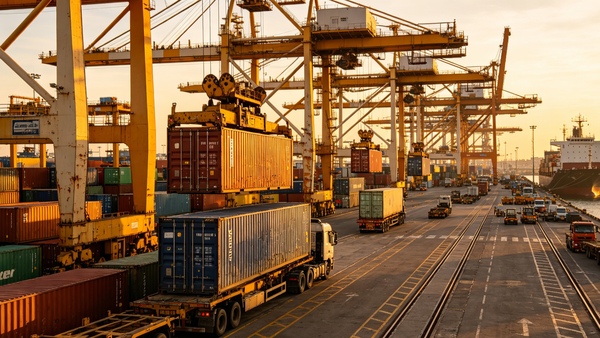
Border port throughput pressure further aggravates clearance inefficiency. Major border hubs including Manzhouli and Suifenhe sustain robust cargo inflows throughout the year. Official 2025 border logistics statistics show that bulk industrial cargo inspection volumes register around 30% growth during quarterly manufacturing procurement cycles, leading to queuing delays for cross-border land freight shipments.
A common mistake among forwarders is applying general commodity declaration workflows to mixed industrial component batches. Many operational teams adopt unified document templates for multi-specification parts shipments, which may result in HS code mismatches, incomplete parameter annotations and intensified customs inspection scrutiny.
Why do industrial component shipments require rigorous border supervision?
Industrial component cargo undergoes differentiated border supervision due to its role in cross-border manufacturing and infrastructure supply chains. Regulatory frameworks on the China to Russia Land Bridge aim to standardize cargo circulation and maintain regional industrial operation stability.
Most imported industrial components serve local Russian manufacturing production, infrastructure upgrading and mechanical maintenance projects. Border authorities conduct rigorous verification on product specifications, production qualification certificates and safety compliance documents to align inbound cargo with local industrial access standards.
Forwarders should note that incomplete certification documentation represents a frequent cause of clearance delays. Many component suppliers fail to deliver full factory inspection reports, material composition certificates and parameter matching files before shipment. Missing individual documents in large batches often trigger full-batch re-inspection procedures.
Dynamic policy adjustments also increase operational complexity. According to WTO 2024 cross-border trade supervision reports, tariff classification rules for Sino-Russian industrial goods receive partial annual revisions. Forwarders need to adjust declaration schemes dynamically to reduce the possibility of document discrepancies.
What practical solutions resolve bulk cargo clearance bottlenecks?
Standardized pre-declaration workflows and systematic cargo management protocols are commonly adopted approaches to mitigate clearance obstacles for high-volume industrial shipments. These standardized measures help lower inspection frequency and border detention risks.
Classify batches by unified standards: Forwarders are advised to categorize industrial components based on HS codes, material properties and functional applications before customs declaration. Separating mixed-specification cargo into independent declaration batches reduces inspection complexity and procedural errors during border clearance.
Implement full pre-departure document audits: The recommended approach is to arrange dedicated staff for document verification targeting bulk industrial cargo. Operation teams need to check certification files, parameter sheets and tariff descriptions comprehensively to meet bilateral declaration requirements.
Cooperate with authorized pre-inspection bodies: Forwarders can engage official certified institutions to complete cargo sorting, sampling checks and document filing in advance. According to UNCTAD 2025 cross-border logistics data, formal pre-inspection cooperation helps shorten border processing time for bulk industrial cargo by approximately 35%.
Adopt staggered shipment scheduling: Teams can avoid concentrated large-batch declaration during seasonal cargo surges. Dispersing shipment arrangements effectively alleviates port congestion and lowers queuing detention probabilities at border checkpoints.
How to establish sustainable clearance operation systems for bulk shipments?
Sustained clearance efficiency for high-volume industrial cargo relies on standardized operational systems and localized resource deployment, rather than temporary emergency countermeasures. Systematic management supports stable long-term cross-border service delivery.
Forwarders should note that accumulating categorized declaration databases benefits long-term business optimization. Archiving historical declaration records, inspection feedback and tariff adaptation rules for different component types enables reusable standard templates, which improve accuracy for repeated batch shipments.
The recommended approach for mid-to-large forwarding enterprises is to deploy on-site border operation teams. Local staff can track real-time policy updates, adapt to dynamic inspection standards and communicate with customs authorities timely to resolve emergent clearance issues.
A common mistake in daily operations is neglecting continuous staff training. Industrial component declaration involves professional HS classification and technical parameter verification. Insufficient professional competence may lead to declaration errors, cargo detention and additional logistics expenditures.
According to Freightos 2026 global land freight monitoring data, forwarding teams with standardized industrial cargo clearance systems maintain around 28% higher operational efficiency and 22% lower abnormal cost ratios compared with ordinary logistics service providers.
How does digital transformation optimize border clearance efficiency?
Ongoing digital upgrading of Sino-Russian border port facilities reshapes clearance workflows for bulk industrial cargo on cross-border land routes. Intelligent supervision systems reduce manual intervention and stabilize overall operational efficiency.
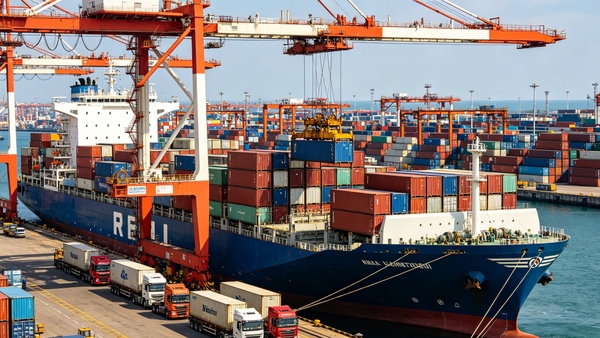
Major border ports including Manzhouli and Suifenhe have launched integrated single-window declaration platforms in recent years. These systems support one-stop document submission and synchronous bilateral review, shortening manual verification cycles significantly. According to 2025 official port operation data, digital process reconstruction helps compress formal customs release time to under 30 minutes for qualified cargo.
Intelligent scanning and automatic data matching devices further improve inspection efficiency for high-volume shipments. Automated equipment reduces manual checking workload and lowers human error rates during batch cargo verification, easing port operational pressure during peak seasons.
What development trends shape future land bridge clearance services?
Cross-border regulatory mechanisms for Sino-Russian land logistics continue to iterate with policy optimization and technological upgrading. Border clearance procedures for industrial cargo become more standardized and digitalized across the industry.
Continuous port infrastructure upgrading and regulatory simplification create friendlier conditions for bulk industrial component transportation. Standardized declaration processes and intelligent supervision modes effectively reduce procedural barriers for cross-border freight businesses.
Global freight forwarders can enhance service competitiveness by adopting standardized workflows, digital management tools and localized border layouts. These operational improvements help enterprises capture stable supply chain opportunities supported by the China to Russia Land Bridge.
Last
Managing complex customs valuation rules for tech equipment moving along traditional westward usa to india logistics trade lanes
USA to India logistics for tech equipment faces persistent operational hurdles rooted in evolving cross-border customs valuation f
Next
Vetting reliable rail container operators specializing in heavy machinery freight sent from china factories to russia land bridge routes
The China to Russia Land Bridge serves as a crucial overland logistics corridor for outbound heavy machinery shipments from Chines
