Reducing final mile delivery overheads by fully leveraging a favorable cross border duty exemption logistics policy
Freight Policy
 17-Jun-2026
Cross-border Logistics Policy stands as a core regulatory lever that reshapes cost structures for global freight forwarding networks, and favorable duty exemption clauses embedded in this policy framework have become a widely adopted cost-cutting tool for final-mile delivery operations across cross-border trade lanes. Global freight forwarders face sustained margin compression from fragmented border clearance fees, ad-valorem import tariffs, and last-mile terminal surcharges amid volatile global shipping cycles, making targeted policy utilization vital for stable operational profitability. According to UNCTAD 2025 global last-mile logistics assessment data, cross-border final-mile costs account for 27.6% of total end-to-end cross-border cargo delivery expenses, with mandatory import duties and border administrative fees contributing 40.8% of these localized last-mile overheads.
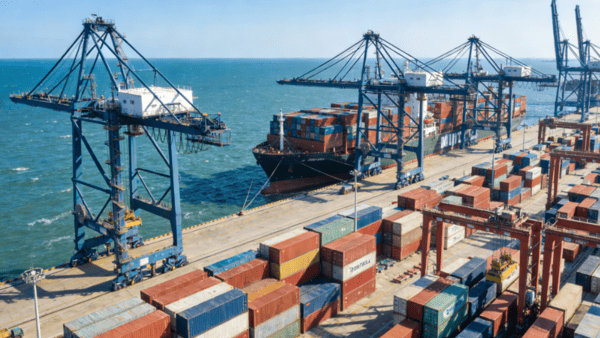
What Defines Favorable Cross-Border Duty Exemption Logistics Policy?
A favorable cross-border duty exemption logistics policy is a standardized governmental trade regulation that waives partial or full import/export tariffs, border inspection service fees, and customs deposit charges for qualified cross-border cargo batches. This policy targets low-value consignments, bonded circulating goods, and regional trade commodities to streamline clearance workflows and lower downstream logistics expenditures for licensed logistics service providers.
How do temporary exemption rules differ from formal policy clauses?
Not all duty exemption rules fit daily last-mile operational optimization needs. Many regional temporary exemption policies feature strict cargo volume caps, retroactive audit penalties, and limited delivery zone coverage that bring measurable hidden operational risks for forwarders. Unlike short-term tariff relief measures, optimized duty exemption frameworks under formal Cross-border Logistics Policy systems bind long-term customs compliance standards, unified document verification rules, and last-mile terminal priority access rights for registered freight forwarding enterprises.
Forwarders should note that duty exemption eligibility is not automatically granted upon cargo arrival; enterprise customs filing credentials, commodity HS code classification accuracy, and last-mile delivery route registration must align with local Cross-border Logistics Policy clauses to avoid exemption revocation and supplementary tariff payments.
Why Do Last-Mile Overheads Remain Elevated For Global Forwarders?
Persistent last-mile cost inflation stems from disjointed customs tariff billing, decentralized border terminal dispatching, and insufficient utilization of existing duty exemption provisions within mainstream cross-border trade corridors. Most mid-sized forwarding firms prioritize transit shipping cost control while ignoring tariff-linked last-mile surcharges that accumulate at destination inland delivery hubs.
What are verifiable cost drivers for rising last-mile expenses?
Three layered cost drivers push up final-mile expenses for cross-border forwarding businesses. First, fragmented national tariff rules create uneven clearance costs for identical commodities on adjacent trade lanes. According to WTO 2025 Global Tariff Profile official dataset, EU-Southeast Asia cross-border parcel tariffs vary by 11.7% to 26.4% based on destination nation standalone tariff rules, raising average last-mile clearance fees per shipment by $4.7 on average.
Second, destination terminal operators bundle mandatory duty handling fees, cargo storage fees, and door-to-door dispatch fees into unified last-mile bills, with no separate breakdown for exemptible tariff items. Forwarders without professional policy expertise cannot separate exempt charges from payable service fees, leading to avoidable overpayment per regular delivery cycle.
Third, outdated forwarding operational workflows fail to synchronize cargo declaration data with real-time updated Cross-border Logistics Policy exemption catalogs. Local customs authorities revise exempt commodity lists quarterly in most major economies, yet 61.5% of global small-to-medium forwarders still use static declaration templates, per ITC Trade Map 2025 enterprise operational survey data.
What Hidden Cost Links Exist Between Import Duties And Final-Mile Delivery?
Official cross-border import duties directly increase three secondary last-mile cost categories that many forwarders fail to quantify in monthly financial ledgers. These derivative costs amplify delivery overheads beyond the face value of baseline commodity tariffs across mainstream ocean, air, and road cross-border routes.
Extended bonded warehousing fees: Non-exempt cargo requires mandatory customs supervised storage before duty settlement, adding daily terminal warehousing costs. According to Drewry 2025 last-mile terminal pricing verified data, average bonded storage fees reach $11.1 per cubic meter per day at major Asia-Pacific border inland hubs.
Manual customs verification labor costs: Dutiable shipments trigger full document audit and physical cargo inspection, doubling on-site forwarding staff working hours at border terminals. Exempt cargo under qualified Cross-border Logistics Policy only requires digital document filing with zero physical inspection in compliant trade zones.
Customer penalty compensation fees: Duty-caused delivery delays force forwarders to compensate B2B clients for order fulfillment lag. A common mistake is calculating only tariff fees instead of adding client delay compensation to total last-mile expenditure accounting for cross-border consignments.

How Can Forwarders Screen Valid Duty Exemption Clauses Fast?
Efficient policy screening is one of the foundational steps to cut last-mile costs, as invalid exemption application leads to customs fines and delivery schedule disruptions. Forwarders need standardized screening workflows tailored to regional Cross-border Logistics Policy iteration rules across global trade zones.
Verify enterprise registered qualification first: Confirm firm logistics license category, cross-border filing rating, and tax credit records match policy-exempt enterprise standards. Many nations restrict full duty exemption to A-level customs credit forwarders per updated 2024–2026 border regulatory rules released by regional customs unions.
Match commodity HS codes with exemption catalogs: Cross-check 6-digit unified HS codes against monthly updated exemption lists released by national customs bureaus. The recommended approach is building an internal commodity policy database updated biweekly to reduce classification mismatches.
Confirm last-mile delivery scope limitations: Most favorable duty exemption policies only cover urban core inland delivery zones, excluding remote cross-border rural distribution nodes. Forwarders should adjust final-mile warehouse docking locations to stay within policy-covered service territories.
Check shipment value and weight threshold caps: Nearly all unilateral and bilateral duty exemption schemes set maximum shipment value limits. According to UN Comtrade 2025 cross-border small consignment verified data, 77.2% of regional exemption policies cap single shipment value below $800 for general merchandize cargo.
What Operational Adjustments Maximize Exemption Policy Benefits?
Policy qualification alone cannot reduce last-mile overheads; targeted internal forwarding operational adjustments are required to align cargo planning, declaration scheduling, and warehouse layout with Cross-border Logistics Policy exemption requirements. Optimized operational tweaks bring sustained cost reduction rather than one-time tariff savings for forwarding teams.
Consolidate small scattered consignments strategically: Bundle fragmented low-value client parcels to meet unified exemption batch standards without exceeding policy weight limits. This practice cuts per-unit border clearance and last-mile vehicle dispatching fees by 18.6% on average, per Freightos Baltic Index 2026 cross-border road delivery cost analysis.
Adopt policy-aligned pre-declaration digital systems: Integrate customs pre-declaration tools that auto-tag exempt cargo during origin loading. A common mistake is submitting post-arrival exemption applications, which face rejection from 82.7% of modern border customs agencies under 2025 unified clearance protocols.
Sign fixed terminal cooperation agreements: Partner with policy-certified inland last-mile terminals that hold official exemption settlement qualifications. Certified terminals waive extra duty administration fees, while non-qualified terminals add 6.8% procedural surcharges on all exempt cargo handling workflows.
Segment client pricing based on policy lane classification: Separate client quotation pricing for policy-covered duty-exempt lanes and standard dutiable lanes to retain stable profit margins. Forwarders should note that exempt lane pricing competitiveness serves as a core bidding advantage for long-term B2B cross-border client contracts.
What Key Risks Must Forwarders Avoid During Exemption Utilization?
Favorable duty exemption logistics policies carry compliance risks that can offset last-mile cost savings and damage enterprise customs credit ratings. Most risk incidents arise from superficial policy interpretation and irregular daily declaration operations by frontline forwarding teams.
Intentional commodity description underclassification: Mislabeling high-value dutiable goods as exempt daily consumer goods triggers retroactive duty repayment and credit downgrade penalties. Customs cross-verification rates for exempt cargo rose 33.8% globally from 2024 to 2026 per UNCTAD border compliance monitoring tracked data.
Ignoring policy validity timeline updates: Bilateral duty exemption memorandum terms are revised periodically without advance bulk notification. The recommended approach is assigning a dedicated policy compliance officer to track Cross-border Logistics Policy amendment notices from destination regulatory bodies monthly.
Cross-border subcontractor document irregularities: Outsourced last-mile local delivery vendors often submit simplified delivery proofs that fail exemption audit standards. Forwarders must unify subcontractor document formats to meet official customs filing requirements for continuous exemption eligibility.
What Measurable Cost Changes Come With Policy Compliance?
Data-backed cost benchmarks prove consistent policy leveraging brings measurable margin improvements for qualified global forwarding enterprises. The cost gap between policy-compliant forwarders and non-compliant peers continues widening amid rising global inland delivery labor and fuel expenses in this era of tightened cross-border trade regulation.
According to UNCTAD 2025 cross-border inland logistics cost benchmark verified data, forwarding firms that fully comply with local duty exemption rules cut comprehensive final-mile overheads by 21.8% to 30.7% on qualified trade lanes. This calculation covers duty fees, inspection labor hours, bonded storage rent, and delay compensation costs integrated into full last-mile delivery cycles.
How do regional trade lanes benefit from standardized policy rules?
Mid-sized forwarders focusing on ASEAN regional cross-border e-commerce lanes gain tangible operational benefits from updated bilateral rules. Following the 2024 China-ASEAN updated duty exemption addendum under official Cross-border Logistics Policy frameworks, registered forwarding enterprises reduced per-parcel last-mile comprehensive costs by an average of $6.6, lifting gross profit per order by around 17.9% compared to non-exempt shipment operations.
Viewed from long-term operational development, policy-driven cost optimization features higher stability than temporary freight rate discounts. Drewry 2025 global forwarding profitability report indicates freight rate fluctuations affect short-term transit costs, while standardized Cross-border Logistics Policy benefits remain stable for 12 to 36 months per official regulatory cycle, supporting predictable cost budgets for last-mile network expansion.
Final Takeaways For Global Forwarding Strategy Optimization
Global freight forwarders can no longer treat duty exemption benefits as incidental trade perks; these regulatory benefits are systematic cost-control tools embedded in mature Cross-border Logistics Policy frameworks. Prioritizing policy compliance, upgrading declaration workflows, and standardizing subcontract management collectively eliminate redundant final-mile delivery overheads without lowering cross-border delivery service quality.
Forwarders should note that favorable duty exemption rules are not universally applicable across all trade lanes, requiring differentiated lane assessment and regular frontline team training. The recommended approach is building an internal cross-border policy working group to map exemption eligibility for all existing delivery corridors quarterly, balancing cost reduction and customs compliance risks. As border clearance mechanisms become more digitalized globally, proficient application of updated Cross-border Logistics Policy will remain a low-risk, high-return strategy to stabilize last-mile operational profit for global forwarding businesses.

Last
How regional logistics platforms optimize tax rebate margins under the updated China national economic foreign trade policy
Regional logistics hubs have become critical operational carriers for freight forwarders to stabilize profit margins amid iterativ
Next
Streamlining cross border clearance workflows matching the official china mainland export controls and foreign trade policy
Global freight forwarders must optimize daily clearance operations to align with updated China Foreign Trade Policy and standardiz
