Streamlining cross border clearance workflows matching the official china mainland export controls and foreign trade policy
Freight Policy
 17-Jun-2026
Global freight forwarders must optimize daily clearance operations to align with updated China Foreign Trade Policy and standardized mainland export control rules for stable cross-border shipment delivery. As global trade regulatory frameworks grow increasingly refined, cross-border clearance efficiency has become a core competitive factor for international logistics service providers. Recent iterative updates to China’s trade and export control regulations have reshaped standard clearance procedures, requiring global forwarders to adjust operational workflows proactively rather than reacting passively to policy changes.
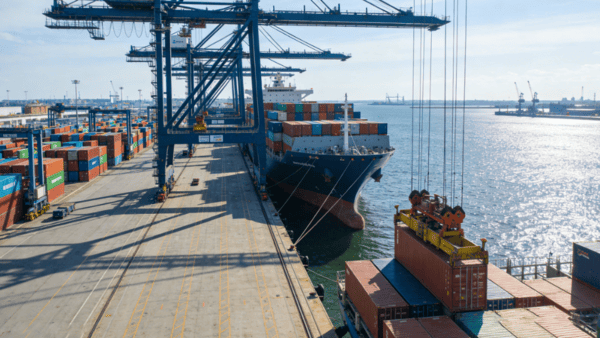
What core updates define current China mainland export control and foreign trade frameworks?
China’s current export control and foreign trade policy system refers to a unified, refined regulatory framework governing cross-border commodity, technology and service exports with standardized compliance and clearance rules. This framework has undergone systematic upgrades from 2024 to 2025, focusing on dual-use item supervision, entity-specific control management and declaration standardization to balance trade openness and national security. According to MOFCOM and General Administration of Customs 2025 official announcements, the updated export license catalogs and declaration specifications have unified compliance standards for all export enterprises and logistics service providers.
Revised legal and regulatory baseline adjustments
A key milestone of the policy upgrade is the formal implementation of the revised Foreign Trade Law in March 2026, which expands regulatory clauses from 69 to 83 items to strengthen classified supervision and risk-based trade governance. Supporting regulations including the 2024 Dual-Use Items Export Control Regulations further refine item classification, licensing application procedures and entity control mechanisms. Regulatory governance has shifted from loose supervision modes adopted in previous years to precise item identification, traceable entity management and standardized declaration element submission, changing cross-border clearance operational logic for global freight forwarders.
Comprehensive supervision scope expansion
Forwarders should note that policy updates no longer focus solely on commodity classification but extend to end-user verification and transaction scenario assessment. This comprehensive supervision model requires forwarders to integrate compliance verification into every clearance workflow link, rather than treating declaration as a single terminal procedure. Many cross-border shipment delays in recent years stem from forwarders’ insufficient attention to updated end-user control rules, rather than basic document filling errors.
Why do global forwarders need to streamline clearance workflows for policy alignment?
Workflow streamlining for China’s export control and trade policy compliance enables forwarders to reduce clearance risks, cut operational costs and improve shipment timeliness in cross-border logistics services. Recent global trade data reflects rising regulatory complexity for China outbound shipments, making adaptive workflow optimization indispensable for sustainable business development.
Compliance non-alignment serves as a major clearance delay factor
According to WCO 2025 global customs procedural statistics, procedural non-compliance and policy misalignment account for a notable share of clearance abnormalities for Asia-Pacific cross-border shipments, surpassing traditional issues such as incomplete documents and temporary port congestion. For global freight forwarders serving Chinese export clients, unoptimized clearance workflows may trigger customs inspection detention, administrative penalty fees and weakened client trust. In the competitive international freight market, standardized policy-aligned clearance operations act as a fundamental guarantee for maintaining stable cooperative relationships with export enterprises.
Universal workflow application brings hidden compliance risks
A common mistake is that many international forwarders adopt unified clearance workflows for all China outbound shipments without distinguishing controlled commodities from ordinary traded goods. Traditional generalized operational modes fail to adapt to China’s refined classified supervision rules, which may induce unnecessary compliance risks. Dual-use items, specialized mechanical equipment, aerospace auxiliary materials and other regulated commodities require targeted declaration procedures, while ordinary simplified declaration processes for these goods may lead to customs risk screening and administrative supervision measures.
Standardized workflows improve operational stability
Reasonably optimized policy-compliant workflows help logistics enterprises stabilize daily operational efficiency. According to UNCTAD 2025 maritime logistics performance reports, forwarders with standardized China export clearance processes record faster average customs release cycles and lower abnormal cargo detention rates compared with practitioners relying on outdated operational frameworks. Stable clearance efficiency helps forwarders control operational costs and maintain steady service quality in cross-border logistics businesses.
What key workflow links require targeted optimization for policy compliance?
Cross-border clearance workflows for China outbound shipments cover pre-shipment verification, document preparation, customs declaration, inspection coordination and post-clearance filing, all requiring policy-aligned standardized optimization. Each link corresponds to specific export control and trade policy requirements, with differentiated operational standards for controlled and ordinary goods.
Pre-shipment commodity and policy classification verification: Forwarders must conduct dual verification of commodity HS codes and export control attributes before shipment arrangement. The recommended approach is to cross-check goods attributes with the 2026 Export License Administration Catalog and confirm whether commodities belong to restricted dual-use items or ordinary traded goods. For uncertain commodity attributes, forwarders may submit inquiry applications to China customs in advance to reduce classification deviation. This step helps mitigate core risks of declaration standards mismatching China Foreign Trade Policy.
End-user and transaction compliance confirmation: Forwarders need to verify whether overseas buyers and end-users are included in China’s export control entity list. MOFCOM 2026 policy revisions have supplemented multiple overseas industrial and institutional entities to the control list, restricting the export of regulated items to these parties. Forwarders may establish a real-time control entity database query mechanism to identify non-compliant transactions at the pre-shipment stage and reduce subsequent clearance obstacles.
Standardized declaration document preparation: Based on 2026 China customs announcement requirements, export declarations require exclusive control identification codes and detailed control attribute remarks for regulated goods. A common mistake is omitting mandatory remark fields or submitting inconsistent attribute descriptions, which may trigger customs risk review procedures. Forwarders may adopt unified document filling templates to conform to official declaration specifications.
Real-time policy update synchronization: China’s foreign trade and export control policies carry out dynamic iterative adjustments in response to global trade changes. Forwarders should arrange dedicated teams to monitor official announcements released by MOFCOM and China customs, including catalog adjustments and procedural revisions. Timely workflow adjustment based on updated policies supports sustained operational compliance and reduces risks caused by outdated operational norms.
Post-clearance compliance filing and review: The recommended approach is to retain complete shipment filing records for all China outbound clearance businesses, including classification verification reports, end-user certification documents and declaration vouchers. Systematic post-operation review helps identify operational deficiencies, optimize workflow details and build a closed-loop compliance management system that adapts to China’s trade supervision rules.
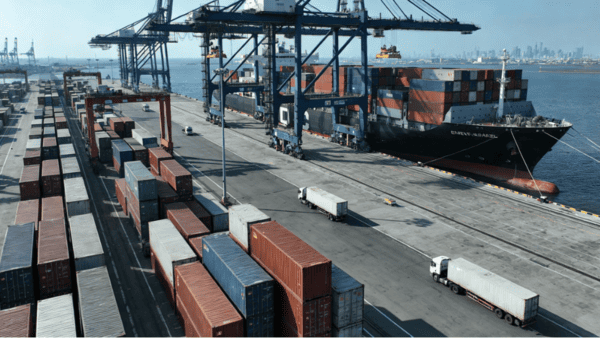
How to implement sustainable workflow optimization for long-term policy adaptation?
Sustainable clearance workflow optimization requires global forwarders to build standardized compliance systems, strengthen team professional capabilities and adopt digital operational tools to adapt to evolving China trade policies. Short-term operational adjustments cannot meet long-term compliance demands, and systematic institutional optimization serves as a necessary measure for stable business operation.
Build classified commodity management mechanisms
Forwarders may construct classified operational management mechanisms for different types of export goods. Independent clearance workflows can be formulated for controlled dual-use items, precision mechanical equipment, electronic technology products and ordinary general goods, with differentiated verification, declaration and internal review standards. This classified management mode helps improve clearance accuracy and operational stability while adapting to China’s refined export control supervision requirements.
Strengthen professional policy training for operational teams
Most clearance compliance errors derive from operational personnel’s insufficient grasp of updated trade and export control policies. Forwarders may organize regular professional training focusing on the latest MOFCOM and customs announcements, covering declaration element updates, control list adjustments and administrative penalty specifications. Continuous training helps elevate team compliance awareness and professional operational capabilities, reducing human-induced compliance risks.
Adopt digital tools for intelligent compliance management
Forwarders can introduce professional digital compliance tools to realize intelligent policy matching and operational risk early warning. Specialized logistics compliance systems support automatic identification of regulated commodities, real-time matching of updated policy requirements and standardized document inspection, which assist in lowering manual operational errors. Digital workflow optimization also generates traceable compliance data records, fitting the transparent and standardized development trend of China’s trade supervision systems.
Forwarders should note that policy adaptation is a continuous iterative process rather than one-time adjustment. With the steady upgrading of China’s open trade system and export control rules, forwarders need to retain flexible operational adjustment capabilities, take policy compliance as the core of clearance workflow optimization, and gradually improve the standardized level of China outbound cross-border logistics services.
In the context of global trade regulatory upgrading, streamlining cross-border clearance workflows to fit official China mainland export controls and China Foreign Trade Policy remains a core operational capability for global freight forwarders. Rational workflow optimization helps mitigate compliance risks, stabilize clearance efficiency, improve client service quality, and support forwarders in maintaining stable operational competitiveness in the evolving Sino-foreign trade logistics market.
Last
Reducing final mile delivery overheads by fully leveraging a favorable cross border duty exemption logistics policy
Cross-border Logistics Policy stands as a core regulatory lever that reshapes cost structures for global freight forwarding networ
Next
Standardizing digital manifest declarations to align with a modernized regional Cross-border Logistics Policy
Cross-border Logistics Policy acts as a core regulatory framework guiding digital manifest reform across regional trade blocs, as
