ETD Meaning in Shipping: Departure Estimates and Schedule Changes
Freight Knowledge
 17-Nov-2026
ETD means estimated time of departure: the expected departure of a vessel from a stated port. It supports planning but does not confirm sailing or replace cargo and document deadlines. Use the latest booking schedule, then check ATD to establish actual departure and reassess the onward delivery plan.
A supplier may promise cargo readiness against one sailing while the booking confirmation shows a different departure date. Even a small mismatch can leave a truck booked too early or a customer expecting an arrival that no longer fits the schedule.
Reading the date correctly starts with identifying the event it describes. For a shipment planner, the useful questions are which vessel and port it belongs to, when it was updated, and which separate deadlines still control cargo acceptance.

What Does ETD Mean in Shipping?
ETD means estimated time of departure. In a vessel schedule, it normally identifies when a ship is expected to leave a particular port. That estimate belongs to a location and voyage, so “ETD Friday” is incomplete without the port, vessel, voyage reference, and date context.
For an actual shipment, check the latest booking confirmation or carrier's online booking record to confirm the departure date. Maersk's ETD guidance, for example, recommends these sources for the most up-to-date vessel departure information. This is particularly useful when the sailing schedule has changed since the original booking.
A route may have several departures: the origin sailing and a connection after transshipment. Check which leg the displayed ETD describes before updating a customer. A changed connecting departure does not necessarily mean the first vessel has failed to sail.
For an illustrative example, a shipment could have an origin ETD of November 10 and a connecting ETD of November 18. Those are two separate events. Reporting only the later date to the factory could cause confusion about when the goods must reach the export terminal.
How Do ETD, ATD, and ETA Differ?
These abbreviations describe different events and levels of certainty. Match each one to its port and voyage before using it in a customer update or production plan.
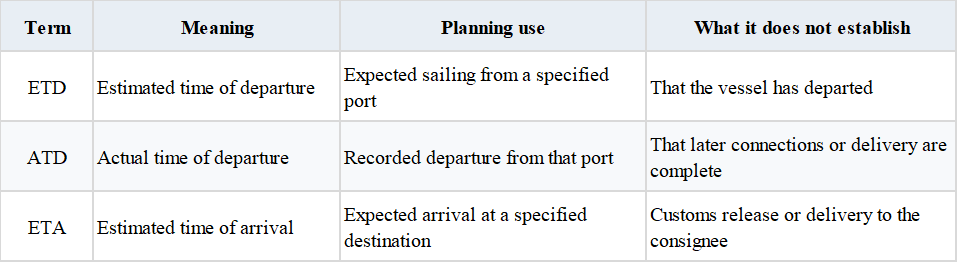
A delayed ETD does not always push the ETA back by the same amount, as vessel schedules can change during transit. For shipments involving transshipment, check which port and voyage leg each date refers to. Use the latest carrier updates when sharing departure and arrival estimates with customers.
Why Can a Vessel’s ETD Change?
A vessel’s ETD can shift as conditions around the planned departure change. Knowing why schedules move helps shippers read updates more accurately and adjust plans when needed.
· The incoming vessel arrives later. A delay at an earlier port may reduce the time available for the next call. Ask whether the current booking remains on the same vessel or whether cargo has been reassigned.
· Berth or terminal operations take longer. Waiting for a berth or completing cargo work can move departure. Confirm terminal acceptance arrangements separately rather than assuming a later ETD gives you extra gate-in time.
· Weather affects access or operations. A port-specific closure or operational restriction may change the plan. Use the carrier or terminal notice for the affected call; a general regional forecast is not a revised booking instruction.
· The service rotation changes. A cancelled sailing, omitted port, or altered connection can change both departure and routing. Check the revised voyage, transshipment point, and destination estimate together.
· Your cargo misses a requirement. A vessel may sail as planned while one shipment fails to meet an acceptance, document, or clearance condition. Establish whether the change concerns the ship or only your booking before describing it as a vessel delay.
A revised ETD may create different consequences for different parties. The factory may need storage, the trucker may need a new appointment, and the consignee may need to adjust inventory. Communicate the confirmed operational change and the decisions still pending instead of forwarding an unexplained date.
How Should You Use ETD to Plan a Shipment?
ETD helps you coordinate cargo preparation, trucking, and shipping documents around a vessel's expected departure. Once a booking is confirmed, use the latest sailing schedule and cutoff times to keep each part of the shipment on track.
Step 1. Confirm the Vessel, Port, and Latest Schedule
Check the booking confirmation for the vessel name, voyage number, departure port, and ETD. You can also check vessel schedules through JCtrans to compare available sailings and review departure options.
Confirm the selected sailing with your carrier or freight forwarder, especially if the schedule has changed since booking. Share the latest departure details with the supplier and trucking company so everyone is working toward the same date.
Step 2. Arrange Cargo Delivery and Document Deadlines
Ask your carrier or freight forwarder for the cargo gate-in cutoff, shipping instruction deadline, VGM deadline, and applicable customs requirements. These deadlines determine when the goods must reach the terminal and when the required documents must be submitted.
Work backward from the confirmed cutoffs to arrange factory pickup, trucking, and document preparation. Assign responsibility for each submission and allow enough time for terminal processing. If ETD changes, confirm the updated cutoffs before adjusting your arrangements.
Step 3. Monitor Schedule Changes and Confirm Actual Departure
Check the vessel schedule again before cargo dispatch and watch for any changes to the departure date or voyage assignment. If the sailing is delayed, update your trucking arrangements and inform the customer of the revised schedule.
Once the vessel leaves port, confirm the actual time of departure (ATD) and check that your container was loaded onto the scheduled vessel. Record the confirmed departure and latest ETA so your team can plan the next stage of transportation.
Note: For shipments that haven't been booked yet, prepare the origin and destination ports, cargo dimensions, weight, commodity details, cargo ready date, and delivery requirements before you request a freight quote. Providing this information helps freight forwarders recommend suitable services, compare sailing options, and estimate transportation costs.
Conclusion
The practical value of ETD comes from linking a departure estimate to the right voyage and acceptance deadlines. A schedule date can support planning only when the supplier, forwarder, and customer understand which event it describes.
Before committing cargo or delivery expectations, reconcile the booking with the latest schedule. When a departure changes, confirm the affected leg, preserve separate cutoff instructions, and use the actual departure event to update the onward plan.
Frequently Asked Questions
Does ETD Mean the Vessel Has Already Left?
No. ETD is an estimate for departure, even when the displayed date is today or has already passed. Look for ATD or obtain confirmation from the booking carrier. If the schedule still shows an old estimate, ask whether the event record is awaiting an update or the sailing has changed.
Is ETD the Same as the Cargo Cutoff?
No. The cargo cutoff governs when cargo must meet the terminal’s acceptance requirement; ETD concerns the vessel’s expected departure. Shipping instructions and VGM may have separate deadlines. Use the dates stated for your booking and obtain confirmation before treating any schedule change as an extension.
What's the Difference Between ETA and ETD?
ETD (Estimated Time of Departure) indicates when a vessel is expected to leave a port, while ETA (Estimated Time of Arrival) shows when it is expected to reach its destination port. Both dates can change due to weather, port congestion, or schedule adjustments. Check the latest carrier updates when planning your shipment.
Last
What Does In Transit Mean for a Package?
In transit means a package is progressing through a carrier’s network toward delivery. It may be traveling between facilities or w

Next
Container Shipping to the USA From the UK: Options, Costs, and Planning
Container shipping from the UK to the USA requires a transport choice, a comparable cost estimate, and clear export and import res
