Vessel and Container Shortages Disrupt Shipments as Congestion Spreads Across Singapore and Colombo, Putting Indian Exporters Under Pressure
Freight Knowledge
 17-Aug-2026
India’s export logistics sector is facing renewed transportation pressure. As congestion worsens at Singapore and Colombo, two major Asian transshipment hubs, the impact is spreading to India’s export market. Feeder vessel capacity is tightening, container availability is declining, and some cargo is waiting 15–20 days in Singapore for onward transshipment, far longer than the usual three to four days. For freight forwarders worldwide, transshipment delays are becoming a new factor affecting sailing schedules and delivery times for Indian cargo.
Key Highlights
• Singapore waits reach 15–20 days: Transshipment times for some Indian cargo have increased significantly.
• Congestion continues in Colombo: Lower transshipment efficiency is disrupting feeder connections.
• Vessel and container shortages: India is facing pressure from limited feeder capacity and container availability.
• China–U.S. trade draws capacity: More vessels and containers are being deployed on China–U.S. routes.
• Delay risks increase: Rolled cargo, rebooking, and higher transportation costs require close attention.
Congestion at Singapore and Colombo Spreads to Indian Cargo
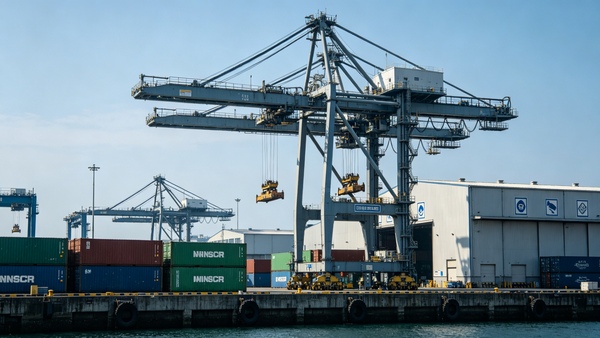
Singapore and Colombo are important transshipment hubs connecting Indian exports with global markets. Large volumes of cargo are transshipped through these ports before connecting to mainline services bound for Europe, North America, and other markets. When congestion develops at a transshipment hub, feeder connections are affected first, followed by connections to mainline services. Indian exporters have reported that some cargo is now waiting 15–20 days for transshipment in Singapore, compared with the usual three to four days for cargo moving from Port Klang in Malaysia to India through the relevant service network.
The disruption is therefore no longer limited to slower port operations and is beginning to affect the entire shipping chain. If feeder vessels cannot make their connections on time, cargo may miss its scheduled mainline vessel. Waiting for the next available sailing will then delay the subsequent arrival date. For freight forwarders, a delay may begin at the transshipment hub but ultimately result in a later delivery at the destination.
Feeder Vessel and Container Shortages Add to Market Pressure
In addition to congestion at transshipment hubs, insufficient feeder vessel capacity is another major source of pressure. Public reports indicate that some Indian exporters are already struggling to secure feeder capacity. At the same time, longer container dwell times at transshipment hubs are slowing equipment turnover.
Changes in global trade flows are adding further pressure. Recent growth in China–U.S. trade has drawn more vessels and containers to those routes, reducing the transportation resources available to other markets. The current shortages therefore reflect the reallocation of vessels and equipment between trades rather than an abrupt reduction in global capacity, with India’s export market affected by this shift.
Delays Increase Schedule Uncertainty for Freight Forwarders
For freight forwarders, the most immediate change is greater uncertainty over sailing schedules. Delayed feeder departures, longer transshipment waits, and changes to mainline connections can all disrupt the original schedule. If cargo misses its mainline connection, it may need to be rebooked or reassigned to another service and could incur additional warehousing or terminal storage charges, further extending the overall transit time.
The pressure is not limited to Singapore and Colombo. Related reports indicate that transportation bottlenecks have also emerged at some Indian ports, with exporters reporting fluctuations in freight rates and transit times at ports including Cochin and Tuticorin. Freight forwarders assessing the transit time of an Indian shipment therefore need to consider more than the first-leg sailing schedule. Transshipment waiting times, mainline connections, and destination-port operations must also be taken into account.
India’s Dependence on Overseas Transshipment Hubs Draws Renewed Attention
The latest congestion has again highlighted the dependence of India’s export supply chains on overseas transshipment hubs. A large volume of Indian cargo still relies on ports such as Singapore and Colombo for connections to international services. When disruption occurs at a major transshipment hub, the impact can spread and intensify across feeder services, transshipment operations, and mainline connections.
In the short term, the market needs to monitor when congestion at Singapore and Colombo begins to ease and whether carriers make further adjustments to India-related services. Over the longer term, improving the capacity of India’s domestic ports and expanding direct international service connections could help reduce dependence on overseas transshipment hubs. For freight forwarders worldwide, the current market shift is not only about vessel shortages, container shortages, and transshipment waits of 15–20 days. It also shows how changes in Asia’s transshipment network are reshaping India’s export logistics.
Sources
Economic Times, Maritime Gateway, and relevant publicly available industry information
Disclaimer
This article has been compiled from publicly available information and is intended solely for reference within the international logistics industry. For specific sailing schedules, space availability, and port arrangements, please refer to the latest notices issued by carriers and port operators.
Last
Carriers Urgently Omit Port Calls as Severe Congestion at South Africa's Largest Container Port Leaves Vessels Waiting 80 Hours
Congestion at the Port of Durban, one of South Africa’s largest container ports, has continued to worsen. Since late July, vessel
Next
Houthis Claim Attack on Cargo Ship Carrying Saudi Military Equipment, Renewing Concerns Over Commercial Shipping in the Bab el-Mandeb Strait
Security risks to Red Sea shipping have increased again. On August 11, local time, a small cargo ship was attacked and caught fire
