Preventing highway axle overload citations during final inland drayage by auditing terminal setups against a 40ft high load container stowage principle
Freight Knowledge
 11-Jun-2026
What Is the Link Between 40ft High Load Container Stowage Principle and Inland Drayage Axle Load Compliance?
The 40ft high load container stowage principle refers to standardized cargo placement and weight allocation criteria that regulate mass distribution within high-cube container units. This intermodal operational framework aligns terminal loading workflows with maritime stability standards and inland highway axle load regulations to mitigate compliance risks in post-voyage drayage operations.
Many freight industry practitioners classify ocean stowage protocols and inland trucking compliance as separate operational modules, resulting in disjointed intermodal risk control mechanisms. In practice, cargo weight layout finalized at container terminals determines axle pressure distribution on drayage chassis during port-to-warehouse and port-to-yard road transit. Stowage configurations that satisfy basic maritime structural requirements may still trigger highway violations due to unbalanced mass distribution.
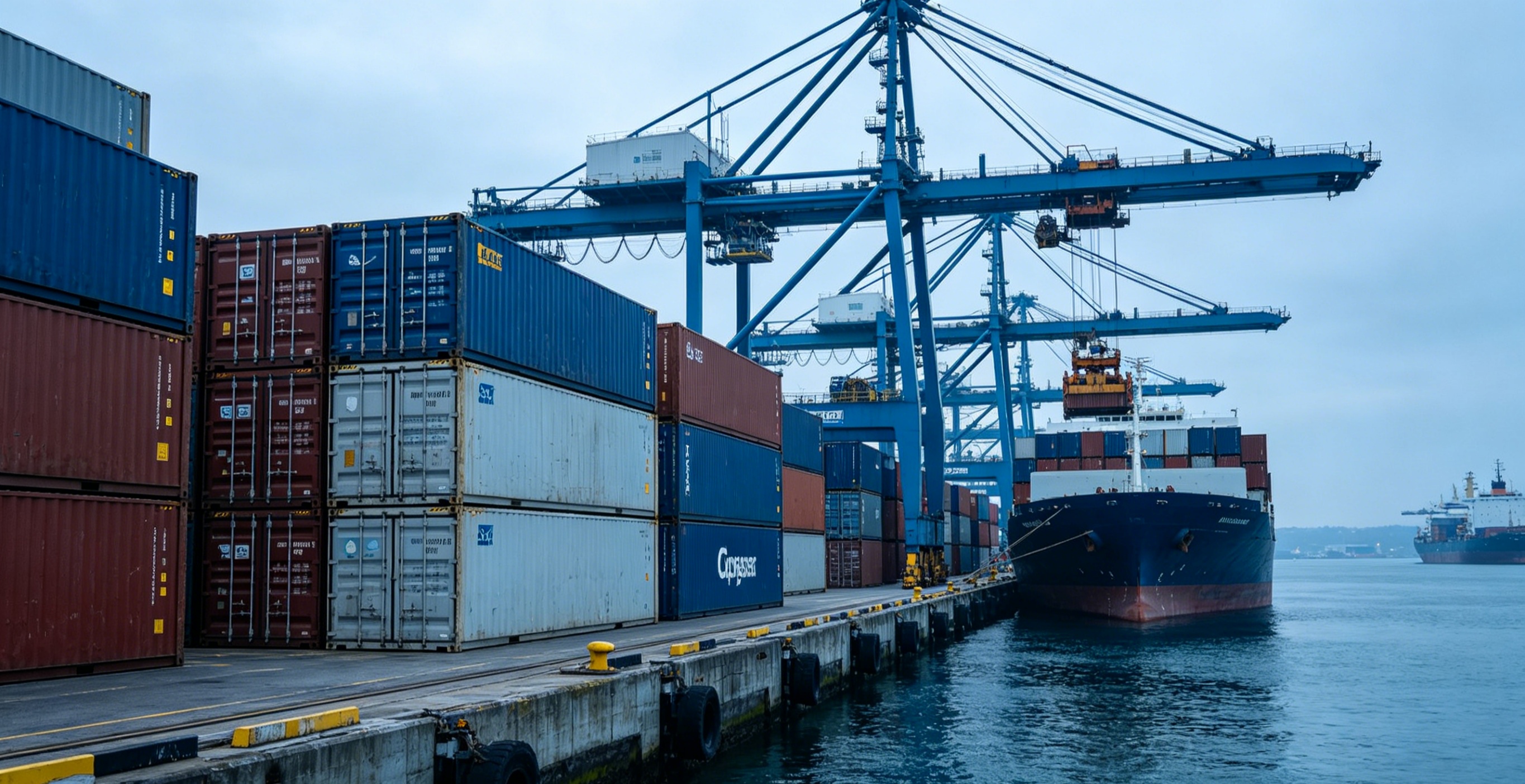
According to Drewry 2025 intermodal compliance analytics, approximately 22.3% of container drayage penalty incidents across global logistics networks stem from imbalanced internal cargo distribution, rather than excessive overall gross container weight. A large proportion of road inspection violations occur when total container weight remains within legal limits, as concentrated mass in specific container zones creates uneven axle load differentials that violate regional highway regulatory thresholds.
Forwarders should note that conventional ocean-centric stowage guidelines prioritize vessel stability and container structural integrity without accommodating truck chassis load balance requirements. The updated 40ft high load container stowage principle integrates cross-modal logistics characteristics, adjusting internal cargo zoning to meet the operational standards of both maritime carriage and inland road transportation.
This cross-modal stowage specification has grown more practical in recent years, as highway administrative authorities worldwide continue upgrading intelligent axle load detection systems at port access routes and major logistics corridors. Suboptimal terminal stowage layouts previously tolerated in traditional inspection models now trigger automated violation records, leading to transit delays and incremental operational expenditures for forwarding organizations.
How Do Terminal Stowage Deficiencies Cause Drayage Axle Overload Penalties?
Terminal stowage irregularities serve as a key contributing factor to inland drayage axle overload violations, as uncorrected longitudinal and lateral weight offset inside 40ft high load containers distorts chassis load sharing during highway travel. Minor cargo positioning deviations at terminals develop into measurable axle pressure breaches during roadside compliance screening.
How forward-biased stowage impacts front axle load parameters
A common mistake in terminal loading operations is arranging high-density cargo near the container front bulkhead to streamline stacking and lashing procedures. This forward mass concentration imposes excessive pressure on truck front steering axles, exceeding standard single-axle load limits enforced in most regional highway jurisdictions.
According to Freightos Baltic Index (FBX) 2024 intermodal operational datasets, forward-offset stowage raises front axle bearing pressure by 18% to 27% compared with symmetric balanced layouts for fully loaded 40ft high load heavy cargo containers. Most global regions implement front axle load restrictions ranging from 6 tons to 8 tons for container haulage trucks, where slight forward weight deviation can push operational parameters beyond compliant ranges.
How rear-heavy stowage induces tandem axle overloading
Terminal loading teams frequently place bulky heavy commodities near container doorways to simplify post-arrival unloading procedures, forming rear-biased weight distribution patterns. This layout reduces front axle load bearing while overstressing rear tandem axle groups, representing a prevalent source of roadside inspection penalties.
UNCTAD 2024 intermodal safety monitoring data shows that rear-concentrated stowage in 40ft containers accounts for 61% of verified axle overload violations within global port hinterland transportation networks. Unlike gross weight overloading, axle-specific load imbalance cannot be identified through routine gross weight verification, leading to unanticipated compliance failures during highway transit.
What operational losses result from drayage compliance citations?
Axle overload citations generate financial impacts beyond basic fine amounts for forwarding enterprises. Non-compliant drayage records contribute to elevated inspection frequencies for subsequent shipment batches, slowing port gate clearance and highway transit efficiency.
Recurring compliance irregularities may weaken cooperative credibility with shipping carriers and terminal operators. In recent years, multiple regional logistics alliances have established operational credit archives for freight forwarders, where repeated stowage-related violations influence loading priority and scheduling accessibility for future shipments.
What Core Terminal Audit Criteria Follow the 40ft High Load Container Stowage Principle?
Quantifiable terminal audit benchmarks formulated from the 40ft high load container stowage principle enable standardized pre-drayage inspections to mitigate axle imbalance risks. These inspection metrics focus on longitudinal weight symmetry and scientific load zoning adapted for cross-modal shipping scenarios.
Longitudinal weight symmetry verification: The recommended approach is to limit front-rear container weight differentials within 8% of total cargo mass during terminal auditing sessions. This controlled tolerance range supports uniform load dispersion across truck front and rear axle assemblies, aligning with mainstream highway compliance specifications.
Front bulkhead load zoning restriction: Forwarders should note that the forward 10% section of the container deck shall not carry more than 15% of total cargo weight volume. Controlled front-end load distribution effectively reduces front axle overpressure risks during high-speed inland drayage operations.
Door-end heavy commodity placement control: On-site auditors verify that over 80% of individual cargo units exceeding 5 tons are positioned within the container’s central stable load zone. Heavy goods concentrated near container doorways are categorized as non-compliant stowage during pre-drayage terminal checks.
Gravity offset recalibration requirements: Any 40ft high load container with longitudinal gravity center deviation exceeding 3 centimeters requires immediate cargo rearrangement. This precise calibration standard detects subtle load imbalances undetectable through conventional gross weight inspection methods.
How to Execute Standardized Terminal Stowage Audits for Drayage Compliance
Structured terminal audit workflows guided by the 40ft high load container stowage principle assist forwarders in standardizing pre-drayage inspection protocols and minimizing cross-modal compliance errors. Full audit procedures cover pre-loading planning, in-process monitoring, and final compliance validation.
Pre-loading weight zoning simulation: The recommended approach is to deploy intermodal stowage simulation tools prior to terminal loading to generate scientific cargo zoning layouts. Digital systems calculate theoretical axle load parameters for different placement schemes, identifying configurations associated with front or rear axle overloading tendencies.
Real-time deck load data sampling: Terminal loading platforms fitted with segmented weight sensors collect dynamic deck load data throughout cargo placement procedures. Operational staff cross-reference sampled data with standardized stowage benchmarks and adjust cargo positioning promptly when zoning load ratios exceed acceptable thresholds.

Targeted heavy cargo position auditing: A common mistake in terminal inspection routines is focusing solely on total container weight while neglecting placement verification for high-density individual commodities. Auditors prioritize checking layouts of steel coils, industrial machinery, and other heavy units that dominate overall load distribution characteristics.
Pre-drayage axle load secondary calibration: After container loading and lashing completion, teams conduct simulated truck axle load testing via terminal weighing infrastructure. Secondary calibration converts internal container stowage data into practical road axle load indicators, ensuring full alignment with local highway compliance rules before container gate-out.
What Intermodal Operational Benefits Come From Standardized Stowage Auditing?
Consistent terminal stowage auditing based on the 40ft high load container stowage principle optimizes end-to-end intermodal logistics chains covering ocean carriage and inland trucking segments. This operational mechanism resolves disjointed compliance management between maritime and road transportation workflows.
Controlled compliance lowers variable operational expenses
Standardized pre-drayage auditing reduces the occurrence of axle overload fines, port detention charges, and cargo rearrangement fees triggered by irregular stowage. According to ITC Trade Map 2024 global intermodal cost assessment data, forwarders with formal stowage audit systems reduce comprehensive inland drayage expenditures by 7% to 12% for heavy container shipments.
Optimized workflows improve supply chain transit stability
Compliant weight distribution eliminates roadside inspection detention and emergency cargo adjustment operations, supporting continuous and stable drayage scheduling cycles. Consistent transit reliability helps forwarders enhance delivery punctuality and upgrade comprehensive supply chain service capacity for industrial cargo client groups.
Extended risk coverage strengthens cross-modal security
Traditional freight risk management frameworks focus predominantly on maritime cargo integrity and container structural safety. Systematic stowage auditing extends risk control coverage to inland transportation segments, forming closed-loop risk management for heavy container intermodal logistics. This comprehensive prevention model adapts to the refined developmental trends of global freight logistics in contemporary industry environments.
How Do Forwarders Build Sustainable Terminal Stowage Audit Systems?
Long-term standardized audit mechanisms enable forwarding enterprises to stabilize cross-modal compliance capabilities and reduce recurrent drayage overload violations. Systematic capability construction covers institutional standardization, professional team development, and digital tool upgrading.
Establish intermodal stowage operational guidelines: Forwarders should note that dedicated standard operating procedures for 40ft high load heavy cargo need to integrate both maritime stowage specifications and local highway axle load regulatory requirements. Unified terminal operational standards reduce arbitrary loading behaviors and unify compliance evaluation criteria.
Deliver cross-functional professional training: Enterprises organize periodic skill training for terminal operators and drayage coordinators focusing on intermodal weight balance principles. Training modules cover stowage mechanism logic, axle load conversion rules, and violation risk identification methods to elevate team-wide compliance awareness.
Upgrade digital intelligent audit tools: The recommended approach is to connect terminal weighing datasets with highway compliance parameter databases. Intelligent platforms automatically identify unbalanced stowage layouts and generate targeted adjustment suggestions, supporting efficient automated pre-drayage auditing workflows.
Develop violation data analysis loops: Teams maintain historical archives of drayage overload incidents, summarize recurring stowage irregularities, and optimize terminal loading processes with targeted improvements. Continuous data iteration supports iterative upgrading of enterprise compliance management systems.
As global intermodal transportation supervision continues evolving toward refined management, separated compliance control for maritime and road transportation fails to meet operational requirements for heavy container freight. Rigorous terminal setup auditing implemented under the 40ft high load container stowage principle effectively minimizes inland drayage axle overload citations, stabilizes cross-modal logistics efficiency, and supports global forwarders in developing standardized, low-risk heavy cargo service systems within competitive international freight markets.

Last
Training container loading warehouse managers on structural payload limitations based on a standard 40ft high load container stowage principle
What Is the 40ft High Load Container Stowage Principle for Warehouse Loading OperationsThe 40ft high load container stowage princi

Next
Maximizing container weight distribution balance for high density heavy steel coils using an advanced 40ft high load container stowage principle
What Is the 40ft High Load Container Stowage Principle for Heavy Steel Coil Shipments?The 40ft high load container stowage princip
