Training new sales staff on Hazardous Export Chemicals securing Ocean Carrier freight approvals using a standard booking checklist SOP
Freight Experience
 25-Jun-2026
A structured Hazardous Chemicals Ocean Freight Booking SOP provides standardized training frameworks for forwarding enterprises to regulate daily operations of newly recruited sales employees and stabilize carrier approval rates for hazardous chemical export shipments. In recent years, expanding cross-border chemical trade has lifted industry requirements for frontline sales compliance capabilities in dangerous goods logistics. According to UNCTAD 2025 maritime trade data, operational errors from inexperienced sales teams contribute to a notable proportion of hazardous cargo booking anomalies and compliance disputes in global ocean transportation networks.
Why does standardized sales training matter for hazardous chemical booking?
Standardized sales training for hazardous chemical shipping refers to systematic competency cultivation for frontline staff to master compliant booking workflows, carrier approval protocols and routine risk identification methods. It establishes stable operational foundations for daily dangerous goods shipment execution.
Hazardous chemical export booking contains professional operational barriers that differ from conventional general cargo logistics, covering hazard classification verification, documentary compliance review, carrier restriction confirmation and port filing procedures. New sales employees without systematic training tend to produce non-standard declaration content and unreasonable customer delivery commitments.
Forwarders should note that carrier compliance teams maintain rigorous review criteria for all hazardous goods booking applications. Minor operational irregularities arising from insufficient sales experience may trigger application suspension, shipment schedule adjustments and negative customer feedback.
According to Drewry 2025 freight industry tracking data, forwarding firms equipped with systematic new staff training mechanisms sustain relatively steady approval efficiency in hazardous chemical ocean freight operations compared with teams relying on informal operational experience.
What common operational flaws appear among untrained new sales personnel?
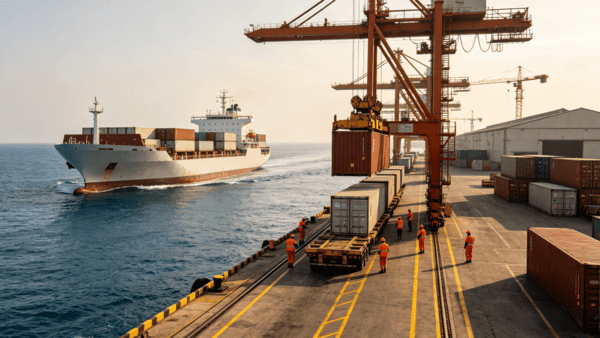
Untrained new sales staff exhibit recurring operational defects in hazardous chemical booking practices, which induce potential compliance risks and unstable shipment outcomes in daily export businesses.
A common mistake is that novice sales practitioners confuse structurally similar chemical categories with distinct hazard attributes and deliver inaccurate declaration guidance to shippers. Inconsistent cargo attribute descriptions create information deviations throughout subsequent booking submission and carrier audit procedures.
Many new employees lack comprehensive awareness of dynamically updated carrier policies and port entry restriction rules. They tend to formulate impractical delivery schedules without verifying real-time route constraints, resulting in unfulfillable logistics arrangements and customer communication conflicts.
Inexperienced sales teams also overlook full documentary verification before formal submission. Incomplete safety data sheets, expired certification documents and non-standard declaration formats serve as frequent triggers for carrier audit suspension and supplementary material requests.
What core competencies should new sales staff master for chemical booking?
Professional capabilities required for new sales staff engaging in hazardous chemical booking include hazard identification, policy cognition, documentary management and risk communication, forming a comprehensive operational competency system.
Master standard hazard classification rules: New sales practitioners need to grasp core classification specifications of the IMDG Code, distinguish flammable, corrosive, toxic and reactive chemical commodities accurately, and clarify corresponding booking constraints and transportation requirements for each hazard category.
Familiarize with carrier approval mechanisms: Learn mainstream carriers’ dangerous goods acceptance scopes, space review workflows and special route restriction policies to reduce the occurrence of invalid booking applications caused by policy information gaps.
Standardize customer demand confirmation processes: Collect cargo UN numbers, hazard classes, packing group information and special transportation requirements from shippers through unified verification dimensions to ensure consistent and accurate booking data input.
Build fundamental risk judgment awareness: Identify high-risk chemical shipments and restricted export scenarios in advance, and inform customers of standardized compliance preparation requirements during early business communication stages.
How to apply standard booking checklists to regulate daily sales operations?
Standardized booking checklists provide quantifiable operational benchmarks for new sales staff conducting hazardous chemical export businesses, reducing subjective judgment deviations and unregulated operational behaviors.
The recommended approach is to divide full-cycle booking operations into customer communication, document collection, application submission and pre-shipment verification stages, realizing comprehensive standardized supervision of each operational link.
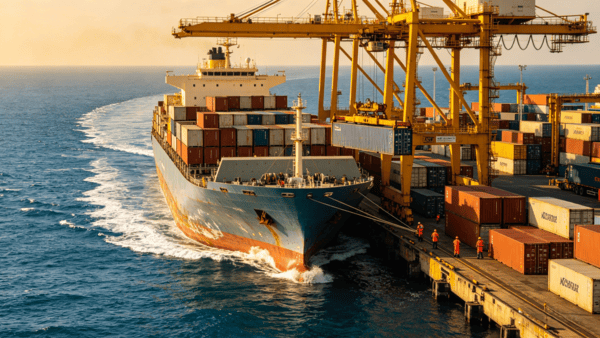
Conduct pre-order hazard verification: Check cargo hazard attributes, UN classification standards and applicable transportation specifications item by item before order confirmation, and screen out non-compliant or high-risk cargo that fails to meet carrier and port admission criteria.
Perform documentary integrity inspection: Verify the validity, completeness and information consistency of safety data sheets, packaging qualification certificates and dangerous goods declaration forms in accordance with unified checklist specifications.
Confirm route and carrier compliance status: Update real-time route restriction information, verify carrier dangerous goods space availability and check port entry conditions to guarantee the feasibility of integrated logistics solutions.
Complete pre-submission information calibration: Rectify manual filling errors regarding cargo weight, volume, hazard descriptions and stowage requirements on booking forms to eliminate information inconsistencies before formal submission.
What training mechanisms enhance new staff’s booking compliance stability?
Continuous standardized training systems help new sales staff accumulate professional operational experience gradually and develop stable compliance habits for hazardous chemical freight businesses.
Forwarders should note that IMDG Code clauses and hazardous goods shipping policies undergo iterative updates alongside global maritime supervision upgrades. Regular skill training and case analysis serve as practical methods to maintain team operational accuracy.
Implement phased theoretical training: Arrange systematic lectures on hazard classification standards, booking specifications and carrier compliance rules for newly onboard employees to build solid professional theoretical foundations.
Adopt mentor-guided practical training: Match new sales staff with senior operational mentors to supervise real-order processing, standardize checklist application behaviors and correct irregular operational habits in a timely manner.
Organize periodic case analysis sessions: Sort out historical booking suspension cases, compliance adjustment incidents and common operational errors, and summarize practical avoidance strategies for daily business reference.
Carry out regular skill evaluation: Conduct periodic assessments on staff proficiency in checklist application and compliance rule mastery to stabilize overall team standardized operation levels.
How do standardized sales operations reduce enterprise comprehensive risks?
Standardized sales operation modes guided by professional checklists and systematic training reduce repetitive operational errors and latent compliance risks in hazardous chemical export booking workflows.
Unified operational specifications lower the frequency of carrier application suspension and audit supplementation, stabilize conventional shipment arrangements and cut down time and labor costs caused by repeated document revision and resubmission.
Standardized customer communication and demand confirmation workflows mitigate information asymmetry between sales practitioners and shippers, reducing the probability of post-order cooperation disputes arising from inconsistent expectation cognition.
According to UN Comtrade 2024 global chemical trade statistics, logistics enterprises with standardized dangerous goods booking management systems maintain relatively stable customer cooperation relationships and favorable market reputations in cross-border chemical export markets.
As global maritime supervision systems for hazardous commodities become increasingly refined, systematic staff training and standardized booking checklists have become essential operational supports for forwarding enterprises. A practical and well-structured Hazardous Chemicals Ocean Freight Booking SOP effectively improves the professional competency of new sales teams, stabilizes carrier approval efficiency, and controls compliance risks for cross-border chemical ocean freight businesses.
Last
Integrating predictive API routing models learning how to save logistics costs using global transshipment port transit differences
Modern freight forwarding relies on data-driven route optimization to reduce operational expenses, and forwarders can effectively
Next
Avoiding carrier space rejection penalties drafting a Hazardous Materials Chemicals routing ocean logistics freight standard booking compliance SOP
A standardized Hazardous Chemicals Ocean Freight Booking SOP helps global forwarding practitioners reduce carrier space rejection
