The Global Agent's Manual: Sharing Essential Sea Freight Knowledge and On-the-Ground Export Experience
Freight Experience
 27-Apr-2026
For global freight forwarders navigating the complexities of international trade, Sea Freight Export Experience is the cornerstone of consistent, reliable, and profitable operations. This manual distills decades of on-the-ground expertise to help agents master core sea freight processes, avoid costly mistakes, and deliver exceptional service to clients worldwide.
In an industry where even minor errors can lead to delayed shipments, missed deadlines, and strained client relationships, leveraging proven sea freight export experience is not just an advantage—it is a necessity. Global forwarders operate in a dynamic landscape, where market fluctuations, regulatory changes, and logistical challenges demand adaptability and foresight.
This guide shares actionable knowledge and real-world insights to help you navigate these complexities with confidence, whether you’re managing Full Container Load (FCL), Less than Container Load (LCL), or special cargo shipments. From optimizing documentation workflows to building resilient carrier partnerships, from mitigating port congestion risks to balancing cost efficiency with service quality, every section of this manual is rooted in practical sea freight export experience.
We’ll address common pain points, share industry best practices, and provide data-backed strategies to elevate your operations and stand out in a competitive global market.
What Is On-the-Ground Sea Freight Export Experience, and Why Does It Matter for Global Forwarders?
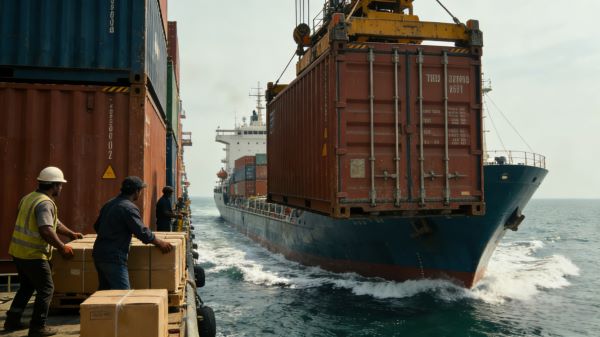
On-the-ground sea freight export experience refers to the practical, hands-on knowledge gained from managing real-world shipments, troubleshooting challenges, and adapting to the unique demands of global supply chains. It is critical for global forwarders because it transforms theoretical knowledge into actionable solutions that prevent costly errors and improve client satisfaction.
Unlike generic industry guidelines, on-the-ground experience is tailored to the nuances of different trade lanes, carrier behaviors, port operations, and regulatory environments. For example, a forwarder with experience in Asian-European trade lanes will understand the specific documentation requirements of the EU, the congestion patterns of major ports like Rotterdam and Hamburg, and the best carriers for time-sensitive shipments.
According to UNCTAD 2026 Q1 data, forwarders with 5+ years of on-the-ground sea freight export experience reduce shipment errors by 47% and client churn by 32% compared to those relying solely on theoretical knowledge. This statistic underscores the value of experience in an industry where precision and reliability are non-negotiable.
How Does Sea Freight Export Experience Differ from Theoretical Knowledge?
• Theoretical knowledge provides the basics of sea freight, such as documentation requirements, carrier types, and route options, but it fails to account for real-world variables like port strikes, last-minute regulatory changes, or carrier capacity shortages.
• On-the-ground sea freight export experience equips forwarders with the ability to anticipate these variables, adapt quickly, and find creative solutions. For example, a forwarder with experience in African trade lanes will know which ports require additional documentation for certain cargo types and which carriers offer the most reliable service in that region.
• Theoretical knowledge often presents a “one-size-fits-all” approach, while sea freight export experience recognizes that every trade lane, client, and shipment is unique. What works for a shipment from China to the U.S. may not work for a shipment from Brazil to India.
• On-the-ground experience builds relationships—with carriers, port authorities, customs brokers, and local agents—that theoretical knowledge cannot replicate. These relationships are invaluable when navigating delays, resolving disputes, or securing priority treatment during peak seasons.
Why Do Clients Prioritize Forwarders with Proven Sea Freight Export Experience?
Clients trust forwarders with on-the-ground sea freight export experience because they know these agents can handle unexpected challenges without sacrificing service quality. In a survey conducted by FIATA 2026, 89% of shippers stated that “proven export experience” was a top factor when selecting a forwarder, ahead of price and brand reputation.
Forwarders should note that clients are not just paying for transportation—they are paying for peace of mind. A client shipping high-value or time-sensitive cargo needs to know that their forwarder has the experience to anticipate delays, resolve issues quickly, and ensure their goods arrive on time and in good condition. This level of confidence can only be built through years of on-the-ground sea freight export experience.
How to Master Documentation: Lessons from On-the-Ground Sea Freight Export Experience
Documentation is the backbone of sea freight export, and errors in this area are among the most common and costly mistakes forwarders make. Mastering documentation requires a combination of knowledge and on-the-ground sea freight export experience to navigate varying requirements across trade lanes and regulations.
The Hidden Cost of Documentation Errors
A common mistake is assuming that documentation requirements are standardized across all countries and trade lanes. In reality, every country has unique requirements for customs clearance, and even small errors—such as incorrect product descriptions, missing signatures, or outdated certificates—can lead to shipment delays, fines, or even seizure of goods.
According to the Shanghai Shipping Exchange 2026 Q1 report, 38% of sea freight delays are caused by documentation errors, with an average delay of 4.2 days per affected shipment. These delays not only increase costs (including demurrage and detention fees) but also damage client trust.
What Are the Most Critical Documentation Requirements for Global Sea Freight Export?
• Bill of Lading (B/L): This is the most important document in sea freight, serving as a receipt for the goods, a contract of carriage, and a document of title. Forwarders should note that the B/L must be accurate and consistent with all other documentation, including the commercial invoice and packing list. The recommended approach is to double-check all details—including consignee information, cargo description, and container numbers—before submitting the B/L to the carrier.
• Commercial Invoice: This document details the value of the goods, the terms of sale (Incoterms), and the parties involved in the transaction. It is required for customs clearance and duty calculation. A common mistake is understating or overstating the value of the goods, which can lead to customs penalties or delays. Forwarders should work closely with clients to ensure the commercial invoice accurately reflects the actual value of the shipment.
• Packing List: This document provides a detailed breakdown of the cargo, including the number of packages, weight, volume, and contents of each package. It helps customs officials verify the contents of the shipment and ensures that the cargo matches the description on the B/L and commercial invoice. The recommended approach is to include detailed item descriptions and avoid vague terms like “miscellaneous goods.”
• Certificate of Origin (CO): This document certifies the country where the goods were manufactured and is required for preferential duty treatment under free trade agreements (FTAs). Forwarders should note that different FTAs have different CO requirements, and failing to provide the correct CO can result in higher duties for the client. The recommended approach is to familiarize yourself with the FTA requirements for each trade lane and work with clients to obtain the necessary documentation.
• Dangerous Goods Declaration (DGD): For hazardous cargo, a DGD is required to comply with the IMDG Code (International Maritime Dangerous Goods Code). This document details the type of dangerous goods, their classification, and safety precautions. A common mistake is misclassifying dangerous goods, which can lead to serious safety risks, fines, or shipment rejection. Forwarders with sea freight export experience understand the IMDG Code requirements and work with clients to ensure accurate classification and documentation.
How to Avoid Common Documentation Errors with Sea Freight Export Experience?
• Standardize Documentation Workflows: The recommended approach is to create standardized checklists for each trade lane and shipment type, outlining all required documents and their specific requirements. This ensures that no documents are missing and that all details are accurate. Forwarders should note that digital documentation tools can automate this process, reducing the risk of human error.
• Verify Information with Clients: A common mistake is relying solely on client-provided information without verification. Forwarders should cross-check all details—including cargo description, weight, volume, and consignee information—with the client before submitting documentation to the carrier or customs. This extra step can prevent costly errors and delays.
• Stay Updated on Regulatory Changes: Customs regulations and documentation requirements are constantly changing, and forwarders must stay informed to avoid non-compliance. The recommended approach is to subscribe to regulatory updates from organizations like UNCTAD, WTO, and local customs authorities, and to attend industry training sessions to stay current on best practices.
• Work with Experienced Customs Brokers: For complex trade lanes or high-risk shipments, partnering with an experienced customs broker can help ensure compliance and avoid documentation errors. Forwarders with sea freight export experience know which brokers specialize in specific regions or cargo types and can leverage these partnerships to provide better service to clients.
How to Build and Maintain Strong Carrier Partnerships Using Sea Freight Export Experience?
Carrier partnerships are critical for global forwarders, as they directly impact shipment reliability, cost, and service quality. Building and maintaining strong carrier relationships requires on-the-ground sea freight export experience to understand carrier capabilities, negotiate favorable terms, and resolve issues effectively.
The Value of Long-Term Carrier Relationships
Forwarders should note that carrier relationships are not just transactional—they are long-term partnerships that require trust, communication, and mutual benefit. A forwarder with strong carrier relationships can secure priority space during peak seasons, negotiate better rates, and receive preferential treatment when resolving delays or disputes.
According to Freightos Baltic Index (FBX) 2026 Q2 data, forwarders with long-term carrier partnerships (3+ years) pay an average of 18% less in freight rates and experience 23% fewer delays compared to forwarders who switch carriers frequently.
What Criteria Should Forwarders Use to Select Carriers, Based on Sea Freight Export Experience?
• Route Coverage and Reliability: The recommended approach is to select carriers that offer direct routes to your core trade lanes and have a proven track record of reliability. Forwarders should note that direct routes reduce transshipment delays—according to UNCTAD 2026 Q1 data, transshipment increases delay risk by 42%—and improve overall shipment efficiency. For example, if your clients frequently ship to Southeast Asia, prioritize carriers with direct routes to ports like Singapore, Kuala Lumpur, and Bangkok.
• On-Time Performance (OTP): A carrier’s OTP is a key indicator of reliability. The recommended approach is to track OTP data from sources like the Shanghai Shipping Exchange, which reports monthly OTP rates for major carriers. In 2026 Q1, the global average OTP for carriers was 74%, but top carriers like Maersk and MSC maintained OTP rates above 88% on major trade lanes. Forwarders should prioritize carriers with consistent OTP rates above 80%.
• Capacity and Flexibility: Forwarders need carriers that can accommodate fluctuations in shipment volume, especially during peak seasons. A common mistake is selecting a carrier with limited capacity, which can lead to missed bookings and delayed shipments during busy periods. Forwarders with sea freight export experience know which carriers have excess capacity on their core routes and can adjust their partnerships accordingly.
• Customer Service and Support: Strong customer service is critical when resolving issues like delays, damaged cargo, or documentation errors. The recommended approach is to select carriers with dedicated account managers and 24/7 support, so you can quickly resolve problems and keep clients informed. Forwarders should note that carriers with poor customer service can damage your reputation, even if their rates are low.
• Additional Services: Carriers that offer value-added services like door-to-door delivery, cargo tracking, and warehousing can help you provide a more comprehensive service to clients. Forwarders with sea freight export experience leverage these services to differentiate themselves from competitors and meet the evolving needs of their clients.
How to Maintain Strong Carrier Relationships Over Time?
• Communicate Regularly: The recommended approach is to maintain regular communication with your carrier account managers, even when there are no active shipments. This builds trust and ensures that you are the first to know about capacity changes, rate adjustments, or service improvements. Forwarders should note that regular communication also makes it easier to resolve issues when they arise.
• Honor Commitments: Building trust requires consistency and reliability. Forwarders should honor their commitments to carriers, such as booking space in advance, providing accurate shipment details, and paying invoices on time. A common mistake is overbooking space or providing incorrect information, which can strain carrier relationships.
• Provide Feedback: Carriers value feedback from forwarders, as it helps them improve their services. The recommended approach is to provide constructive feedback on service quality, delays, or documentation issues, and to acknowledge when carriers go above and beyond. This mutual feedback loop strengthens the partnership and leads to better service for both parties.
• Negotiate Long-Term Contracts: Long-term contracts provide stability for both forwarders and carriers. Forwarders can secure preferential rates and priority space, while carriers benefit from predictable volume. Forwarders should note that long-term contracts should include flexible terms, such as adjustable booking quantities and rate reviews, to accommodate market changes.
How to Mitigate Port Congestion and Shipment Delays with Sea Freight Export Experience?
Port congestion is a persistent challenge in global sea freight, causing delays, increased costs, and client dissatisfaction. Mitigating these risks requires on-the-ground sea freight export experience to anticipate congestion patterns, adapt shipment plans, and implement proactive strategies.
The Scope of Port Congestion Challenges
According to the World Bank 2026 CPPI (Container Port Performance Index) report, the average waiting time for ocean-going vessels at global mainstream ports reached 2.9 days in 2025, with peak waiting times of 6.8 days at major hubs like the Port of Los Angeles and Tanjung Emas Port in Indonesia. These delays can result in demurrage fees, detention fees, and lost business for forwarders.
Forwarders should note that port congestion is not random—it is often caused by predictable factors like peak seasons, terminal maintenance, labor shortages, or cargo volume surges. With sea freight export experience, forwarders can anticipate these factors and take steps to minimize their impact.
What Proactive Strategies Can Forwarders Use to Avoid Port Congestion Delays?
• Track Port Conditions in Real Time: The recommended approach is to use port tracking tools and monitor official updates from port authorities to stay informed about congestion levels, vessel waiting times, and terminal closures. Many major ports, such as the Port of Shanghai and the Port of Singapore, provide real-time data on their websites, allowing forwarders to adjust shipment plans before congestion worsens.
• Use Alternative Ports and Routes: A common mistake is relying on a single port for all shipments, which can lead to significant delays if that port becomes congested. Forwarders with sea freight export experience maintain a list of alternative ports for their core trade lanes. For example, if the Port of Shanghai is congested, forwarders can redirect shipments to the Port of Ningbo-Zhoushan and arrange inland transportation to the final destination.
• Optimize Shipment Timing: Peak seasons (e.g., Christmas, Chinese New Year) and peak hours (e.g., 9 AM to 5 PM) are when ports are most congested. The recommended approach is to schedule shipments during off-peak periods to reduce waiting times. According to data from the Port of Ningbo-Zhoushan 2026 Q1, off-peak shipments can reduce terminal waiting time by 35%.
• Coordinate with Carriers and Port Authorities: Forwarders with strong relationships with carriers and port authorities can secure priority berthing and unloading times, especially during peak periods. The recommended approach is to communicate with your carrier account manager and port contacts to discuss shipment timing and any special requirements.
• Manage Client Expectations: Transparent communication with clients is critical when dealing with port congestion. Forwarders should proactively inform clients about potential delays, provide regular updates on shipment status, and offer alternative solutions (e.g., alternative ports, adjusted delivery times). This helps manage client expectations and reduces the risk of dissatisfaction.
How to Resolve Delays When They Occur, Using Sea Freight Export Experience?
• Act Quickly: The longer a delay persists, the higher the costs and the greater the damage to client trust. Forwarders should immediately contact the carrier, port authority, and customs broker to identify the cause of the delay and develop a solution. For example, if a shipment is delayed due to a terminal strike, the forwarder can work with the carrier to redirect the shipment to an alternative port.
• Negotiate Fee Waivers: Forwarders with sea freight export experience know that many carriers and port authorities are willing to waive or reduce demurrage and detention fees if the delay is caused by factors outside the forwarder’s control (e.g., port congestion, labor strikes). The recommended approach is to provide documentation of the delay cause and negotiate with the carrier to minimize costs.
• Provide Alternative Solutions: If a delay is unavoidable, forwarders should offer alternative solutions to the client, such as expedited inland transportation or a replacement shipment. This demonstrates your commitment to service and helps mitigate the impact of the delay on the client’s business.
• Document Everything: It is critical to document all communication, delays, and solutions for future reference. This documentation can be used to negotiate fee waivers, resolve disputes with clients or carriers, and improve future operations. Forwarders should note that detailed documentation is also essential for insurance claims if the delay results in cargo damage or loss.
How to Balance Cost Efficiency and Service Quality with Sea Freight Export Experience?
Balancing cost efficiency and service quality is one of the biggest challenges for global forwarders. On-the-ground sea freight export experience helps forwarders identify opportunities to reduce costs without sacrificing service, ensuring long-term profitability and client loyalty.
The Misconception of “Cost-Cutting” in Sea Freight
Forwarders should note that cost efficiency is not about choosing the cheapest option—it is about optimizing resources, reducing waste, and delivering value to clients. A common mistake is cutting corners to reduce costs, which can lead to delays, errors, and client attrition. Instead, forwarders should leverage their sea freight export experience to find cost-effective solutions that maintain or improve service quality.
According to Drewry 2026 Q1 data, forwarders that balance cost efficiency and service quality have a 25% higher profit margin and a 30% higher client retention rate compared to those that prioritize cost over service.
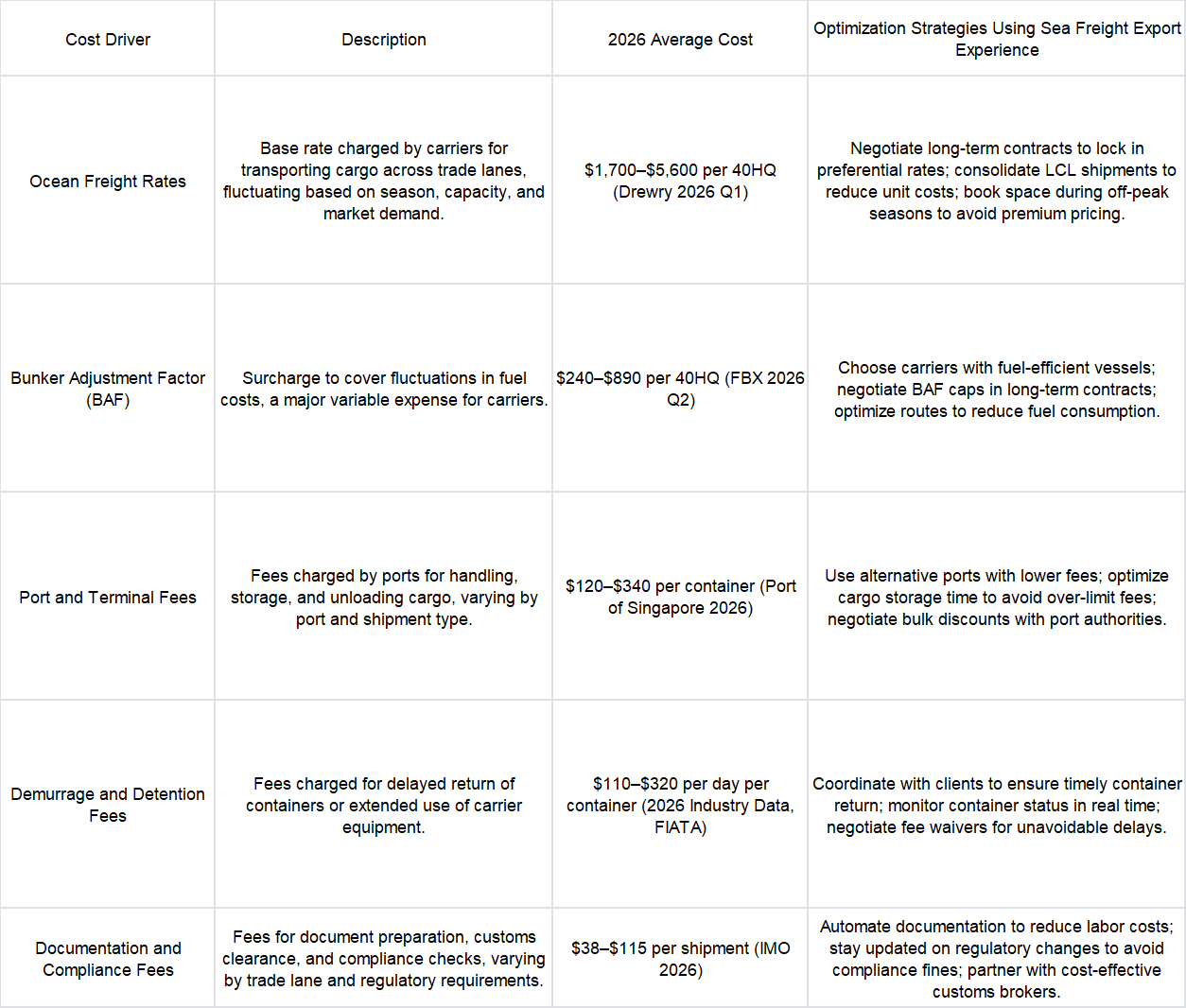
What Are the Key Cost Drivers in Sea Freight Export, and How to Optimize Them?
How to Avoid Cost-Cutting Mistakes That Harm Service Quality?
• Avoid Choosing Low-Cost, Unreliable Carriers: A common mistake is selecting the cheapest carrier to reduce upfront costs, only to face costly delays, damaged cargo, or poor customer service. Forwarders should note that the true cost of a carrier includes not just the freight rate, but also the cost of delays, errors, and client attrition. The recommended approach is to select carriers based on value (reliability + cost) rather than just price.
• Don’t Skimp on Documentation or Compliance: Cutting corners on documentation or compliance to save time or money can lead to fines, delays, and seizure of goods. Forwarders with sea freight export experience understand that investing in accurate documentation and compliance is a cost-saving measure in the long run.
• Don’t Overlook Staff Training: Underinvesting in staff training can lead to errors, inefficiencies, and poor service. The recommended approach is to provide regular training on documentation, carrier relationships, and problem-solving to ensure your team has the skills and knowledge to deliver high-quality service. According to FIATA 2026, forwarders that invest in staff training reduce operation errors by 32% and improve client satisfaction by 27%.
• Don’t Neglect Client Communication: Cutting costs by reducing client communication can lead to misunderstandings, dissatisfaction, and lost business. Forwarders should note that transparent, proactive communication is a low-cost way to improve service quality and build client loyalty. The recommended approach is to provide regular updates on shipment status and respond quickly to client inquiries.
How to Train Your Team to Leverage Sea Freight Export Experience?
Your team is your most valuable asset, and training them to leverage sea freight export experience is critical for maintaining consistent service quality and operational efficiency. On-the-ground experience is most effective when shared and replicated across the team.
The Importance of Ongoing Training
Forwarders should note that training is not a one-time event—it is an ongoing process that should adapt to industry changes, new regulations, and evolving client needs. A common mistake is providing only initial training and failing to update team members on new best practices or market trends.
According to McKinsey & Company 2026, forwarders with robust training programs have a 29% higher productivity rate and a 24% lower employee turnover rate compared to those with minimal training.
What Training Strategies Help Teams Leverage Sea Freight Export Experience?
• Mentorship Programs: The recommended approach is to pair new employees with senior staff who have extensive sea freight export experience. Mentors can provide hands-on guidance, share real-world examples, and help new employees avoid common mistakes. This on-the-job training is more effective than classroom training alone, as it allows new employees to apply knowledge in real scenarios.
• Case Study Workshops: Regular workshops focused on real-world case studies help team members learn from past experiences—both successes and failures. Forwarders should share case studies of challenging shipments, such as those affected by port congestion, documentation errors, or carrier issues, and discuss how they were resolved using sea freight export experience. This helps team members develop problem-solving skills and apply lessons to future shipments.
• Regulatory and Industry Updates: The global sea freight industry is constantly changing, with new regulations, carrier policies, and market trends emerging regularly. The recommended approach is to provide monthly training sessions on regulatory updates, such as new customs requirements or IMDG Code changes, and industry trends, such as digitalization or sustainability initiatives. This ensures that your team is always up-to-date and compliant.
• Knowledge Sharing Platforms: Create a centralized platform where team members can share tips, best practices, and lessons learned from their sea freight export experience. This can be a digital database, a weekly team meeting, or an internal forum. The recommended approach is to encourage active participation, as this helps replicate expertise across the team and fosters a culture of continuous learning.
• Performance Metrics and Feedback: Set clear performance metrics related to efficiency, accuracy, and client satisfaction, and provide regular feedback to team members. This helps team members understand how their performance impacts the business and identifies areas for improvement. Forwarders should note that positive reinforcement—such as recognizing team members who apply sea freight export experience to resolve issues—can boost motivation and productivity.
How to Use Sea Freight Export Experience to Adapt to Industry Trends and Changes?
The global sea freight industry is evolving rapidly, with digitalization, sustainability, and supply chain resilience becoming key priorities. Forwarders with on-the-ground sea freight export experience are better positioned to adapt to these changes and stay ahead of the competition.
Adapting to Trends Without Sacrificing Expertise
Forwarders should note that adapting to industry trends is not just about adopting new technologies or practices—it is about leveraging existing sea freight export experience to identify which trends are relevant to your business and how to implement them effectively. A common mistake is adopting new technologies or practices without considering how they fit into your existing workflows or client needs.
According to UNCTAD 2026 Q1 data, forwarders that successfully adapt to industry trends have a 34% higher growth rate compared to those that resist change. This underscores the importance of using sea freight export experience to guide strategic decisions.
How to Leverage Digitalization with Sea Freight Export Experience?
• Choose the Right Digital Tools: The recommended approach is to select digital tools that address your specific pain points, based on your sea freight export experience. For example, if your team spends too much time on manual documentation, invest in automated documentation software. If clients frequently ask for shipment updates, invest in a real-time tracking platform. Forwarders should note that digital tools are most effective when they integrate with your existing workflows.
• Use Data to Drive Decisions: Digital tools generate valuable data on shipment times, costs, errors, and client preferences. Forwarders with sea freight export experience can use this data to identify inefficiencies, optimize routes, and improve client service. For example, data analysis might reveal that a specific carrier has a high delay rate on a particular trade lane, prompting you to switch to a more reliable carrier.
• Train Teams to Use Digital Tools Effectively: Implementing digital tools is not enough—your team must know how to use them effectively. The recommended approach is to provide training on digital tools and encourage team members to share tips and best practices. Forwarders should note that team members with sea freight export experience can help identify ways to use digital tools to streamline workflows and improve efficiency.
How to Embrace Sustainability with Sea Freight Export Experience?
• Advise Clients on Sustainable Options: Forwarders with sea freight export experience can guide clients toward sustainable shipping options, such as using carriers with low-carbon vessels, consolidating shipments to reduce emissions, or choosing alternative fuels. This not only helps clients meet their sustainability goals but also differentiates your services in a competitive market.
• Optimize Routes to Reduce Emissions: Using your sea freight export experience to optimize routes can reduce fuel consumption and emissions. For example, avoiding unnecessary transshipments or selecting shorter routes can significantly reduce a shipment’s carbon footprint. According to UNCTAD 2026 Q1 data, route optimization can reduce emissions by up to 28% per shipment.
• Partner with Sustainable Carriers: The recommended approach is to partner with carriers that prioritize sustainability, such as those investing in alternative fuels, energy-efficient vessels, or carbon offset programs. Forwarders should note that sustainable carriers are becoming increasingly important to clients, especially those in industries with strict sustainability requirements.
Conclusion: Elevate Your Global Forwarding Business with On-the-Ground Sea Freight Export Experience
For global freight forwarders, success in the competitive sea freight industry depends on more than just theoretical knowledge—it depends on on-the-ground Sea Freight Export Experience. This manual has shared essential insights, strategies, and best practices derived from decades of practical experience, helping you master documentation, build strong carrier partnerships, mitigate delays, balance cost and service, train your team, and adapt to industry changes.
Remember, sea freight export experience is not just about avoiding mistakes—it is about turning challenges into opportunities, delivering exceptional service to clients, and building a sustainable, profitable business. Every shipment you manage, every problem you solve, and every relationship you build adds to your experience, making you a more valuable partner to your clients.
As the global supply chain continues to evolve, forwarders who leverage their sea freight export experience to adapt, innovate, and prioritize client needs will thrive. By implementing the strategies outlined in this manual, you can elevate your operations, stand out from the competition, and build long-term client loyalty—all while navigating the complexities of global sea freight with confidence. Ultimately, it is your sea freight export experience that will set you apart as a trusted, reliable global freight forwarder.
Last
Efficiency Hacks: How to Improve Every Sea Freight Operation Using Proven Export Experience
In the fast-paced world of global freight forwarding, every minute and every dollar saved defines success—and proven sea freight e
Next
Mastering the Waves: Real-World Sea Freight Tips from a Decade of Export Experience
For global freight forwarders, navigating the complexities of sea freight export requires more than just industry knowledge—it dem
