Schedule Reliability Falls Across Major Asian Container Ports; Shanghai Drops to 21%
Logistics News
 8-Sep-2026
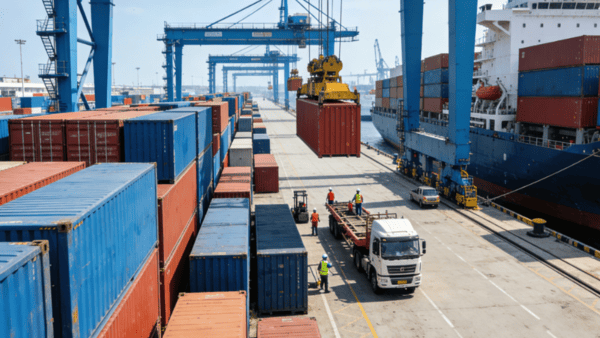
Schedule reliability at Asia’s major container ports deteriorated significantly in July. According to Sea-Intelligence, all 14 of the region’s busiest container ports reported lower schedule reliability. The figure fell to 21% in Shanghai and 34.6% in Ningbo-Zhoushan, while Yantian, Hong Kong, Singapore, and other major hubs also recorded declines. As port delays spread through liner networks, uncertainty over sailing schedules, transshipment connections, and cargo arrival times is increasing.
Key Highlights
• Declines across 14 ports: Schedule reliability fell at all 14 of Asia’s busiest container ports in July.
• Shanghai drops to 21%: Ningbo-Zhoushan, Yantian, and other major Asian ports also recorded declines.
• Global performance weakens: Global container vessel schedule reliability fell to 56.4%, while the average delay for late vessel arrivals rose to 6.06 days.
Why Did Schedule Reliability Fall Across Asia’s Major Ports?
Schedule reliability at Shanghai fell to 21% in July, one of the lowest levels recorded at the port in 14 years outside the extreme supply chain disruption of the pandemic. Reliability also declined at Ningbo-Zhoushan, Yantian, Hong Kong, Singapore, Port Klang, Busan, and other major Asian ports. The widespread decline shows that the deterioration was not confined to a single port.
Sea-Intelligence reported that schedule reliability declined at all 14 of Asia’s busiest ports in July, with port congestion identified as a major cause. Shanghai, Ningbo-Zhoushan, and other ports had also been affected by typhoons and other adverse weather. Combined with congestion, these conditions increased vessel queues and operational delays, further reducing schedule reliability. As several Asian export gateways and transshipment hubs were affected simultaneously, the disruption may extend beyond individual ports.
Global Schedule Reliability Also Falls as Delays Spread Through Liner Networks
The deterioration at major Asian ports is already being reflected across global liner networks. According to Sea-Intelligence, global container vessel schedule reliability fell to 56.4% in July, down 6.1 percentage points month on month. This was the sharpest single-month decline since January 2021. The average delay for late vessel arrivals increased by 0.59 days to 6.06 days.
Port congestion can create knock-on delays across the network. A late vessel arrival can reduce the time available for operations at the next port, affecting subsequent port calls, transshipment connections, and the vessel’s next sailing. With more than half of vessel arrivals at these ports running behind schedule, backlogs of vessels and cargo could spread to other points in the mainline network. Sea-Intelligence expects the disruption to contribute to further delays on major deep-sea trades over the coming months.
How Could Export Schedules Be Affected?
For cargo owners and freight forwarders arranging shipments in the near term, the main concern is lower schedule reliability rather than a widespread shutdown of Asian ports. Shipments moving through Shanghai, Ningbo-Zhoushan, Yantian, Singapore, and other major hubs require closer checks of actual departure times, terminal cut-off times, and transshipment connections.
For transshipment cargo, a late arrival on the first leg may leave less time to make the onward connection. Shipments with fixed delivery deadlines may also require additional time to account for late departures, rolled containers, or changes to subsequent sailings. Port congestion in Asia also remains closely linked to capacity deployment on deep-sea services. Cargo owners and freight forwarders should therefore continue to monitor carrier changes to sailings, schedules, and service rotations.
The simultaneous decline in schedule reliability at several major Asian hubs is more significant than congestion at any one port because of its potential effect on the reliability of the wider liner network.
Sources and Disclaimer
Sources include Sea-Intelligence and publicly available shipping industry information. This article is provided solely for reference by the international logistics and freight forwarding industry. Specific arrangements remain subject to the latest notices issued by the relevant ports, carriers, and authorities.

Last
Philippine Containership Loses 47 Containers Overboard; Coast Guard Issues Navigational Warning
On September 3, a Philippine inter-island containership encountered rough seas off Batangas Province and lost 47 containers overbo

Next
CMA CGM Subsidiary CEVA Faces Lawsuit Over Employee Data Allegedly Stolen in Cyberattack
CEVA Logistics, a subsidiary of the CMA CGM Group, is facing legal action over a cyberattack in late July. On August 24, former CE
