More Carriers Resume Suez Canal Transits as Red Sea Traffic Gradually Returns
Logistics News
 7-Sep-2026
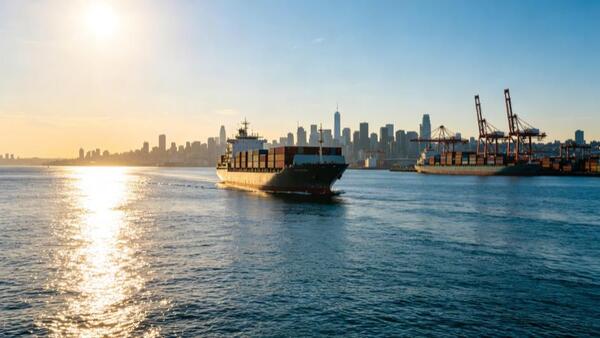
After more than a year of diversions around the Cape of Good Hope, a growing number of container ships are cautiously returning to routes through the Bab el-Mandeb, the Red Sea, and the Suez Canal. On September 1, Seatrade Maritime reported, citing Linerlytica data, that the number of container ships passing through the Bab el-Mandeb was gradually increasing. CMA CGM, Maersk, MSC, Wan Hai, COSCO, and other carriers have all operated sailings through the route. However, the current shift remains limited to selected services and sailings and should not be viewed as a full resumption of Red Sea services.
Key Highlights
• Selected sailings: CMA CGM, Maersk, MSC, and other carriers have resumed some Suez Canal transits.
• Capacity pressure: Congestion at Asian ports and continued diversions around the Cape of Good Hope are tying up substantial containership capacity.
• Phased return: Services are returning gradually, while security risks in the Red Sea have not been fully resolved.
CMA CGM, Maersk, and MSC Resume Selected Suez Canal Transits
Recent vessel movements indicate that carriers are moving beyond isolated trial sailings and beginning to restore selected scheduled services. According to Linerlytica data, CMA CGM had completed 15 Suez Canal transits by early September, while Maersk had completed 11. CMA CGM, Maersk, and MSC have all operated both northbound and southbound transits, while Wan Hai and COSCO have also sent vessels through the route.
Maersk has provided one of the clearest examples of this shift. On August 10, Maersk and Hapag-Lloyd announced that the Gemini Cooperation’s AE19 service would switch from routing around the Cape of Good Hope to transiting the Suez Canal and the Red Sea, effective immediately. Berlin Maersk operated the first sailing under the revised routing. On August 24, MSC announced that, following an assessment of the latest security and operating conditions in the Red Sea, it would partially resume Suez Canal transits on selected east–west services. The change covers services connecting Asia with the Mediterranean and Northern Europe, as well as India with the Mediterranean, and is being introduced gradually across different routes.
Carriers Reassess Diversion Costs amid Capacity Pressure
Carriers are reconsidering Suez Canal routing not only because of recent changes in Red Sea security conditions, but also because of continued pressure on global effective capacity. Linerlytica data shows that approximately 4.3 million TEUs of containership capacity are currently affected by congestion at Asian ports, exceeding the pandemic-era peak of around 4 million TEUs. Meanwhile, diversions around the Cape of Good Hope continue to absorb approximately 5%–7% of global containership capacity, equivalent to around 1.7 million–2.4 million TEUs.
Longer voyages reduce vessel turnaround efficiency and the number of sailings a fleet can complete, requiring carriers to deploy additional capacity to maintain existing schedules. With capacity currently tight, the safe resumption of Suez Canal transits on selected services could gradually release some of the vessel capacity tied up by longer diversions. This is another important reason carriers are reassessing their Red Sea routing.
How Far Has the Suez Canal Resumption Progressed, and What Does It Mean for Shipments?
The current shift is best understood as a resumption of selected services rather than a full return to Red Sea routing. Maersk’s adjustment applies specifically to the Gemini Cooperation’s AE19 service, while MSC has explicitly described its move as a “partial resumption.” This indicates that carriers are proceeding gradually based on route-specific security conditions. Security risks in the Red Sea and the Bab el-Mandeb have not been fully resolved, and MSC has continued to issue risk-related notices and announce surcharge arrangements for affected routes.
For shipments between Asia and Europe and on related Mediterranean routes, transit times should therefore not be calculated on the assumption that Suez Canal routing has fully resumed. When booking cargo, shippers and freight forwarders should confirm whether the specific carrier and sailing will transit the Suez Canal and the Red Sea, and whether further schedule changes are possible. If more mainline services continue to return, some of the vessel capacity absorbed by prolonged diversions around the Cape of Good Hope could be released, potentially affecting schedules, effective capacity, and freight rates on Asia–Europe routes.
Current developments indicate that Suez Canal services are gradually returning, but a full resumption remains some way off. In the near term, the main factors to watch are whether carriers continue to expand the scope of resumed services and whether security conditions in the Red Sea remain stable. For time-sensitive cargo, shipment planning should continue to be based on the specific booked voyage and the latest carrier notices, with extra time allowed for possible delays.
Sources and Disclaimer
Sources include Linerlytica, Seatrade Maritime, Maersk, MSC, and other publicly available shipping industry information. This article is provided solely for reference by the international logistics and freight forwarding industry. Specific arrangements remain subject to the latest notices issued by the relevant authorities and carriers.
Last
Strait of Hormuz Tensions Rise as Trump Proposes 'Trump Strait'; Merchant Shipping Risks Persist
U.S. President Donald Trump has again drawn attention with remarks made as tensions in the Strait of Hormuz remain high. On Septem
Next
Russian Vessel Arrested in Norway as Naftogaz Seeks Enforcement of USD 4.22 Billion Award
Norwegian authorities arrested the Russian vessel Professor Molchanov at the Port of Barentsburg in Svalbard on September 2. The a
