91% of Reported Tanker Transits 'Go Dark' as 150 Vessels Gather in the Gulf of Oman: Shipping Continues Through the Strait of Hormuz as Operating Patterns Change
Logistics News
 25-Aug-2026
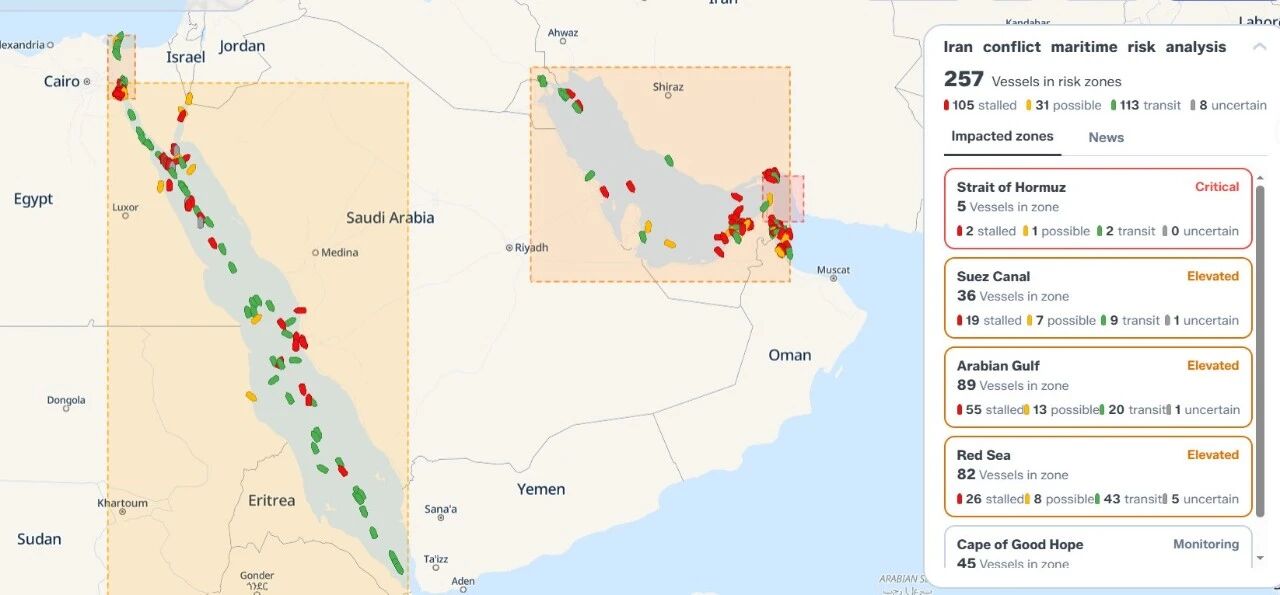
Risks to commercial shipping through the Strait of Hormuz continue to rise, but crude oil transportation has not stopped completely. Following a series of attacks on ADNOC-linked vessels, some shipowners have sought to keep energy shipments moving by switching off Automatic Identification System (AIS) signals, conducting ship-to-ship (STS) transfers at sea, and changing loading locations. Data show that in the week ending August 16, approximately 91% of certain tanker transits through the Strait of Hormuz took place with AIS switched off. Meanwhile, around 150 vessels were gathered near the Gulf of Oman awaiting transfers.
Key Highlights
• Tanker transits “go dark”: Approximately 91% of certain tanker transits took place with AIS switched off, reducing the public visibility of vessel locations.
• Vessels gather in the Gulf of Oman: Around 150 vessels were waiting near the Gulf of Oman as demand for STS transfers increased significantly.
• ADNOC-linked vessels attacked: Fifteen ADNOC-linked vessels have been attacked, including three incidents during one week in August.
• Operating patterns change: Shipowners are using STS transfers, regional shuttle operations, and alternative export routes to reduce risk.
The Strait of Hormuz Remains Open, but Transit Patterns Are Changing
A rise in attacks on commercial vessels has further increased shipping risks around the Strait of Hormuz. On August 13, the ADNOC-linked vessels Navig8 Messi and Tarif were attacked by drones. On August 14, the Liberian-flagged bulk carrier Al Watan was struck by an unidentified projectile near shipping lanes off Oman. The vessel sustained damage, but its crew remained safe. Citing information from ADNOC, Reuters reported that 15 ADNOC-linked vessels have been attacked by missiles and drones while transiting the Strait of Hormuz since the conflict began, including three incidents during one week in early August.
The increase in risk, however, does not mean that all commercial shipping has stopped. Vessels are still transiting the strait, although overall traffic is significantly below pre-conflict levels. On August 19, Reuters cited Kpler data showing that only six vessels carrying commodities passed through the strait that day, below the previous daily average. Traffic remained low on August 20, when seven vessels carrying commodities transited the strait, with no VLCCs or LNG carriers recorded.
The current situation is therefore more accurately described as some energy shipments continuing under changed operating arrangements, rather than normal navigation through the Strait of Hormuz. Shipowners are adjusting their transportation methods and reducing their exposure to risk.
91% of Tanker Transits Take Place with AIS Switched Off as Around 150 Vessels Gather in the Gulf of Oman
One of the most notable developments is the sharp increase in tanker transits with AIS switched off, commonly referred to as “going dark.” This reduces the public visibility of vessels’ real-time locations. Switching off AIS does not mean that a vessel has stopped sailing, nor does it necessarily mean that every vessel involved is concealing its transportation activities.
In the week ending August 16, approximately 91% of the relevant tanker transits through the Strait of Hormuz took place with AIS switched off. Under heightened security risks, this reduces the public visibility of vessel locations in real time.
STS transfers at sea are also becoming an increasingly important part of energy transportation. Satellite and vessel-tracking data show that around 150 vessels are currently gathered near the Gulf of Oman awaiting transfers, significantly more than the previous level of approximately 40 vessels. Some transportation chains are shifting toward a model in which regional tankers carry crude oil to the Gulf of Oman for STS transfer to larger tankers, which then complete the long-haul voyage. This allows larger tankers to continue long-distance transportation without entering higher-risk areas.
The risks surrounding the Strait of Hormuz are therefore no longer limited to whether vessels can transit the waterway. Cargo transfer locations, the types of vessels operating on higher-risk voyage legs, and arrangements for subsequent long-haul transportation are also becoming increasingly important.
Saudi Arabia Resumes Crude Loading, but Alternative Routes Also Face Challenges
Saudi Arabia is also adjusting its crude oil transportation arrangements in response to the security situation. Reuters previously reported that Saudi Aramco had resumed some crude loading operations inside the Strait of Hormuz, with at least three VLCCs completing loading between August 12 and 16. Saudi Aramco has also offered some Asian buyers crude oil loaded through STS transfers.
In addition to offshore transfers, Saudi Arabia has previously sought to redirect some crude exports through the Red Sea and Egypt’s Sidi Kerir terminal to reduce its reliance on the Strait of Hormuz. These alternative routes also carry additional costs. Longer voyages increase transportation expenses, while security risks in the Red Sea create further uncertainty.
For freight forwarders and trading companies, the main issue is no longer simply whether the Strait of Hormuz is open or closed. Attention should instead be given to changes in tanker loading locations, the addition of STS transfers, possible schedule disruptions, and further increases in insurance costs. If these operating patterns continue, the effects could extend to tanker freight rates, war-risk insurance, and energy supply arrangements for Asia.
Sources
Reuters, ADNOC, the UK Maritime Trade Operations (UKMTO), and publicly available shipping information. This article is provided solely for reference within the international logistics, freight forwarding, and shipping industries. Specific vessel, route, and cargo arrangements are subject to the latest information from the relevant shipowners, ports, and authorities.
Last
FedEx, Ryder, and Other Logistics Companies Scale Back, with Over 7,000 U.S. Supply Chain Jobs Affected
The U.S. freight and logistics market is undergoing another round of adjustments. The latest Freight Distress Report shows that ap
Next
Indian Ports Accelerate Clearance of Long-Dwell Containers, with October 31 Reported as Target Date
Indian ports are stepping up efforts to clear long-dwell containers. According to an August 19 report by Indian industry publicati
