Maersk Accelerates Red Sea Return as Around One-Third of Traffic Shifts Back to Suez, but Full Resumption Will Take Time
Logistics News
 20-Aug-2026
Maersk is gradually shifting some Asia–Europe services from the Cape of Good Hope back to the Red Sea and the Suez Canal. According to public reports from Lloyd’s List, Reuters, and other sources, the carrier believes that security conditions in some areas now allow for the resumption of Red Sea services. Maersk CEO Vincent Clerc said that approximately one-third of the traffic that would normally use the route is now transiting the Red Sea and the Suez Canal. This does not represent a full return, however, as security risks and congestion at European ports remain important factors affecting further adjustments.
Key Highlights
• Phased return: Maersk is gradually resuming services through the Red Sea and the Suez Canal.
• Around one-third of traffic shifted back: Four of 13 relevant services have returned to the Red Sea and Suez route.
• Services returning via Suez: AE15, MECL, WAF6, and AE19 have gradually resumed Trans-Suez sailings.
• European port congestion: A large-scale return could result in vessels reaching Europe within a shorter period.
• Freight rates may not fall sharply: Port and landside bottlenecks could continue to absorb some of the capacity released by shorter voyages.
• Asian container volumes continue to grow: Main-haul container volumes from Asia are increasing at an annual rate of approximately 7%.
Maersk Begins Returning to Suez as Four Services Shift Routes
Following the start of the Red Sea crisis, many container vessels were rerouted around the Cape of Good Hope. The longer voyages increased fuel consumption and extended transit times. As security conditions have improved, Maersk has gradually resumed some Trans-Suez services.
In July, the AE15 Asia–Mediterranean service resumed sailing through the Suez Canal. The MECL service returned to the Red Sea and added a call at Jeddah, while WAF6 was subsequently shifted to the Red Sea route. On August 10, the AE19 Gemini service also switched from the Cape of Good Hope to a Trans-Suez routing. Approximately one-third of the traffic that would normally use the route is now moving through the Red Sea and the Suez Canal.
Why Is Maersk Not Restoring All Services at Once?
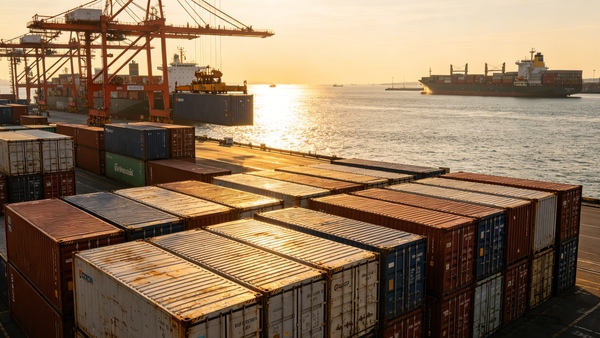
Security remains a key consideration for Maersk, but congestion at European ports is also limiting the pace of the return. If many vessels switch from the Cape of Good Hope to the Suez Canal at the same time, shorter voyages could cause them to reach Europe sooner and within a shorter period. For ports already facing pressure on terminals and landside logistics, the concentration of vessel arrivals could create further congestion.
Maersk is therefore restoring services individually. The carrier is monitoring changes across ports and its service network before moving the next service back to the Suez route, helping to avoid a concentration of vessel arrivals in Europe.
Return to Suez May Not Lead to a Sharp Fall in Ocean Freight Rates
A return to the Suez Canal shortens voyages, reduces fuel consumption, and improves vessel turnaround, helping carriers lower operating costs. This does not necessarily mean that a large amount of idle capacity will immediately enter the market.
Port congestion and landside logistics bottlenecks remain in Europe, and some of the effective capacity released by shorter voyages could continue to be absorbed by these constraints. A return to the Red Sea therefore cannot be directly equated with lower ocean freight rates. Future rates will continue to depend on the pace of service resumptions, port efficiency, and cargo volumes.
Asian Exports Continue to Grow as New Capacity May Not Immediately Create Oversupply
In addition to the Red Sea route, Maersk is monitoring export demand from Asia. Vincent Clerc said that main-haul container volumes from Asia are currently growing at an annual rate of approximately 7%. Products associated with electrification and infrastructure investment, including solar components, wind power equipment, and data center cooling equipment, are contributing additional cargo volumes.
At the same time, landside infrastructure such as ports, trucking networks, and rail systems has not expanded at the same pace. Although the global container ship orderbook is equivalent to approximately 40% of the existing fleet, continued growth in Asian exports means that the additional capacity may not immediately result in significant oversupply.
Red Sea services are moving from widespread diversions toward a gradual return. Security conditions in the Red Sea, the pace at which services return via the Suez Canal, congestion at European ports, and Asian export growth will continue to affect capacity and freight rates in the global container shipping market. Freight forwarders and trading companies should closely monitor the resumption dates of specific services, sailing schedule changes, and whether congestion at European ports continues to ease.
Source Note
This article has been compiled from publicly available information from Maersk, Reuters, Lloyd’s List, and other sources. It is provided solely for industry reference. Please refer to the latest carrier notices for specific sailing schedules, routes, and transportation arrangements.
Last
Hapag-Lloyd and ZIM to Launch New AS3 China-Brazil Service in September
Hapag-Lloyd and ZIM have announced plans to jointly launch a new Asia–South America East Coast service, known as AS3, on September
Next
Diana Shipping Withdraws Genco Acquisition Proposal After Nine Months of Talks as Dry Bulk Consolidation Deal Falls Through
Nearly nine months of acquisition talks in the dry bulk shipping sector have ended without an agreement. On August 17, local time,
