8 Million Barrels of Crude Oil Gather in the Arctic as Russia's Northern Sea Route Tanker Fleet Reaches Record Scale
Logistics News
 11-Aug-2026
Energy transportation along Russia’s Northern Sea Route (NSR) has recently increased sharply. According to industry information published by gCaptain on August 3, Russia has assembled an unprecedented tanker fleet in Arctic waters, with large volumes of crude oil preparing for shipment to Asia. Around 8 million barrels of crude oil are currently either in transit or waiting to enter the Arctic route, equivalent to about 60% of the total volume transported during the entire 2025 summer Arctic shipping season. This marks a significant acceleration in Russia’s Arctic energy exports.
Key Highlights
• Capacity surge: Around 8 million barrels of crude oil are currently in transit or waiting to enter the Arctic route, with Arctic export volumes rising sharply this year.
• Tanker concentration: Multiple types of tankers are gathering in the Kara Sea and preparing to sail east toward Asian markets with icebreaker support.
• Broader shipping activity: The Arctic route is expanding beyond energy transportation, with commercial container trial services now being introduced.
• Geopolitical factors: Rising risks in the Red Sea and the Middle East are increasing the strategic importance of the Arctic route.
• Current limitations: Russia remains the main operator of navigation support along the route, which is unlikely to replace traditional shipping corridors in the short term.
Large Tanker Fleet Gathers as Arctic Crude Oil Exports Accelerate
The latest concentration of vessels is centered in the Kara Sea, where more than ten Suezmax, Aframax, and medium-range tankers are waiting to proceed. Once ice conditions improve or nuclear-powered icebreaker support becomes available, the vessels will sail east along the Northern Sea Route toward Asian markets.
For comparison, total crude oil transportation through the Arctic during the entire 2025 summer shipping season reached 13.1 million barrels. Only a short time into the current season, around 8 million barrels are already in transit or waiting to sail, indicating that Russia is rapidly expanding the use of the Arctic route for energy exports.
Arctic Route Expands from Sanctioned Energy Shipments to Commercial Shipping Trials
The Arctic route has previously been widely viewed as a channel used by Russia to transport energy supplies under sanctions. In 2025, several sanctioned tankers used the route to transport oil and gas, drawing international attention over safety, environmental, and regulatory concerns. The route is now also being explored for broader commercial shipping.
This year, South Korea’s PanStar launched the country’s first commercial container trial service through the Arctic. The vessel will depart from Busan and travel directly to Europe via the Northeast Passage, calling at major ports including Rotterdam and Hamburg.
The development means the Arctic route is no longer limited to energy transportation and is beginning to be tested for commercial container shipping between Asia and Europe.
Geopolitical Risks Drive Greater Use of Alternative Shipping Routes
In recent years, instability in the Red Sea and geopolitical tensions surrounding the Strait of Hormuz have increased uncertainty along traditional energy shipping corridors. Against this backdrop, the Arctic route has gained greater importance as an alternative shipping option.
As Western sanctions have continued, Russia has increasingly redirected its energy exports toward Asia. The Northern Sea Route has become an important part of its cross-border energy transportation network. The sharp increase in shipping capacity this season reflects how geopolitical developments are influencing the use of international shipping routes.
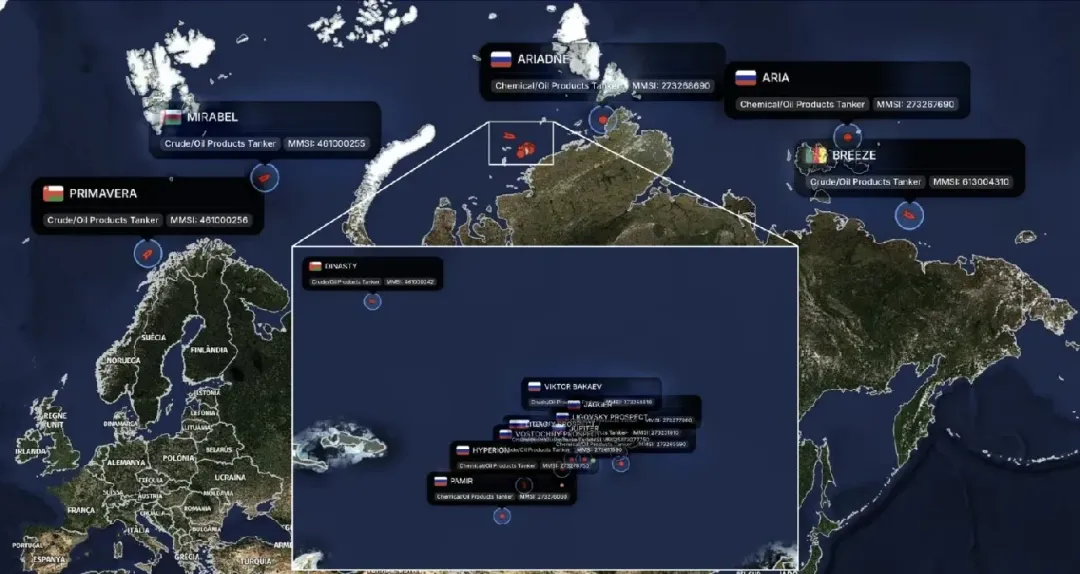
▷ Tankers on the Arctic route on August 3, 2026 (MagicPort maritime intelligence)
Russia Remains the Main Operator, but the Route Cannot Replace Traditional Shipping Corridors in the Near Term
Navigation support and route management along the Northern Sea Route are currently controlled by Russia. During this year’s shipping season, Russia has deployed three nuclear-powered icebreakers — Sibir, Yakutia, and Ural — across Arctic waters to provide navigation support.
However, the Arctic route continues to face significant operational limitations. Its navigable window is heavily restricted by seasonal conditions and sea ice, while vessels must meet specific polar-class requirements. Many sections of the route also depend on icebreaker assistance.
As a result, the route currently serves only certain cargo types and specific trade lanes and cannot fully replace traditional international shipping networks.
Industry Observations and Logistics Reference
As polar infrastructure develops, commercial trial services are introduced, and geopolitical risks remain elevated, the Arctic route has become an important area for the global shipping industry to monitor. Its future development will depend on four main factors: the international trade environment, geopolitical conditions, navigational safety capabilities, and Arctic infrastructure.
For companies involved in energy trading and Asia–Europe logistics, continued expansion of Arctic shipping capacity and a broader range of cargo operations could make the route an alternative when traditional shipping routes face congestion or elevated risks. Its development should therefore be monitored over the longer term.
Sources
gCaptain, MagicPort maritime intelligence, and publicly available industry information
Timeliness Note
As of early August 2026, Arctic energy transportation remains active. PanStar’s commercial trial service is expected to begin in September, with further developments subject to the latest official announcements.
Disclaimer
The information in this article is sourced from publicly available channels and is provided solely for industry reference. It does not constitute commercial advice, booking guidance, or logistics operating guidance.
Last
Red Sea Risks Rise as Houthis Target Saudi Vessels and UKMTO Issues Gulf of Aden Navigation Alerts
Shipping security risks in the Red Sea and Gulf of Aden have risen again. On August 5, local time, the Houthis announced attacks o
Next
ONE to Introduce CRD-Based Freight Rating from September, with Europe and Africa Exports Priced by Actual Cargo Receiving Date
Ocean Network Express (ONE) has announced a major change to its freight rating rules. Effective September 1, 2026, export shipment
