Sea-Intelligence and Xeneta Report Widely Different Schedule Reliability Figures as Global Service Stability Remains Below Normal
Logistics News
 11-Aug-2026
Global liner schedule reliability in June 2026 has drawn industry attention after Sea-Intelligence and Xeneta released significantly different figures. Sea-Intelligence reported global schedule reliability of 62.6%, while Xeneta reported 37%. The gap is mainly due to differences in methodology, but both datasets indicate that global shipping schedule stability remains weak. Port congestion, service adjustments, and geopolitical disruptions continue to affect transit times, resulting in uneven service performance for shippers.
Key Highlights
• Data gap: The two major shipping data providers reported a difference of nearly 26 percentage points in schedule reliability, mainly due to different measurement methodologies.
• Carrier performance: Maersk and Hapag-Lloyd remained among the strongest performers, while Wan Hai Lines recorded the lowest June on-time performance at 35.6%.
• Alliance performance: Gemini remained well ahead in schedule reliability, while performance among the other two major alliances was more mixed.
• Congestion patterns: Port waiting times were highest in Africa, the Indian Subcontinent, and Southeast Asia, while congestion in the Middle East was heavily affected by geopolitical conditions.
• Industry trend: Freight forwarders and shippers are placing greater emphasis on schedule reliability rather than freight rates alone.
Different Methodologies Lead to Widely Different Schedule Reliability Figures
According to Seatrade Maritime News, Sea-Intelligence and Xeneta both released updated schedule reliability reports covering mid-2026, but their June figures differed significantly. Sea-Intelligence reported global liner schedule reliability of 62.6%, while Xeneta reported only 37% for the same period.
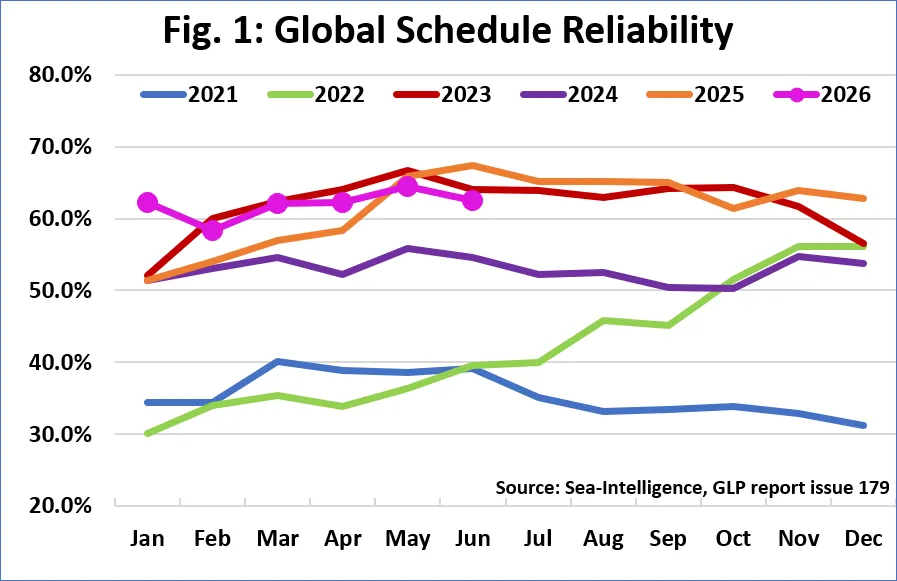
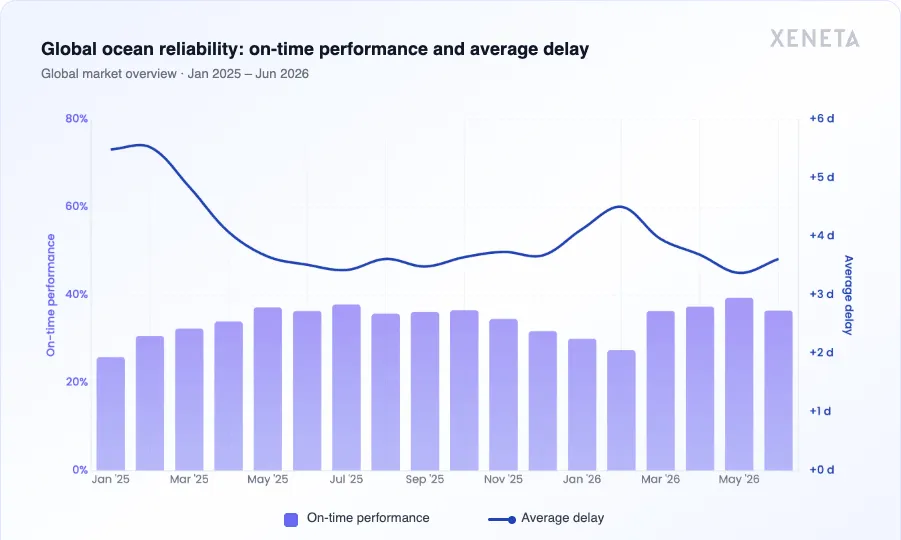
The difference mainly reflects their measurement methodologies. Sea-Intelligence focuses on actual vessel arrival and departure performance, with greater emphasis on actual operating results. Xeneta measures performance against the original published schedule, meaning that service adjustments and voyage changes may also be counted as delays.
Despite the difference in figures, both reports indicate that global liner service reliability remains below market expectations and that recurring delays continue to affect supply chains.
Carrier Performance Shows a Clear Divide
Sea-Intelligence’s June carrier data showed significant differences in schedule reliability. Maersk ranked first with an on-time performance of 77.1%, followed by Hapag-Lloyd at 75.6% and MSC at 72.1%. COSCO Shipping remained within the 60%–70% range.
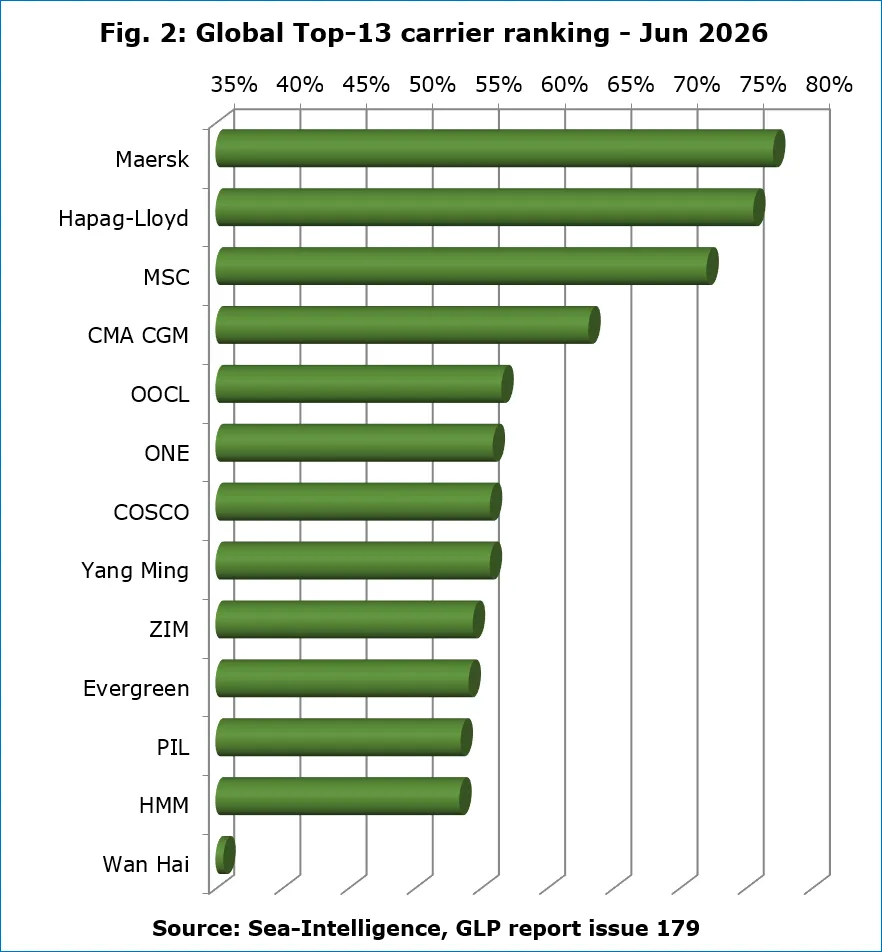
Most carriers recorded schedule reliability between 50% and 60%. Wan Hai Lines ranked lowest in June, with an on-time performance of only 35.6%, well below the industry average.
Gemini Maintains a Clear Lead in Alliance Schedule Reliability
Differences in schedule reliability among the three major shipping alliances remained significant. According to Sea-Intelligence data for May and June 2026, the Gemini alliance recorded schedule reliability of around 90% on major Asia–Europe and trans-Pacific routes. Based on overall port-to-port arrivals, its schedule reliability stood at 76.8%, still the highest among the three alliances.
During the same period, Ocean Alliance recorded 67.6%, while Premier Alliance recorded 53.6%.
Xeneta’s second-quarter data showed a similar gap. Gemini recorded average schedule reliability of 68%, with an average delay of only 1.1 days, while Ocean Alliance recorded 39%.
Port Congestion Remains Most Severe in Africa, the Indian Subcontinent, and Southeast Asia
According to Xeneta’s second-quarter data, based on average vessel waiting time at ports, Africa recorded the longest waiting time at 3.1 days, followed by the Indian Subcontinent at 2.6 days and Southeast Asia at 2.3 days. Lower terminal operating efficiency and slower yard turnover were the main contributing factors.
Congestion in the Middle East showed a different pattern and was largely driven by geopolitical conditions. Due to navigation risks in the Strait of Hormuz, the average number of vessels transiting the area each day fell from 24 to 2, leaving a large number of vessels waiting at Jebel Ali and creating temporary congestion.
If Jebel Ali is excluded from the data, the Middle East would no longer rank among the three regions with the longest port waiting times, showing the significant impact of geopolitical risks on Middle East routes on shipping schedules.
Schedule Reliability Gains Importance in Carrier Selection
The current shipping market shares some characteristics with the pandemic period: freight rates have strengthened and carrier profitability has recovered, while service reliability has continued to weaken. Blank sailings, port omissions, port congestion, and geopolitical disruptions continue to affect normal schedule performance.
Industry sources have reported that some carriers cancel severely delayed sailings or adjust service schedules, which can improve reported schedule reliability figures to some extent.
Trading companies and logistics companies are therefore placing greater emphasis on schedule reliability, service stability, and the ability to respond to disruptions instead of focusing on freight rates alone.
Operational Alerts and Recommended Actions for Freight Forwarders and Trading Companies
With global schedule volatility remaining common, freight forwarders and trading companies are advised to give greater consideration to carriers and alliances with stronger schedule reliability, including Gemini, Maersk, and Hapag-Lloyd.
For shipments involving Africa, the Indian Subcontinent, and Southeast Asia, sufficient transit-time buffers should be allowed due to the higher risk of port congestion. Developments affecting Middle East routes should also be monitored closely to reduce the risk of port delays and unexpected disruptions.
Freight rates and service reliability should be assessed together to reduce uncertainty in supply-chain execution.
Sources
Seatrade Maritime News, Sea-Intelligence, and official Xeneta shipping reports
Timeliness Note
The core data covers the second quarter through June 2026. Global port congestion and schedule volatility remain ongoing.
Disclaimer
The information in this article is sourced from publicly available channels and is provided solely for industry reference. It does not constitute commercial advice, booking guidance, or logistics operating guidance.
Last
SCI Launches USD 720 Million Tender for LNG Dual-Fuel Container Ships as India Expands Domestic Shipping Capacity
India’s state-owned shipping company SCI has recently launched a global shipbuilding tender for up to six 8,000 TEU LNG dual-fuel
Next
Maersk Cuts Near-Term PSS but Announces Later Increases on Latin America Routes, Using a Two-Track Rate Strategy
Maersk has made another targeted pricing adjustment during the peak shipping season. In early August, the carrier issued two conse
