Black Sea Shipping Risks Escalate as Grain Vessel Sinking Impacts Route Insurance and Supply Chains
Logistics News
 29-Jul-2026
Geopolitical tensions in the Black Sea continue to intensify, bringing another major black swan event to regional shipping. Following a series of maritime attacks, another fatal vessel sinking has occurred in the Black Sea, undermining expectations that limited navigation in the region could remain safe.
According to information confirmed by the Ukrainian Sea Ports Authority, Reuters, and The Maritime Executive, the grain carrier Golden Leo, which remained damaged and adrift for one week after being attacked, eventually sank in the Black Sea near Odesa. The incident caused significant casualties and cargo losses and is expected to reshape route risk ratings, operating rules, and cost structures across Black Sea shipping.
The incident has exposed a key risk in Black Sea shipping: ports may remain operational while the entire voyage remains highly dangerous. Shipowners, freight forwarders, and trading companies must therefore strengthen risk control across the entire transport chain, while the stability of the regional grain supply chain has also come under significant pressure.
Key Highlights
• Fatal vessel sinking: The grain carrier Golden Leo was attacked, sustained hull damage and water ingress, and sank after drifting for one week, resulting in multiple fatalities.
• Changing safety assessment: The resumption of port operations does not mean that shipping lanes are safe. The entire Black Sea voyage is now subject to high-risk controls.
• Rising industry costs: War-risk insurance premiums, route surcharges, and transshipment costs are all expected to increase, requiring adjustments to existing quotation structures.
• Supply chain impact: Ukrainian grain exports are being disrupted, increasing uncertainty across global agricultural supply chains.
Incident Details: Grain Carrier Attacked at Sea and Sinks After Sustaining Severe Damage
Key conclusion: A single attack caused permanent structural damage to the vessel, demonstrating the fatal and destructive risks posed by recurring attacks in the Black Sea.
The vessel involved, Golden Leo, was sailing under the flag of Guinea-Bissau and operated by a Turkish shipping company. It was fully loaded with Ukrainian corn and was sailing through an officially designated Ukrainian maritime safety corridor toward a Romanian port. The vessel was engaged in a normal and compliant commercial voyage.
The vessel was attacked in the Black Sea on July 19. It sustained major structural damage and continuous water ingress. It could not be repaired at sea or continue normal navigation and was left adrift while awaiting rescue.
After taking on water for one week, the vessel sank completely on July 26. The incident resulted in 10 fatalities, including nine crew members and one Ukrainian maritime pilot. Only eight crew members were rescued.
To date, Russia has not issued any public response regarding the attack or the vessel sinking. Ukrainian authorities have formally reported the incident to the International Maritime Organization (IMO) and the shipowner concerned.
Further procedures may include international accountability action and route-risk reporting, adding further compliance and risk control pressure to Black Sea operations.
Key Shift in Black Sea Shipping: Risk Expands from Isolated Areas to the Entire Transport Chain
Key conclusion: Risk assessments for Black Sea shipping must now cover loading, navigation, and port calls throughout the entire voyage.
For a long time, many carriers and freight forwarders assessed the safety of Black Sea navigation mainly by whether Ukrainian ports remained operational. This approach overlooked potential risks along coastal shipping lanes and the wider sea passage.
As regional tensions have continued to escalate, attacks targeting deep-water ports and outbound shipping lanes in southern Ukraine have increased significantly, making traditional risk assessment methods no longer sufficient.
The sinking of Golden Leo clearly demonstrates that even when Ukrainian ports maintain basic cargo-handling operations and designated shipping corridors remain open, the entire Black Sea passage after departure may still be exposed to uncontrollable high-risk conditions.
Port operational safety and maritime navigation safety must be assessed separately. A single incident may result in a vessel sinking, total cargo loss, and casualties.
Market participants expect major shipowners and charterers to tighten route acceptance criteria for Black Sea services and reassess operating costs in high-risk waters. Sailing schedules, vessel deployment, and insurance underwriting conditions are likely to undergo systematic adjustment.
Black Sea shipping has entered a period of high risk, high premiums, and high volatility.
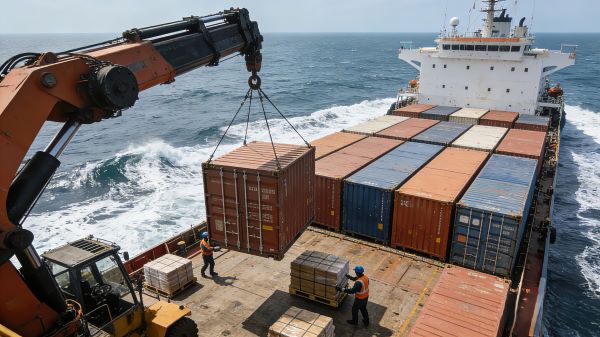
Industry-Wide Impact: Routes, Insurance, Transit Times, and Costs Under Pressure
Key conclusion: Risks are spreading across the entire logistics chain. Freight forwarders and trading companies must update their Black Sea operating and quotation systems.
Frequent high-risk incidents in the Black Sea do not affect shipowners alone. Transshipment arrangements, insurance costs, delivery schedules, and order fulfillment throughout the logistics chain will also be significantly affected.
Route Restructuring Accelerates as Transshipment Becomes the Main Alternative
To reduce exposure to maritime attacks, major carriers may continue to reduce direct Black Sea sailings, tighten port-call policies, and decrease the frequency of direct calls at Ukrainian ports.
Large volumes of grain and general cargo previously exported through Ukrainian Black Sea ports may be redirected through safer ports in neighboring countries, including Romania.
Longer transport distances, additional transshipment procedures, and more complex sea-land connections will directly reduce overall transport efficiency and increase operating costs. Existing transport arrangements will therefore need to be adjusted.
Freight forwarders can use the platform’s Company Directory to identify reliable local partners in Romania, arrange transshipment more efficiently, reduce overseas cooperation risks, and maintain stable cargo movements.
Insurance Costs Rise Sharply, Further Compressing Quotation Margins
Risk ratings for the Black Sea continue to increase, placing greater pressure on war-risk and marine insurance underwriting.
Based on the way risks have affected insurance costs in the Strait of Hormuz, war-risk premiums for Black Sea routes are likely to increase significantly. Route-risk surcharges, emergency handling fees, and other related costs may also rise.
Freight forwarders that continue using previous quotation structures may face situations in which actual costs exceed quoted rates, resulting in losses.
New risk premiums and additional operating expenses must therefore be incorporated into routine quotation calculations.
Transit Times Become Highly Unstable, Increasing Order Fulfillment Risks
Black Sea routes are currently affected by multiple uncertainties, including geopolitical attacks, temporary navigation restrictions, emergency carrier schedule changes, and sudden port controls.
Vessel delays, port congestion, last-minute diversions, and emergency service suspensions are increasingly common.
For trading orders and grain export shipments with strict delivery requirements, overall fulfillment reliability has declined significantly.
Without adequate alternative transport arrangements, companies may face customer complaints, contractual defaults, compensation claims, and other operating risks.
Global Grain Supply Chains Come Under Pressure as Market Volatility Increases
Ukraine is one of the world’s major grain exporters. Large volumes of agricultural commodities, including corn and wheat, depend heavily on Black Sea routes for export.
The stability of Black Sea navigation therefore directly affects global grain supply schedules and price movements.
The sinking has significantly weakened market confidence in the safety of regional navigation. If attacks continue, shipowners may become increasingly reluctant to operate in the area, potentially leading to a further reduction in grain export sailings.
Slower Ukrainian grain exports, tighter overseas supply, limited regional shipping capacity, higher insurance premiums, and rising transshipment costs may gradually pass through the logistics chain to global end markets.
This could further increase price volatility and supply chain uncertainty in international grain trade.
Operational Alerts and Recommended Actions for Freight Forwarders: Black Sea Route Risk Control Is Now Mandatory
Black Sea shipping risk has shifted from an issue requiring optional attention to a mandatory risk-control requirement.
All logistics companies involved in import and export business connected with Ukraine or the Black Sea must upgrade their operating standards, avoid relying on optimistic assumptions, and address potential operating risks in advance.
Black Sea Routes: Comparison Between Compliant Risk-Control Practices and High-Risk Practices
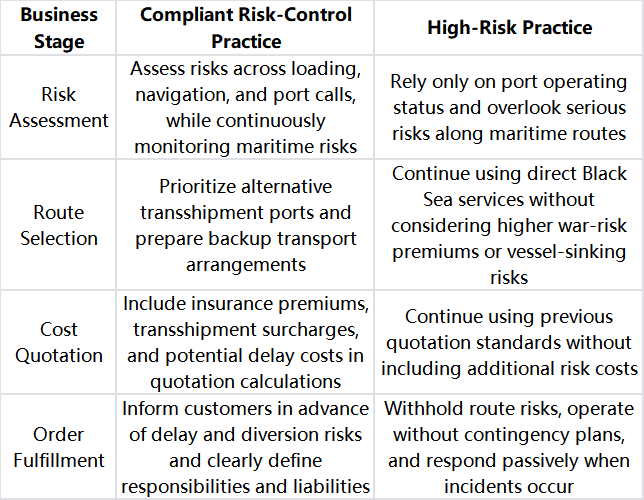
Uncertainty across Black Sea routes is now extremely high. Relying on optimistic assumptions, accepting shipments at unsustainably low rates, or overlooking risk control may result in total cargo loss, substantial compensation claims, and customer losses.
Freight forwarders should proactively explain the risks to customers and manage expectations. They should also monitor carrier schedule adjustments, maritime restrictions, and new insurance requirements in real time to maintain operational safety.
Three Self-Check Questions for Freight Forwarders
• Has the entire transport chain been properly assessed? Has the company moved beyond port-only assessments and completed a full-voyage risk review for Black Sea shipments?
• Are quotation costs being updated in real time? Have higher insurance premiums, transshipment expenses, delay costs, and other potential charges been included?
• Have contingency plans been implemented in advance? Are alternative routes available for current orders, and have responsibilities and liabilities for unexpected incidents been clearly defined?
Industry Summary
Overall, Black Sea shipping has entered a prolonged period of elevated risk. Route volatility, rising costs, and order fulfillment risks resulting from geopolitical conflict are likely to persist.
Logistics companies must conduct routine risk assessments, adjust transport arrangements as conditions change, and clearly define contractual responsibilities and liabilities.
These measures can help reduce operating losses and cooperation risks and maintain stable cross-border logistics operations in the Black Sea region and surrounding markets.
Sources: Ukrainian Sea Ports Authority, Reuters, The Maritime Executive, World Ports
Disclaimer: This content is based on publicly available information and is provided for industry reference only. It does not constitute commercial or logistics operating advice.
Last
New Kenya Import Compliance Rule Takes Effect on August 3: ACD Filing Mandatory and Reference Code Required on Bills of Lading
Compliance requirements for cross-border logistics in Africa are tightening again as Kenya introduces a new import control system.
Next
La Guaira Port Begins Phased Reopening After 28-Day Shutdown: Venezuela Service Schedules, Shipping Rules, and Port Change Costs Explained
La Guaira Port, Venezuela’s main port, has officially announced a phased reopening after being fully shut down for nearly a month
