From Logistics Journalist to Downing Street: New UK Prime Minister Andy Burnham May Reshape Freight and Supply Chain Policy
Logistics News
 22-Jul-2026
Introduction: A politician with a background in specialist logistics journalism has formally taken office as Prime Minister of the United Kingdom. According to reports from the BBC, Associated Press, Reuters and Xinhua News Agency, Andy Burnham, who previously worked for a publication covering tank containers and bulk logistics, was appointed Prime Minister on July 20 and formed a new Cabinet. His move from the industry press to 10 Downing Street gives him an uncommon perspective on freight and supply chains that may influence future UK policy on port infrastructure, freight transport and cross-border supply chains, with long-term implications for China–Europe and China–UK routes, freight forwarders and foreign trade companies.
Leadership Confirmed: Strong Support Secures Labour Leadership before Burnham Takes Office on July 20
The Labour Party leadership nomination process began on July 9. Andy Burnham secured overwhelming support, receiving nominations from 379 Labour MPs and 23 affiliated organizations, well above the required threshold and leaving him unopposed in the leadership contest.
On July 17, the Labour Party formally announced Burnham as its new leader and proceeded with the transfer of power under the United Kingdom’s constitutional process.
On July 20, Burnham was appointed Prime Minister by King Charles III at Buckingham Palace. He subsequently entered 10 Downing Street and formed a new Cabinet.
Burnham has become the United Kingdom’s seventh prime minister in ten years. The orderly transfer of power may provide greater short-term political stability and improve market expectations for the UK economy, foreign trade and cross-border logistics.
An Unusual Professional Background: Beginning His Career in Tank Container Journalism
Unlike many Western politicians whose careers began in law, academia or public administration, Burnham started his professional career in specialist logistics publishing.
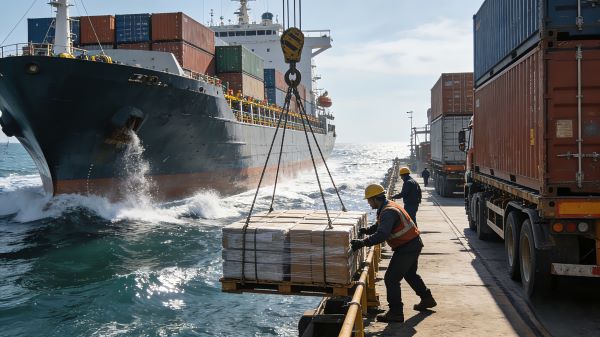
After graduating from the University of Cambridge, Burnham joined Tank World in October 1991. The publication was a predecessor of today’s Bulk Distributor and covered tank containers, intermediate bulk containers, rail tanks, bulk liquid logistics and multimodal transport.
During his time in journalism, Burnham reported on industrial transport, rail tank operations and the cross-border movement of bulk liquids. This makes him one of the few national leaders with professional journalism experience covering specialist logistics and industrial bulk transport.
Patrick Hicks, founder and publisher of Tank World, recalled in an industry interview that Burnham was diligent, approachable and strongly interested in the logistics industry.
This specialist publishing experience gave Burnham early exposure to freight transport, multimodal operations and the practical issues facing industrial supply chains.
In 1994, Burnham left the media industry to become a research assistant to Labour MP Tessa Jowell, beginning his political career.
He was elected to the House of Commons in 2001 and later held several senior government positions under Tony Blair and Gordon Brown, including Chief Secretary to the Treasury, Culture Secretary and Health Secretary.
In 2017, he left Parliament to become Mayor of Greater Manchester and was subsequently re-elected for three terms. During his time in regional government, transport and infrastructure were central parts of his policy agenda.
Burnham returned to Parliament through a by-election in June 2026 and became Labour leader and Prime Minister the following month.
Manchesterism: The New Prime Minister’s Policy Priorities and Development Agenda
Burnham’s record during three terms as Mayor of Greater Manchester earned him the media nickname “King of the North.” His policy approach has been described as “Manchesterism,” with an emphasis on regional development and the devolution of power from London.
Several elements of this approach are directly relevant to the logistics and foreign trade sectors.
At the domestic policy level, Burnham has pledged to deliver what he describes as the largest rebalancing of power in the United Kingdom’s history. His approach seeks to transfer greater authority over policy, funding and infrastructure to regional and local governments.
The policy places particular emphasis on transport, housing and public infrastructure investment, supported by cooperation between the public and private sectors. This could provide a policy basis for port expansion, freight road and rail upgrades, and the development of multimodal transport networks.
On fiscal policy, Burnham has emphasized fiscal discipline and compliance with government borrowing limits. This approach is intended to maintain confidence in the public finances and provide a more stable operating environment for foreign trade, shipping and logistics companies.
John Healey has been appointed Chancellor of the Exchequer, while Shabana Mahmood remains Home Secretary. The new government’s fiscal, trade and financial policies will remain important areas for the market to monitor.
On foreign and geopolitical policy, Burnham has confirmed that the United Kingdom will remain committed to NATO, maintain its nuclear deterrent and continue supporting Ukraine. The country’s overall foreign policy direction is therefore unlikely to undergo a major immediate change.
Industry Analysis: Key Implications for Freight Forwarders and China–UK Trade
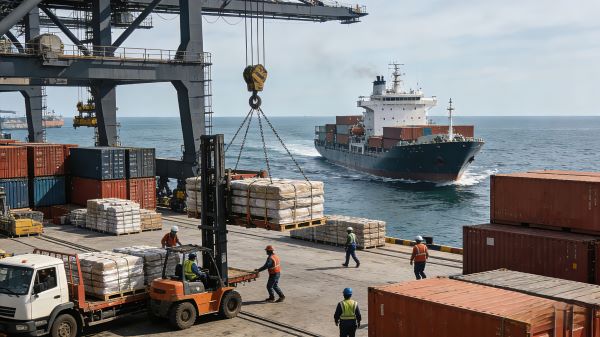
Burnham’s appointment is unlikely to result in immediate changes to freight rates, shipping services or tariff rules. However, his background in specialist logistics publishing and his policy priorities may create opportunities for longer-term improvements to the UK freight and supply chain system.
Three main industry implications should be monitored.
1. Freight and Supply Chains May Receive Greater Attention at the National Policy Level
Burnham is one of the few Western national leaders with direct professional exposure to specialist logistics reporting.
His early work covered tank containers, bulk liquid transportation, rail tanks and multimodal transport, giving him familiarity with the issues involved in freight operations and supply chain connectivity.
The UK government may therefore give greater attention to port planning, freight rail upgrades, cross-border logistics support and supply chain resilience. More industry-focused policies in these areas could support the long-term stability of China–UK cross-border logistics.
2. Regional Infrastructure Expansion Could Release Additional UK Freight Capacity
Burnham’s emphasis on devolution and regional infrastructure investment could reduce the concentration of resources in London and support the development of northern ports, inland freight hubs and rail networks.
UK logistics resources have traditionally been concentrated around southern ports, while freight capacity in northern regions has not been developed to the same extent.
Greater regional infrastructure investment could improve inland cargo distribution, north–south freight connections and multimodal transport efficiency, helping reduce delivery times and logistics costs for cargo moving on China–Europe and China–UK routes.
3. The Leadership Transition May Improve Stability in the Foreign Trade and Logistics Market
Seven prime ministers in ten years have contributed to uncertainty surrounding UK trade policy and logistics regulation, making long-term planning more difficult for foreign trade companies and freight forwarders.
The orderly transfer of power may stabilize short-term market expectations and reduce immediate policy uncertainty.
Longer-term challenges remain, including weak economic growth, pressure on public services and instability in global trade. These factors will continue to affect China–UK trade and logistics.
Industry Summary: A Logistics Publishing Background May Influence the Future of the UK Supply Chain
Andy Burnham’s move from tank container journalism to the office of Prime Minister is a notable development for the logistics industry.
Unlike politicians with no direct exposure to the sector, Burnham has previously reported on specialist freight, industrial logistics and multimodal transport.
In the short term, the completed political transition may improve the stability of the UK logistics policy environment and reduce market uncertainty.
Over the longer term, Burnham’s focus on infrastructure investment and regional development could support further upgrades to freight railways, port hubs and multimodal transport systems, improving China–UK cross-border logistics connections.
Industry participants should continue monitoring the new government’s infrastructure projects, logistics support measures and trade policy adjustments. They should also use end-to-end tracking tools to monitor transit times and market developments on China–UK routes and adjust their business plans accordingly.
Sources: Reuters, BBC, Associated Press, Splash247, EuroBulk Systems and Lianhe Zaobao
Disclaimer: The content and data in this article are sourced from publicly available authoritative channels and are provided for industry information only. They do not constitute commercial advice or operational guidance for logistics activities.
Last
Emergency on the Yangtze River: Engine-Room Explosion on LNG-Fuelled Hybrid Containership at Wuhan Yangluo Port, Seven Empty Containers Overboard and One Crew Member Missing
Introduction:A major shipping incident has occurred at a key transport hub on the middle reaches of the Yangtze River.In the early
Next
Dual Regulatory Scrutiny Intensifies: Four Major Container Manufacturers Face US and South Korean Antitrust Investigations, Putting Industry Pricing under Review
Introduction:Antitrust scrutiny of the global container manufacturing industry continues to intensify. Following criminal antitrus
