Southeast asia trucking routes that bypass heavily congested ocean container ports
Freight Solutions
 22-May-2026
Southeast asia trucking routes deliver viable overland logistics alternatives for freight forwarders looking to evade recurring bottlenecks at major Southeast Asian container seaports. Regional manufacturing expansion and growing intra-ASEAN trade have intensified maritime congestion, creating unpredictable delays for conventional ocean freight. This article analyzes verified congestion-free trucking corridors, operational merits, eligible cargo types, and standardized forwarding tactics using authoritative 2024–2025 UNCTAD and ASEAN logistics data.
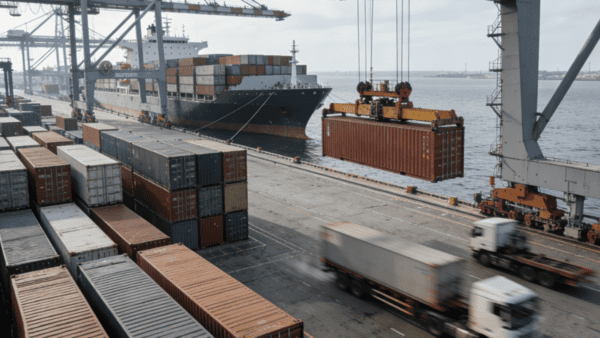
Why do key Southeast Asian container ports sustain chronic congestion?
Persistent congestion at major Southeast Asian container ports arises from surging regional cargo throughput, constrained terminal infrastructure capacity, and periodic operational disruptions that amplify vessel berthing and container dwelling delays year-round.
According to UNCTAD 2025 maritime performance data, flagship ASEAN container hubs face systemic capacity pressure amid robust intra-regional trade growth. Singapore Port recorded average vessel waiting times of 1.5 to 2 days in mid-2025, with peak delays extending to 7 days and over 450,000 TEU of containers queued for berthing and handling.
Port Klang in Malaysia maintains an average berth waiting time of 1.46 days, while Thailand’s Laem Chabang and Vietnam’s Cai Mep and Saigon ports experience recurring yard overcrowding during seasonal shipment peaks. These persistent bottlenecks elevate container dwelling duration and increase the likelihood of schedule deviations for ocean freight services.
According to the 2025 ASEAN Investment Report, continuous manufacturing relocation and cross-border procurement growth have lifted regional container throughput steadily. Most major ASEAN ports lack synchronous infrastructure expansion to match rising cargo volumes, forming long-term structural congestion rather than temporary seasonal disruption.
Forwarders should note that Southeast Asian port congestion has evolved into a permanent supply chain constraint. Fixed ocean liner schedules can no longer guarantee reliable transit consistency, making alternative overland trucking solutions essential for time-sensitive ASEAN cross-border shipments.
What core operational benefits do port-bypassing southeast asia trucking routes offer?
Port-avoiding southeast asia trucking corridors provide stable, flexible, and accessible cross-border transportation options that mitigate efficiency losses caused by maritime terminal congestion and schedule volatility across ASEAN trade lanes.
Consistent transit timeliness without port queuing: Optimized cross-border road routes eliminate vessel berthing waits, terminal stacking delays, and congested customs inspections inherent to ocean shipping. Overland trucking maintains predictable door-to-door cycles to support stable factory production and retail inventory planning.
Adaptive capacity for small and mid-sized shipment batches: Cross-border trucking supports daily dispatching and flexible volume adjustments, which aligns with the high-frequency, fragmented shipment patterns of regional electronics components, industrial spare parts, and fast-moving consumer goods.
Streamlined cross-border customs clearance workflows: Leveraging the ASEAN Customs Transit System and ASEAN Single Window framework, qualified bonded trucking cargo adopts unified transit declarations, minimizing repeated document verification at multiple border checkpoints.
Reduced incidental terminal and storage expenses: Bypassing congested seaports eliminates elevated demurrage, detention, and off-port storage fees triggered by prolonged container dwelling, lowering comprehensive logistics costs for mid-volume shippers.
A common mistake is that many forwarders prioritize ocean freight for all intra-ASEAN cargo solely based on lower base sea rates. This narrow cost-centric approach ignores hidden losses including production downtime, order fulfillment delays, and customer contract adjustments stemming from unplanned port congestion.
What mature trucking corridors help forwarders bypass congested seaports?
A network of standardized cross-border trucking corridors across the Indochina Peninsula and Malay Peninsula enables full or partial avoidance of overloaded mainstream container ports for intra-ASEAN commercial shipments.
How does the Thailand Laos Vietnam cross-border trucking corridor operate?
This east-west inland logistics corridor connects central Thailand, northern Laos, and southern Vietnam, completely bypassing congested maritime hubs including Laem Chabang, Saigon Port, and Cai Mep Port for cross-border industrial and commercial cargo.
The recommended approach is to deploy bonded cross-border trucking with unified transit declaration. Forwarders can complete one-stop customs filing at origin warehouses to realize seamless border passage and reduce manual intervention delays.
What logistics value does the Malaysia Thailand land bridge corridor deliver?
The cross-peninsula land corridor links northern Malaysia and southern Thailand, evading container congestion at Port Klang and Penang Port for bilateral bulk cargo, inventory replenishment, and inter-border factory transfers.
Based on 2025 ASEAN regional logistics monitoring data, trucking shipments on this land corridor cut average transit delays by two to four days compared with conventional inter-country sea transshipment options.
How does the Cambodia Vietnam border trucking route reduce port reliance?
This short-haul cross-border road route connects eastern Cambodia and southwestern Vietnam, diverting border economic zone cargo away from overloaded Vietnamese seaports to stabilize regional material circulation and finished goods distribution.
What cargo categories are suitable for congestion-bypassing trucking services?
Port-bypassing southeast asia trucking routes match multiple time-sensitive and flexibly scheduled cargo types, serving as a practical supplementary solution to rigid ocean container shipping across ASEAN cross-border supply chains.
Time-critical industrial production inputs: Electronic components, mechanical accessories, and packaging materials rely on stable inbound delivery cycles. Trucking bypasses port congestion risks that may cause intermittent production suspension.
Mid-batch finished consumer goods: Retail commodities and daily consumption goods require continuous market replenishment. Flexible trucking dispatching maintains steady inventory levels without ocean schedule constraints.
High-priority after-sales spare parts: Maintenance components demand predictable fast transit to support regional after-sales service networks. Road transportation eliminates maritime delay uncertainties.
Multi-SKU cross-border e-commerce parcels: Lightweight, diversified e-commerce shipments adapt well to flexible truck loading rules, avoiding minimum volume thresholds and LCL consolidation delays associated with ocean freight.
What operational risks exist in cross-border trucking and how to mitigate them?
Although port-bypassing trucking delivers prominent reliability gains, it contains controllable operational risks in customs compliance, border passage efficiency, and cargo integrity that require standardized forwarding management.
What frequent operational errors compromise trucking efficiency?
A common mistake is inconsistent HS code classification and declaration content for multi-country transit shipments. Minor regulatory differences among ASEAN member states can trigger targeted customs inspections and border detention if declaration data is inaccurate.
Another common mistake is inadequate pre-shipment cargo reinforcement. Long-distance road vibration and repeated border loading and unloading may cause abrasion or structural damage to precision and unpackaged goods.
What standardized optimization workflows should forwarders adopt?
The recommended approach is to formulate targeted declaration standards based on transit country regulations, unifying commodity descriptions, HS coding, and cargo valuation to achieve full document consistency before border crossing.
The recommended approach is to implement differentiated packaging and cargo fixation measures, alongside comprehensive cargo insurance coverage, to offset potential transit loss risks during cross-border road transportation.
Validate full transit qualification documentation: Verify truck transit permits, cargo manifests, and bonded supervision certificates in advance to prevent border detention caused by incomplete regulatory paperwork.
Track real-time border policy and traffic updates: Border checkpoint operating hours, temporary traffic control, and trade policy adjustments directly affect passage efficiency and require continuous dynamic monitoring.
Implement node-based cargo handover records: For multi-border-crossing routes, establish standardized handover logs at key transit nodes to ensure full cargo traceability and rapid exception response.
Optimize scientific cargo loading allocation: Arrange heavy rigid goods at the bottom and fragile precision goods in buffered independent zones to lower mechanical damage risks during transit.
How do trucking and ocean freight perform under persistent port congestion?
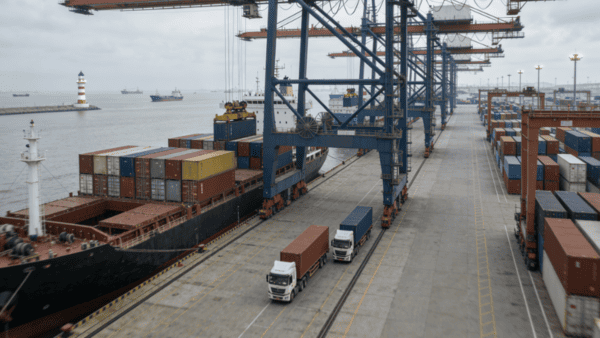
Side-by-side performance comparison clarifies the differentiated positioning of overland trucking and conventional sea freight, helping forwarders select rational logistics combinations for congested ASEAN market scenarios.
How do transit timeliness differ during congestion periods?
According to UNCTAD 2025 port performance statistics, major Southeast Asian container ports sustain average congestion delays of two to seven days throughout peak operational cycles. In contrast, mature cross-border trucking routes operate independently of maritime terminal pressure, maintaining relatively stable transit lead times across all seasons.
How do comprehensive logistics costs compare?
Though baseline road freight rates exceed standard ocean freight tariffs, trucking avoids cascading additional costs including demurrage, detention fees, warehousing surcharges, and emergency air freight diversion expenses triggered by severe port congestion. For time-sensitive cargo, the overall cost stability is more competitive.
What gaps exist in service flexibility?
Forwarders should note that ocean freight depends on fixed liner schedules and pre-allocated container space, offering limited flexibility for temporary order adjustments and urgent replenishment. Cross-border trucking supports ad-hoc dispatching and flexible batch adjustments to accommodate sudden client shipment demands.
What future trends will shape Southeast Asian bypass trucking services?
Driven by regional infrastructure upgrading and digital customs reform, port-bypassing southeast asia trucking routes will witness steady improvements in efficiency, compliance standardization, and route coverage through 2025 and 2026.
2025 ASEAN regional infrastructure reports confirm ongoing cross-border highway upgrades and intelligent border checkpoint transformations across the Indochina and Malay Peninsula regions. These projects will streamline vehicle passage procedures and further reduce road transit and clearance lead times.
The accelerated penetration of the ASEAN Single Window and unified transit systems will continue cutting manual declaration errors and standardizing cross-border cargo supervision. Digital tracking platforms will enhance end-to-end cargo visibility for multi-country trucking shipments.
As intra-ASEAN manufacturing collaboration and cross-border commodity circulation expand, market demand for congestion-resilient overland logistics solutions will keep rising. Proficiency in deploying southeast asia trucking routes enables global forwarders to build more robust, diversified, and risk-resistant supply chain solutions for Southeast Asian cross-border trade clients.
Last
Managing middle east shipping schedules effectively during the ramadan slowdown period
Middle east shipping encounters predictable seasonal operational disruptions throughout the annual Ramadan cycle, as adjusted gove
Next
When booking an emergency air charter service makes financial sense for factories
An emergency air charter service provides on-demand dedicated air cargo capacity for time-sensitive industrial shipments, enabling
