Intra asia shipping network choices for guarantee next day manufacturing hub deliveries
Freight Solutions
 22-May-2026
A well-structured intra asia shipping network enables global forwarders to sustain just-in-time production cycles and fulfill next-day delivery commitments across interconnected Asian manufacturing hubs. Regional supply chains rely on optimized short-sea feeder routes, stable vessel schedules, and matched port pairs to mitigate maritime volatility and avoid production halts and inventory shortages.
What defines modern intra asia shipping for manufacturing logistics
Intra Asia shipping covers short-sea containerized and breakbulk maritime transportation linking industrial ports across East, Southeast and South Asia to support regional manufacturing and cross-border distribution operations.
This regional shipping model differs fundamentally from long-haul intercontinental liner trades. It prioritizes transit agility, high schedule frequency and flexible cutoff windows rather than low unit freight rates. Industrial cargo including raw materials, semi-finished components and emergency spare parts heavily depends on these frequent short-sea sailings to maintain continuous production workflows.
According to the UNCTAD 2025 Review of Maritime Transport, global containerized trade achieves a 1.4% year-on-year growth in 2025, while intra-East Asian container trade records a robust 10% annual increase, far outperforming the global average. This notable growth highlights the indispensable role of regional shipping networks in Asia’s integrated industrial ecosystem.
Forwarders should note that intra asia shipping networks feature dense route coverage and intense carrier competition. This market feature brings flexible booking alternatives but also causes inconsistent service standards across different port pairs and feeder carriers.
Why next-day hub delivery reliability matters for regional manufacturers
Stable next-day delivery between Asian manufacturing hubs underpins just-in-time inventory mechanisms and reduces capital occupation caused by idle industrial stock in cross-border production chains.
Electronics, machinery and automotive manufacturing clusters across Asia adopt lean inventory strategies with minimal buffer stock. These industrial clusters require daily cross-border component replenishment from neighboring production bases. Any maritime delay may lead to assembly line shutdowns, order backlogs and contractual compensation risks for global original equipment manufacturers.
A common mistake is that many forwarders categorize intra-Asia short-sea shipments as low-risk routine cargo. This oversimplified judgment ignores inherent risks including schedule volatility, terminal congestion and blank sailings, which severely affect time-sensitive industrial supplies.
According to Drewry 2025 intra-Asia shipping market analysis, frequent capacity adjustments and sporadic spot rate fluctuations have increased route uncertainty in regional trades. Professional customized network planning has become a necessary measure to guarantee time-critical cargo movement.
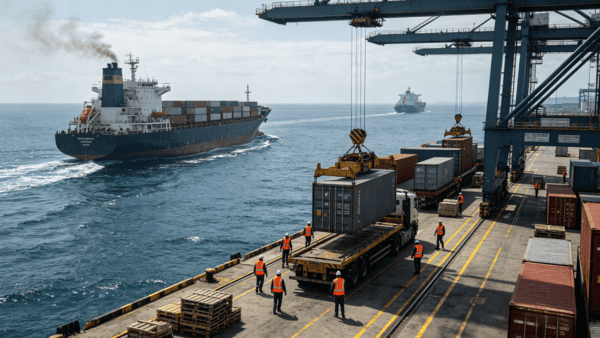
What core challenges disrupt fast intra-Asia maritime deliveries
Multiple structural and operational bottlenecks undermine the stability of next-day delivery services under conventional intra-Asia shipping route frameworks for industrial cargo.
Frequent blank sailings and unstable feeder capacity
Regional liner carriers dynamically adjust short-sea vessel deployment to balance capacity utilization across different trade lanes. 2025 maritime industry monitoring data shows that secondary intra-Asia routes maintain higher blank sailing frequencies compared with mainstream intercontinental routes, disrupting fixed daily delivery schedules.
Unplanned service cancellations directly trigger cargo accumulation and break continuous component replenishment cycles. Feeder vessels deployed for regional trades are generally smaller in tonnage, with flexible deployment rules, which further weakens the stability of fixed-time cargo delivery commitments.
Unbalanced port clearance efficiency across Asian regions
Customs inspection protocols, terminal operating efficiency and cargo dwell time vary significantly among industrial ports in China, Vietnam, Thailand and Malaysia. Inconsistent local regulatory standards create variable clearance cycles and break unified next-day delivery timetables.
According to UNCTAD 2025 port performance evaluation data, Northeast Asian automated terminals deliver faster clearance efficiency, while most secondary ports in Southeast Asia still rely on manual inspection procedures, forming a major bottleneck for cross-border fast shipping services.
Seasonal weather and geopolitical interferences
Monsoon weather systems and regional geopolitical fluctuations regularly affect vessel navigation stability at key intra-Asia maritime chokepoints. These external uncontrollable factors generate random delays that standard routing schemes cannot fully offset.
How to select high-reliability intra-Asia shipping routes for fast delivery
Data-driven route selection based on schedule frequency, terminal efficiency and carrier service stability helps forwarders sustain consistent next-day delivery performance for manufacturing hub cargo.
Prioritize high-frequency daily feeder routes: The recommended approach is to cooperate with carriers operating daily or multiple weekly sailings between core industrial port pairs. Dense schedule resources provide effective backup slots to offset blank sailing disruptions and maintain delivery continuity.
Select automated gateway port terminals: Prefer regional ports equipped with automated clearance systems and standardized terminal operation procedures. These facilities reduce manual inspection delays and shorten cargo dwell time to adapt to tight cross-border delivery windows.
Diversify cooperative carrier resources: Establish long-term partnerships with multiple medium and large regional liner companies. Multi-carrier resource allocation mitigates service disruptions caused by individual carrier capacity adjustments and route suspensions.
Adopt near-port warehousing transshipment modes: Deploy temporary warehousing facilities adjacent to key industrial ports. Pre-staging components near terminals enables rapid loading operations and offsets minor sailing schedule deviations.
What carrier network features support manufacturing fast-track logistics
Specialized intra-Asia carrier networks for industrial cargo possess distinctive operational attributes that differentiate them from conventional regional shipping services.
Stable weekly capacity reservation mechanisms: Reliable regional carriers provide fixed weekly capacity quotas for contractual clients. Reserved vessel space effectively avoids cargo rollover risks during peak industrial shipment seasons.
Flexible customized cutoff arrangements: Professional intra-Asia shipping providers support delayed cutoff windows for urgent manufacturing components. Extended document submission time accommodates last-minute production adjustments and emergency replenishment demands.
Full lifecycle cargo tracking visibility: Integrated digital logistics systems offer real-time vessel positioning, terminal processing and customs clearance updates. End-to-end transparency enables forwarders to predict potential delays and adjust delivery plans in advance.
Dedicated industrial cargo operation teams: Specialized service teams focus on manufacturing supply chain cargo, prioritizing exception handling, inspection coordination and timeline control for time-sensitive shipments.
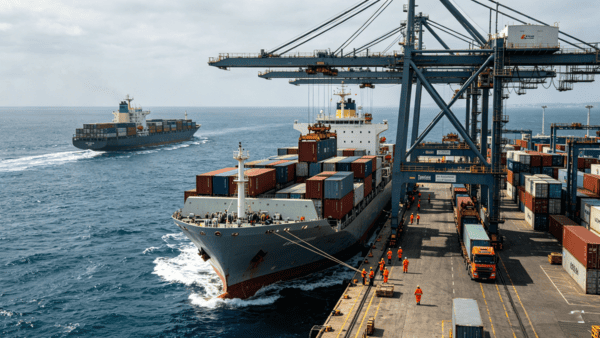
What common network planning errors weaken delivery stability
Frequent strategic and operational errors in intra-Asia network layout are primary causes of failed next-day delivery commitments for cross-border industrial cargo.
Overlooking blank sailing occurrence probability: A common mistake is formulating delivery plans solely based on official published schedules without reserving buffer time for regular blank sailings. This negligence triggers systemic delivery failures under normal market fluctuations.
Matching generic routes with time-sensitive cargo: Applying cost-oriented conventional regional routes to urgent manufacturing components fails to meet priority loading and fast clearance requirements, resulting in avoidable delivery delays.
Ignoring cross-regional port efficiency gaps: Treating all regional ports as equivalent in processing capability ignores obvious efficiency differentials, breaking unified cross-border delivery timelines for batch industrial cargo.
Missing contingency routing backup schemes: Adopting single fixed routing solutions leaves no alternative channels when facing sudden port congestion, vessel breakdowns or temporary route suspensions, leading to passive delivery disruptions.
How to build resilient intra-Asia shipping networks for long-term manufacturing support
Systematic network optimization and multi-dimensional risk control allow forwarders to build stable intra-Asia shipping frameworks adaptable to long-term industrial supply chain cooperation.
Establish dual primary and backup routing mechanisms: Configure dedicated main routes and standby alternative routes for core manufacturing port pairs. Dual-path layouts ensure continuous delivery capability when mainstream routes encounter temporary disruptions.
Track real-time regional shipping index data: Monitor the latest Drewry Intra-Asia Container Index fluctuations to capture short-term capacity and rate changes. Data-driven judgment optimizes route planning accuracy and overall cost controllability.
Sign exclusive industrial logistics service contracts: Secure stable priority capacity and preferential terminal processing through long-term industrial-oriented service agreements. Formalized cooperation stabilizes service quality during seasonal capacity tightening periods.
Standardize cross-border declaration documentation: Unify declaration forms, inspection certificates and shipping documents for recurring industrial cargo. Standardized document management accelerates clearance procedures and reduces delays caused by manual errors.
What future trends reshape intra-Asia industrial shipping networks
Ongoing supply chain regionalization and maritime service upgrading continue to reshape the operational logic of intra-Asia shipping for manufacturing-focused cross-border logistics.
According to UNCTAD 2025 medium-term forecasts, global containerized trade will grow at an average annual rate of 2.3% from 2026 to 2030, while intra-Asian industrial trade will maintain higher growth momentum. Continuous regional port infrastructure upgrading further improves short-sea transit efficiency and cargo handling capacity.
Major regional carriers keep expanding intra-Asia vessel capacity and optimizing feeder route density to accommodate rising industrial cargo demand. Service differentiation between conventional bulk shipping and industrial fast-track shipping will become increasingly prominent in the next two years.
Forwarders should note that global supply chain localization trends will further elevate the strategic value of high-frequency, flexible intra asia shipping network layouts for multinational manufacturing procurement systems.
In conclusion, scientific route screening, diversified carrier collaboration, standardized operational workflows and complete contingency risk control systems enable forwarders to maximize the value of mature intra asia shipping network resources. This comprehensive optimization steadily guarantees next-day delivery performance across interconnected Asian manufacturing hubs and strengthens overall regional supply chain resilience.
Last
Intermodal rail freight routing adjustments that cut cross country transport costs
Intermodal rail freight has become a practical cost-reduction solution for cross-border and domestic long-haul logistics, enabling
Next
Secure medical equipment logistics tracking frameworks for high value hospital tech shipments
In the global supply chain, medical equipment logistics plays a critical role in ensuring high-value hospital technology—from MRI
