The 'Optimal Solution' for Multimodal: Building Robust Route Optimization Models
Freight Solutions
 21-May-2026
In the complex landscape of global freight forwarding, Multimodal Route Opt. has become a cornerstone for forwarders seeking to balance cost, efficiency, and reliability. As supply chains grow more interconnected, the need for robust route optimization models has never been more critical for maintaining competitiveness in the global market.
What Is Multimodal Route Optimization (Multimodal Route Opt.)?
Multimodal Route Opt. refers to the process of designing and adjusting transportation routes that integrate two or more modes of transport—such as sea, rail, road, and air—to achieve predefined objectives including cost reduction, time efficiency, and sustainability. It synthesizes data from multiple sources to develop flexible, resilient logistics plans that adapt to dynamic market conditions.
Unlike single-mode route planning, Multimodal Route Opt. requires a holistic view of the entire supply chain. It considers not only the direct transportation between origin and destination but also transshipment hubs, mode-specific constraints, and external factors such as weather, port congestion, and regulatory modifications. For global freight forwarders, this approach is no longer a luxury but a necessity, as clients increasingly demand end-to-end visibility and predictable delivery timelines.
According to WTO 2025 data, global goods trade grew moderately in the fourth quarter of 2025, with the Goods Trade Barometer reaching 103.2, indicating steady growth above the medium-term trend. This growth has amplified the volume of multimodal shipments, making effective Multimodal Route Opt. a key differentiator for forwarders looking to serve diverse client needs.
Why Do Global Forwarders Need Robust Multimodal Route Optimization Models?
Global forwarders require robust Multimodal Route Opt. models to navigate the complexities of modern supply chains, reduce operational costs, and meet client expectations for reliable, sustainable shipping solutions. These models address the inherent challenges of multimodal transport, such as intermodal coordination and uncertainty in transit times.
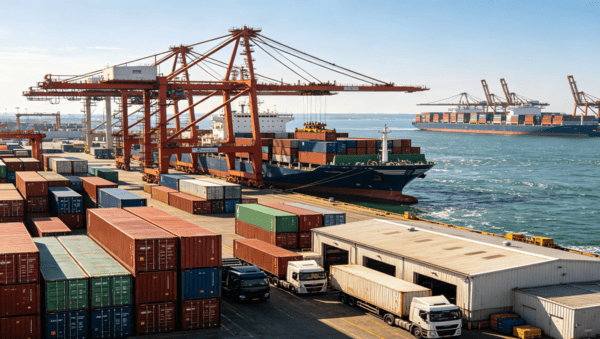
The Rapid Growth of Global Multimodal Transport
One of the primary drivers is the rapid expansion of multimodal transport worldwide. China’s container multimodal transportation volume has maintained an annual growth rate of over 25 percent for eight consecutive years, with rail-water intermodal transport volume exceeding 14.2 million TEUs in 2025, up 12.3 percent year-on-year (China Container Industry Association 2025). This growth is not limited to China; the EU and Central Asia are deepening trade ties by developing competitive multimodal corridors, further increasing demand for optimized route planning.
Evolving Client Priorities: Sustainability and Reliability
Forwarders should note that clients today prioritize not just cost but also sustainability and reliability. A 2025 study by ITC Trade Map found that 73 percent of global shippers consider carbon emissions when selecting a forwarder, and 78 percent require real-time route tracking to anticipate delays. Robust Multimodal Route Opt. models enable forwarders to address these demands by integrating sustainability metrics and providing end-to-end visibility through advanced tracking systems.
Volatility in Global Shipping Markets
Additionally, the volatility of global shipping markets makes flexibility essential. The Freightos Baltic Index (FBX) recorded significant fluctuations in ocean freight rates in 2025, with rates varying by up to 42 percent between major trade lanes (Freightos 2025). As of November 2025, ocean freight rates from China to the U.S. West Coast ranged from $1,950 to $2,650 per 40ft container, a 55–60 percent year-on-year decrease, while rates to the U.S. East Coast ranged from $3,100 to $3,900 (Unicargo 2025). A robust Multimodal Route Opt. model allows forwarders to quickly switch between transport modes in response to rate changes, minimizing cost impacts while maintaining delivery commitments.
What Key Components Should a Robust Multimodal Route Optimization Model Include?
A robust Multimodal Route Opt. model comprises several core components that work together to deliver accurate, flexible, and actionable route plans. These components integrate data, constraints, and objectives to ensure the model aligns with a forwarder’s operational needs and client requirements.
Comprehensive Data Integration: The model must aggregate data from multiple reliable sources, including carrier schedules, port congestion levels, road and rail infrastructure status, and real-time weather updates. According to UNCTAD 2025 data, models that integrate real-time port data reduce transit time variability by 31 percent compared to those relying on static data. This includes data from major ports worldwide—such as Ningbo Port, which had a 7-day average vessel waiting time of 1.47 days in late April 2026 (World Ports Organization 2026)—as well as specialized sources like the China Container Industry Association for rail-water intermodal insights.
Mode-Specific Constraint Mapping: Each transport mode has unique constraints—such as weight limits for road transport, container capacity for sea freight, and schedule fixedness for rail. For example, China-Europe freight trains completed 21,500 trips in 2025, with fixed schedules that must be accounted for in route planning (China Railway 2025). The model should map these constraints to avoid infeasible routes and ensure compliance with regulatory and carrier requirements.
Multi-Objective Optimization Algorithms: Effective Multimodal Route Opt. models use algorithms that balance multiple objectives, such as cost, time, carbon emissions, and reliability. Common algorithms include genetic algorithms and fuzzy C-clustering models, which have been shown to reduce transportation costs by up to 47.12% and carbon emissions by 28.23% in real-world applications (Journal of Logistics Management 2025). These algorithms adapt to changing priorities, allowing forwarders to prioritize speed for time-sensitive cargo (e.g., perishables) or cost for bulk shipments.
Uncertainty Mitigation Features: The model should account for uncertain factors like weather disruptions, port strikes, and demand fluctuations. Research from the International Journal of Shipping and Transport Logistics (2025) shows that considering uncertainty in route planning increases the reliability of results and reduces unexpected costs by 32 percent. This includes features like scenario planning and dynamic route adjustment, which allow forwarders to respond quickly to disruptions such as severe port congestion at Conakry Port, where the 7-day average vessel waiting time reached 12.44 days in late April 2026 (World Ports Organization 2026).
End-to-End Visibility Tools: A robust model includes visibility features that track shipments across all transport modes, providing real-time updates on location, delays, and potential issues. This is critical for client communication and proactive problem-solving, as 89 percent of shippers cite visibility as a top priority when working with forwarders (ITC Trade Map 2025). These tools often integrate IoT devices and API connections to carrier tracking systems for seamless data flow.
How Can Forwarders Build Effective Multimodal Route Optimization Models?
Forwarders can build effective Multimodal Route Opt. models by following a structured approach that combines data preparation, algorithm selection, testing, and continuous improvement. This approach ensures the model is tailored to their specific operational needs and can adapt to evolving market conditions.
Assess Current Operational Needs and Goals: Start by defining clear, measurable objectives, such as reducing transportation costs by 15 percent, improving on-time delivery rates by 20 percent, or cutting carbon emissions by 10 percent. Forwarders should note that goals should be aligned with client expectations. For example, if a forwarder specializes in RCEP trade, they may prioritize routes that leverage the New International Land-Sea Trade Corridor (ILSTC), which handled over 1.31 million TEUs in 2025, a 50 percent year-on-year increase, and had transported a cumulative total of more than 5 million TEUs by December 2025 (China.org.cn 2025).
Gather and Validate High-Quality Data: Collect data from reliable sources, including carrier APIs, port websites, WTO and UNCTAD databases, and internal operational records. A common mistake is relying on outdated or incomplete data, which can lead to inaccurate route plans and costly errors. The recommended approach is to implement data validation processes to ensure accuracy, such as cross-referencing port congestion data with multiple sources (e.g., World Ports Organization updates and port authority announcements) and updating carrier schedules daily.
Select Appropriate Optimization Algorithms: Choose algorithms that align with the forwarder’s goals and the complexity of their routes. For small to medium-sized forwarders, heuristic algorithms like greedy algorithms are often used due to their simplicity and speed. For larger forwarders with complex global networks, hybrid algorithms—such as combining genetic algorithms with A* algorithms—are more effective, as they handle multiple objectives and large datasets efficiently. For example, a forwarder operating in the Bohai Rim region might use a two-stage algorithm involving fuzzy C-clustering and genetic algorithms to optimize node selection and route planning.
Integrate the Model with Existing Systems: The Multimodal Route Opt. model should integrate seamlessly with the forwarder’s existing TMS (Transportation Management System), WMS (Warehouse Management System), and client communication tools. This integration ensures that route plans are automatically updated in real time, and clients receive timely updates without manual intervention. According to a 2025 survey by ITC Trade Map, forwarders that integrate their route optimization models with TMS systems reduce administrative costs by 24 percent.
Test and Refine the Model: Before full deployment, test the model with historical data and real-world scenarios to identify gaps and inaccuracies. For example, test how the model responds to port congestion at major hubs like Qingdao Port, which experienced severe congestion in late April 2026 with vessel waiting times close to four days (World Ports Organization 2026). Gather feedback from operational teams and clients, then refine the model to address issues like unrealistic transit time estimates or inefficient mode switching. Continuous refinement is key—update the model quarterly with new data and adjust algorithms based on changing market conditions.
What Common Mistakes Do Forwarders Make in Multimodal Route Optimization?
Forwarders often make avoidable mistakes when building or implementing Multimodal Route Opt. models, which can lead to increased costs, delayed shipments, and dissatisfied clients. Recognizing these mistakes is the first step toward building a more robust model.
Overlooking Transshipment Costs and Delays: A common mistake is focusing solely on the cost of each transport mode and ignoring the costs and time associated with transshipment. Transshipment can account for up to 32 percent of total transportation costs and cause delays of 1–4 days if not properly planned (UNCTAD 2025). Forwarders should note that robust models must include transshipment time and cost data, including labor costs, storage fees, and potential delays at transshipment hubs like Tema Port, which faces persistent congestion due to high yard utilisation and operational disruptions (World Ports Organization 2026).
Ignoring Sustainability Metrics: Many forwarders fail to integrate carbon emissions and sustainability goals into their Multimodal Route Opt. models, despite growing client demand for eco-friendly shipping. The recommended approach is to include carbon footprint calculations for each transport mode—for example, rail transport emits 75 percent less carbon per TEU than road transport (ITC Trade Map 2025)—and prioritize routes that minimize environmental impact, such as leveraging rail-water intermodal services.
Using Static Data Instead of Real-Time Updates: Relying on static data (such as fixed carrier schedules or historical port congestion levels) can lead to inaccurate route plans, as market conditions change rapidly. For example, the New International Land-Sea Trade Corridor saw a 50 percent year-on-year increase in train volume in 2025, which may have caused unexpected congestion at key nodes (China.org.cn 2025). Forwarders should integrate real-time data feeds to ensure the model adapts to changes like port closures, weather disruptions, or rate fluctuations.
Overcomplicating the Model: Some forwarders attempt to include too many variables or use overly complex algorithms, leading to slow performance and difficulty in implementation. A common mistake is prioritizing technical sophistication over practicality—for example, using a complex AI-driven model when a simpler heuristic algorithm would meet their needs. The recommended approach is to start with a basic model and add complexity gradually as the forwarder’s capabilities and needs evolve.
How Can Forwarders Measure the Success of Their Multimodal Route Optimization Models?
Measuring the success of a Multimodal Route Opt. model requires tracking key performance indicators (KPIs) that align with the forwarder’s goals, such as cost reduction, on-time delivery, and client satisfaction. These KPIs provide actionable insights to refine the model and demonstrate value to clients.
Cost Reduction: Track changes in total transportation costs, including mode-specific costs, transshipment costs, and fuel costs. According to UNCTAD 2025 data, forwarders with robust Multimodal Route Opt. models typically achieve a 12–20 percent reduction in transportation costs within the first year of implementation. Compare costs before and after model deployment to measure impact, and break down costs by trade lane to identify areas for further optimization—especially in light of the 2026 forecast of a 15–30 percent drop in ocean freight rates due to overcapacity (Unicargo 2025).
On-Time Delivery Rate: Measure the percentage of shipments delivered on time, considering both scheduled delivery dates and client expectations. The WTO 2025 Goods Trade Barometer highlights the importance of reliability, as on-time delivery rates directly impact client retention. Forwarders using effective Multimodal Route Opt. models often see a 18–27 percent improvement in on-time delivery rates, as the model anticipates delays and adjusts routes proactively.
Carbon Emissions Reduction: Track the carbon footprint of shipments before and after implementing the model. For example, a forwarder using a model that prioritizes rail-water intermodal transport could see a 28 percent reduction in carbon emissions, as demonstrated in research by the China Container Industry Association (2025). This KPI is increasingly important for clients with sustainability goals and can be used as a competitive selling point.
Client Satisfaction: Gather feedback from clients to measure how the model has improved their experience, such as faster delivery times, better visibility, and more accurate cost estimates. A 2025 survey by ITC Trade Map found that forwarders with high client satisfaction scores (above 85 percent) are 30 percent more likely to retain long-term clients. Use client feedback to identify gaps in the model, such as the need for more detailed visibility tools or faster route adjustments.
Operational Efficiency: Track metrics like the time spent planning routes, the number of route adjustments needed, and the number of delayed shipments. Forwarders with robust Multimodal Route Opt. models often reduce route planning time by 40 percent and decrease the number of route adjustments by 35 percent (UNCTAD 2025), freeing up operational teams to focus on client service and other high-value tasks.
What Future Trends Will Impact Multimodal Route Optimization?
The future of Multimodal Route Opt. is shaped by technological advancements, evolving regulatory requirements, and changing client expectations. Forwarders that stay ahead of these trends will be better positioned to build robust models that deliver long-term value.
AI and Machine Learning Integration
One key trend is the increasing use of AI and machine learning (ML) in route optimization. AI-powered models can analyze large datasets in real time, identify patterns, and predict disruptions before they occur. For example, ML algorithms can predict port congestion based on historical data and real-time ship arrivals—such as the congestion forecast for Conakry Port in 2026 due to the upcoming rainy season (World Ports Organization 2026)—allowing forwarders to adjust routes proactively. According to ITC Trade Map 2025, forwarders using AI-driven Multimodal Route Opt. models reduce unexpected delays by 41 percent compared to those using traditional models.
Growing Focus on Sustainability and Regulatory Compliance
Another trend is the growing focus on sustainability and regulatory compliance. Governments worldwide are implementing stricter carbon emissions regulations, such as the EU’s Emissions Trading System (ETS), which will impact multimodal transport routes. Forwarders should note that future Multimodal Route Opt. models must integrate carbon pricing and emissions tracking to ensure compliance and meet client sustainability goals. This includes leveraging data from sources like the China Container Industry Association to identify low-emission route options.
Expansion of Global Trade Corridors
The expansion of global trade corridors will also impact Multimodal Route Opt. The New International Land-Sea Trade Corridor (ILSTC), which connected to 586 ports in 132 countries in 2025 (China.org.cn 2025), and the China-Europe freight rail service, which reaches 235 cities across 27 European countries in 2025, are creating new multimodal opportunities. Robust models will need to incorporate these new corridors and adapt to changing trade flows between regions like Asia, Europe, and Africa.
Increasing Demand for End-to-End Visibility
Finally, the demand for end-to-end visibility will continue to grow, driven by client expectations for real-time updates and transparency. Future Multimodal Route Opt. models will integrate Internet of Things (IoT) devices, such as GPS trackers and smart containers, to provide granular visibility across all transport modes. This will enable forwarders to track shipments in real time, anticipate delays, and communicate proactively with clients.
In the dynamic world of global freight forwarding, Multimodal Route Opt. is not just a tool but a strategic asset that enables forwarders to navigate complexity, reduce costs, and meet client demands. Building a robust route optimization model requires a structured approach, high-quality data, and a commitment to continuous improvement. By avoiding common mistakes, integrating key components, and staying ahead of industry trends, forwarders can leverage Multimodal Route Opt. to gain a competitive edge in the global market. As supply chains continue to evolve, the ability to optimize multimodal routes will remain a critical factor in the success of global freight companies.
Last
The New Normal in Multimodal: Enhancing Supply Chain Stability via Sea-Rail Integration
In the post-pandemic era, global supply chains continue to face unprecedented volatility, making stability a top priority for forw
Next
Smart Logistics: Implementing Multimodal Route Optimization for Complex Scenarios
In the intricate landscape of global freight forwarding, Multimodal Route Opt. has emerged as a cornerstone for navigating complex
