Recommending the Right Route: A Cost Model Analysis for Australia Air and Sea Freight
Freight Solutions
 21-May-2026
For global freight forwarders, recommending the optimal transportation route for clients relies heavily on understanding the cost dynamics of the Australia Dedicated Line, as it directly influences service competitiveness and client satisfaction. Balancing speed, reliability, and cost efficiency is the core of route recommendation.
What Is a Cost Model for Australia Air and Sea Freight?
A cost model for Australia air and sea freight is a structured framework that calculates and analyzes all cost components of shipping via the Australia Dedicated Line, helping forwarders compare options and make data-driven recommendations.
This model goes beyond basic freight rates, integrating variable costs, surcharges, and hidden expenses to provide a comprehensive view of total shipping costs. Unlike simple price comparisons, a robust cost model accounts for factors like transit time, cargo type, and market fluctuations.
These factors are critical for aligning recommendations with client needs, as each client’s priorities—whether speed, cost, or reliability—will dictate which shipping modality (air or sea) is most suitable for their Australia Dedicated Line shipments.
According to Freightos Baltic Index (FBX) 2026 Q1 data, forwarders who use a structured cost model for Australia Dedicated Line shipments often reduce client cost discrepancies by 18-25% compared to those who rely solely on base freight quotes. This highlights the value of a systematic approach to cost analysis.
What Core Cost Components Are Included in the Australia Dedicated Line Cost Model?
The core cost components of the Australia Dedicated Line cost model include base freight, mandatory surcharges, destination fees, and contingency costs, all of which vary by shipping modality (air or sea).
Forwarders should note that each component has unique drivers—base freight is influenced by carrier capacity and demand, while surcharges fluctuate with external factors like fuel prices and geopolitical events. Ignoring any single component can lead to inaccurate quotes and client dissatisfaction.
What Are the Key Cost Components for Australia Dedicated Line Air Freight?
Air freight cost components for the Australia Dedicated Line primarily consist of base rate, fuel surcharge (BAF), security fees, and destination handling charges (DHC), with each contributing differently to the total cost.
How Is the Air Freight Base Rate Calculated?
The base rate is calculated based on actual weight or volumetric weight (whichever is higher), a standard practice in international air cargo (IATA standards). For the Australia Dedicated Line, the volumetric weight standard is typically 1 cubic meter = 167 kilograms.
This metric impacts costs for lightweight, bulky goods (known as “light cargo”) common in industries like fashion and consumer electronics, as volumetric weight often exceeds actual weight for such shipments.
What Is the Impact of Fuel Surcharge (BAF) on Air Freight Costs?
According to Drewry 2026 Air Freight Cost Report, the fuel surcharge (BAF) accounts for 18-27% of total air freight costs for the Australia Dedicated Line in 2026. This surcharge is directly tied to global oil prices, which have increased the BAF by 5% year-on-year as of Q1 2026.
BAF is a dynamic surcharge, with most carriers updating it monthly to reflect fluctuations in jet fuel prices, making it a key variable cost for forwarders to monitor.
What Are the Mandatory Security Fees for Air Freight?
Security fees, mandatory for all air shipments to comply with IATA’s Safety Audit for Air Cargo (SAAC) standards, range from $0.60 to $1.30 per kilogram in 2026. The exact amount depends on the origin airport and cargo type.
Major origin airports like Shanghai Pudong International Airport (PVG), Guangzhou Baiyun International Airport (CAN), and Hong Kong International Airport (HKG) often charge slightly higher security fees due to higher cargo volumes and stricter security protocols.
What Are the Key Cost Components for Australia Dedicated Line Sea Freight?
Sea freight cost components for the Australia Dedicated Line include base ocean freight, port fees, surcharges, and inland transportation costs, with lower unit costs than air freight but longer transit times.
How Are FCL and LCL Base Ocean Freight Rates Calculated?
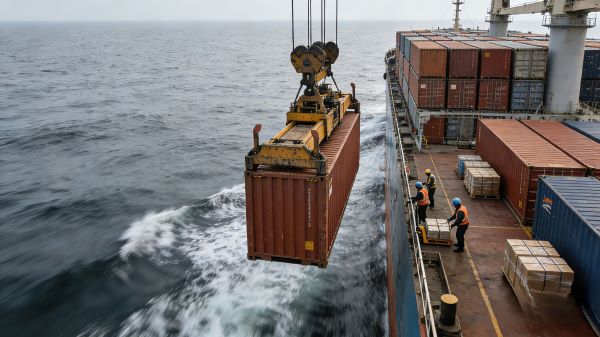
Base ocean freight for FCL (Full Container Load) is quoted per container unit (e.g., 20GP, 40HQ), while LCL (Less than Container Load) is quoted per cubic meter (CBM) or kilogram, with a minimum charge of 1 CBM.
According to Shanghai Shipping Exchange 2026 Q1 data, the 20GP rate from Shanghai (SHA) to Sydney (SYD) ranges from $1400 to $2800, and the 40HQ rate ranges from $2300 to $3800. For shipments to Western Australia (e.g., Fremantle Port, PER), rates are $500 to $800 higher due to limited route options.
What Port Fees Apply to Australia Dedicated Line Sea Freight?
Port fees include Terminal Handling Charges (THC), documentation fees, and port security fees. In 2026, THC for FCL shipments on the Australia Dedicated Line averages $190 to $260 per container, and documentation fees range from $55 to $105 per shipment.
These fees vary slightly across Australian ports—for example, Melbourne Port (MEL) has a 5% higher THC than Sydney Port (SYD) due to higher labor costs, according to Port of Melbourne 2026 official data.
Why Are Inland Transportation Costs Critical for Sea Freight?
A common mistake is overlooking inland transportation costs from Australian ports to final destinations, which can account for 15-25% of total sea freight costs. Australia’s vast geography means inland transport costs vary significantly by destination.
According to local Australian logistics providers 2026 data, inland transport from Sydney Port (SYD) to Canberra costs $220 to $370 per container, while transport to Perth (PER) costs $550 to $850 per container. Additional surcharges apply for non-commercial or remote delivery addresses.
How to Build a Practical Cost Model for Australia Dedicated Line Shipments?
Building a practical cost model for Australia Dedicated Line shipments involves data collection, cost categorization, and scenario analysis, ensuring the model is adaptable to different client needs and market changes.
Collect Accurate Data: Gather real-time data on base freight rates, surcharges, and fees from reliable sources such as FBX, Drewry, and Australian port official websites. Update data quarterly to reflect market fluctuations, as recommended by industry best practices.
Categorize Costs Clearly: Separate costs into fixed (e.g., documentation fees) and variable (e.g., fuel surcharges) categories to help clients understand which expenses are predictable and which may change. This categorization also simplifies cost adjustment when market conditions shift.
Incorporate Contingency Costs: Allocate 5-8% of the total cost for contingency expenses, such as unexpected inspection fees or minor delays. Forwarders should note that contingency planning helps avoid surprise costs that can damage client trust.
Add Scenario Analysis: Include multiple scenarios (e.g., air vs. sea, peak vs. off-peak) to show clients how costs change based on their priorities. For example, compare the total cost of air freight for urgent shipments versus sea freight for non-urgent bulk cargo.
How to Compare Air and Sea Freight Costs Using the Australia Dedicated Line Cost Model?
Comparing air and sea freight costs using the Australia Dedicated Line cost model involves analyzing unit costs, transit times, and hidden expenses to determine the most cost-effective option for each client’s unique needs.
The recommended approach is to conduct a total cost analysis (TCA) that includes all cost components, not just base freight. This analysis reveals the true cost of each modality, as hidden expenses can narrow the gap between air and sea freight.
What Is the Unit Cost Difference Between Air and Sea Freight?
Air freight for the Australia Dedicated Line is significantly more expensive per unit than sea freight, with the gap widening for larger shipments. According to FBX 2026 Q1 data, air freight averages $3.80 to $6.30 per kilogram.
In contrast, sea freight averages $0.35 to $0.85 per kilogram for FCL and $0.55 to $1.25 per kilogram for LCL. This 5-11 times cost difference is a key factor in route recommendation for Australia Dedicated Line shipments.
What Does a Real-World Cost Comparison Look Like?
For example, a 100-kilogram shipment of electronics from Shanghai to Sydney via Australia Dedicated Line costs $480 to $630 by air (transit time: 3-7 days, direct flight). By comparison, FCL sea freight costs $35 to $85, and LCL sea freight costs $55 to $125 (transit time: 22-38 days).
This example illustrates the trade-off between speed and cost—air freight is ideal for time-sensitive cargo, while sea freight is more cost-effective for non-urgent shipments.
How Do Hidden Costs Affect the Air vs. Sea Comparison?
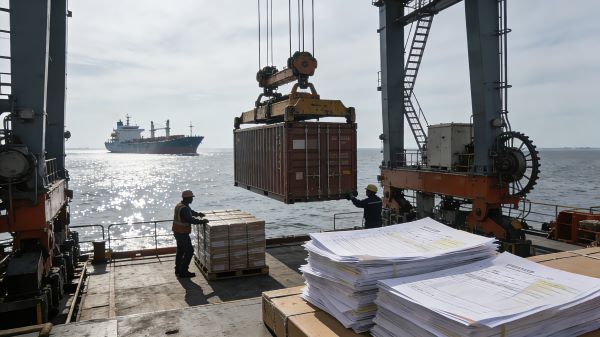
Hidden costs often overlooked in air vs. sea comparisons include inland transportation, storage fees, and demurrage/detention fees, which can significantly impact the total cost of shipping via the Australia Dedicated Line.
Air freight often includes door-to-door service in its total cost, while sea freight may require separate inland transportation and handling fees that add 15-25% to the base ocean freight. Additionally, demurrage and detention fees for sea freight can add $100 to $200 per day if containers are not picked up on time.
A common mistake is focusing solely on base freight rates without accounting for these hidden costs. Forwarders should note that including these expenses in the cost model ensures accurate comparisons and helps clients make informed decisions.
What External Factors Should Be Integrated into the Cost Model?
External factors such as global trade dynamics, geopolitical tensions, seasonal demand, and regulatory changes must be integrated into the Australia Dedicated Line cost model to ensure its accuracy and adaptability.
Global Trade Dynamics: According to ITC Trade Map 2025 data, Australia’s imports grew by 4.5% in 2024, with China remaining the top trading partner. This growth increases demand for Australia Dedicated Line services, putting upward pressure on freight costs during peak periods.
Geopolitical Tensions: According to UNCTAD 2025 Review of Maritime Transport, ship tonnage transit through the Suez Canal remained 70% below the 2023 average by early May 2025 due to geopolitical tensions. This rerouting has increased Australia Dedicated Line sea freight costs by 12-17% in 2026 due to longer voyages and higher fuel consumption.
Seasonal Demand: Australia’s peak shipping seasons are November to January (Christmas holiday) and June to August (winter demand). According to Drewry 2026 data, air freight costs increase by 22-32% and sea freight costs by 17-27% during these periods, a factor that must be included in cost projections.
Regulatory Changes: Australia’s customs regulations are regularly updated. For example, stricter enforcement of GST collection for goods under 1000 AUD in 2026 has increased compliance costs for forwarders, which should be reflected in the cost model. ITC’s Market Access Map (MAC Map) 2025 provides detailed updates on Australian import regulations.
How to Use the Cost Model to Recommend the Right Route for Clients?
Using the Australia Dedicated Line cost model to recommend routes involves aligning the model’s insights with client priorities, such as speed, cost, and cargo type, to provide personalized and actionable recommendations.
Prioritize Client Needs: For time-sensitive cargo (e.g., emergency stock, perishables), recommend air freight even with higher costs, as the value of timely delivery often outweighs the expense. For non-urgent, bulk cargo (e.g., raw materials, bulk goods), sea freight is typically the more cost-effective option.
Present Clear Comparisons: Use the cost model to create side-by-side comparisons of air and sea freight options, highlighting total costs, transit times, and key trade-offs. This helps clients understand the rationale behind each recommendation for their Australia Dedicated Line shipments.
Offer Proactive Adjustments: Monitor market changes (e.g., fuel price drops, carrier rate adjustments) and update the cost model regularly to provide proactive adjustments to clients. For example, if fuel prices drop significantly, recommend revisiting sea freight options to reduce costs.
Educate Clients on Cost Drivers: Use the cost model to explain how external factors (e.g., geopolitical tensions, seasonal demand) and cargo characteristics (e.g., weight, volume) impact costs. This empowers clients to make more informed decisions and strengthens the forwarder-client relationship.
What Are the Common Pitfalls in Cost Model Implementation and How to Avoid Them?
Common pitfalls in implementing the Australia Dedicated Line cost model include outdated data, ignoring hidden costs, and overcomplicating the model, which can reduce its effectiveness and lead to poor recommendations.
How to Avoid Outdated Data and Inaccuracies?
The recommended approach is to keep the model simple and focused on client needs, while ensuring data is updated quarterly. Forwarders should source data from authoritative platforms like FBX, Drewry, and UNCTAD to maintain accuracy.
Additionally, testing the model with past Australia Dedicated Line shipments helps identify and correct discrepancies, ensuring the model reflects real-world shipping costs.
Why Should Forwarders Avoid Overcomplicating the Model?
A common mistake is overcomplicating the model with unnecessary data points, which can make it difficult to use and interpret. Instead, focus on the core cost components and external factors that have the most significant impact on Australia Dedicated Line costs.
Simplifying the model ensures forwarders can quickly generate accurate quotes and recommendations, improving efficiency and client satisfaction.
In conclusion, building and using a structured cost model is essential for global freight forwarders to recommend the right route for Australia Dedicated Line air and sea freight. By integrating accurate, up-to-date data, accounting for all cost components, and aligning recommendations with client priorities, forwarders can enhance service quality, reduce cost discrepancies, and maintain a competitive edge in the Australia Dedicated Line market. The cost model not only simplifies route recommendation but also strengthens client trust by providing transparent, data-driven insights tailored to their unique needs.
Last
The Cost Equation for Australia Shipping: Comparing Air vs. Sea in Dedicated Lines
For global freight forwarders, mastering the cost dynamics of Australia Dedicated Line is critical to optimizing client solutions
Next
Managing Sea Freight Volatility: Capacity Protection for Trans-Pacific Routes
The Trans-Pacific route remains one of the world’s most critical sea freight corridors, but its stability is frequently disrupted
