Evaluating scheduling reliability metrics for multi carrier alliances running from northern europe to south america via ocean strings
Freight Area
 5-Jun-2026
Europe to South America Ocean liner services operated by multi-carrier alliances sustain cross-continental containerized trade flows, connecting manufacturing and consumer markets across Northern Europe and South America. Amid persistent geopolitical disruptions and chokepoint instability, schedule consistency has become a critical operational variable for long-haul maritime lanes. Global freight forwarders rely on standardized reliability metrics to quantify carrier performance, mitigate supply chain disruptions, and stabilize client service outcomes on these intercontinental trade routes.
What core scheduling reliability metrics apply to Northern Europe to South America ocean routes?
Scheduling reliability metrics are standardized quantitative benchmarks used to assess voyage punctuality, operational stability, and service consistency for alliance-managed ocean liner strings. These metrics cover full voyage cycles from Northern Europe gateway departures to South America port discharges, supporting data-backed carrier performance evaluation for logistics practitioners.
Why do long-haul lane metrics differ from regional shipping standards?
Long-distance Europe to South America Ocean routes feature multiple transshipment hubs, seasonal meteorological variability, and heterogeneous port operational efficiencies across regions. Unlike short-sea trades that involve fewer external interference factors, these intercontinental lanes require a refined multi-indicator evaluation framework. Single-dimensional on-time arrival statistics fail to capture comprehensive service stability for such complex liner networks.
What verified industry data supports metric adoption?
According to UNCTAD 2024 Review of Maritime Transport, global long-haul container routes have experienced elevated schedule disruption risks due to Panama Canal water level restrictions and Red Sea navigation disturbances. The report confirms that multi-stop intercontinental lanes register higher volatility than regional services, validating the need for multi-metric assessment systems. Four core indicators are widely adopted across the industry: vessel on-time departure rate, port-to-port on-time arrival rate, schedule deviation duration, and weekly string service stability rate.
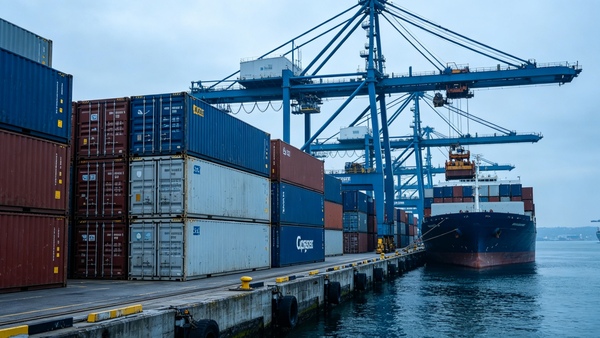
Why do multi-carrier alliance operations affect route scheduling reliability?
Multi-carrier alliance models integrate independent vessel capacities, terminal booking resources, and voyage schedules from multiple liner operators to improve slot utilization on Northern Europe to South America ocean lanes. This cooperative structure delivers scale efficiency while introducing unique coordination-driven scheduling vulnerabilities.
How do alliance operational structures generate schedule risks?
Each alliance member maintains autonomous vessel deployment cycles, dry-docking maintenance plans, and priority cargo allocation protocols. Independent operational decision-making can create coordination friction across unified liner strings. Minor delays originating from individual carriers may propagate through interconnected voyage schedules, resulting in cumulative arrival deviations at destination ports.
Forwarders should note that slot sharing and cross-member charter agreements introduce additional scheduling uncertainty on Europe to South America Ocean routes. During peak cargo seasons or regional capacity tightening, temporary slot reallocations among alliance participants often alter confirmed voyage itineraries, leading to inconsistent delivery lead times for consignments.
What empirical data reflects alliance route performance gaps?
According to Drewry 2024 container shipping performance analytics, multi-carrier alliance-operated lanes between Northern Europe and South America exhibit moderately higher schedule deviation frequencies compared to independent single-carrier services. Such performance differentials correlate with cross-organizational coordination lags and divergent terminal operation standards among alliance member lines.
How to evaluate scheduling reliability of alliance-operated Europe to South America ocean routes effectively?
Effective reliability assessment requires forwarders to implement structured, data-driven evaluation workflows that integrate real-time voyage tracking, historical operational datasets, and established industry benchmarks. This multi-layered approach reduces judgment bias caused by isolated single-voyage observations.
Accumulate full-cycle operational datasets: Collect continuous voyage records covering departures from core Northern Europe ports including Rotterdam, Hamburg, and Antwerp, intermediate transshipment activities, and final arrivals at key South America terminals such as Santos and Buenos Aires. Accumulating six to twelve months of historical data helps neutralize temporary disruptions from extreme weather or short-term port congestion.
Reference credible industry benchmark figures: Adopt schedule reliability baseline data published by the Freightos Baltic Index (FBX) in 2024. The documented average port-to-port punctuality rate for Europe to South America long-haul container routes stands at approximately 82%, serving as a credible reference for carrier performance comparison.
Stratify schedule deviation severity levels: Categorize voyage delays into three measurable tiers: mild delays of 0 to 24 hours, moderate delays of 24 to 48 hours, and substantial delays exceeding 48 hours. Calculating the proportional distribution of each tier generates nuanced insights into route stability beyond basic delay frequency counts.
Assess alliance disruption recovery mechanisms: Evaluate operational resilience amid prevalent maritime chokepoint disruptions, including Panama Canal draft limitations and Red Sea route diversions. Cooperative alliances with mature adjustment protocols tend to reorganize vessel deployment and mitigate prolonged schedule disturbances within reasonable timeframes.
The recommended approach is to deploy standardized monthly reliability auditing protocols for partnered alliance liner strings. Forwarders can establish dedicated performance archives for each alliance, update metric data dynamically, and compile periodic assessment reports to inform evidence-based carrier selection and cargo routing planning.
What common evaluation mistakes do forwarders need to avoid?
Many global freight forwarding practitioners apply simplistic assessment frameworks when auditing alliance route reliability, which can lead to inaccurate carrier performance judgments and unanticipated logistics operational risks. Standardized evaluation practices help enhance overall supply chain predictability.

Relying on limited short-term voyage datasets: A common mistake is judging long-term route operational stability based on fewer than three months of voyage records. Short-term data is susceptible to transient market shocks, including extreme weather events, temporary terminal congestion, and regional maritime incidents, which do not reflect sustained service quality levels.
Overlooking transshipment link performance volatility: Some forwarders prioritize origin departure and destination arrival timestamps while neglecting intermediate transshipment efficiency. On Europe to South America Ocean multi-stop routes, transshipment bottlenecks represent one of the primary contributors to overall schedule deviations.
Failing to account for seasonal performance fluctuations: Liner service reliability exhibits noticeable seasonal variability. Winter rough sea conditions in Northern Europe and rainy-season terminal congestion across major South America ports both contribute to periodic punctuality declines. Ignoring such cyclical patterns undermines the accuracy of annual performance evaluations.
Equating sufficient capacity with schedule stability: Adequate slot availability does not consistently correlate with reliable voyage scheduling. Several alliances maintain abundant market capacity but implement frequent unscheduled voyage adjustments, resulting in unstable delivery performance despite sufficient cargo space.
How to leverage reliability evaluation results to optimize forwarding operations?
Structured scheduling reliability assessments serve dual functions for freight forwarding businesses, supporting routine carrier performance reviews and providing actionable data for operational optimization and client risk mitigation. Rational utilization of evaluation outcomes helps reduce cargo delay disputes and control operational overheads.
How to adjust cargo allocation strategies based on reliability metrics?
Forwarders can develop tiered cargo routing strategies according to alliance reliability performance trends. Time-sensitive shipments, including cross-border e-commerce consignments and industrial spare parts, can be assigned to alliance routes with consistent deviation metrics. Bulk low-urgency commodities can be arranged on cost-competitive routes with moderate reliability levels to balance service stability and operational profitability.
What operational benefits do data-driven selections deliver?
According to UNCTAD 2024 maritime logistics analyses, forwarders adopting data-backed carrier screening mechanisms achieve measurable improvements in long-haul route management. Structured reliability evaluation workflows assist enterprises in lowering cargo delay occurrences and reducing client compensation expenditures on intercontinental ocean shipping lanes.
In summary, systematic assessment of scheduling reliability metrics for multi carrier alliances running from northern europe to south america via ocean strings constitutes a valuable operational capability for global freight forwarders navigating volatile maritime markets. By adopting standardized evaluation metrics, avoiding prevalent assessment biases, and applying analytical results strategically, forwarders can mitigate routine logistics risks, refine route allocation decisions, and build resilient, high-quality ocean freight service frameworks for evolving Europe to South America Ocean trade demands.

Last
Comparing rail transit cost efficiency with cross border trucking alternatives for cargo moving from china to russia land bridge lanes
The China to Russia Land Bridge constitutes a vital overland logistics corridor linking Chinese manufacturing clusters to Russian
Next
How pharmaceutical logistics providers maintain strict reefer tracking on containers from europe to south america ocean freight routes
Europe to South America Ocean freight routes serve as a vital cold chain corridor for cross-border pharmaceutical consignments, re
