Document Verification Workflows to Clear High Value Diagnostic Tools via Europe to Middle East Air Freight Terminals
Freight Area
 5-Jun-2026
Europe to Middle East Air freight networks serve as core logistical corridors for high-value medical diagnostic devices, supporting cross-border healthcare infrastructure upgrades and clinical resource supplementation across Middle Eastern territories. Standardized documentary verification workflows mitigate clearance risks for these precision regulated commodities, avoiding terminal detention and compliance penalties. In recent years, updated regional customs and healthcare regulatory frameworks have standardized documentary inspection protocols for all inbound European medical air freight shipments.
Why do high value diagnostic devices require rigorous documentary verification for air clearance?
Rigorous documentary verification procedures reduce compliance vulnerabilities and financial losses associated with cross-border transportation of premium diagnostic devices. Such medical equipment falls under regulated commodity categories requiring multi-agency inspection prior to customs release. According to ITC Trade Map 2024 statistical data, cross-border air import volumes of European diagnostic devices to Middle Eastern markets recorded steady quarterly growth during the 2024–2025 operational cycle.
What operational risks arise from incomplete documentation submission?
A common mistake is categorizing professional diagnostic devices as general cargo and submitting simplified document packages for air clearance. Many forwarders disregard the specialized regulatory attributes of clinical diagnostic equipment, which leads to terminal detention, accumulated demurrage and storage fees, and mandatory cargo repatriation in severe scenarios. Forwarders should note that Middle Eastern customs and health authorities enforce stringent compliance screening for imported medical devices to sustain regional clinical service quality standards.
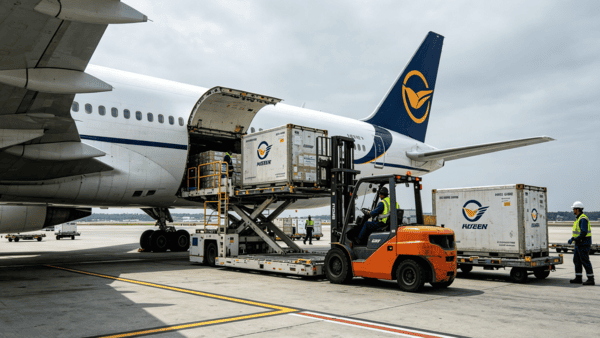
Missing or inaccurate certification paperwork frequently triggers clearance suspension at major regional air gateways including Dubai International Airport, Hamad International Airport, and Jeddah King Abdulaziz International Airport. Distinct from conventional consumer goods, diagnostic devices carry high unit valuation and require strict calibration stability control. Extended terminal custody may compromise equipment calibration accuracy and original packaging integrity, rendering devices unfit for professional clinical deployment.
How do regional regulatory variations impact documentary review processes?
Middle Eastern healthcare administrations implement unified baseline compliance criteria for European-origin diagnostic devices while maintaining jurisdiction-specific supplementary verification rules. Individual nations conduct independent validation of equipment registration records, manufacturing qualification credentials, and safety compliance certificates. This multi-layered review mechanism elevates the necessity of systematic pre-submission document verification for cross-border air freight operations.
What mandatory documentary sets support diagnostic device air clearance?
Standardized mandatory document collections constitute the fundamental compliance framework for high-value diagnostic devices clearing Europe to Middle East Air freight terminals. Each documentary component delivers targeted verification value for cargo legitimacy, manufacturing compliance, and trade transparency.
Classified commercial invoice with precise commodity details: The official invoice must include verified HS code classification, equipment model specifications, functional application descriptions, and unit valuation data. Accurate commodity classification assists customs officers in distinguishing clinical diagnostic devices from ordinary laboratory supplies and applying corresponding tariff and inspection protocols.
Original manufacturer compliance certification files: Authorized manufacturing qualification documents, batch production compliance reports, and factory calibration certification are mandatory for official review. These documents validate that European-manufactured diagnostic devices conform to international medical device production and safety benchmarks.
Valid air waybill and itemized packing list: House or master air waybills must maintain data consistency with commercial invoices covering gross weight, package quantity, and consignee registered information. Detailed packing documentation facilitates efficient on-site cargo tally and shortens manual inspection cycles at air cargo terminals.
Medical device import pre-approval filings: Most Middle Eastern regulatory bodies mandate pre-submitted import notification filings for high-precision diagnostic equipment. These regulatory filings record end-user institutional information and intended clinical application scenarios for administrative supervision purposes.
Official certificate of origin for European manufactured goods: Qualified origin certification verifies European manufacturing provenance and supports local customs in implementing applicable bilateral trade tariff policies. Complete origin documentation also lowers the probability of targeted anti-counterfeiting inspection procedures at regional air hubs.

How can forwarders streamline document verification workflows for efficient clearance?
Optimized documentary verification workflows accelerate air clearance procedures for regulated diagnostic devices and minimize terminal dwell time at Middle Eastern freight hubs. Structured pre-flight verification and error rectification mitigate most recurring clearance barriers for specialized medical air cargo.
The recommended approach is to deploy a dedicated pre-flight document auditing workflow tailored for medical diagnostic air freight. Forwarders can sort documentary requirements by destination jurisdiction to conduct targeted preparation and reduce errors caused by generalized template application.
Execute policy alignment verification in advance: Cross-check cargo specifications with updated import regulatory standards of destination Middle Eastern nations before document compilation. Targeted policy matching eliminates non-compliant documentary content that may result in clearance rejection.
Standardize cross-document data consistency: Forwarders should note that data discrepancies across invoices, air waybills, and certification files represent a prevalent cause of routine clearance delays. Unified data calibration supports seamless automated and manual inspection procedures at regional air terminals.
Adopt third-party pre-submission compliance auditing: Engage professional third-party compliance institutions to audit document packages for high-value diagnostic cargo. External auditing mechanisms identify latent documentary discrepancies and improve pass rates during primary customs verification.
Establish emergency document supplementation mechanisms: Build rapid response coordination channels with overseas manufacturers and local destination agents for urgent document revision and supplementation. Flexible operational frameworks shorten resolution cycles for unanticipated documentary corrections.
Maintain systematic verified document archiving: Categorize and archive validated document templates for recurring European diagnostic device shipments. Standardized file archiving improves operational efficiency for subsequent batch air freight arrangements.
What operational values do standardized verification workflows deliver?
How do structured workflows control abnormal logistics expenditures?
Systematic documentary verification protocols reduce additional logistics expenditures arising from clearance delays, including terminal storage fees, cargo detention charges, and document amendment service costs. According to Freightos 2025 mid-year air freight industry analysis, standardized compliance workflows cut abnormal operational expenses for regulated medical air cargo across cross-border routes.
How does reliable clearance support sustainable client cooperation?
Consistent and predictable customs clearance performance enables forwarders to deliver stable logistics solutions for medical industry clients. Timely inbound delivery of diagnostic devices supports scheduled equipment deployment and routine clinical service operation for Middle Eastern healthcare institutions, facilitating steady long-term business collaboration.
How do compliant operations enhance market adaptability?
As Middle Eastern medical infrastructure expansion progresses steadily, cross-border import demand for European high-precision diagnostic devices continues to rise. Forwarders with mature documentary verification systems can adapt to iterative regulatory updates and capture more operational opportunities within the specialized medical air freight segment.
Continuous refinement of documentary compliance and verification mechanisms serves as a vital operational advantage for logistics providers focusing on medical freight services. Robust workflow governance supports consistent, compliant, and cost-effective clearance for high-value diagnostic device shipments moving through Europe to Middle East Air freight ecosystems.

Last
Utilizing high efficiency air sea intermodal transshipment loops for freight moving from hong kong to usa logistics gateways
Hong Kong to USA logistics relies on optimized air-sea intermodal transshipment loops to strike a balanced combination of transit

Next
Streamlining sea rail intermodal transit time paths when routing commercial freight from china to mexico across cross border loops
China to Mexico Cross Border freight operations rely heavily on optimized sea-rail intermodal workflows to mitigate transit delays
