Balancing transit speed variations across alternative transshipment route strings to lower your average china to brazil logistics freight cost
Freight Area
 5-Jun-2026
Many global freight forwarding enterprises fail to adjust route strategies based on transit speed differences, which gradually raise overall china to brazil logistics freight cost and affect shipment delivery consistency. Rational allocation and balanced combination of diverse transshipment routes help forwarders control comprehensive logistics expenditure while stabilizing container delivery schedules.
What creates transit speed differences on China to Brazil transshipment routes?
Transit speed discrepancies on China to Brazil container shipping routes derive from varied transshipment hub efficiency, carrier service schedules, and periodic port congestion conditions. These multi-dimensional operational factors form distinct timeline gaps among different route combinations.
According to UNCTAD 2025 maritime connectivity statistics, Asia-to-South America container trade lanes support more than eight common transshipment route configurations. Each configuration features unique sailing frequencies, berth waiting cycles, and terminal processing durations that reshape total shipping transit time.
Major relay hubs including Singapore, Panama, and Dubai maintain differentiated container throughput capabilities. Periodic Panama Canal traffic adjustments and liner service schedule revisions further expand transit time gaps between direct and indirect shipping routes for China-Brazil cargo movements in recent shipping cycles.
Why do route speed variations impact long-term freight budgeting?
Transit speed fluctuations influence multiple hidden logistics expenditures such as container inventory holding fees, demurrage charges, and client delivery compensation costs. Unreasonable route matching tends to push up the average china to brazil freight cost for batch and repeated export shipments.
According to Drewry 2026 Q1 global shipping cost research, route instability and unplanned transit delays generate 6% to 10% extra incidental expenses for regular China-Brazil container shipments. Such cumulative incremental costs erode the profit space of forwarding companies with continuous order volumes.
Most cargo purchasers formulate fixed procurement and inventory turnover cycles based on stable shipping timelines. Forwarders who ignore the matching balance between transit speed and freight budget may face client disputes and additional operational losses during long-term cooperation.
A common mistake is that many forwarders only refer to upfront ocean rates when selecting shipping routes, without evaluating long-term transit stability and hidden delay risks. This one-sided selection mode causes follow-up cost increases that offset the initial rate advantages.
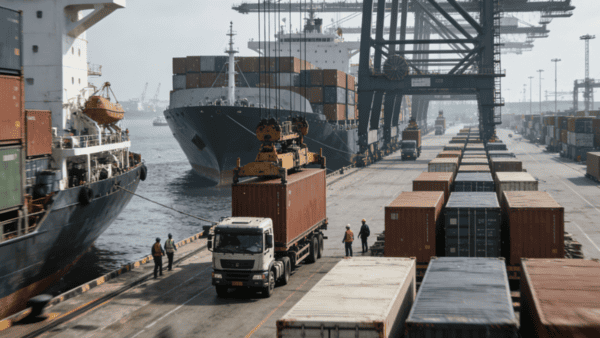
What are the mainstream transshipment route options for China to Brazil container shipping?
Container shipping services from China to Brazil cover several typical transshipment route structures with differentiated operational characteristics. Each route matches different cargo demands in terms of delivery timeline requirements and logistics budget arrangements.
Panama Canal transshipment route: This route connects Chinese eastern coastal ports and Brazilian coastal terminals via Panama Canal transit. It provides moderate freight rates and stable transit cycles, often adopted for conventional general cargo shipments with regular delivery demands.
Singapore hub relay route: Container cargo completes transshipment and vessel connection at Singapore Port before sailing toward Brazilian destinations. This route offers abundant liner resources and flexible scheduling, with slightly extended transit time and relatively economical unit freight rates.
Middle East transshipment route: Relay operations at Dubai and Jeddah ports support eastbound container transportation from China to Brazil. This route presents competitive baseline ocean rates but carries higher exposure to transit delays during seasonal shipping peaks.
Direct port-to-port shipping service: Direct liner routes between core Chinese and Brazilian ports reduce transshipment links and operational risks. The service maintains steady rate standards with limited floating space in conventional market environments.
How can forwarders balance speed and cost across multiple routes?
Dynamic portfolio allocation of multiple shipping routes helps forwarders coordinate transit stability and cost control for China-Brazil container logistics. Scientific route collocation optimizes comprehensive freight expenditure without weakening overall service quality.
Forwarders should note that single fixed route strategies cannot adapt to the dynamic adjustments of global maritime markets. Mixed route allocation is one of the commonly adopted approaches to balance operational stability and cost control for cross-border container shipments.
Classify shipments based on delivery urgency: Arrange time-sensitive container cargo via Panama Canal routes and direct port-to-port services to secure stable transit efficiency. Deploy bulk cargo with flexible delivery windows to Singapore and Middle East relay routes for cost optimization.
Track hub port congestion indicators continuously: The recommended approach is to monitor real-time congestion and berth occupancy data of major transshipment hubs. Timely route switching avoids unplanned waiting delays and temporary congestion surcharges.
Adopt proportional multi-route allocation mechanisms: Set reasonable allocation proportions for stable medium-rate routes and economical relay routes. This balanced allocation mode reduces overall freight cost volatility and unifies batch shipment delivery cycles.
Optimize route combinations with seasonal data: Adjust route portfolio structures according to annual peak and off-peak shipping rules. Seasonal strategy revisions lower delay probabilities and stabilize average freight costs for long-term shipment arrangements.
What cost benefits come with balanced route management?
Standardized multi-route balancing management reduces unplanned incidental logistics costs and unifies operational standards for China-Brazil cross-border shipping. It helps forwarders form predictable cost frameworks for client quotation and internal financial planning.
According to Freightos Baltic Index (FBX) 2026 Q1 lane analysis data, logistics providers that apply mixed route allocation modes reduce average container shipping costs by 5% to 9% on Asia-to-Brazil trade lanes. The optimization effect becomes more visible during market fluctuation periods.
Reasonable route allocation also lowers manual operational errors and emergency shipment adjustment frequencies. Consistent transit service performance helps forwarders sustain stable cooperative relationships with long-term cargo owners.
What risks should forwarders avoid in multi-route scheduling?
Unregulated multi-route deployment may trigger operational disorder and inconsistent service quality without complete management specifications. Targeted risk prevention measures maintain stable cost-control and service-output effects.
Aim for rational low-cost route application: Excessive dependence on economical routes with unstable transit performance raises demurrage and cargo detention risks. Controlled proportional allocation assists forwarders in balancing cost expenditure and service stability.
Maintain standardized route switching procedures: Irregular route replacement leads to inconsistent delivery timelines for batch shipments. Formulating unified seasonal adjustment rules helps maintain operational regularity.
Carry out full-dimensional route cost evaluation: Incomplete cost assessment that ignores transshipment fees and detention charges causes inaccurate budget calculation. Comprehensive evaluation of all auxiliary charges ensures authentic total freight cost accounting.
In the evolving maritime logistics industry, refined balancing of transit speed and multi-route resources serves as a practical optimization method to cut comprehensive china to brazil logistics freight cost, enabling global forwarders to improve operational stability and market competitiveness in cross-border container shipping businesses.
Last
Vetting ocean carrier service strings for moving electric vehicle components from korea to europe via ocean freight contracts
Korea to Europe ocean freight constitutes a vital logistics channel for cross-border transportation of high-value electric vehicle
Next
Vetting cross docking facility efficiency when managing multi supplier e commerce freight moving from shenzhen to uk lcl paths
Multi-supplier e-commerce freight consolidation has become a prevalent operational model in cross-border logistics, and rigorous v
