High-Value Over-Sized Cargo Operation Handbook: How a Piece of Chinese-Manufactured Large-Scale Equipment Safely Arrives at a UK Construction Site via Sea Freight
Freight Area
 30-Apr-2026
In the wave of Chinese manufacturing going global, the export demand for large-scale engineering equipment continues to rise. China to UK sea freight has become a core channel for the transportation of high-value over-sized cargo. Such goods are characterized by high unit prices, over-dimensional sizes, and high transportation risks; any oversight in any link may result in huge losses. As a freight forwarder, accurately controlling each operation node is the key to ensuring the safe arrival of the goods.
I. First, Clarify: What Are the Criteria for Identifying High-Value Over-Sized Cargo?
High-value over-sized cargo refers to large-scale equipment with a single shipment value exceeding USD 500,000, a length of more than 12 meters, or a width of more than 3 meters. It is commonly used in fields such as engineering construction and intelligent manufacturing. Its sea freight operation is far more difficult than that of ordinary goods, requiring extremely high professional capabilities of freight forwarders.
1. What Are the Core Judgment Dimensions?
Freight forwarders need to note that the identification of high-value over-sized cargo must meet two core conditions: "value" and "dimension", both of which are indispensable. The specific identification standards can refer to industry practices and customs supervision requirements to avoid operational violations caused by incorrect judgment.
Value Judgment: The declared value of a single shipment of goods is ≥ USD 500,000, including the value of the equipment itself, packaging costs, and relevant additional values. Formal commercial invoices and value certification documents must be provided.
Dimension Judgment: If the length is > 12 meters, the width is > 3 meters, or the height is > 2.8 meters, the cargo will be identified as over-length/over-width/over-height cargo. The transportation dimensions and weight must be calculated in advance.
Cargo Attributes: It mainly includes large-scale engineering equipment and precision machinery, most of which are non-separable, fragile, and collision-sensitive, requiring extremely high stability during transportation.
2. Why Is China to UK Sea Freight the First Choice for Such Cargo?
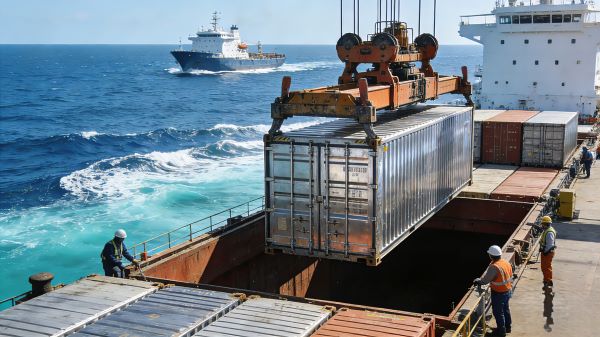
The recommended practice is that when formulating transportation plans for high-value over-sized cargo, freight forwarders should give priority toChina to UK sea freight. The core reasons lie in the cost advantages, capacity adaptability, and route maturity of sea freight, which are particularly suitable for the long-distance transportation of large non-separable goods.
According to the data in the UNCTAD Q2 2026 Global Shipping Report, the capacity of large special containers (FR/OT) on the China-UK sea freight route has increased by 29.3% year-on-year, which can fully meet the capacity demand for over-sized cargo transportation. At the same time, the per-kilometer transportation cost of sea freight is only 1/8 of that of air freight. For high-value over-sized cargo with heavy weight, it can significantly reduce transportation costs. In addition, the route is highly stable and less affected by weather than air freight.
II. Practical Step 1: How to Complete Preparations for China to UK Sea Freight?
Preparations are the foundation for the success of high-value over-sized cargo sea freight. The core lies in "accurate calculation, compliant declaration, and plan adaptation". Freight forwarders must coordinate with shippers, shipping companies, ports, and other parties to avoid potential risks in advance.
1. Cargo Information Calculation: Why Is Accuracy Critical?
A common misunderstanding is that some freight forwarders formulate plans based solely on the rough dimensions and weight provided by the shipper, ignoring the weight and dimension superposition of packaging and reinforcement materials, which leads to subsequent container space adaptation problems or port operation obstacles.
Accurate Cargo Dimension Measurement: It is necessary to measure the bare dimensions of the cargo and the actual dimensions after packaging, accurate to centimeters, and focus on marking the longest, widest, and highest points to avoid being unable to load into special containers or pass through port channels due to dimension errors.
Actual Weight Calculation: It includes the bare weight of the cargo, packaging weight, and reinforcement material weight. A weight redundancy of 5%-10% should be reserved to avoid shipping companies refusing to carry the cargo or charging additional overweight fees due to excessive weight.
Confirmation of Cargo Characteristics: Clarify whether the cargo is fragile, needs moisture protection, or has special loading requirements (such as upright loading and no tilting) to provide a basis for subsequent packaging, reinforcement, and transportation.
2. Compliant Declaration: What Are the Core Requirements for China's Export and UK's Import?
Freight forwarders need to note that the compliant declaration of high-value over-sized cargo directly affects customs clearance efficiency. Both China's export and the UK's import have clear supervision requirements. All relevant documents must be prepared in advance to avoid port detention and fines caused by inconsistent declarations.
(1) Requirements for China's Export Declaration
Document Preparation: Commercial invoice, packing list, customs declaration form, certificate of origin, and equipment manual (bilingual in Chinese and English). If the cargo involves special equipment, an export license for special equipment must be provided.
Declaration Norms: Truthfully declare the value, dimensions, weight, and purpose of the cargo. Under-declaration and misdeclaration are strictly prohibited—according to the latest supervision requirements of China Customs in 2026, under-declaration of high-value goods will face a fine of 30%-50% of the cargo value.
(2) Requirements for UK's Import Declaration
Document Preparation: Bill of lading, commercial invoice, packing list, certificate of origin, UK Customs import declaration form (C88 document). If the cargo is engineering equipment, a UK engineering equipment access certificate (UKCA certification) must be provided.
Customs Duties and VAT: According to the latest tax rates of UK Customs in June 2026, the import tariff rate for large-scale engineering equipment is 5%, and the VAT rate is 20%. Freight forwarders must calculate the tax in advance and inform the shipper to prepare for the cost.
III. Practical Core: Packaging, Reinforcement, and Loading—How to Avoid Transportation Risks?
The main sea freight risks of high-value over-sized cargo are concentrated in the links of packaging, reinforcement, and loading. Freight forwarders must supervise the entire process to ensure that every detail complies with operational norms, avoiding damage, displacement, and other problems of the cargo during transportation.
1. Packaging Requirements: What Are the Special Norms for High-Value Over-Sized Cargo Packaging?
Freight forwarders need to note that the packaging of high-value over-sized cargo must not only meet the requirements of moisture-proof and anti-collision but also adapt to the bumpy environment of sea freight to avoid cargo damage caused by improper packaging, especially for precision machinery.
Basic Packaging: Adopt wooden pallets + shock-absorbing foam + waterproof tarpaulin. Wooden pallets must comply with the ISPM-15 international standard, undergo fumigation treatment, and be marked with fumigation signs to avoid being refused entry by UK Customs.
Protection of Precision Components: The precision parts of the equipment (such as instruments and interfaces) must be packaged separately, wrapped with shock-absorbing cotton, and then placed in a waterproof packaging box to avoid vibration and moisture damage during transportation.
Marking and Labeling: Clearly mark the cargo name, dimensions, weight, center of gravity, as well as warning signs such as "Fragile", "No Tipping", and "Moisture-Proof" on the outside of the packaging to facilitate the operation of ports and shipping companies.
2. Reinforcement Operation: How to Ensure No Displacement During Transportation?
A common misunderstanding is that some freight forwarders only use simple rope reinforcement, ignoring the center of gravity distribution of the cargo, which leads to the displacement and collision of the cargo during sea freight bumps, resulting in equipment damage.
Selection of Reinforcement Materials: Prioritize high-strength steel wire ropes + reinforcement buckles, combined with wooden squares and triangular wooden blocks for fixation. The strength of the steel wire ropes must be calculated according to the cargo weight to ensure that they can withstand the bumping force during sea freight.
Layout of Reinforcement Points: Arrange reinforcement points around and at the bottom of the cargo according to the center of gravity, with one reinforcement point set every 1.5-2 meters to ensure uniform force on the cargo and avoid packaging damage caused by excessive local force.
Reinforcement Acceptance: After the reinforcement is completed, freight forwarders must conduct on-site acceptance, manually check the tightness of the steel wire ropes to ensure that the cargo is not loose or displaced, and take photos of the reinforcement for future claim purposes.
3. Loading Operation: What Are the Key Notes?
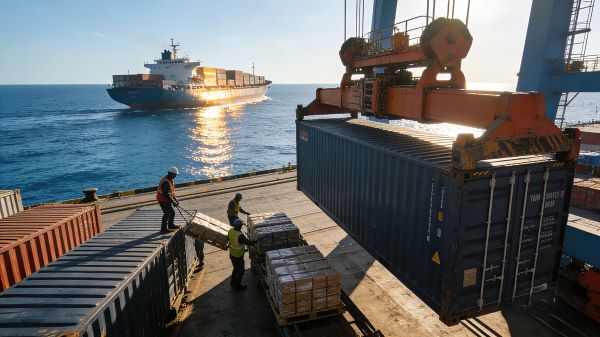
The recommended practice is that freight forwarders should arrange special personnel to supervise the loading site, coordinate with shipping companies and hoisting companies to ensure a smooth and standardized loading process, and avoid cargo damage or loading delays caused by operational errors.
Selection of Hoisting Equipment: Select appropriate hoisting equipment according to the cargo weight. The hoisting capacity must be more than 20% higher than the cargo weight to avoid accidents caused by equipment overload during hoisting.
Loading Positioning: Place the cargo in the designated position in the cabin to ensure that the center of gravity of the cargo is consistent with that of the cabin, avoid increased bumps caused by the offset of the center of gravity during the ship's navigation, and keep the cargo away from the cabin edge to prevent falling.
Post-Loading Inspection: After loading, recheck the reinforcement of the cargo to ensure that it is not loose or displaced, and verify that the cargo information is consistent with the bill of lading to avoid misloading or missing loading.
IV. Practical Final Step: UK Customs Clearance and Construction Site Delivery—How to Achieve Seamless "Door-to-Construction Site" Connection?
The last key link of China to UK sea freight is UK customs clearance and construction site delivery. Freight forwarders must connect with local UK customs brokers and delivery teams in advance to ensure that the goods can be safely and timely delivered to the UK construction site after smooth customs clearance.
1. UK Customs Clearance: How to Improve Clearance Efficiency?
Freight forwarders need to note that UK customs clearance has extremely high requirements for the completeness and accuracy of documents. Preparing all relevant documents in advance and cooperating with professional UK customs brokers can greatly improve clearance efficiency and avoid port detention.
Pre-Clearance Document Review: Before customs clearance, freight forwarders must review all documents to ensure that the information on commercial invoices, bills of lading, certificates of origin, and other documents is consistent, without spelling errors or missing information, especially key information such as cargo value and dimensions.
Selection of Professional Customs Brokers: Prioritize local UK customs brokers with experience in high-value over-sized cargo clearance, who are familiar with UK Customs supervision requirements and can quickly handle unexpected problems (such as customs inspection) during clearance.
Response to Customs Inspection: If the cargo is inspected by UK Customs, freight forwarders must promptly provide relevant certification documents, cooperate with the inspection, and coordinate with the customs broker to minimize the inspection time and reduce detention fees.
2. Construction Site Delivery: What Are the Special Requirements for Over-Sized Cargo Delivery?
According to the latest regulations of the UK Department for Transport (DfT) in June 2026, the transportation of over-length and over-width goods within the UK requires a transportation license in advance, and the goods must be transported on designated routes and at designated times. Freight forwarders must make route plans in advance.
Application for Transportation License: Apply for an over-sized cargo transportation license from the UK Department for Transport 7-10 days in advance, providing information such as cargo dimensions, weight, and transportation route, and start delivery only after approval.
Route Planning: Avoid restricted sections such as UK city centers, bridges, and tunnels, select routes with good road conditions and sufficient width, and arrange special personnel to guide along the way to avoid delays caused by traffic jams or inconsistent routes.
Construction Site Handover: After delivering the goods to the UK construction site, freight forwarders must check the cargo information with the site supervisor, inspect whether the cargo is damaged or displaced, complete the handover procedures after confirmation, and retain the handover certificate.
V. Risk Avoidance and Emergency Handling: Practical Guidelines for Freight Forwarders
There are many risk points in the China to UK sea freight of high-value over-sized cargo. Freight forwarders must formulate risk avoidance plans and emergency handling measures in advance to respond to unexpected situations during transportation and reduce losses.
1. Core Risk Points and Avoidance Methods
Risk 1: Cargo Damage: The avoidance method is to strictly follow the packaging and reinforcement norms, select experienced shipping companies and hoisting companies, and purchase sufficient marine insurance for the cargo (the insured amount is not less than 110% of the cargo value), prioritizing insurance types that cover risks such as breakage and displacement.
Risk 2: Customs Clearance Delay: The avoidance method is to review documents in advance, select professional customs brokers, be familiar with UK Customs supervision requirements, avoid port detention caused by inconsistent declarations, and reserve a 3-5 day buffer period for customs clearance.
Risk 3: Container Space Shortage: The avoidance method is to book container space 15-20 days in advance, sign Long-Term Agreements (LTA) with shipping companies to lock in container space resources, and plan in advance especially during peak seasons (June-August, November-December) to avoid shipping peaks.
2. Emergency Handling Measures: How to Respond to Problems?
Cargo Damage: Immediately take photos and videos of the damaged cargo, retain relevant evidence, report to the insurance company as soon as possible, communicate with the shipping company and hoisting company to clarify the division of responsibilities, negotiate compensation matters, and synchronize the relevant situation to the shipper.
Customs Clearance Obstruction: Timely coordinate with the customs broker to understand the cause of the obstruction, supplement relevant documents or explanatory materials. If fines are involved, communicate with the shipper in a timely manner to handle it properly, avoid expanding the delay, and coordinate with the customs to issue relevant explanations if necessary.
Delivery Delay: Communicate with the delivery team in advance to understand the cause of the delay (such as traffic jams or route changes), adjust the delivery plan in a timely manner, and inform the shipper and site supervisor of the delay and the expected delivery time to reduce losses.
VI. Summary: Professionalism and Details Are the Key to High-Value Over-Sized Cargo China to UK Sea Freight
From the factory to the UK construction site, every link of a Chinese-manufactured high-value over-sized cargo tests the professional ability and sense of responsibility of freight forwarders. As the core transportation channel, the standardization, compliance, and safety of China to UK sea freight directly determine whether the goods can arrive smoothly. Freight forwarders must abandon the misunderstanding of "valuing price over service", focus on pre-preparation, mid-term control, and post-connection, accurately grasp each operation node, and avoid potential risks. Only in this way can they provide safe, efficient, and worry-free transportation services for shippers, establish core competitiveness in the high-value over-sized cargo transportation market, and promote Chinese manufacturing to go global smoothly through the China to UK sea freight route.
Last
Practical Operation of Special Containers (FR/OT) for Sea Shipping from China to Germany: How Can Freight Forwarders Avoid Surcharges?
Sea shipping from China to Germany is a core logistics channel for China-EU trade. Among them, special containers (FR Flat Rack an
Next
Felixstowe Port Strike Alert: How to Ensure the Timeliness of UK Backend Shipping Delivery from China Through Multi-Port Linkage?
Recently, the strike alert at Felixstowe Port, the largest container port in the UK, has continued to escalate, bringing great unc
