2026 Route Outlook: How Can Shipping Carriers Reshape Their Freight Rate Moat Amid Overcapacity on the China-UK Shipping Route?
Freight Area
 30-Apr-2026
Since 2026, the China-UK shipping market has shown distinct characteristics of "weak demand and surging capacity". The vicious freight rate competition caused by overcapacity has become increasingly fierce, and many shipping carriers have fallen into the dilemma of "cutting prices to seize cargo while suffering shrinking profits". Against this industry background, how to jump out of the price war trap and reshape their own freight rate moat has become a core proposition for global freight forwarders.
I. Overcapacity is a Foregone Conclusion: What is the Current Situation of the China-UK Shipping Market in 2026?
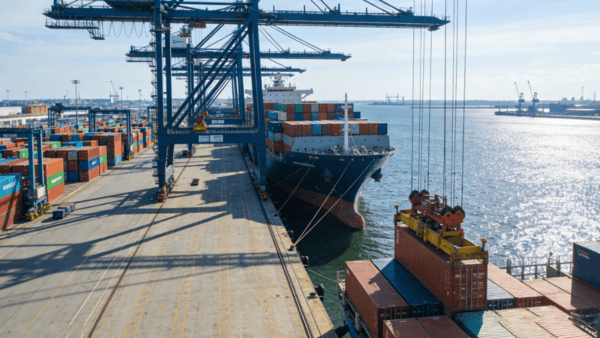
Overcapacity in China-UK shipping is one of the core keywords in the global shipping market in 2026. Its essence is the serious imbalance between the capacity invested by shipping companies and the actual market demand. This imbalance is not a short-term phenomenon but the result of multiple factors, such as the slow recovery of the global supply chain and the concentrated delivery of new ships.
1. Core Data Evidence: What are the Specific Manifestations of Overcapacity?
Freight forwarders need to note that the overcapacity in China-UK shipping in 2026 has reached the peak in the past five years, and various authoritative data can intuitively reflect this situation: According to the Q2 2026 Global Shipping Report released by UNCTAD (United Nations Conference on Trade and Development), the container capacity on the China-UK route increased by 29.3% year-on-year, while the freight demand only rose by 7.5%, resulting in a capacity supply-demand gap of as high as 21.8%. In addition, according to the latest data from the Shanghai Shipping Exchange in May 2026, the comprehensive freight rate index for China-UK shipping (CCFI Europe Route) stood at 1528.76 points, a year-on-year decrease of 33.2%, and some routes even saw the extreme situation of "grabbing cargo below cost price".
2. In-depth Cause Analysis: Why Does Large-scale Overcapacity Occur?
The recommended approach is that when analyzing the causes of overcapacity, freight forwarders should start from three dimensions—"supply side, demand side, and industry environment"—to avoid one-sided attribution.
(1) Supply Side: Concentrated Delivery of New Ships and Surging Capacity Investment
2025-2026 has entered a peak period for global new ship deliveries. In Q2 2026 alone, 15 ultra-large container ships of over 18,000 TEU were put into the China-UK route, directly leading to a sharp surge in capacity that far exceeds the market's absorption capacity.
(2) Demand Side: Weak UK Consumption and Slowing Export Demand
Affected by persistently high inflation in the UK and the decline in residents' consumption capacity, the growth rate of China's export volume to the UK has slowed down. According to UN Comtrade data in April 2026, China's export volume to the UK increased by only 4.1% year-on-year, far lower than the 8% market expectation. Insufficient demand has further highlighted the problem of overcapacity.
(3) Industry Environment: Blind Expansion in the Early Stage and Unabsorbable Capacity
During the epidemic, global shipping demand soared, prompting shipping companies to blindly expand production and add China-UK routes. Now that the global supply chain has gradually recovered, shipping demand has declined, and the excess capacity added in the early stage cannot be absorbed in a timely manner, further exacerbating the overcapacity situation.
II. The Core of Freight Rate Moat: Why Can't Shipping Carriers Rely on "Price Cutting to Seize Cargo" Anymore?
The freight rate moat is the core barrier for shipping carriers to resist risks and achieve profits in market competition. Its core is not "low price" but the comprehensive competitiveness of "cost performance + service barrier + resource advantage". Against the background of overcapacity, a simple low-price strategy will only trap carriers in a vicious circle.
1. Common Misunderstanding: Why is Price Cutting to Seize Cargo a "Drinking Poison to Quench Thirst"?
A common misunderstanding is that many shipping carriers believe "as long as the price is low enough, they can seize market share", but they ignore the hidden costs behind low prices. Since 2026, many small and medium-sized carriers have had their capital chains broken due to price cutting to seize cargo—on the one hand, low prices cannot cover basic costs such as ship chartering, port operations, and customs declaration; on the other hand, low prices are often accompanied by reduced services, which are likely to cause disputes such as cargo damage and delays, leading to the loss of long-term customers. Freight forwarders need to note that in an overcapacity market, "low price" can only be used as a short-term drainage tool, not a long-term competitive advantage.
2. Core Cognition: What Elements Does a Real Freight Rate Moat Include?
According to the 2026 Global Freight Forwarding Industry Report released by Drewry, the freight rate moat of high-quality shipping carriers mainly consists of three elements: first, a stable freight rate system to avoid frequent price reductions or increases, allowing customers to form clear expectations; second, differentiated service capabilities to provide customized solutions for different goods; third, control over scarce resources, such as locking in high-quality container space and priority operation rights at core ports. These three elements are the core competitiveness that distinguishes them from "low-price carriers".
III. Practical Guide: How Can Shipping Carriers Reshape Their Freight Rate Moat? (4 Core Strategies)
The core of reshaping the freight rate moat is to "jump out of the price war and focus on value competition". Combined with the characteristics of the China-UK shipping market in 2026, the following four practical strategies are recommended, which freight forwarders can flexibly implement according to their own resources:
Strategy 1: Lock in Core Container Space and Build a Capacity Barrier. Freight forwarders need to note that overcapacity does not mean "no risk in container space"; on the contrary, it is prone to polarization—"lack of space in peak seasons and overcapacity in off-seasons". The recommended approach is to sign Long-Term Agreements (LTAs) with leading shipping companies such as Maersk and Hapag-Lloyd to lock in 20%-30% of stable container space. At the same time, match direct route resources from China's Shanghai Port, Shenzhen Port to the UK's Southampton Port and Liverpool Port, avoid relying on a single port or route, and enhance customer trust through "stable capacity", thereby gaining the initiative in freight rate pricing.
Strategy 2: Create Differentiated Services and Get Rid of Price Dependence. Providing customized services for different types of goods in China-UK shipping is the key to jumping out of the price war. For example, for cross-border e-commerce goods, launch an integrated service of "container space reservation + fast customs clearance + end-to-end delivery"; for dangerous goods (DG) and special containers (FR/OT), set up a professional operation team to provide value-added services such as compliant declaration and reinforced packaging; for bulk cargo, cooperate with local warehousing enterprises in the UK to provide "door-to-door" full-cycle performance services, and cover costs through service premiums instead of relying on low prices.
Strategy 3: Optimize the Freight Rate System and Realize Dynamic Regulation. A common misunderstanding is that many carriers adopt a "one-size-fits-all" freight rate strategy, which cannot adapt to market fluctuations. The recommended approach is to establish a dynamic freight rate adjustment mechanism, and flexibly adjust freight rates based on real-time data from the Shanghai Shipping Exchange and Freightos Baltic Index (FBX), as well as factors such as peak/off seasons, cargo volume changes, and route congestion. In off seasons, appropriately offer concessions to attract customers but set a minimum cost bottom line; in peak seasons, rely on stable container space to reasonably increase freight rates, and at the same time launch "preferential prices for long-term cooperative customers" to balance short-term drainage and long-term profits.
Strategy 4: Integrate Upstream and Downstream Resources to Reduce Operational Costs. Behind the freight rate moat is the contest of cost control capabilities. Freight forwarders need to note that they can compress intermediate costs by integrating upstream and downstream resources: for example, sign long-term cooperation agreements with terminals and customs brokers at China's core export ports (Shanghai, Shenzhen, Ningbo-Zhoushan) to obtain preferential operation fees and customs declaration fees; establish in-depth cooperation with local customs clearance companies and delivery enterprises in the UK to reduce end-to-end delivery costs; use digital freight forwarding management systems to optimize processes such as booking, customs declaration, and cargo tracking, reduce labor costs, and support reasonable freight rates through cost advantages instead of low-price competition.
IV. Risk Reminder: What Common Pitfalls Should Be Avoided When Reshaping the Freight Rate Moat?
Against the background of overcapacity in China-UK shipping in 2026, many shipping carriers have increased losses due to improper operations in the process of reshaping their freight rate moat. The following three common pitfalls need to be focused on avoiding:
Pitfall 1: Blindly Locking in Container Space and Ignoring Demand Matching. Freight forwarders need to note that when signing Long-Term Agreements (LTAs), they should consider their own cargo volume scale and avoid blindly locking in too much container space. If their own cargo volume is insufficient to absorb the locked container space, they will face high idle container space costs, which will instead drag down profits. The recommended approach is to lock in a reasonable proportion of container space based on the average cargo volume in the past six months and reserve 10%-15% of flexible space to cope with market fluctuations.
Pitfall 2: Overpursuing Differentiation and Ignoring Cost Control. Differentiated services are not "the more the better". If the launched value-added services cannot bring corresponding service premiums, they will instead increase operational costs. A common misunderstanding is that some carriers blindly launch a variety of value-added services without accurately positioning customer needs, resulting in service costs higher than revenue. The recommended approach is to focus on their own core advantages, launch customized services for high-value customers, and provide standardized services for ordinary customers to achieve a balance between "differentiation and cost control".
Pitfall 3: Ignoring Digital Empowerment and Low Efficiency. In an overcapacity and highly competitive market, operational efficiency is the key to controlling costs and enhancing competitiveness. Many small and medium-sized carriers still adopt the traditional manual operation mode, with cumbersome processes such as booking, customs declaration, and tracking, high labor costs, and high error rates, which cannot support a reasonable freight rate system. The recommended approach is to introduce a digital freight forwarding management system to realize the full onlineization of booking, customs declaration, and cargo tracking, improve operational efficiency, reduce labor costs, and provide support for the freight rate moat.
V. Conclusion: In the Era of Overcapacity, the Core of the Freight Rate Moat is "Value Competition"
The overcapacity in China-UK shipping in 2026 is both a challenge and an opportunity—for shipping carriers relying on low-price competition, it is a "cold winter" of elimination; for carriers focusing on value competition and actively reshaping their freight rate moat, it is a "window of opportunity" to seize market share. Freight forwarders need to clarify that a real freight rate moat is never built by low prices but by stable capacity, differentiated services, efficient cost control, and accurate customer positioning. In the future, only by jumping out of the price war trap, focusing on customers' core needs, and continuously optimizing services and freight rate systems, can we gain a firm foothold in the overcapacity China-UK shipping market in 2026, achieve long-term profits, and truly build an irreplaceable freight rate moat of their own.
Last
Shipping from China to Vietnam: A Comprehensive Guide for Freight Forwarders
The shipping route from China to Vietnam is a vital component of the Southeast Asian trade landscape. Given the close economic tie

Next
Boost Profit Margins_ The Unknown Logic of Tax Rebates and Rebates in Shipping from China to Germany
Against the backdrop of the continuous warming of China-Germany trade, shipping from China to Germany, as one of the core business
