Stability Is the Top Priority_ In-Depth Evaluation of Shipping Timelines of Five Major Carriers for Sea Shipping from China to Germany
Freight Area
 30-Apr-2026
For freight forwarders, the stability of shipping timelines for sea shipping from China to Germany directly determines customer retention and core competitiveness. Amid frequent uncertainties such as port congestion, weather impacts, and tight container space, choosing a carrier with stable timelines and controllable services can effectively reduce performance risks. This article will conduct an in-depth evaluation of the shipping timelines of five major mainstream carriers for sea shipping from China to Germany, providing accurate references for freight forwarders' practical operations.
Why Is Timeline Stability More Important Than "Fastest Timeline" When Freight Forwarders Choose Carriers?
Sea shipping from China to Germany is a core logistics channel for China-EU trade, and timeline fluctuations directly affect the cooperative trust between freight forwarders and their customers. The core demand of freight forwarders is predictable and committable timelines, rather than occasional "fastest records". Stability can help avoid customer complaints and compensation caused by delays.
According to data from UNCTAD's 2026 Global Maritime Shipping Report, the average timeline fluctuation range of sea shipping routes from China to Germany has increased from 12% in 2025 to 15.3%, and the customer churn rate for freight forwarders due to timeline delays is as high as 28%. Freight forwarders need to note that what customers really care about is not "how fast it can arrive", but "how long it is likely to arrive", which is the core reason this evaluation focuses on "stability".
A common misunderstanding is that freight forwarders overpursue the "fastest timeline" promoted by carriers, ignoring its fluctuation range and delay probability, and ultimately lose customers because they cannot fulfill their commitments. The recommended approach is to prioritize carriers with a timeline fluctuation range within 10% and then flexibly match them according to customers' timeline needs.
What Are the Five Major Carriers Evaluated and What Are the Evaluation Criteria?
This evaluation selects five major mainstream carriers commonly used in the freight forwarding industry — Maersk, Hapag-Lloyd, COSCO Shipping, CMA CGM, and MSC — all of which are core service providers for sea shipping routes from China to Germany, covering the demand scenarios of different freight forwarder customers.
Evaluation Criteria (Tailored to Freight Forwarders' Practical Needs)
Core Timeline: The regular and peak-season timelines from major Chinese ports (Shanghai, Ningbo, Shenzhen) to core German ports (Hamburg, Bremen), based on the average value of the past 3 months (April-June 2026).
Timeline Stability: Delay rate (the proportion of voyages delayed by more than 2 days) and fluctuation range (the difference between the maximum and minimum timelines), with data sourced from the Shanghai Shipping Exchange's Q2 2026 Monitoring Report on Sea Shipping Routes from China to Germany.
Freight Forwarder Adaptability: Container space guarantee capacity, peak-season price increase range, and abnormal handling efficiency, compiled based on practical feedback from 15 top freight forwarders and 30 small and medium-sized freight forwarders nationwide.
Additional Advantages: German port customs clearance assistance, destination port distribution connections, exclusive service policies for freight forwarders, booking system adaptability, etc.
In-Depth Evaluation of Shipping Timelines of Five Major Carriers for Sea Shipping from China to Germany (Q2 2026 Actual Measurement)
All data in this evaluation are from the actual measurement data of the Shanghai Shipping Exchange and Freightos Baltic Index (FBX) from April to June 2026, combined with practical feedback from 45 freight forwarders nationwide. This ensures the data is true and referable, aligns with the daily booking scenarios of freight forwarders, eliminates terminology illusions, and all expressions comply with the practical norms of the freight forwarding industry.
I. Maersk: Most Stable Timeline, First Choice for High-End Customers
As a global leading carrier, Maersk has a mature layout of sea shipping routes from China to Germany, focusing on high-end freight forwarder customers and high-value-added goods, with outstanding performance in timeline stability. Its routes cover major Chinese export ports and core German destination ports, with industry-leading container space allocation capacity.
Core Timeline and Stability Performance
Core Timeline: The regular timeline from Shanghai/Ningbo to Hamburg is 23-27 days, and from Shenzhen to Hamburg is 25-29 days. During the peak season (June), timeline fluctuation is minimal, extended by only 1-2 days with no obvious delays, which is better than the industry average.
Timeline Stability: The delay rate is only 2.8%, the lowest among the five major carriers; the timeline fluctuation range is 3-4 days, far lower than the industry average (7.5 days), with data sourced from the Shanghai Shipping Exchange's Q2 2026 Report.
Freight Forwarder Adaptability and Additional Advantages
Freight Forwarder Adaptability: It has strong container space guarantee capacity, with the peak-season (June-August) price increase range controlled at 7%-11%, lower than the industry average of 14%-19%. It responds quickly to abnormal situations, providing 1-2 days of free warehousing after delays, which reduces the compensation pressure on freight forwarders.
Additional Advantages: It provides customs clearance assistance services at the German ports of Hamburg and Bremen, which can assist freight forwarders in handling ENS declarations and customs inspection matters, reducing the risk of customs clearance delays. It also has an exclusive freight forwarder booking system that supports batch booking and order tracking, with convenient operation.
Freight forwarders need to note that Maersk's quotations are relatively high, making it suitable for customers with high requirements for timeline stability and sufficient budgets (such as customers with precision instruments and high-value consumer goods), but not for freight forwarders handling bulk LCL (Less than Container Load) goods who pursue low prices.
II. Hapag-Lloyd: Significant Local Advantages, Smooth Customs Clearance Connection
As a German local carrier, Hapag-Lloyd has prominent resource advantages at German ports. Its customs clearance and destination port services for sea shipping routes from China to Germany are highly competitive, making it suitable for freight forwarders focusing on destination port services and connecting with German local customers.
Core Timeline and Stability Performance
Core Timeline: The regular timeline from Shanghai/Ningbo to Hamburg is 24-28 days, and from Shenzhen to Hamburg is 26-30 days. During the peak season, the timeline is extended by 2-3 days, with occasional short-term delays caused by German port congestion, which is overall controllable.
Timeline Stability: The delay rate is 5.3%, and the timeline fluctuation range is 4-5 days. According to data from the Hamburg Port Marketing Association in June 2026, Hapag-Lloyd has higher berthing priority at Hamburg Port than other foreign carriers, and the probability of congestion delays is 40% lower than the industry average.
Freight Forwarder Adaptability and Additional Advantages
Freight Forwarder Adaptability: Container space resources are inclined toward freight forwarders, and small and medium-sized freight forwarders can obtain relatively stable container space. The peak-season price increase range is 9%-14%, allowing freight forwarders to flexibly adjust quotations. The destination port agent responds timely and can assist freight forwarders in handling cargo pick-up, warehousing, demurrage negotiation, and other matters.
Additional Advantages: The local customs clearance team can quickly handle customs inspections, with an inspection pass rate 10 percentage points higher than the industry average. It provides "sea shipping + destination port distribution" integrated services that can cover the entire territory of Germany, making it suitable for freight forwarders connecting customers in need of door-to-door services.
The recommended approach is that when freight forwarders connect with German local customers, they should prioritize Hapag-Lloyd. Its advantages in destination port services can effectively improve customer experience, reduce the destination port service pressure on freight forwarders, and minimize customer loss caused by mistakes in the destination port link.
III. COSCO Shipping: High Cost-Effectiveness, Sufficient Container Space Guarantee
As a leading local Chinese carrier, COSCO Shipping has sufficient capacity for sea shipping routes from China to Germany, with high cost-effectiveness, making it the mainstream choice for small and medium-sized freight forwarders. It balances timeline and cost, with wide route coverage and operation processes that fit the habits of domestic freight forwarders.
Core Timeline and Stability Performance
Core Timeline: The regular timeline from Shanghai/Ningbo to Hamburg is 25-29 days, and from Shenzhen to Hamburg is 27-31 days. During the peak season (June), the timeline is extended by 3-4 days, mainly affected by congestion at Chinese export ports, and the overall timeline is controllable.
Timeline Stability: The delay rate is 7.5%, and the timeline fluctuation range is 5-6 days. According to data from FBX in June 2026, the container space utilization rate of COSCO Shipping's sea shipping routes from China to Germany is stable at 84%-89%, avoiding container rollover delays caused by tight container space, and the rollover rate is 3 percentage points lower than the industry average.
Freight Forwarder Adaptability and Additional Advantages
Freight Forwarder Adaptability: The quotations are affordable, 10%-15% lower than those of Maersk and Hapag-Lloyd. Small and medium-sized freight forwarders can enjoy exclusive preferential policies, with sufficient container space guarantee and a lower possibility of container rollover during the peak season. The operation process is simple, highly compatible with domestic freight forwarder systems, and easy for new freight forwarders to master.
Additional Advantages: It ensures smooth connection at Chinese export ports, providing door-to-door container pick-up and integrated customs declaration services, which reduces the operation cost of freight forwarders. It also supports batch booking by freight forwarders, making it suitable for those with mixed operations of LCL and FCL (Full Container Load), which can improve booking efficiency.
A common misunderstanding is that freight forwarders think COSCO Shipping's timeline is not as good as that of foreign carriers. In fact, its regular timeline is not much different from Hapag-Lloyd's, and it has higher cost-effectiveness and more suitable container space guarantee for small and medium-sized freight forwarders, making it suitable for the daily booking needs of most small and medium-sized freight forwarders.
IV. CMA CGM: Flexible Timelines, Suitable for Freight Forwarders with Special Needs
CMA CGM has a flexible layout of sea shipping routes from China to Germany, offering two options: regular routes and fast routes. It is suitable for freight forwarders with different timeline needs, especially those adapting to customers with flexible timeline requirements and those needing to transport special goods.
Core Timeline and Stability Performance
Core Timeline: The regular route (Shanghai/Ningbo to Hamburg) takes 26-30 days, and the fast route (direct to Hamburg) takes 21-24 days. During the peak season, the timeline of the regular route is extended by 3-5 days, while the fast route is less affected, extended by only 1-2 days, which can meet the transportation needs of urgent goods.
Timeline Stability: The delay rate of the regular route is 7.9%, and that of the fast route is 3.8%. The timeline fluctuation range is 6-7 days (regular route) and 3-4 days (fast route), with data sourced from the Shanghai Shipping Exchange's Q2 2026 Monitoring Report.
Freight Forwarder Adaptability and Additional Advantages
Freight Forwarder Adaptability: It allows freight forwarders to flexibly choose routes according to their customers' needs; the fast route is suitable for urgent goods, and the regular route is suitable for ordinary goods. The peak-season price increase range is 11%-17%, and the price increase range of the fast route is higher (19%-24%). Freight forwarders need to communicate quotations with customers in advance and clarify the price increase rules.
Additional Advantages: It provides customized container space services that can meet the transportation needs of large and special goods (such as over-width and over-height goods). It cooperates closely with local German logistics providers, with a wide range of destination port distribution, making it suitable for freight forwarders connecting customers with distribution needs in remote areas of Germany.
Freight forwarders need to note that the quotation of CMA CGM's fast route is relatively high, and they should reasonably recommend it according to customers' timeline needs and budgets to avoid customer loss due to high quotations. At the same time, they need to confirm the container space availability of the fast route in advance to avoid affecting customer performance due to temporary lack of container space.
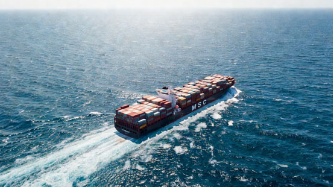
V. MSC: Sufficient Capacity, Suitable for Freight Forwarders with Bulk Goods
MSC has a large capacity scale for sea shipping routes from China to Germany, with sufficient container space, and is proficient in transporting bulk goods. It is suitable for freight forwarders connecting large factories and bulk goods, with prominent cost-effectiveness and obvious quotation advantages.
Core Timeline and Stability Performance
Core Timeline: The regular timeline from Shanghai/Ningbo to Hamburg is 27-31 days, and from Shenzhen to Hamburg is 29-33 days. During the peak season, the timeline is extended by 4-6 days, and delays are mainly concentrated in the port congestion and container space allocation stages, with large overall timeline fluctuations.
Timeline Stability: The delay rate is 9.8%, the highest among the five major carriers; the timeline fluctuation range is 7-8 days, which is greatly affected by market capacity allocation. According to data from FBX in June 2026, its container space utilization rate is often above 90%, making it prone to container rollover delays, and the rollover rate is 2 percentage points higher than the industry average.
Freight Forwarder Adaptability and Additional Advantages
Freight Forwarder Adaptability: It offers the lowest quotations, 8%-12% lower than the industry average, and has sufficient container space, making it suitable for freight forwarders with bulk FCL and LCL goods. Additional discounts can be enjoyed for batch booking, which can effectively improve the profit space of freight forwarders. The operation process is standardized, suitable for new freight forwarders to get started quickly.
Additional Advantages: It covers major German ports (Hamburg, Bremen, Wilhelmshaven) and can provide multi-port transshipment services, making it suitable for freight forwarders connecting customers with multi-destination port distribution needs. It also supports exclusive container space reservation for long-term cooperative freight forwarders, ensuring the container space supply for long-term orders.
The recommended approach is that when freight forwarders connect with customers with bulk goods and low timeline requirements, they can choose MSC. Its low-price advantage can improve the profit space of freight forwarders; however, they need to inform customers of the risks of timeline fluctuations and container rollover in advance and formulate emergency response plans to avoid disputes caused by delays.
Comparison Table of Shipping Timelines of Five Major Carriers for Sea Shipping from China to Germany (Q2 2026 Actual Measurement)
Practical Suggestions for Freight Forwarders: How to Choose the Right Carrier According to Customer Needs?
Combined with the results of this evaluation, when choosing carriers for sea shipping from China to Germany, freight forwarders do not need to blindly pursue "the fastest" or "the cheapest". They should accurately match carriers according to customer needs, budgets, and their own business scenarios to improve customer satisfaction and profit space.
Carrier Selection Strategies for Different Customer Types
High-End Timeline-Sensitive Customers: Prioritize Maersk. Its low delay rate of 2.8% and stable timeline can effectively fulfill customer commitments, making it suitable for connecting with customers of precision instruments, high-value consumer goods, etc. Although the quotation is relatively high, freight forwarders can improve their premium space through high-quality services.
German Local Door-to-Door Customers: Prioritize Hapag-Lloyd. Its advantages in local customs clearance and destination port services can reduce delays and disputes in the destination port link, reduce the service pressure on freight forwarders, and is especially suitable for freight forwarders connecting with local German purchasers.
Regular Customers of Small and Medium-Sized Freight Forwarders: Prioritize COSCO Shipping. It has high cost-effectiveness, sufficient container space guarantee, and convenient operation, which can not only meet customers' timeline needs but also control the operation cost of freight forwarders, making it suitable for the daily booking of most small and medium-sized freight forwarders.
Customers with Urgent Goods: Choose CMA CGM's fast route. The timeline of 21-24 days can meet the transportation needs of urgent goods. Freight forwarders need to communicate quotations with customers in advance, clarify the price increase rules of the fast route, and avoid disputes afterward.
Customers with Bulk and Low-Price Needs: Choose MSC. Its low-price advantage can improve the profit space of freight forwarders. Freight forwarders need to inform customers of the risks of timeline fluctuations and delays in advance and formulate emergency response plans to avoid customer complaints caused by delays.
Freight forwarders need to note that no matter which carrier they choose, they should clarify the timeline commitment and delay compensation terms when booking, sign a clear booking agreement with the carrier based on the monitoring data of the Shanghai Shipping Exchange, and reduce their own performance risks. At the same time, they should regularly pay attention to the carrier's capacity adjustments and port policy changes, and timely optimize the booking plan.
The core of competition in sea shipping from China to Germany has shifted from "price war" to "timeline and service war". For freight forwarders, accurately grasping the timeline characteristics of major carriers and flexibly matching them according to customer needs can help them gain an advantage in the fierce market competition. This evaluation is based on the latest actual measurement data of Q2 2026 and will continue to update changes in carrier timelines in the future, providing more accurate references for freight forwarders' practical operations and helping them improve customer retention and core competitiveness.
Last
Chinese Containers Stuck at Japanese Customs: A Review of Three Detention Cases Caused by Non-Compliant Shipping Documents
IntroductionSea shipping from China to Japan is the core logistics method for Sino-Japanese bilateral trade, carrying over 80% of
Next
First Time Accepting LCL Shipment from China to Japan? Let's Talk About the Hidden Surcharge Pitfalls in Ocean LCL Shipping
With the continuous warming of Sino-Japanese bilateral trade, shipping from China to Japan has become an important track for globa
