Say Goodbye to Price Wars: How to Redefine High-Quality Ocean Freight Services from Chinese Ports to Germany?
Freight Area
 30-Apr-2026
In the context of increasingly fierce competition in the international freight market, ocean freight from China to Germany, as the core logistics channel for China-EU trade, is trapped in the dilemma of "low-price involution" — many freight forwarders blindly lower quotes to seize market share, but ignore service quality, timeliness stability and risk control, ultimately leading to shrinking profits and customer loss. In fact, with the continuous deepening of China-Germany economic and trade exchanges, the core competitiveness of the freight forwarding industry has shifted from "price" to "value". Only by jumping out of price wars and focusing on high-quality services can we achieve long-term development on this golden route.
Core Status Quo of Ocean Freight from China to Germany: What Are the Service Pain Points Under Low-Price Involution?
Ocean freight from China to Germany is a key link connecting China's manufacturing industry with European consumer and industrial markets, covering various transportation forms such as Full Container Load (FCL), Less than Container Load (LCL) and special containers. It mainly relies on the route network between major hub ports along China's eastern coast and major basic ports in Germany. The core pain point of the current market is that low-price competition squeezes service space, leading to frequent problems in timeliness, customs clearance, after-sales service and other links.
According to the latest data released by the Federal Statistical Office of Germany in March 2026, the total value of goods imported by Germany from China in 2025 reached 172.8 billion euros, a year-on-year increase of 1.3%, continuing to rank first among Germany's import sources. China remains Germany's largest import country, which means the market demand for ocean freight from China to Germany is still strong.
However, in sharp contrast to this, the low-price involution in the freight forwarding industry is becoming increasingly fierce. Some small freight forwarders even quote lower than the industry cost line and can only maintain operations by reducing service links and lowering operation standards. Freight forwarders need to note that this "volume for price" model is unsustainable.
A common misunderstanding is that many freight forwarders believe that "as long as the price is low enough, they can retain customers", but they ignore the real core needs of shippers — goods can arrive on time and safely, customs clearance is smooth without delay, and problems can be solved in a timely manner. Once goods are detained at the port or seized due to insufficient services, it will not only cause additional costs to the shipper, but also directly affect the reputation of the freight forwarder, and ultimately lead to the loss of long-term cooperative customers.
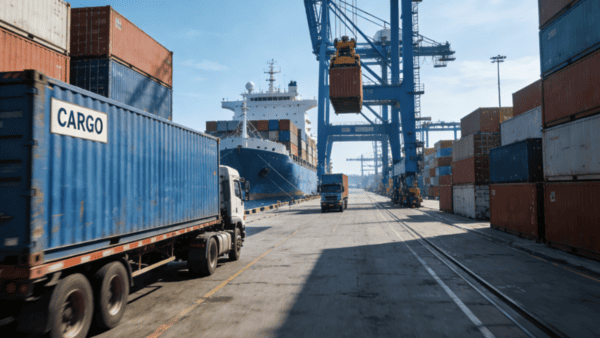
High-Quality Ocean Freight Services from China to Germany: What Are the Core Evaluation Criteria?
High-quality ocean freight services from China to Germany are not a single dimension of "fast timeliness" or "low price", but a comprehensive service system covering route resources, operation specifications, customs clearance capabilities, after-sales support and other aspects, with its core being "stability, efficiency, safety and controllability".
How to Judge the Quality of an Ocean Freight Route from China to Germany?
Route Stability: Prioritize routes with fixed schedules and sufficient shipping space to avoid delayed loading due to insufficient space. The recommended approach is that freight forwarders should establish long-term cooperation with large shipping companies such as Maersk and CMA CGM. For example, the "Europe Express Fast Line" newly launched by CMA CGM in April 2026 takes only 37 days from Xiamen Port to Hamburg Port, 4-5 days faster than traditional routes, and it is a weekly service with sufficient shipping space guarantee.
Port Adaptability: Choose the optimal port combination according to the shipper's goods departure and destination. On the Chinese side, priority should be given to hub ports such as Shanghai Port, Ningbo-Zhoushan Port and Xiamen Port, which have dense routes and high operation efficiency; on the German side, focus on Hamburg Port, Rotterdam Port (for transshipment) and Bremerhaven Port. Among them, as Germany's largest port, Hamburg Port saw a 6.8% increase in container throughput from China in 2025 (Source: Hamburg Port official website, February 2026), and it is the core destination port for ocean freight from China to Germany.
Timeliness Controllability: Clarify the Estimated Time of Departure (ETD) and Estimated Time of Arrival (ETA) of the route, and provide real-time vessel tracking services. Under normal circumstances, the timeliness of direct routes from China's eastern ports to Hamburg Port in Germany is 35-45 days, and the timeliness of transshipment routes is 45-60 days. Freight forwarders need to clearly inform shippers of the timeliness range in advance and reserve a reasonable buffer period.
Freight Forwarder Operation Links: Which Details Determine Service Quality?
Document Review: Review the commercial invoice, packing list, customs declaration and other documents provided by the shipper in advance to ensure the information is accurate and correct. In 2026, German customs upgraded its supervision, adopting AI automatic document review and real-time data comparison between Chinese and German customs. A deviation of ±8% between the declared value and the actual value of the goods will trigger a customs lock. Freight forwarders need to focus on ensuring document consistency to avoid customs clearance delays.
Goods Packaging and Reinforcement: Provide professional packaging suggestions according to the characteristics of the goods. Fragile goods and precision equipment need to adopt shockproof and anti-fall packaging, and large goods need to be properly reinforced. Freight forwarders need to note that German customs have high requirements for the compliance of goods packaging. Damaged packaging or unclear labels may lead to goods inspection and additional costs.
Customs Clearance Services: Equip a professional customs clearance team familiar with the latest German customs regulations, especially the upgraded requirements for CE certification — starting from 2026, electronic and mechanical products exported to Germany need to provide CE certification that fully matches the goods, and construction products also need to upload Digital Product Passport (DPP) data. Freight forwarders should assist shippers in completing the preparation of compliance qualifications.
Say Goodbye to Price Wars: Practical Strategies for Freight Forwarders to Build High-Quality Ocean Freight Services from China to Germany
For freight forwarders, the core of saying goodbye to price wars and building high-quality services is to shift from "passive order receiving" to "active service", focus on customer needs, strengthen their core capabilities, and achieve the transformation from "price competition" to "value competition".
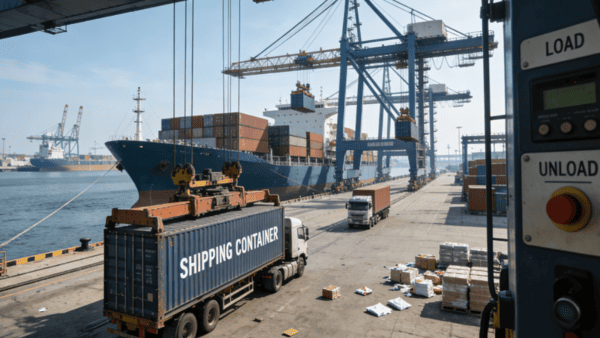
How to Optimize Customer Service and Jump Out of Low-Price Involution?
Accurately Locate Customer Needs: When connecting with shippers, do not rush to quote. First, understand the goods characteristics, timeliness requirements, customs clearance needs, budget range, etc., and customize exclusive ocean freight solutions from China to Germany for shippers. For example, if the shipper is transporting sensitive goods, focus on recommending routes with strong customs clearance capabilities; if the shipper pursues cost-effectiveness, recommend transshipment routes and clarify timeliness risks, so that the shipper can feel the professionalism of the service.
Strengthen Full-Process Visualization Services: Provide shippers with full-process tracking services from booking, loading, ocean shipping to customs clearance and delivery, and real-time synchronize goods status through mini-programs, WeChat Work and other channels. A common misunderstanding is that many freight forwarders only provide goods information when the shipper asks. Proactively synchronizing services can greatly improve customer satisfaction.
Improve After-Sales Support System: Establish a special after-sales team and formulate standardized handling processes for problems such as goods delay, customs clearance abnormalities and goods damage. For example, in case of route adjustments and rising fuel costs caused by the situation in the Middle East, it is necessary to inform the shipper in the first place and provide alternative solutions to avoid disputes due to delayed communication.
According to the latest data from the Hamburg Port Marketing Association in March 2026, the situation in the Middle East has limited impact on the freight volume of Hamburg Port, but it will lead to a year-on-year increase of 5%-8% in fuel and insurance costs. Freight forwarders need to make risk plans in advance, reasonably control costs and explain the situation to shippers.
How to Strengthen Self-Capabilities and Improve Service Competitiveness?
Deeply Cultivate Route Resources: Gain an in-depth understanding of the route layout, schedule arrangement and port policies of ocean freight from China to Germany, establish in-depth cooperation with shipping companies, ports and customs brokers, and strive for better shipping space prices and operation priorities. For example, Xiamen Port added CMA CGM's express line in April 2026, and freight forwarders can connect with this route resource in advance to provide more efficient services for shippers in South China.
Improve Professional Literacy: Organize employees to carry out training on the latest German customs regulations, goods packaging specifications, route knowledge, etc., especially the 2026 German customs document review policies and CE certification requirements, to ensure compliance and correctness in operation links. The recommended approach is to cooperate with professional customs clearance agencies to provide practical training for employees and improve their customs clearance processing capabilities.
Build Differentiated Services: Combine their own advantages to create characteristic services, such as focusing on special container (FR/OT) transportation, dangerous goods (DG) operation, or providing "ocean shipping + overseas warehouse" integrated services for cross-border e-commerce shippers. Differentiated services can allow freight forwarders to jump out of low-price competition, attract shippers with specific needs, and increase profit margins.
Future Trends: What Is the Development Direction of Ocean Freight Services from China to Germany?
With the continuous deepening of China-Germany economic and trade cooperation and the restructuring of the global supply chain, ocean freight services from China to Germany will present three major development trends. Freight forwarders need to make advance arrangements to seize market opportunities.
Trend 1: Compliance Becomes the Industry Bottom Line
With the continuous upgrading of German customs supervision and the full advancement of the EU Carbon Border Adjustment Mechanism (CBAM), compliant operation will become the core competitiveness of freight forwarders. Illegal operations such as gray customs clearance and underreporting of goods value will completely withdraw from the market. Freight forwarders need to focus on strengthening compliance capabilities, assisting shippers in completing various qualification preparations and document reviews, and reducing customs clearance risks.
Trend 2: Green Logistics Becomes a New Competitive Highlight
The EU has increasingly strict requirements for carbon emissions. Shipping companies such as CMA CGM and Maersk have begun to invest heavily in LNG-powered ships, gradually replacing traditional fuel-powered ships. Freight forwarders can focus on promoting green routes, providing low-carbon transportation solutions for shippers who pay attention to environmental protection, and creating differentiated competitive advantages. According to the latest data from UNCTAD in January 2026, global maritime carbon emissions decreased by 3.2% year-on-year, and green shipping has become the mainstream of industry development.
Trend 3: Integrated Services Become the Mainstream Market Demand
Shippers' needs will shift from a single ocean transportation to an integrated logistics service of "ocean shipping + customs clearance + delivery + overseas warehouse". Freight forwarders need to integrate upstream and downstream resources, expand the service chain, provide shippers with full-process, one-stop services, enhance customer stickiness, and achieve the transformation from "freight forwarder" to "comprehensive logistics service provider".
In summary, the market demand for ocean freight from China to Germany has never weakened. Price wars are only short-term vicious competition, and high-quality services are the long-term development path for the freight forwarding industry. For freight forwarders, only by jumping out of price involution, focusing on customer needs, and strengthening route resources, operation specifications and service capabilities, can we redefine high-quality ocean freight services from China to Germany and gain a firm foothold in the China-EU logistics market to achieve sustained growth.
Last
What is ISF Filing? Why is it Required for Shipping from China to the USA?
In the specialized field of sea freight from China to USA, mastering the Importer Security Filing (ISF) is a cornerstone of risk m
Next
What is AMS Declaration_ What Should Be Noted for Shipping from China to the USA_
AMS Declaration is a mandatory core customs filing for all ocean shipments from China to the USA. It directly affects loading, cle
