Rerouting warehouse fulfillment operations to match the official cross border international e commerce logistics policy
Freight Policy
 17-Jun-2026
Global logistics operators are rerouting regional warehouse fulfillment workflows to align with updated Cross-border E-commerce Logistics Policy frameworks that standardize inventory storage, pre-shipment verification, and cross-border dispatch rules for international retail parcels. In recent years, major trading economies have revised warehouse compliance obligations to reduce customs irregularities and improve supply chain traceability amid expanding cross-border e-commerce trade scales. According to WTO 2025 global trade outlook data, international e-commerce parcel throughput maintains stable year-on-year growth, encouraging regulatory authorities to strengthen standardized governance for overseas and bonded warehouse fulfillment procedures.
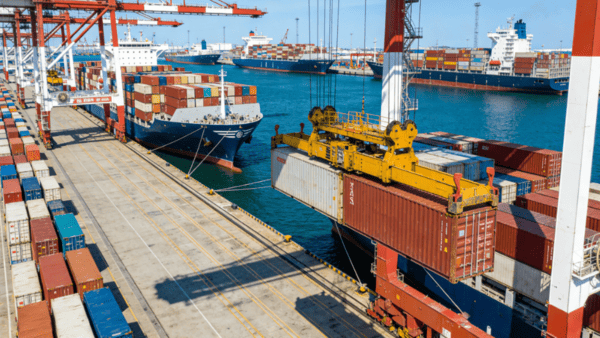
What regulatory changes in Cross-border E-commerce Logistics Policy affect warehouse fulfillment?
Updated Cross-border E-commerce Logistics Policy revisions set unified operational and documentary standards for bonded and overseas warehouse fulfillment procedures supporting cross-border retail shipments. These regulatory adjustments reshape core workflows for inventory processing, pre-declaration audit, and outbound dispatch within global forwarding businesses.
Regional policy iterations from 2024 to 2025
Multiple regional policy updates implemented between 2024 and 2025 target traditional operational loopholes that permitted simplified warehouse processing for low-value retail commodities. Revised EU logistics supervision rules enforce localized warehousing and pre-delivery inspection for non-EU e-commerce inventory, while updated Chinese customs regulations refine declaration coding specifications and inventory file retention standards for cross-border warehouse shipments. According to World Customs Organization 2025 compliance monitoring reports, warehouse-related declaration mismatches contribute to a notable proportion of cross-border clearance delays at major global container ports.
A common mistake is that many forwarding enterprises continue adopting legacy warehouse fulfillment routing schemes formulated under lenient pre-2024 regulatory environments. These outdated operational workflows omit mandatory single-item verification and real-time inventory data submission procedures, forming measurable compliance loopholes under current policy systems. Fixed fulfillment layouts fail to adapt to differentiated regional supervision rules and raise inspection detention risks for inbound cross-border parcels.
Why do forwarders need to reroute warehouse fulfillment structures proactively?
Proactive warehouse fulfillment rerouting allows logistics service providers to synchronize daily inventory management and parcel dispatch workflows with updated Cross-border E-commerce Logistics Policy compliance criteria. Timely operational alignment helps cut regulatory violation risks and sustain steady cross-border cargo circulation efficiency.
Forwarders should note that modern cross-border logistics supervision mechanisms extend beyond traditional port clearance procedures. Regulatory oversight now covers upstream operational links including warehouse stocking, order consolidation, and pre-fulfillment data verification. Warehouse facilities operating without alignment with updated policy frameworks may face inventory detention, operational rectification notices, or restricted cross-border dispatch qualifications in key overseas trading regions.
Operational adaptability also exerts direct influence on overall supply chain efficiency and merchant service stability. According to UNCTAD 2025 global logistics performance statistics, enterprises that conduct periodic warehouse fulfillment optimization record lower parcel detention ratios and fewer compliance violation records compared with enterprises retaining fixed legacy workflows. Policy-aligned workflow rerouting serves as a practical method to maintain consistent service quality for cross-border e-commerce clients.
Which core warehouse fulfillment links require policy-based rerouting?
Key warehouse fulfillment segments including inventory admission, data archiving, order consolidation, and outbound dispatch require targeted structural rerouting to satisfy prevailing Cross-border E-commerce Logistics Policy requirements. Each operational segment carries independent compliance risks that call for standardized operational adjustment.
Inbound inventory verification workflows: Updated policy provisions mandate comprehensive documentation and attribute verification for all cross-border e-commerce inventory entering bonded or overseas warehouse facilities. Forwarders need to revise traditional bulk stocking workflows to integrate single-item HS code verification, commodity compliance inspection, and transaction data binding before formal warehousing registration.
Real-time inventory data reporting: The recommended approach is to build synchronized data submission frameworks for dynamic warehouse inventory changes. New regulatory systems require regular data synchronization with local customs platforms to ensure full traceability and transparency of cross-border inventory circulation.
Cross-border order consolidation rules: Recent policy revisions impose standardized constraints on arbitrary parcel consolidation for cross-border retail shipments. Forwarders should adjust mixed-order processing workflows to categorize commodities in line with compliance standards and reduce declaration errors arising from irregular consolidation operations.
Pre-dispatch compliance auditing: Current policy specifications require systematic pre-departure compliance auditing for all cross-border parcels dispatched from warehouse facilities. Workflow rerouting that integrates dual manual and intelligent system inspection helps lower declaration discrepancy rates and customs clearance rejection occurrences.
Post-fulfillment record archiving: Extended file retention clauses in modern logistics policies require standardized long-term storage of warehouse operational logs. Optimized internal archiving procedures ensure complete retrievability of inventory and dispatch records for routine customs post-inspection audits.
How to reroute regional warehouse layouts for cross-border policy adaptation?
Customized regional warehouse layout rerouting enables forwarders to adapt to differentiated Cross-border E-commerce Logistics Policy rules across European, North American, and Southeast Asian markets. Region-specific operational adjustments improve overall compliance accuracy and comprehensive logistics efficiency.
Optimize EU local fulfillment layouts: In response to 2025 EU cross-border e-commerce regulatory updates, non-EU retail inventory requires localized warehousing and pre-delivery compliance inspection before terminal distribution. Forwarders can transform transit-oriented warehouse models to deploy localized stocking infrastructure, meeting regional product safety and tax supervision requirements.
Adjust APAC multi-warehouse distribution strategies: The recommended approach is to construct tiered regional warehouse networks based on local policy thresholds and real-time order density data. Regions with rigorous declaration standards adopt centralized compliant warehouse hubs, while emerging markets deploy flexible satellite fulfillment sites to balance operational costs and compliance demands.
Upgrade bonded warehouse operational paths: Updated domestic cross-border logistics policies simplify enterprise filing procedures while enhancing dynamic inventory supervision intensity. Forwarders need to optimize bonded warehouse workflows to strengthen real-time data synchronization and standardized inventory classification management.
Unify cross-regional compliance SOPs: Establish universal baseline standards for warehouse fulfillment operations while reserving adjustable modules for regional policy differences. This optimization method avoids repetitive workflow reconstruction and improves policy adaptation efficiency across global operational networks.
What operational risks arise from outdated warehouse fulfillment routing?
Retention of outdated warehouse fulfillment routing mechanisms triggers multi-dimensional compliance and operational risks under the updated Cross-border E-commerce Logistics Policy systems. Unadjusted legacy workflows weaken enterprise risk resistance within tightening cross-border trade supervision environments.
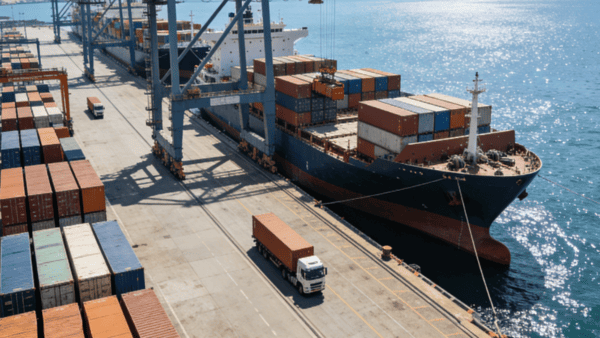
Data mismatch and clearance abnormality risks
Traditional routing frameworks lack standardized pre-warehousing verification and real-time data synchronization modules. This operational defect leads to inconsistent inventory statistics and declaration data mismatches, which may trigger customs spot checks, parcel detention, and administrative penalty cases. According to Freightos Baltic Index 2025 mid-year operational risk analysis, warehouse compliance inconsistencies are among the common factors causing abnormal clearance records in cross-border e-commerce logistics.
Enterprise credit and long-term operational risks
A common mistake is classifying warehouse fulfillment as a basic storage and sorting procedure without linking daily operations to policy iteration. Many forwarders prioritize transit and clearance optimization while neglecting upstream warehouse compliance upgrades. Long-term operational non-compliance may lead to enterprise credit record downgrades in local customs systems, creating obstacles for sustained cross-border business expansion.
Cost waste and resource allocation risks
Unreasonable warehouse routing layouts result in imbalanced resource allocation and incremental operational costs. Mismatched warehouse distribution arrangements and regional policy supervision intensity require repeated operational adjustments, increasing labor and system maintenance expenditures and reducing overall business profit margins.
What optimization measures stabilize policy-aligned warehouse fulfillment?
Systematic operational optimization solutions help forwarders implement scientific warehouse fulfillment rerouting, achieving full alignment with updated Cross-border E-commerce Logistics Policy specifications while balancing compliance performance, operational efficiency, and cost control.
Deploy intelligent warehouse management systems: Automated warehouse management platforms support real-time inventory classification, dynamic data synchronization, and pre-dispatch compliance screening. Intelligent operational tools reduce manual error probabilities and maintain continuous workflow alignment with policy updates.
Build policy dynamic tracking mechanisms: Arrange dedicated compliance teams to monitor global cross-border logistics policy iterations and adjust warehouse routing rules in a timely manner. Proactive policy trend identification helps enterprises reduce passive operational rectification triggered by regulatory changes.
Standardize staff fulfillment operational training: The recommended approach is to organize regular policy-oriented training for frontline warehouse teams. Unified operational cognition and standardized execution help lower human-induced compliance risks in daily fulfillment procedures.
Establish regular operational audit mechanisms: Formulate weekly and monthly warehouse workflow inspection systems to verify compliance levels of inventory admission, commodity sorting, order consolidation, and parcel dispatch links. Timely problem rectification forms closed-loop compliance management cycles.
As global cross-border e-commerce regulatory systems continue to improve, continuous optimization and dynamic rerouting of warehouse fulfillment workflows have become essential adaptive capabilities for modern logistics enterprises. In-depth alignment with the iterative Cross-border E-commerce Logistics Policy enables forwarders to standardize upstream supply chain management, mitigate common compliance risks, and retain steady operational competitiveness in the global cross-border logistics market.
Last
Standardizing digital manifest declarations to align with a modernized regional Cross-border Logistics Policy
Cross-border Logistics Policy acts as a core regulatory framework guiding digital manifest reform across regional trade blocs, as
Next
Adjusting DDP shipping margins following a recent cross border trade compliance e commerce logistics policy shift
Global logistics service providers are actively adjusting DDP shipping margins to adapt to sweeping regulatory changes within the
