Bypassing severe us destination customs holds through meticulous CVD declaration vetting and rigorous anti subsidy documentation compliance
Freight Policy
 16-Jun-2026
CVD Anti-Subsidy Documentation Compliance has become a non-negotiable operational standard for global forwarders navigating tightened United States customs supervision. Minor documentation discrepancies routinely trigger prolonged port holds, financial penalties, and shipment delivery delays across trans-Pacific supply chains. Recent regulatory overhauls by U.S. Customs and Border Protection (CBP) have raised compliance thresholds for countervailing duty (CVD) declaration accuracy and anti-subsidy record verification. These policy shifts compel logistics professionals to refine pre-shipment compliance workflows to mitigate clearance risks. According to WTO 2025 trade compliance reports, approximately 38% of U.S.-bound cargo delays stem from incomplete or inaccurate CVD and anti-subsidy documentation. This statistic highlights the practical value of standardized compliance protocols for global freight forwarding businesses.
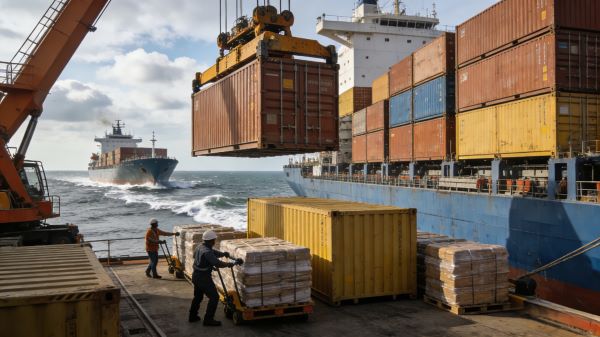
What Are US Customs Holds Linked to CVD and Anti-Subsidy Violations?
US customs holds related to CVD and anti-subsidy violations are official suspension orders that halt cargo clearance due to non-compliant declaration data or unsubstantiated subsidy-related documentation. These administrative holds differ from routine procedural delays, as they target cargo suspected of benefiting from unfair governmental subsidies that conflict with U.S. trade remedy laws. According to ITC Trade Map 2024 trade enforcement datasets, U.S. customs authorities initiated over 12,700 subsidy-related cargo holds for trans-Pacific shipments in the 2024 fiscal cycle. Industrial manufacturing equipment and renewable energy component cargo accounted for roughly 62% of all detained shipments within this category.
What Risks Do Extended CVD Customs Holds Bring to Forwarders?
Many global forwarders underestimate the operational impact of modern CVD-related customs holds, assuming minor paperwork errors can be resolved through basic supplementary submissions. Current CBP enforcement guidelines empower customs officials to extend hold durations while conducting retrospective subsidy investigations. These retrospective reviews may cover up to five years of historical import records, in line with established U.S. federal trade regulatory provisions.
Extended hold periods generate cascading operational and financial risks for forwarding enterprises. Common repercussions include client contract performance disputes, incremental container detention and demurrage fees, and weakened cooperative credibility with U.S. importers and downstream supply chain partners. Long-term repeated detention records also affect firms’ overall trade operation stability in North American markets.
A common mistake is treating CVD declaration and anti-subsidy documentation as isolated administrative tasks rather than an integrated compliance system. Many forwarders allocate limited manpower and technical resources to cross-verifying subsidy origin proof, tariff classification alignment, and CVD tax calculation records. This practice creates fragmented documentation packages that fail to pass CBP’s holistic compliance audits, which serve as a primary source of preventable customs holds for small and mid-sized forwarders operating on trans-Pacific routes.
Why Do Meticulous CVD Vetting and Anti-Subsidy Compliance Reduce Customs Detentions?
Meticulous CVD declaration vetting and rigorous anti-subsidy documentation compliance eliminate core triggers of U.S. customs holds by ensuring full alignment with evolving CBP trade remedy enforcement standards. All documents submitted for U.S. clearance undergo multi-layered official verification, covering subsidy eligibility screening, duty calculation validation, and origin authenticity confirmation. These verification procedures directly influence the efficiency and outcome of cargo clearance processes. According to UNCTAD 2025 maritime trade compliance statistics, forwarders with standardized CVD compliance workflows record 47% lower U.S. cargo detention rates compared to industry peers with informal documentation management practices.
How Has the US Regulatory Framework Reshaped CVD Compliance Requirements?
The U.S. trade regulatory landscape has undergone notable tightening in recent years, supported by the 2026 Strengthening Customs Enforcement executive order. This policy framework imposes stricter supervisory standards for imported goods categorized as subsidy-prone within official trade remedy lists. The updated rules require forwarders and importers to provide granular, traceable documentation to verify no unfair governmental subsidies were applied to product manufacturing, raw material procurement, or export pricing mechanisms.
Shipments with legitimate trade origins may still face temporary detention without comprehensive compliance verification and complete supporting evidence. Regulatory updates prioritize documentary traceability, requiring every subsidy-related declaration to be backed by verifiable supply chain records and third-party certification materials.
Forwarders should note that CBP’s current risk assessment algorithm incorporates historical compliance records as a key screening indicator. Shipments processed by forwarders with consistent CVD Anti-Subsidy Documentation Compliance track records tend to receive expedited clearance reviews. In contrast, enterprises with prior documentation violation records are placed on enhanced risk monitoring lists. This risk-based screening mechanism forms a sustained incentive for standardized and rigorous documentation practices.
What Core Documentation Sets Require Strict CVD Anti-Subsidy Vetting?
Effective CVD Anti-Subsidy Documentation Compliance depends on rigorous vetting of six core documentation categories that receive priority scrutiny during CBP clearance inspections. Each document set serves an independent verification function, and data inconsistencies across any category may trigger official hold procedures. Proficiency in managing these documentation requirements helps forwarders build stable pre-clearance compliance checklists for all U.S.-bound shipments.
Product origin certification documents: These official records validate manufacturing locations and cross-border production supply chains, forming the foundational evidence for subsidy eligibility screening. Forwarders must ensure origin certificates include detailed production process narratives instead of generic templates, as CBP officials routinely reject vague documentation that lacks traceable manufacturing input records. A common mistake is adopting outdated origin forms that do not conform to 2025 CBP subsidy verification benchmarks, resulting in routine cargo detention.
CVD duty calculation worksheets: These structured worksheets record applicable countervailing duty rates, taxable cargo valuation metrics, and final duty settlement amounts for individual shipments. The recommended approach is to cross-check all duty calculations against the latest U.S. Department of Commerce CVD rate schedules, as rate adjustments take place quarterly for most subsidy-sensitive commodity categories. Forwarders are advised to retain full calculation trails to justify declared duty values during targeted customs audits.
Subsidy non-benefit attestation letters: These sworn statutory statements confirm imported goods have not obtained prohibited governmental subsidies, including export-specific grants, production subsidies, and preferential raw material pricing support. Forwarders should note that generic template attestation letters are no longer admissible under 2026 CBP compliance rules. Each letter requires customized content matching specific product specifications, manufacturing regions, and shipment parameters to pass official verification.
Supply chain transaction records: Commercial invoices, payment settlement receipts, and third-party logistics service contracts constitute key transactional evidence supporting anti-subsidy declarations. CBP auditors cross-analyze these records to identify abnormal pricing patterns associated with implicit subsidy benefits. The recommended approach is to organize transaction documents in chronological order and maintain full data consistency across commercial invoices, bill of lading entries, and CVD declaration forms.
Manufacturer compliance declarations: Official sworn statements from product manufacturers confirming adherence to U.S. anti-subsidy trade regulations. Qualified declarations must include valid manufacturer registration information, exact production facility addresses, and formal certification of no subsidized input material usage. A common mistake is submitting expired manufacturer declarations, as CBP requires updated certification documents for each new production batch and corresponding shipment.
Pre-shipment compliance audit reports: Internal or third-party audit records that validate full CVD and anti-subsidy compliance prior to cargo departure. According to Freightos Baltic Index 2025 logistics compliance surveys, shipments accompanied by professional pre-shipment audit reports register fewer customs hold incidents compared to unaudited cargo. This verification step serves as a valuable final compliance checkpoint for trans-Pacific freight operations.
How Do Forwarders Implement Rigorous Pre-Clearance CVD Compliance Workflows?
Structured pre-clearance compliance workflows help forwarders sustain consistent CVD Anti-Subsidy Documentation Compliance and reduce the occurrence of costly U.S. customs holds. Standardized multi-step operational frameworks minimize manual errors, unify documentation quality standards, and align internal operations with the latest U.S. trade regulatory updates. The following actionable measures form a scalable compliance system adaptable to forwarding teams of varying sizes.
Conduct periodic regulatory update training: U.S. CVD and anti-subsidy enforcement rules undergo continuous iterative adjustments, with quarterly policy revisions released by CBP and the U.S. Department of Commerce. Forwarders should arrange monthly team training sessions covering updated regulatory clauses, product-specific subsidy restriction updates, and standardized documentation format adjustments. Regular training helps teams phase out outdated compliance practices that cause avoidable clearance disruptions.
Build a categorized compliance document library: Deploy a cloud-based centralized repository for verified, up-to-date compliance documentation templates covering major commodity types and trans-Pacific trade lanes. The recommended approach is to classify templates by product category, manufacturing origin, and CVD risk level, enabling staff to access audit-ready document resources for individual shipments. This centralized mechanism reduces inconsistent template application among different team members.
Execute dual-layer document verification procedures: Adopt a two-person cross-review mechanism for all CVD and anti-subsidy documentation before official declaration submission. The first reviewer verifies basic data accuracy and document completeness, while the second reviewer confirms regulatory compatibility and cross-document data consistency. A common mistake is relying on single-person verification, which fails to identify subtle data discrepancies targeted in CBP compliance audits.
Integrate compliance data with declaration platforms: Synchronize pre-shipment audit data with official U.S. customs declaration systems to reduce manual data entry errors. Automated data alignment ensures uniformity among CVD calculation results, subsidy attestation content, and origin verification information across all official submission channels. According to Drewry 2024 logistics technology research, automated compliance data integration lowers documentation error rates for trans-Pacific shipments significantly.
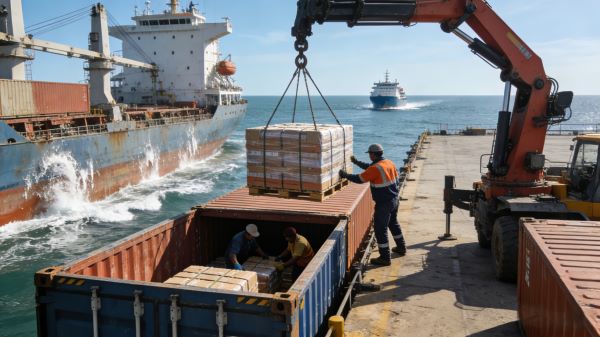
Maintain long-term standardized compliance archives: Preserve digital records of all CVD declaration documents and anti-subsidy compliance files for a minimum of five years, matching CBP’s retrospective investigation timeframe. Forwarders should categorize archived records by shipment number and retain complete revision and verification audit trails. This practice supports comprehensive preparation for post-clearance regulatory investigations and random compliance audits.
What Risks Arise From Substandard CVD Anti-Subsidy Documentation Compliance?
Substandard CVD Anti-Subsidy Documentation Compliance exposes global forwarders to multi-dimensional operational, financial, and reputational risks that undermine trans-Pacific trade profitability and operational stability. Many logistics enterprises focus narrowly on short-term clearance delays while overlooking sustained regulatory penalties and long-term business losses caused by non-compliant documentation practices. Clear understanding of these layered risks supports rational compliance investment and standardized operational optimization.
What Financial Penalties Follow CVD Documentation Non-Compliance?
Non-compliant subsidy documentation generates direct financial losses beyond conventional container detention fees. CBP imposes graded administrative penalties for negligent or intentional subsidy documentation misrepresentation, with fine amounts varying based on violation severity and recurrence frequency. Repeated compliance discrepancies may also lead to increased customs bond thresholds for U.S. import operations. According to WTO 2025 trade penalty analytics, global logistics entities incurred over $42 million in CVD-related non-compliance fines for U.S.-bound shipments throughout the 2024–2025 trade cycle.
How Does Non-Compliance Affect Long-Term Operational Efficiency?
Frequent customs holds and verified compliance violations may result in forwarders being added to CBP’s enhanced risk monitoring roster. Enterprises on this roster face mandatory extended inspection procedures for all subsequent U.S.-bound cargo. Enhanced inspection measures extend clearance cycles, reduce supply chain turnover efficiency, and disrupt delivery schedules for time-sensitive industrial and retail cargo, weakening overall operational stability.
What Reputational Impacts Come With Repeated Compliance Errors?
Reputational damage creates long-term operational challenges for forwarders competing in global trade markets. Cross-border importers and brand owners prioritize logistics partners with stable compliance track records to minimize supply chain disruption risks. Forwarders with recurring CVD and anti-subsidy compliance issues may encounter reduced client cooperation willingness and limited market expansion opportunities in core trans-Pacific trade lanes, leading to gradual revenue and market share decline.
How to Resolve Active US Customs Holds Caused by CVD Documentation Gaps?
Timely and standardized resolution of U.S. customs holds triggered by CVD and anti-subsidy documentation gaps helps forwarders minimize cargo downtime and financial losses. Targeted reactive resolution protocols complement proactive compliance management systems to address unforeseen documentation defects during customs clearance procedures.
Pinpoint specific documentation deficiencies efficiently: Communicate directly with assigned CBP clearance officers to obtain detailed written notices of compliance gaps, rather than relying on generalized hold notifications. The recommended approach is to cross-reference identified defects against 2025–2026 CBP regulatory standards to avoid repeated submission errors. A common mistake is resubmitting revised documents without addressing all listed discrepancies, which prolongs cargo detention periods.
Compile fully verified supplementary documentation: Gather updated manufacturer compliance declarations, revised CVD calculation worksheets, and supplementary supply chain verification records to resolve confirmed compliance gaps. All supplementary materials must adhere to current CBP formatting and content specifications, with consistent data logic across the full document set. Forwarders should note that incomplete supplementary submissions may extend hold durations and trigger additional regulatory scrutiny.
File structured compliance correction petitions: Submit formal correction petitions to CBP with clear itemized explanations of revised documents and targeted resolution measures for each identified deficiency. Standardized petition formatting facilitates official review procedures and demonstrates proactive compliance accountability. Delayed petition submission often results in unnecessary cargo detention time extension.
Conduct root-cause reviews post-clearance: After recovering cargo clearance eligibility, conduct internal retrospective reviews to identify fundamental causes of documentation gaps. Update internal compliance workflows and team operation guidelines based on review findings. This post-incident optimization reduces the probability of similar compliance errors in subsequent shipment operations.
In the current landscape of intensified U.S. trade regulatory oversight, global forwarders can sustain stable trans-Pacific operational performance and mitigate disruptive customs detentions through rigorous declaration verification and consistent CVD Anti-Subsidy Documentation Compliance. The integration of standardized compliance workflows, continuous regulatory training, and dual-layer verification mechanisms assists logistics enterprises in controlling clearance risks, optimizing operational costs, and maintaining steady market competitiveness within the complex U.S. import trade ecosystem.
Last
Calculating clean vessel space premiums driven by an aggressive global green corridor maritime transport and sustainable shipping policy update
The evolving Green Corridor Shipping Policy has facilitated systematic adjustments to global maritime freight pricing mechanisms,

Next
Avoiding severe entry summary declaration rejection penalties by auditing your EU advance customs manifest under ICS2 phase 2 filing requirements
Global freight forwarders must prioritize rigorous manifest audits to prevent costly entry summary declaration (ENS) rejections an
