Calculating unexpected demurrage fees triggered by random origin Customs cargo routing Inspection Policy mandates
Freight Policy
 16-Jun-2026
Modern cross-border container shipping faces frequent unplanned cost fluctuations directly stemming from variable Customs Inspection Policy enforced at origin ports, with random routing inspections serving as one of the common causes of unexpected demurrage fees for global forwarding firms. In recent years, port and Customs authorities worldwide have upgraded randomized cargo routing verification mechanisms to reinforce trade compliance and full supply chain traceability. According to UNCTAD 2025 maritime transport data, origin-based random inspections account for over 35 percent of unplanned container dwell-time extensions at global export terminals, resulting in unbudgeted demurrage expenditures for freight forwarders.
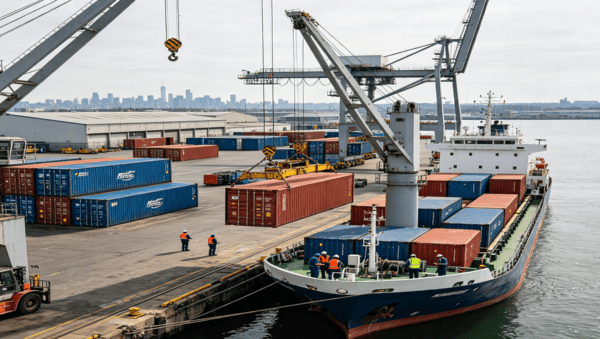
What are origin Customs random routing Inspection Policy mandates?
Origin Customs random routing Inspection Policy mandates are formal regulatory provisions that empower local Customs authorities to reassign selected export containers to dedicated inspection terminals for compliance checks without prior notification to shippers or forwarders. These unscheduled verifications focus on commodity classification accuracy, document consistency, and legitimate cargo routing to mitigate common cross-border trade irregularities.
Planned pre-shipment inspection procedures allow forwarders to arrange operational schedules in advance, while random routing inspections carry prominent uncertainty and flexible terminal allocation rules. Local Customs departments adopt dynamic risk assessment algorithms for cargo selection instead of fixed screening standards, creating unavoidable operational disruptions to conventional shipping schedules. This supervision mode has seen wide adoption across mainstream export hubs in Asia, Europe and North America to optimize traditional border supervision frameworks.
Forwarders should note that origin-based inspection mandates hold distinct operational differences from destination Customs inspections. Routing adjustments at the export stage extend container dwell time at origin terminals, leading to gradual demurrage accumulation before vessel departure. This unique cost-forming mechanism is frequently overlooked in conventional budgeting frameworks adopted by medium-sized forwarding enterprises.
How do random routing inspections trigger unplanned demurrage expenditures?
Random origin inspection routing interrupts standardized container pickup and loading workflows, prolonging terminal storage duration beyond contractual free time limits and triggering tiered demurrage charges. Each regulatory routing adjustment resets container processing timelines and disrupts pre-coordinated vessel stowage plans.
Disrupts scheduled container release arrangements: Forwarders formulate truck pickup and vessel loading plans based on confirmed terminal release notifications. Sudden random routing inspection orders suspend container release procedures and force cargo to stay at temporary inspection yards. According to Drewry 2024 global port cost benchmark analysis, each origin routing inspection adds two to four days of terminal dwell time for general dry freight containers on average.
Alters conventional free time calculation mechanisms: A common mistake is retaining original free time agreement terms after cargo rerouting occurs. Most carrier and terminal service contracts specify that mandatory regulatory detention adjusts standard free time countdown rules, which generates incremental unplanned fees outside pre-approved operational budgets.
Induces sequential schedule delay effects: Rerouted containers commonly miss originally booked vessel voyages and wait for subsequent transport schedules. Continuous terminal occupation across vessel transition periods generates overlapping demurrage charges. Freightos Baltic Index (FBX) 2025 quarterly logistics cost data indicates inspection-related schedule mismatches raise per-container demurrage spending by 18 to 22 percent on average.
Generates extra inspection yard operational charges: Dedicated inspection terminals implement independent pricing standards for yard occupation and cargo handling. Rerouted inspection cargo incurs additional service fees that are not incorporated in basic freight quotations, further increasing unplanned operational costs for forwarding businesses.
Multiple inspection-induced disruptions jointly lead to steady profit erosion for cross-border forwarding projects. Most enterprises adopt fixed cycle cost calculation models for routine shipments, while random policy-related delays produce variable fees that fail to match traditional pricing systems. Continuous neglect of these variable cost factors weakens the overall profitability of cross-border logistics services over time.
What core factors influence demurrage calculation for rerouted inspection cargo?
Final demurrage costs for rerouted origin inspection cargo are determined by a combination of regulatory rules, carrier contract clauses and terminal operational standards. Comprehensive recognition of these contributing factors supports reliable cost forecasting and reasonable budget provisioning.
Regional port free time regulations: Export terminals in different regions maintain differentiated free time policies for inspection-delayed containers. Major Asian export ports typically provide four to six days of basic free time, whereas North American ports enforce relatively stringent three to five day free time windows. These localized rules define the starting threshold for demurrage fee accrual.
Graduated terminal charging structures: Most global container ports implement tiered demurrage pricing systems. Daily charging rates rise progressively with extended terminal dwell time, with noticeable fee increases for containers detained beyond seven days. Longer inspection cycles accordingly create higher cumulative operational costs.
Carrier contract exemption provisions: The recommended approach is to conduct systematic sorting and verification of carrier contracts for regulatory detention exemption terms. Several carriers offer partial fee relief for mandatory Customs inspections, while most standard contracts exclude policy-induced delays from preferential charging terms.
Differentiated charging standards by cargo type: Specialized cargo such as reefer goods, over-dimensional equipment and dangerous commodities follows independent terminal charging rules. Inspection rerouting of special cargo generates higher daily occupation fees compared to standard dry container shipments.
Variable inspection processing efficiency: Terminal inspection speeds fluctuate with daily Customs clearance workload and on-site manpower allocation. Inspection processing cycles tend to extend during peak business periods, leading to longer cargo dwell time and higher total demurrage expenses.
Forwarders should note that diverse combinations of the above factors form unique cost structures for different trade lanes. Single fixed estimation models cannot adapt to dynamic policy inspection scenarios, which explains the frequent occurrence of unanticipated profit fluctuations on conventionally stable shipping routes.
How to conduct reliable pre-estimation of inspection-related demurrage costs?
Accurate pre-calculation of unplanned demurrage fees requires forwarders to build scenario-based assessment frameworks compliant with prevailing Customs Inspection Policy and localized terminal charging specifications. This standardized method reduces budget deviations arising from the uncertainty of random Customs inspections.
Update terminal charging specification documents regularly: Collect official free time policies, daily demurrage rates and tiered charging thresholds from authorized port platforms and carrier official channels. Monthly document updates ensure all calculation data aligns with current terminal operational rules.
Establish multi-scenario dwell time evaluation frameworks: Formulate short, medium and extended delay assessment scenarios based on localized historical inspection cycle data. According to UNCTAD 2025 global port operation reports, routine origin random inspections complete verification within two to five working days, while cases requiring in-depth document review may take over seven days.
Adjust calculations based on contractual exemption terms: Deduct contract-specified exempt delay durations and calculate net effective detention time for fee computation. This operational step prevents cost overestimation caused by overlooking regulatory exception clauses in formal service agreements.
Introduce lane-specific risk adjustment coefficients: Calculate statistical inspection occurrence probability and corresponding cost increments based on historical shipment records of individual trade lanes. Trade lanes with frequent random inspection activities require higher contingency budget ratios for demurrage risks.
Adopt differentiated models for special cargo: Deploy independent calculation frameworks for reefer containers, dangerous goods and oversize cargo to complement standard dry container pricing formulas. Special cargo inspection delays incur premium terminal fees that require targeted budget reservation.
Standardized pre-estimation mechanisms cannot eliminate policy-induced inspection delays, yet they effectively mitigate abrupt cost overruns that compromise project profit margins. In recent years, improving transparency in global port charging standards enables forwarding enterprises to build refined cost evaluation systems and enhance quotation accuracy for cross-border clients.
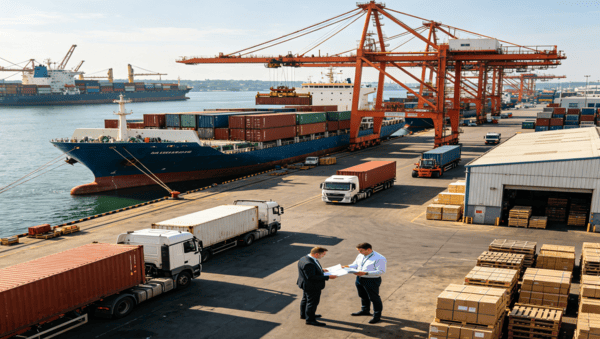
What practical measures reduce inspection-triggered demurrage losses?
Scientific operational adjustments under existing Customs Inspection Policy frameworks can effectively minimize demurrage losses caused by random origin inspection mandates. Optimized scheduling and standardized risk response protocols improve enterprise overall cost control performance.
Set reasonable schedule buffer periods for vessel arrangements: The recommended approach is to reserve two to three days of flexible buffer time for container pickup and loading schedules. Appropriate schedule redundancy absorbs short-term inspection delays and lowers the occurrence of missed vessel bookings that lead to high-cost prolonged detention.
Implement comprehensive pre-shipment document verification: Complete full-range document inspection, commodity classification calibration and origin certificate validation prior to cargo stuffing. Standardized pre-shipment compliance preparation shortens on-site inspection processing time when random routing checks take place.
Deploy real-time inspection progress tracking mechanisms: Arrange dedicated operational personnel to monitor cargo inspection status immediately after receiving rerouting notifications. Timely communication with Customs officers and terminal operators accelerates the resolution of document discrepancies and cargo verification issues.
Apply for customized free time extensions moderately: Maintain stable communication with carrier account management teams to negotiate temporary free time extensions for policy-induced cargo detention. Most carriers provide flexible preferential adjustments for long-term cooperative clients with consistent compliance records.
Archive inspection delay data for operational iteration: Record detailed information of all inspection-related demurrage cases, including detention duration, fee amounts and resolution outcomes. Accumulated data supports continuous optimization of cost calculation models and risk budget ratios for subsequent shipment arrangements.
A common mistake among forwarding operators is applying unified scheduling standards across all trade lanes without differentiated risk assessment. Lanes with low inspection frequency can maintain conventional operational efficiency, while high-risk lanes require targeted buffer configuration and risk budgeting to balance service efficiency and cost stability.
How does standardized cost calculation support long-term business profitability?
Customs Inspection Policy-oriented standardized demurrage cost calculation enables forwarding enterprises to shift from passive loss bearing to active risk management. Stable variable cost control helps sustain profitable operation and reliable client service reputation.
Demurrage fees induced by random origin inspections belong to typical hidden variable costs in cross-border logistics. Enterprises without standardized calculation protocols often bear unplanned losses internally or provide inconsistent client quotations, which weakens market competitiveness. Refined cost modeling supports reasonable risk allocation and transparent pricing for cross-border logistics services.
According to WTO 2024 global trade logistics monitoring data, forwarding enterprises with systematic policy delay cost management frameworks record 20 to 25 percent lower abnormal logistics loss ratios compared to peers with informal budgeting workflows. Stable profit control capacity creates favorable conditions for sustainable business development in competitive global freight markets.
In general, mastering the cost formation mechanism of random origin routing inspections and establishing reliable demurrage calculation systems serves as a core operational capability for modern freight forwarders. Continuous follow-up on Customs Inspection Policy updates and iterative optimization of cost assessment frameworks help enterprises cope with uncertain regulatory delays and stabilize long-term operational profitability.
Last
Shifting origin consolidation warehouse routing strategies to mitigate risks from recent us trade enforcement De Minimis policy changes
US De Minimis Policy Changes have adjusted cross-border cargo consolidation supervision rules, encouraging global freight forwarde
Next
Avoiding container holding delays by auditing standard Customs Terminal procedures and border Inspection Policy updates
Global freight forwarders face recurring container holding risks amid evolving Customs Inspection Policy and inconsistent terminal
