How transpacific retail forwarders adjust DDP air freight pricing models following aggressive us federal De Minimis threshold policy changes
Freight Policy
 16-Jun-2026
US De Minimis Policy Changes have restructured the full cost architecture of transpacific cross-border retail logistics, prompting global freight forwarders to revise conventional DDP air freight pricing mechanisms for stable profitability and market adaptability. Transpacific air freight serves as a critical fast-track logistics solution for cross-border e-commerce retail shipments, supporting high-frequency small-parcel deliveries from Asian manufacturing bases to US consumer markets. For decades, the US De Minimis exemption framework simplified DDP pricing calculations by waiving import tariffs and formal clearance charges for low-value inbound retail parcels. Recent federal-level revisions to the De Minimis threshold have phased out these long-standing cost preferences, introducing new variable operational expenses and pricing uncertainty for transpacific DDP air freight service providers. Global forwarders focusing on transpacific retail logistics need to optimize pricing logic dynamically to mitigate policy-derived risks and sustain stable merchant cooperation relationships.
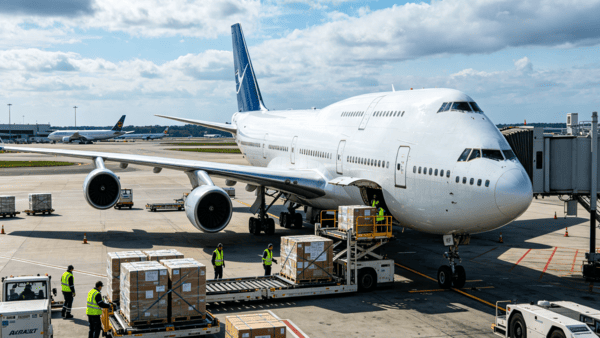
How do revised US De Minimis rules alter DDP air freight cost structures?
Updated US De Minimis Policy Changes reshape transpacific DDP air freight cost accounting by imposing mandatory tariff and compliance charges on retail parcels that previously qualified for duty-free entry. Traditional DDP pricing scopes covered door-to-door transportation, routine customs clearance, and basic service fees without tariff inclusion for low-value shipments.
Under the historical regulatory framework, retail shipments valued below the $800 De Minimis threshold were exempt from import duties and formal entry filing procedures, enabling forwarders to adopt uniform flat-rate DDP pricing for low-value air freight parcels. The latest policy adjustments terminate blanket exemption treatments, requiring all eligible retail parcels to complete duty assessment, formal customs declaration, and compliance verification procedures. According to ITC Trade Map 2025 statistical records, around 21% of transpacific retail air freight shipments previously benefited from De Minimis exemptions, with such cargo volumes now subject to additional tariff and clearance expenditures.
These newly incurred policy costs remain non-static and fluctuate according to commodity category, declared cargo value, and manufacturing origin, undermining the feasibility of traditional unified pricing schemes. A common mistake is that many logistics practitioners retain flat DDP pricing standards formulated for the exemption era, failing to incorporate policy-driven variable costs, which may result in narrowed profit margins or mismatched merchant quotation budgets.
What limitations make traditional flat DDP pricing incompatible with new policies?
Conventional flat-rate DDP air freight pricing operates on fixed cost assumptions that fail to accommodate variable expenditure patterns introduced by US De Minimis Policy Changes. This static pricing structure lacks flexible adjustment mechanisms for policy-induced cost fluctuations.
Most transpacific retail forwarders adopted unified flat pricing for all low-value air freight parcels in past years to streamline quotation workflows and simplify client communication processes. This pricing mode delivered stable applicability under long-term exemption policies with zero tariff liability and minimal compliance overheads. Current De Minimis regulatory revisions introduce differentiated tariff brackets and targeted inspection risks for distinct commodity types, rendering single flat pricing insufficient to cover diverse cargo cost scenarios.
Forwarders should note that static flat pricing systems expose logistics businesses to two prominent operational risks within the updated policy landscape. Flat quotations for high-tariff commodities may generate sustained operational deficits for bulk shipment orders, while unchanged pricing for low-risk cargo may weaken market competitiveness and drive price-sensitive e-commerce merchants to alternative service providers. According to Drewry 2026 transpacific air freight industry analysis, approximately 35% of mid-tier freight forwarding firms have experienced shrinking profit margins due to delayed pricing adaptation during policy transition cycles.
What variable policy costs dominate current DDP air freight pricing calculations?
Multiple policy-related variable cost factors have become core calculation indicators for modern transpacific DDP air freight pricing after the implementation of updated US De Minimis regulations. Forwarders need to integrate these dynamic expenditure items into standardized quotation systems.
Commodity-classified import tariff charges: The cancellation of De Minimis exemptions enforces differentiated tariff assessment rules for different retail commodities. Consumer electronics, textile goods, and daily-use merchandise follow distinct tariff brackets, forming the primary variable cost gap for DDP air freight quotations.
Formal customs declaration service fees: Low-value parcels previously qualified for simplified informal filing processes, while current regulatory requirements mandate formal entry declaration. This shift creates additional expenditures for document sorting, system registration, and professional customs brokerage services.
Inspection-related contingency expenditures: Revised De Minimis rules raise the overall inspection coverage ratio for low-value retail air freight. Unplanned port dwell time, temporary cargo storage fees, and supplementary document audit work generate irregular contingency costs for batch shipment operations.
Compliance verification labor overheads: Logistics teams require dedicated compliance personnel to verify HS code accuracy, declared value authenticity, and cargo origin qualification to reduce clearance rejection risks. Increased human resource investment in regulatory compliance elevates comprehensive DDP service costs.
These variable costs correlate closely with cargo attribute characteristics rather than conventional transportation weight or volume metrics, breaking the traditional single-dimensional pricing logic of air freight services. Forwarders need to reconstruct multi-indicator pricing frameworks to adapt to upgraded policy cost structures.
What differentiated pricing models fit post-reform transpacific DDP air freight business?
Multi-dimensional differentiated pricing frameworks resolve cost-income mismatches caused by ongoing US De Minimis Policy Changes for transpacific retail air freight operations. These optimized models align quotation standards with cargo risk levels and policy cost variations.
Commodity tiered pricing mechanisms: The recommended approach is to categorize retail air freight commodities into multiple tiers based on applicable tariff rates and inspection risk coefficients. Forwarders can formulate independent DDP pricing standards for high-tariff regulated goods, medium-risk conventional merchandise, and low-tariff daily commodities to achieve accurate cost coverage.
Base rate plus variable surcharge structures: Set unified baseline charges for core transportation and general services, while calculating policy-derived expenditures including tariffs, formal declaration fees, and compliance audit costs as separate variable surcharges. This transparent pricing structure improves merchant recognition and moderates profit fluctuation pressures.
Customized bulk shipment pricing schemes: For long-term cooperative e-commerce clients with stable commodity shipment structures, forwarders can design exclusive DDP pricing solutions based on regular cargo types and monthly shipment volumes. This practice helps maintain stable service partnerships and balanced profit margins for core client groups.
Inspection-indexed floating pricing modes: Incorporate real-time port inspection rate fluctuations and policy implementation intensity into pricing reference indicators. Moderate quotation floating offsets uncertain contingency costs during periods of intensified customs supervision.
Differentiated dynamic pricing represents one of the commonly adopted approaches for sustainable operational development in the transpacific retail air freight sector, rather than a temporary transitional adjustment. According to Freightos Baltic Index 2026 Q1 industry data, forwarders applying tiered variable pricing frameworks maintain relatively stable profit margins compared with peers relying on conventional flat-rate quotation modes.
Which operational optimizations support reliable pricing adjustment execution?
Scientific pricing model iteration requires matched operational process upgrades to guarantee quotation accuracy and market stability amid continuous policy updates. Isolated price adjustment without procedural optimization may trigger frequent quotation discrepancies and merchant cooperation disputes.
Dynamic tariff database establishment: Forwarders should note that building a dedicated commodity tariff database synchronized with the latest US customs regulatory updates improves pricing precision and operational efficiency. Timely updates on tariff brackets and compliance rules for mainstream retail commodities reduce quotation errors caused by information delays.
Standardized pre-shipment cargo classification workflows: Integrate mandatory cargo categorization and risk assessment procedures before shipment scheduling. Operational staff confirm commodity attributes and corresponding policy cost standards in advance to provide reliable data support for formal DDP quotation generation.
Structured client pricing communication mechanisms: Conduct transparent communication with cooperative merchants regarding policy revisions and newly incurred cost compositions. Clear interpretation of pricing adjustment logic reduces unnecessary cooperation conflicts arising from quotation fluctuations.
Moderate risk buffer reservation strategies: Reserve reasonable profit buffer space based on precise cost accounting results to cope with uncertain inspection and compliance risks. This method alleviates sudden profit losses from policy supervision fluctuations while retaining market price competitiveness.
Process standardization and data systematization serve as fundamental supports for sustainable pricing model optimization. Many logistics providers prioritize superficial quotation adjustment while neglecting internal procedural matching, leading to unstable quotation quality and weakened client trust during policy transition phases.
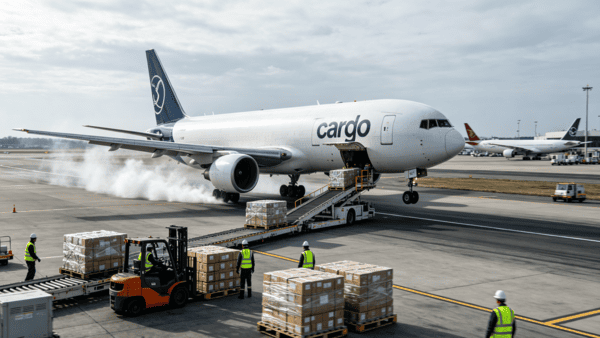
How do forwarders balance market competitiveness and operational profitability?
Balancing client-oriented pricing competitiveness and sustainable profit margins remains a core operational challenge for transpacific retail forwarders adapting DDP pricing under US De Minimis Policy Changes. Improper pricing adjustment strategies may undermine long-term market development stability.
E-commerce merchants in the transpacific retail market maintain relatively high sensitivity to logistics service pricing, and arbitrary quotation increases may contribute to client resource outflow. Conversely, unchanged flat pricing cannot offset incremental policy costs, resulting in sustained profit compression and restricted service quality improvement. Refined internal cost control and flexible pricing strategies help forwarders achieve balanced operational development.
Forwarders should note that refined internal operational optimization creates feasible pricing adjustment space for external market adaptation. Improved cargo consolidation efficiency, reduced idle transportation capacity ratios, and streamlined compliance workflows lower comprehensive operational costs, partially offsetting external policy-derived expenditure increments. Differentiated pricing strategies for new and existing clients also help stabilize core business volume while expanding emerging market resources.
Current global trade supervision environments feature continuous regulatory iteration, where policy adaptability and refined operational capabilities gradually replace single pricing advantages as core competitive indicators for transpacific freight forwarding enterprises. Service providers with flexible pricing adjustment systems and standardized risk control workflows maintain steady operational development amid market and policy fluctuations.
To conclude, continuous optimization of transpacific DDP air freight pricing mechanisms based on evolving US De Minimis Policy Changes enables retail-focused forwarders to adapt to regulatory upgrades, stabilize operational profits, and retain market competitiveness. Refined commodity-based pricing classification, transparent cost accounting, and matched operational standardization support sustainable business growth amid dynamic US customs policy environments.
Last
Maximizing overseas warehouse operational margins utilizing the updated cross border digital logistics E-commerce 9810 official Tax Rebate Policy
The updated Cross-border E-commerce “9810” Tax Rebate Policy optimizes profit structures for overseas warehouse logistics operatio
Next
Mitigating severe legal penalties by enforcing rigorous denied party screening for total OFAC tracking and sanctions compliance in global logistics
OFAC Sanctions Compliance in Logistics has become a non-negotiable operational standard for global freight forwarders, as cross-bo
