In-depth Analysis: How Logistics Compliance Policies Affect Freight Forwarders' Profits in the Current Complex International Trade Environment
Freight Policy
 28-Apr-2026
The current global trade pattern is constantly restructuring, with geopolitical tensions and the iterative upgrading of regional trade agreements. As a core supporting element of international trade, every adjustment to international logistics policies directly penetrates into all links of freight forwarders' operations, profoundly affecting their profit margins and market competitiveness. Understanding and adapting to international logistics policies has become the key for freight forwarders to break through profit bottlenecks and achieve sustainable development.
I. Core Cognition: What Are International Logistics Policies? Why Do They Determine Freight Forwarders' Profits?
International logistics policies refer to a series of rules, regulations, and measures formulated by various countries and international organizations to standardize cross-border logistics activities, covering multiple dimensions such as customs duties, customs clearance, transportation, and quarantine. They directly determine the operating costs, operational efficiency, and risk control costs of freight forwarders. As an intermediate hub for cargo transportation, the profit model of freight forwarders is highly dependent on policy compliance, and policy changes will inevitably lead to profit fluctuations.
According to the latest "Global Trade Update" report released by the United Nations Conference on Trade and Development (UNCTAD) in April 2026, global trade volume grew by approximately 7% in 2025, reaching a record high of 35 trillion US dollars. However, geopolitical factors reshaping trade flows and the continuous tightening of policy compliance requirements have also exerted constant pressure on the profit space of the freight forwarding industry. For freight forwarding enterprises, international logistics policies are not passive "rules and regulations" to be followed but core variables affecting pricing strategies, customer maintenance, and cost control. Only by understanding and making good use of these policies can they maintain profits and seize opportunities in a complex environment.
Freight forwarders need to note that the core development trend of current international logistics policies is "refined compliance, digital supervision, and regional differentiation." The traditional extensive operation model can no longer meet policy requirements. Freight forwarders that ignore policy details will not only face risks such as fines and cargo detention but also see their profits eroded by additional cost expenditures, eventually being eliminated by the market.
II. Core Paths of How Policies Affect Freight Forwarders' Profits: Comprehensive Penetration from Cost to Efficiency
The impact of international logistics policies on freight forwarders' profits is not a one-dimensional increase in costs but rather exerts multiple pressures on profits through three core paths: "rising costs, declining efficiency, and increased risks." At the same time, there are potential profit growth points brought by compliance dividends. The key lies in whether freight forwarding enterprises can accurately grasp the policy orientation.
2.1 Adjustment of Tariff and Tax Policies: Directly Restructuring the Cost Structure of Freight Forwarders
Tariffs and various additional taxes and fees are the core components of international logistics policies. Their adjustments directly affect the quotation system and cost accounting of freight forwarders and are the most direct factors determining profit levels. In recent years, many countries around the world have intensively adjusted their tariff policies, ranging from the cancellation of tax exemptions for small parcels to the imposition of anti-dumping duties on specific products. Every change presents challenges to the cost accounting of freight forwarders.
According to the latest data from the Zhejiang Council for the Promotion of International Trade in April 2026, more than 12 countries and regions worldwide have adjusted their import and export tariff and tax policies, covering multiple categories such as textiles, chemicals, automobiles, and cross-border small parcels, directly affecting the cost and quotation competitiveness of freight forwarders. For instance, starting from July 1, 2026, the European Union will impose a fixed customs duty of 3 euros per item on cross-border small parcels valued below 150 euros, an increase from the previously rumored 2-euro plan. This means each parcel will incur an additional cost of approximately 8 Chinese yuan. For freight forwarders mainly engaged in small-package direct mail, the cost increase directly compresses profit margins. If costs cannot be reasonably passed on to customers, profits will drop by 5% to 10% directly.
A common misunderstanding is that some freight forwarders continue to use their original quotation systems after tariff policy adjustments, either incurring losses due to low quotations or losing customers due to high quotations. The recommended approach is for freight forwarders to establish a real-time tariff policy tracking mechanism, promptly optimize their quotation structures in response to tariff adjustments across different countries and categories, clearly inform customers of the reasons for cost changes, and strive for tariff preferences or customs clearance convenience through bulk booking and in-depth cooperation with customs to offset part of the cost pressure.
2.2 Upgrade of Customs Clearance Compliance Policies: Hidden Profit Loss Caused by Efficiency Decline
Customs clearance compliance is a core link in freight forwarders' operations. In recent years, customs authorities of various countries have continuously strengthened customs clearance supervision and promoted electronic and refined supervision. Although this has improved customs clearance efficiency in the long run, in the short term, the upgrading of compliance requirements has exposed freight forwarders to problems such as increased operating costs and rising risks of cargo detention, resulting in hidden profit losses.
2.2.1 Upgrade of Domestic Customs Clearance Policies and Key Response Points for Freight Forwarders
Taking China Customs as an example, Announcement No. 15 of 2026 by the General Administration of Customs clearly states that starting from March 1, 2026, the "China-Singapore Electronic Information Exchange System for Certificates of Origin" will be upgraded. This upgrade adds the function of real-time transmission of electronic data for certificates of origin issued by Singapore Customs under the RCEP and adjusts customs clearance declaration methods and certificate submission requirements. If freight forwarders fail to promptly grasp policy details, it may lead to declaration failures and cargo detention. According to industry statistics, for each day goods are detained, freight forwarders must bear additional costs such as warehousing fees and demurrage. If detention exceeds 3 days, the profit loss for a single shipment can range from 1,000 to 5,000 Chinese yuan. For small and medium-sized freight forwarders, such hidden costs have become one of the main reasons for profit decline.
2.2.2 Core Trends and Practical Suggestions for Customs Clearance Compliance
Freight forwarders need to note that the upgrading trend of customs clearance compliance policies is "electronization, standardization, and traceability." For example, the "paperless customs clearance" and "single window" declaration systems promoted by China Customs require freight forwarders to accurately enter cargo information and improve document data. Any information error may trigger an inspection. The recommended approach is for freight forwarders to increase investment in information technology, optimize customs declaration systems, assign professional customs declarers to be responsible for document review and declaration, and strengthen communication and coordination with customs to promptly understand inspection rules, reduce inspection rates, minimize the risk of cargo detention, and lower hidden profit losses.
2.3 Tightening of Transportation Supervision Policies: Rising Capacity Costs Compress Profit Space
Supervision policies in the international transportation link—including route restrictions, fuel standards, and capacity control—directly affect the capacity costs and transportation efficiency of freight forwarders, thereby impacting profits. In recent years, geopolitical conflicts and the upgrading of environmental policies have led to the continuous tightening of transportation supervision policies, placing sustained upward pressure on the capacity procurement costs of freight forwarders.
According to the latest data from the Freightos Baltic Index (FBX) as of April 15, 2026, the FBX Global Composite Index stood at 4,862 US dollars per FEU, an 8% decrease from the previous week. However, since the outbreak of the Middle East conflict in February 2026, shipping companies have been forced to pass on the impact of rising fuel costs. The freight rate for the Europe-US East Coast route has soared from 1,400 US dollars to 2,237 US dollars, an increase of more than 59%, leading to a significant rise in the capacity procurement costs of freight forwarders. At the same time, the upgrading of environmental policy requirements—such as the implementation of global low-sulfur fuel standards—has prompted shipping companies to increase fuel surcharges, which will ultimately be passed on to freight forwarding enterprises, further compressing profit margins.
In addition, transportation restriction policies in some countries have imposed additional costs on freight forwarders. For example, starting from January 1, 2026, Mexico has increased tariffs on 1,463 product categories from countries without free trade agreements, raising tax rates from 0-20% to 10-50%, covering multiple categories such as textiles, automobiles, and home appliances. If freight forwarders are involved in transporting these categories, they must either bear additional tariff costs or lose relevant customers, directly affecting profits.
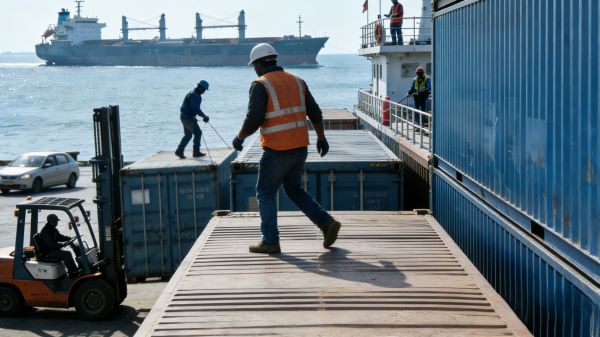
III. Differences in Logistics Policies in Major Global Trade Regions: The Logic of Regional Differentiation of Freight Forwarders' Profits
There are significant differences in international logistics policies across different trade regions. Variations in compliance requirements, tariff levels, and supervision intensity lead to obvious differences in the profit space of freight forwarders in different regions. Freight forwarding enterprises need to accurately grasp the policy characteristics of each region and adjust their operational strategies accordingly to maximize profits.
3.1 China and East Asia Region: Refined Compliance, Coexistence of Dividends and Risks
As the world's largest goods trading country, China has continuously optimized international logistics policies in recent years, promoted customs clearance facilitation, deepened regional trade cooperation, and strengthened compliance supervision. For freight forwarding enterprises, this presents both opportunities and challenges.
According to the "2026 Tariff Adjustment Plan" issued by the Tariff Policy Commission of the State Council on December 29, 2025, starting from January 1, 2026, China will implement temporary import tax rates lower than the most-favored-nation tax rates for 935 commodities, covering key components, advanced materials, energy and resource products, and people's livelihood medical products. At the same time, it will add domestic subheadings for products such as intelligent bionic robots and bio-aviation kerosene. After the adjustment, the total number of tariff headings will be 8,972. This policy adjustment is both a dividend and a test for freight forwarders.
Compliant freight forwarders can leverage policy dividends to provide customers with logistics solutions related to temporary import tax rates, enjoy customs clearance convenience, and reduce operating costs. However, at the same time, China's tax authorities have continuously strengthened compliance supervision over the freight forwarding industry. In April 2026, dozens of freight forwarding enterprises in Shenzhen received tax inspection notices, with the core issue being the "mixing of taxable services into tax-exempt invoices." Many enterprises had to repay taxes due to irregular operations, and compliance costs increased by more than 30%, squeezing substantial profits.
Freight forwarders need to note that the core of logistics policies in China and East Asia is "compliance first, dividend-oriented." The recommended approach is to proactively improve the financial accounting system, separate tax-exempt and taxable services, standardize invoice issuance to avoid tax irregularities, and make full use of policy dividends from regional trade agreements such as the RCEP and the China-Singapore Free Trade Agreement to provide customers with compliant tariff preferential solutions, enhance competitiveness, and tap profit growth points. In addition, as the core logistics hub of China's free trade port, Yangpu Port in Hainan achieved a container throughput of 983,700 TEUs in the first quarter of 2026, a year-on-year increase of 94.37%, with foreign trade container throughput rising by 199% year-on-year. Freight forwarders can focus on deploying routes in this region and leverage port policy dividends to reduce operating costs.
3.2 EU and Europe Region: Environmental and Safety Orientation, High Compliance Costs
As one of the world's most stringent trade supervision regions, the EU's international logistics policies are centered on "environmental protection and safety," with high compliance requirements and strong supervision intensity. The operating costs of freight forwarders in this region are relatively high, and profit margins are relatively limited. However, the compliance threshold has also formed a market barrier, allowing high-quality compliant freight forwarders to obtain stable profits.
The EU's logistics policies mainly focus on three aspects: first, environmental policies—such as low-sulfur fuel standards and recyclable packaging requirements—which require freight forwarders to bear additional environmental costs; second, safety policies—such as C-TPAT anti-terrorism certification and ISPS port safety rules—which require freight forwarders to improve safety control processes and increase human and technical investment; third, tariff and tax policies—such as the imposition of fixed customs duties on cross-border small parcels starting from July 2026—which directly increase freight forwarders' costs. In addition, in February 2026, the EU imposed anti-dumping duties on products such as choline chloride originating from China, with the highest tax rate reaching 115.9%. Freight forwarders involved in transporting these categories must bear additional tariff costs, directly affecting profits.
A common misunderstanding is that some freight forwarders ignore the EU's environmental and safety policy requirements and blindly accept goods, resulting in goods being detained and fined. This not only leads to profit losses but also damages corporate reputation. The recommended approach is for freight forwarders to understand relevant EU policies in advance, cooperate with carriers with environmental and safety qualifications, improve compliance processes, and provide customers with reasonable transportation solutions—such as transshipment and category adjustments—in response to policies like anti-dumping duties to reduce cost pressure.
3.3 Americas Region: Volatile Policies, High Profit Uncertainty
International logistics policies in the Americas region (especially in the United States and Mexico) are highly volatile, with frequent geopolitical and domestic policy adjustments, leading to high profit uncertainty for freight forwarders in this region. This requires strong policy adaptability.
U.S. logistics policies mainly focus on tariff adjustments and safety supervision. For example, in January 2026, the U.S. Department of Commerce imposed anti-dumping duties on hard hollow capsules originating from China, with the highest dumping margin reaching 18.71%. It also plans to impose tariffs on Chinese chips in 2027, which will further affect freight forwarders' transportation costs and customer structures. Starting from January 1, 2026, Mexico has increased tariffs on 17 industries from countries without free trade agreements, covering multiple categories such as textiles, automobiles, and home appliances. If freight forwarders are involved in transporting these categories, they need to recalculate costs and adjust quotations; otherwise, they will face losses.
Freight forwarders need to note that policy fluctuations in the Americas region are sudden. The recommended approach is to establish a policy early warning mechanism, track policy changes in countries such as the United States and Mexico in real time, communicate with customers in advance to clarify cost-sharing plans, and optimize the customer structure to avoid over-reliance on customers in a single category or country, thereby reducing profit risks caused by policy fluctuations.
IV. Profit Strategies for Freight Forwarders to Respond to Changes in International Logistics Policies: From Compliance to Efficiency Enhancement
Faced with complex and changing international logistics policies, if freight forwarding enterprises want to maintain profits and achieve growth, they cannot passively comply with policies but should proactively adapt to and leverage them. Through compliance control, cost optimization, and service upgrading, they can transform policy pressure into profit advantages. The following are specific profit strategies covering three core dimensions: operations, costs, and customers.
4.1 Compliance Control: Reduce Risk Costs and Maintain Profit Bottom Line
Compliance is the prerequisite for freight forwarders to make profits. Only by effectively implementing compliance control can they avoid additional costs such as fines and cargo detention and maintain the profit bottom line. Combined with current policy trends, freight forwarders' compliance control should focus on three core links:
Document Compliance: Strictly in accordance with the requirements of customs authorities in various countries, improve customs declaration documents, certificates of origin, Commercial Invoices, and other materials to ensure information is true, accurate, and complete, and avoid inspections or fines due to document errors. For example, after the upgrading of the China-Singapore electronic connection for certificates of origin, freight forwarders need to promptly confirm the real-time transmission of electronic data for certificates of origin to avoid declaration failures due to missing data.
Tax Compliance: Standardize financial accounting and invoice issuance, strictly distinguish between tax-exempt and taxable services, and avoid irregular operations such as mixed invoice issuance. Especially in freight forwarder hubs like Shenzhen, tax inspections are becoming increasingly strict. Freight forwarders need to improve the "four-in-one" system (contract flow, capital flow, cargo flow, and invoice flow), stop collecting payments through private accounts, ensure tax compliance, and avoid profit erosion due to tax repayments and fines.
Category Compliance: Track the anti-dumping and countervailing policies of various countries in real time, and avoid undertaking categories subject to high tariffs. If relevant categories are involved, communicate with customers in advance to clarify tariff cost-sharing plans and reduce profit risks. For example, after the EU imposed high anti-dumping duties on Chinese choline chloride, freight forwarders should avoid blindly undertaking the transportation of this category or provide customers with alternative solutions such as transshipment.
4.2 Cost Optimization: Tap Policy Dividends and Reduce Operating Costs
Under the cost pressure brought by policies, freight forwarding enterprises need to optimize their cost structures and tap policy dividends to reduce operating costs and improve profit margins. Specifically, this can be achieved through three key measures:
Leverage Regional Trade Agreement Dividends: Conduct in-depth research on regional trade agreements such as the RCEP, the China-Singapore Free Trade Agreement, and the China-ASEAN Framework Agreement, provide customers with compliant tariff preferential solutions, and enjoy customs clearance convenience to reduce operating costs. For example, leverage the upgraded China-Singapore electronic connection policy for certificates of origin to simplify the declaration process, improve customs clearance efficiency, and reduce labor and time costs.
Optimize Capacity Procurement Strategies: Track freight indices such as the FBX in real time, grasp freight fluctuation patterns, and strive for more favorable capacity prices with carriers through Bulk Booking and long-term cooperation to reduce capacity procurement costs. For example, lock in shipping space in advance before freight rates rise to avoid cost increases due to soaring rates; at the same time, cooperate with multiple carriers to diversify capacity risks and enhance bargaining power.
Digital Cost Reduction and Efficiency Enhancement: Increase investment in information technology, introduce logistics management systems, and automate links such as document review, declaration, and cargo tracking to reduce labor costs and improve operational efficiency. For example, use systems to automatically verify HS codes and pre-store inspection reports to reduce declaration error rates, minimize inspection risks, and lower hidden costs.
4.3 Customer Service: Leverage Policy Advantages to Improve Profit Space
Freight forwarders' profits ultimately come from customers. Faced with policy changes, freight forwarders can leverage their policy interpretation capabilities to provide value-added services for customers, enhance customer stickiness, and thereby improve profit margins. Specific measures include the following:
Provide Professional Policy Consulting Services: Establish a professional policy interpretation team to track changes in international logistics policies in real time, provide customers with policy consulting and compliance guidance services, help customers avoid policy risks, reduce their operating costs, and enhance the value of their own services to secure higher service fees.
Customized Logistics Solutions: Based on the cargo categories and Ports of Destination of different customers, combined with local logistics policies, provide personalized logistics solutions. For example, in response to the EU's environmental policies, provide customers with environmentally friendly packaging and low-sulfur fuel transportation solutions; in response to Mexico's tariff policies, provide transshipment and category adjustment solutions to improve customer satisfaction.
Strengthen Customer Communication and Coordination: After policy changes, communicate with customers promptly to clarify the reasons for cost changes, negotiate quotation adjustment plans, and avoid losing customers due to quotation disputes. At the same time, proactively convey policy dividends—such as tariff preferences and customs clearance convenience—to customers, allowing them to perceive professional value and enhance customer stickiness.
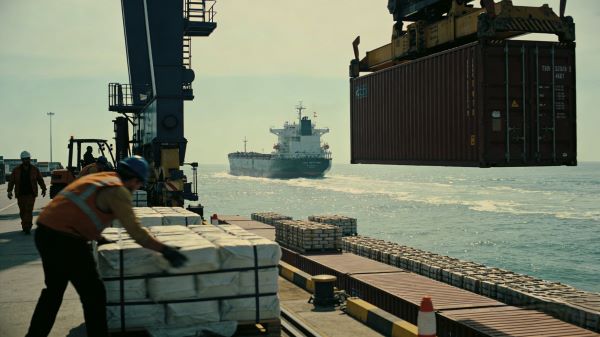
V. Policy Trend Prediction: How Will Future International Logistics Policies Affect Freight Forwarders' Profits?
Combined with the current global trade pattern and policy trends, future international logistics policies will show a trend of "stricter compliance, deeper digitalization, and more obvious regionalization." Their impact on freight forwarders' profits will be more far-reaching. Freight forwarding enterprises need to plan in advance and proactively adapt to policy changes to achieve sustainable profits.
According to the latest UNCTAD report in April 2026, the global trade outlook in 2026 is affected by uncertainty. Geopolitical factors will continue to reshape trade flows, and various countries will further strengthen logistics compliance supervision—especially in areas such as data protection, environmental protection, and safety. Compliance costs will continue to rise, and small and medium-sized freight forwarders that fail to adapt will face the risk of elimination. At the same time, digital supervision will become mainstream. Customs authorities of various countries will further promote electronic declaration, big data inspections, and other methods. The information technology level of freight forwarders will become a core competitiveness; those with insufficient information investment will face problems such as low operational efficiency and rising costs, leading to further compressed profit margins.
Regional trade agreements will become the main source of policy dividends. The influence of regional trade agreements such as the RCEP and CPTPP will continue to expand. If freight forwarding enterprises can deeply cultivate regional markets and fully leverage the tariff preferences and customs clearance convenience brought by these agreements, they will gain more profit growth points. In addition, environmental policies will be further tightened, and global low-sulfur fuel standards and carbon emission reduction requirements will continue to be upgraded. Freight forwarders need to plan for green logistics in advance, cooperate with partners with environmental qualifications, reduce environmental costs, and avoid losing market share due to environmental violations.
Freight forwarders need to note that policy changes in international logistics will become more frequent in the future, and a single operational model can no longer meet market demands. The recommended approach is to establish a flexible operational mechanism, strengthen policy interpretation and prediction capabilities, optimize cost structures, improve service quality, and expand into diversified markets to reduce profit risks caused by a single policy or region.
VI. Conclusion: Compliance as the Foundation, Policies as the Edge, Achieving Sustained Profit Growth of Freight Forwarders
In the current complex international trade environment, international logistics policies have become the core variable affecting freight forwarders' profits. They not only bring challenges such as rising costs and increased risks but also hide opportunities such as compliance dividends and service upgrading. If freight forwarding enterprises want to maintain profits and achieve growth in the fierce market competition, they must take compliance as the foundation, thoroughly interpret international logistics policies, proactively adapt to policy changes, reduce risk costs through compliance control, tap profit space through cost optimization, and enhance customer value through service upgrading.
For global freight forwarding companies, international logistics policies are not obstacles but a "whetstone" to enhance core competitiveness. Only by facing up to the impact of policies, proactively responding to changes, and transforming policy interpretation capabilities into profit advantages can they gain a firm foothold in the complex and changing international trade environment and achieve sustained profit growth. In the future, with the continuous improvement of international logistics policies, compliance, digitalization, and diversification will become the mainstream development direction of the freight forwarding industry. Only by planning in advance and proactively adapting can they stand out in industry restructuring, seize more profit opportunities, and make international logistics policies a driving force rather than a hindrance to their own profit growth.
Last
2026 Customs Inspection Policy Guide for Freight Forwarders
In 2026, the global cross-border logistics industry has entered a new stage of compliance-oriented development. For freight forwar
Next
Overcoming Border Challenges: How to Understand and Respond to the Volatile Logistics Customs Clearance Policies in Current International Trade?
In 2026, the global trade pattern continues to adjust. With the iteration of regional trade agreements and the tightening of envir
