Air Freight Shipment Guide: Service Choice, Costs and Booking
Freight Knowledge
 17-Nov-2026
An air freight shipment needs more than a flight reservation. Choose the service endpoints, confirm cargo acceptance, and compare the chargeable weight and all handling stages. Book against a realistic delivery timeline, then prepare the goods and documents for tender. Aircraft arrival, customs release, and final delivery are separate milestones.
Air freight is often considered when waiting several weeks is not an option. A factory may need one missing part to keep production moving, while a retailer may be sending a small batch of expensive goods that needs to arrive quickly.
An air freight shipment can save a lot of time, but the flight is only part of the process. Cargo rules, pickup, airport handling, customs, and final delivery can all affect the cost and arrival date. Knowing how those pieces fit together makes it much easier to choose the right service and avoid delays.
Is Air Freight Right for Your Cargo and Deadline?
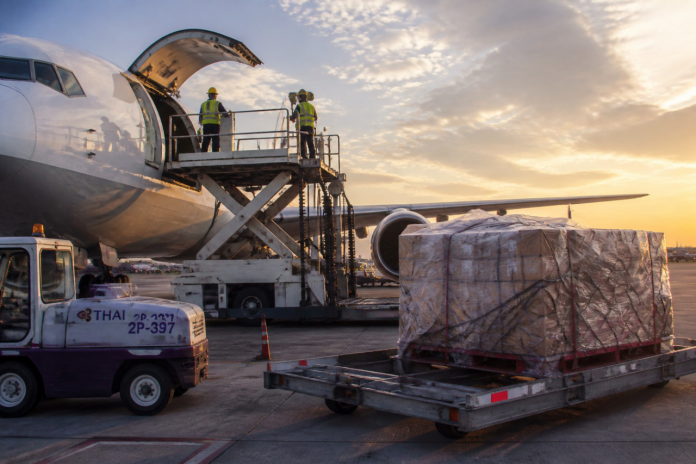
Air freight is a good choice when fast delivery can prevent production delays, meet urgent customer orders, or protect time-sensitive goods. It is particularly useful for replacement parts, high-value products, and smaller shipments where the cost of waiting outweighs the higher transportation expense.
Before booking, check the packed dimensions and weight to estimate air freight charges. Oversized items may face aircraft loading restrictions, while perishable, temperature-sensitive, and regulated goods may require special packaging, documentation, or handling arrangements.
Consider the full delivery timeline, including cargo pickup, export processing, security screening, flights, customs clearance, and final delivery. If you have a fixed deadline, ask your freight forwarder for a realistic door-to-door estimate and compare it with available sea freight options.
For example, a manufacturer facing a production shutdown could ship urgently needed replacement parts by air while sending the remaining inventory by sea. This approach helps restore operations sooner while keeping transportation costs manageable.
Which Air Freight Service Scope Do You Need?
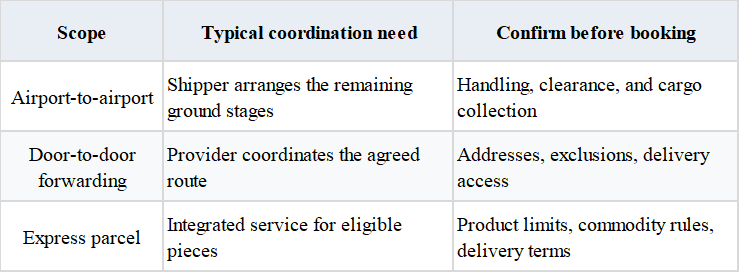
Service scope determines which ground stages are included and who coordinates them. Establish the endpoints before comparing rates, because similarly described air services can cover very different work.
Airport-to-Airport Cargo
This scope centers on transport between specified airports. Ask who delivers cargo to the origin facility and who arranges destination handling, customs release, collection, and onward transport.
It can suit a shipper with established local teams, but a receiving business without clearance or collection arrangements may need broader coordination. Obtain the receiving facility’s release process and handling charges before booking.
Door-to-Door Forwarding
A forwarder can coordinate pickup, airport handling, carriage, customs services, and final delivery where agreed. “Door-to-door” still needs defined addresses, access conditions, and a clear statement of duties, taxes, insurance, and exclusions.
If your team needs that coordination, find air freight forwarding partners with relevant origin and destination capability. Confirm which local offices or agents perform each stage and who owns an exception outside normal working hours.
Express Parcel Services for Suitable Smaller Shipments
An integrated parcel service can suit eligible smaller consignments within its piece limits and commodity rules. A branded air service and conventional airport cargo are different products, even if both use aircraft.
If you are comparing an air freight FedEx option with a forwarder proposal, identify the exact product and endpoints first. Check chargeable weight, clearance, delivery commitments, and acceptance on the same basis instead of assuming a brand name defines the service.
How Are Air Freight Charges Calculated?
Air freight charges are generally based on chargeable weight, which is the higher of the shipment's actual gross weight and volumetric weight. Volumetric weight accounts for the space cargo occupies, so large, lightweight packages may cost more to ship than their physical weight suggests.
As explained in DHL's chargeable weight guide, volumetric weight is calculated using the shipment's dimensions and a service-specific divisor.
For example, suppose a package measures 100 × 80 × 60 cm and weighs 55 kg. Using a divisor of 6,000 cm³/kg:
l Volumetric weight: (100 × 80 × 60) ÷ 6,000 = 80 kg
l Actual gross weight: 55 kg
l Chargeable weight: 80 kg
The airline or freight forwarder would therefore use 80 kg to calculate the weight-based freight charge, subject to the applicable minimums and rounding rules. Measure the cargo after packaging, including pallets or protective materials, to get a more accurate estimate.
The total shipping cost also includes more than the air freight rate. Common additional charges include:
l Fuel and security surcharges: Additional fees related to airline operations and cargo screening.
l Origin and destination handling: Charges for cargo processing, terminal services, and warehouse handling.
l Customs clearance and delivery: Brokerage fees, applicable duties and taxes, and transportation to the final destination.
To compare actual shipping costs, request an air freight quote with your cargo dimensions, gross weight, number of packages, commodity, pickup and delivery locations, and ready date. Ask for an itemized quotation showing the chargeable weight, freight rate, and additional fees so you can compare the total cost across providers.
How Do You Prepare and Book an Air Freight Shipment?
Gather acceptance-critical information before comparing offers. Then confirm the booking and tender requirements so the cargo arriving at the facility matches the shipment the carrier agreed to carry.
Step 1. Confirm Cargo Acceptance and Service Requirements
Describe the commodity, packed size and weight, deadline, and handling needs. Flag batteries, dangerous goods, temperature control, or other restrictions before requesting a firm offer. Ask which aircraft and routing can accept the pieces. Continue only when the provider confirms the relevant acceptance conditions and identifies any specialist preparation required.
Step 2. Compare Quotes and Confirm the Booking
Reconcile chargeable weight, service endpoints, surcharges, customs scope, and delivery arrangements. Ask about routing and the consequences of a missed connection. Confirm space and the cargo-ready date with the selected provider. Retain the booking reference and acceptance instructions rather than treating an indicative quotation as a reservation.
Step 3. Prepare Cargo Data, Documents and Packaging
Finalize invoice and packing data, shipper and consignee details, commodity descriptions, and any required permits or declarations. Use packaging and labels appropriate to the accepted cargo and handling method. Compare the final piece count, dimensions, and gross weight with the booking. Send changes to the provider before tendering the goods.
Step 4. Complete Required Checks and Tender the Cargo
Follow the provider’s security, documentary, and cargo acceptance instructions and the applicable tender cutoff. Confirm the handover location and party authorized to deliver. Obtain receipt or acceptance evidence and the tracking reference. If a required check fails, resolve it with the provider before assuming the cargo will travel on the booked flight.
How Do You Track Arrival, Clearance and Final Delivery?
Track the milestones that control availability, rather than only the flight. The shipment is usable at destination only after the required release and delivery arrangements have been completed.
· Cargo receipt and departure. Confirm that the handling party accepted the goods and obtain the air waybill reference. Ask the provider to distinguish booked routing from actual flight movement.
· Arrival and availability. Verify arrival at the correct airport and when the goods can be processed or collected. An aircraft arrival event does not establish cargo availability at the warehouse.
· Customs and other release. Check whether documents, payment, or inspection are pending and name the party handling them. Follow up on a specific hold rather than repeatedly asking whether the flight landed.
· Collection and delivery. Confirm release authority, transport booking, receiving hours, and unloading arrangements. Obtain delivery confirmation and record visible damage or shortages through the provider’s reporting process.
Conclusion
Air freight saves time when the cargo is accepted and the ground stages support the same delivery goal. The service scope and charging basis should be clear before the goods leave the shipper’s premises.
Compare complete offers using the final packed measurements, then confirm the booking and tender requirements. During the journey, follow the release and delivery milestones as closely as the flight, with a named contact for any condition that prevents the receiver obtaining the cargo.
Frequently Asked Questions
Does Air Freight Always Mean Door-to-Door Delivery?
No. Air cargo can be sold airport-to-airport or with additional ground services. Even a door-to-door offer needs a statement of customs, duties, taxes, access conditions, and unloading. Read the endpoints and exclusions in the actual proposal so the consignee knows which arrangements remain its responsibility.
Can Batteries or Dangerous Goods Be Sent by Air?
Some can, subject to classification, preparation, documentation, aircraft restrictions, and carrier acceptance. The IATA battery guidance distinguishes relevant configurations and requirements. Describe the actual product before booking and use qualified support. Acceptance for one battery shipment does not establish acceptance for another.
Is Cargo Insurance Included in an Air Freight Quote?
Do not assume it is. Ask whether separate cargo insurance is offered and examine the insured value, cover, exclusions, and claims procedure. A carrier’s or forwarder’s liability provisions are not the same as an insurance policy protecting the full commercial value of your shipment.
Next
Sea Freight From China to the USA: Options, Costs and Booking
Sea freight from China to the USA offers shipping options for businesses of different sizes. Compare FCL and LCL based on cargo vo
