Advising marine cargo insurance underwriters on what geopolitical trade lane conditions trigger a protective carrier wrs war risk surcharge
Freight Knowledge
 11-Jun-2026
What is WRS War Risk Surcharge? It is a conditional maritime accessorial fee charged by ocean carriers to offset incremental marine insurance premiums stemming from geopolitical uncertainties and conflict-associated hazards across global shipping lanes. This logistics-specific cost serves as a core risk mitigation instrument for vessel operators, delivering measurable impacts on cost benchmarking for marine cargo insurance underwriters and cross-border service operations of global freight forwarders.
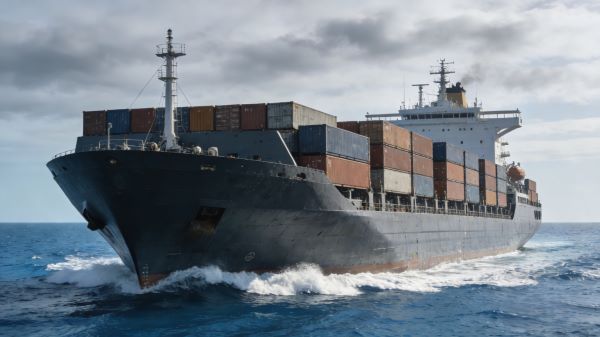
What core definition and operational logic define WRS War Risk Surcharge?
WRS War Risk Surcharge refers to a temporary or cyclical maritime surcharge levied by liner carriers to cover additional war risk insurance expenditures for vessels and cargo units transiting geopolitically vulnerable trade corridors. Distinct from fixed freight add-ons such as bunker adjustment factor or terminal handling charges, this fee is activated solely when geopolitical security risks exceed the coverage scope of standard maritime insurance policies.
According to UNCTAD 2025 maritime risk assessment publications, conventional cargo insurance contracts do not assume liabilities for war conflicts, civil riots, and armed maritime assaults. Such coverage gaps compel carriers to procure supplementary war risk insurance for high-exposure routes, generating extra operational costs that WRS is designed to offset.
Forwarders should note that WRS functions as a transparent pass-through cost rather than a profit-oriented discretionary charge for shipping lines. Its rate adjustments are closely correlated with real-time premium fluctuations issued by mainstream global marine insurance underwriting institutions. Many junior forwarding practitioners misclassify WRS as a routine seasonal surcharge, which often results in inaccurate client quotation formulation and standardized contract pricing deviations.
The operational logic of WRS follows a stable industry-recognized risk transmission chain. Gradual geopolitical tension escalation leads to rising maritime security exposure, which drives up underwriting costs for marine insurance providers. Carriers subsequently initiate or adjust WRS charges to balance increased operational expenditures and maintain sustainable service provision.
A common mistake is retaining fixed WRS cost budgeting frameworks without adjusting for dynamic regional risk variations. WRS rates are regularly revised or suspended as geopolitical trade lane environments improve and insurance premiums revert to standard market levels. This flexible adjustment framework helps carriers sustain compliant risk coverage while mitigating excessive cost burdens for shippers during low-risk operational cycles.
Which geopolitical trade lane conditions support WRS implementation?
A set of standardized geopolitical and on-vessel security conditions serves as the mainstream activation benchmark for carriers to impose WRS War Risk Surcharge. Major global liner alliances and maritime insurance organizations verify and update these triggering criteria periodically to adapt to evolving international trade risk landscapes.
Active military confrontations and armed conflicts: Sustained cross-border military frictions, localized armed skirmishes, and targeted military operations adjacent to key shipping straits and coastal trade routes are primary triggers for WRS activation. According to Drewry 2025 global shipping risk analytics, trade lanes overlapping with conflict zones record substantial growth in war risk insurance premiums for ocean cargo. Multiple regional shipping corridors including the Red Sea, Gulf of Aden, and Persian Gulf have maintained elevated risk exposure due to recurrent vessel attack incidents in recent years.
Regional political instability and institutional volatility: Large-scale civil unrest, governmental regime transitions, and sustained policy uncertainty in major port hub economies constitute valid WRS triggering conditions. Such social and institutional fluctuations disrupt terminal operational continuity, raise cargo detention and seizure probabilities, and increase vessel berthing operational risks. UNCTAD 2025 statistical data shows that coastal economies with ongoing political turbulence register notably higher cargo insurance claim frequencies compared to geopolitically stable trade regions, prompting underwriters to raise premium rates and carriers to launch protective WRS charges.
Maritime piracy and organized vessel hijacking risks: Recurrent organized piracy activities, coordinated vessel hijacking attempts, and armed maritime robbery incidents represent key risk factors for WRS imposition. Unlike sporadic minor maritime violations, large-scale pirate operations threaten vessel navigation safety, cargo integrity, and crew personal security, with such risks excluded from standard maritime insurance coverage. Freightos Baltic Index (FBX) 2026 mid-term lane risk assessments indicate that piracy-prone maritime corridors require significantly higher supplementary insurance coverage compared to conventional global trade routes.
Escalated international sanctions and maritime trade restrictions: Multilateral economic sanctions, targeted maritime trade blockades, and port access control measures implemented by sovereign economies or international bodies drive WRS policy revisions. These regulatory barriers create unpredictable operational obstacles, increase vessel detention probabilities, and extend cargo transit cycle uncertainties. The recommended approach for forwarders is to track real-time trade policy updates released by WTO to conduct early risk assessment for potential WRS imposition on affected trade lanes.
How do professional underwriters judge WRS applicability for different trade lanes?
Marine cargo insurance underwriters adopt standardized tiered risk grading mechanisms to evaluate the rationality of carrier-imposed WRS War Risk Surcharge on individual trade lanes. This unified assessment framework aligns risk judgment standards across insurance institutions, ocean carriers, and freight forwarding enterprises within the global logistics ecosystem.
What risk tier classification is applied for global shipping lanes?
Industry practitioners categorize global container shipping lanes into three adaptive risk tiers, including stable low-risk lanes, fluctuating medium-risk lanes, and conflict-exposed high-risk lanes. Each tier matches corresponding insurance premium coefficients and WRS activation threshold standards. According to ITC Trade Map 2025 global trade risk classification statistics, around 22 percent of core international container trade lanes fall into medium or high-risk categories, requiring continuous dynamic risk monitoring throughout operational cycles.
What multi-dimensional factors support underwriters’ WRS evaluation?
Forwarders should note that underwriters do not base WRS validity judgments merely on immediate on-site conflict incidents. Most underwriting teams adopt forward-looking assessment methods that integrate latent geopolitical risk indicators, such as evolving diplomatic tension trends, cross-regional military deployment adjustments, and regional security cooperation policy shifts. This multi-faceted evaluation mode enables sufficient risk coverage preparation for potential sudden security incidents on major shipping lanes.
A common mistake for junior underwriting practitioners is delaying risk framework updates until official carrier WRS announcements are published. This passive working mode leads to delayed insurance pricing adjustment, inaccurate risk provision allocation, and elevated probabilities of commercial claim disputes. The recommended approach is to formulate periodic trade lane risk review mechanisms based on UNCTAD maritime risk bulletins and WTO geopolitical trend analysis reports.
What practical impacts does WRS exert on forwarding and insurance operations?
The activation and rate adjustment of WRS War Risk Surcharge create measurable financial and operational influences on global freight forwarding businesses, reshaping daily quotation management, commercial contract formulation, and systematic risk control workflows for cross-border cargo transportation services.

How does WRS affect freight pricing and profit management?
WRS introduces notable variable cost volatility to cross-border container freight pricing systems, differing from fixed structural freight surcharges. Its rate fluctuation is closely tied to real-time geopolitical risk levels of target trade lanes. Based on Drewry 2025 freight cost structure analysis, WRS-related cost increments on high-risk lanes can lift comprehensive container shipping expenditures by 8 to 15 percent per single shipment. Forwarders who fail to embed WRS adjustment clauses in formal contracts may face compressed profit margins during risk escalation cycles.
How does WRS change cargo insurance service requirements?
WRS activation on specific trade lanes raises customized service demands for cargo insurance solutions. Standard all-risk cargo insurance policies fail to fully cover conflict-derived maritime risks on high-exposure routes, requiring forwarders to provide supplementary war risk insurance add-on options for client cargo shipments. Though this service adjustment increases daily operational workload for forwarding teams, it also improves the comprehensiveness of logistics risk protection and optimizes overall service value for cargo owners.
What challenges do inconsistent carrier WRS policies bring?
Major liner carriers adopt independent risk assessment cycles and differentiated fee adjustment rules, leading to varied WRS charge standards for identical trade lanes. A common mistake for forwarding teams is applying unified WRS cost parameters for all carrier partners, which triggers inaccurate client quotations and weakens long-term commercial trust. The recommended approach is to establish monthly sorting and updating mechanisms for carrier-specific WRS policies classified by global trade lanes.
What feasible strategies optimize WRS-related risk management?
Targeted and systematic risk management tactics help marine insurance underwriters and global forwarders mitigate operational uncertainties brought by continuous WRS policy fluctuations on geopolitically sensitive trade lanes.
Build multi-source risk monitoring mechanisms: Integrate authoritative industry data resources including UNCTAD maritime risk reports, FBX freight trend statistics, and WTO trade policy updates to track geopolitical condition variations on key shipping corridors. Proactive data monitoring allows logistics and insurance teams to capture early signals of WRS activation, rate adjustment, or policy suspension.
Refine contractual risk allocation clauses: Clearly define WRS as a variable geopolitically linked surcharge in formal freight service contracts. Standardize clause terms to clarify that newly imposed or adjusted WRS fees belong to conditional pass-through costs borne by cargo shippers. This contractual optimization helps enterprises avoid unexpected profit losses from unplanned risk cost increments.
Adopt lane-matched insurance configuration schemes: Collaborate with professional marine underwriters to design differentiated insurance solutions matching low, medium, and high-risk trade lane attributes. Reasonable insurance allocation prevents excessive insurance cost input on stable low-risk routes and avoids insufficient risk coverage on WRS-activated high-risk lanes to reduce claim-related operational disputes.
Promote cross-industry information synchronization: Maintain regular communication with mainstream ocean carriers and professional insurance institutions to synchronize real-time WRS policy updates, high-risk lane adjustments, and insurance premium fluctuation trends. Timely information sharing reduces information asymmetry across the maritime logistics and insurance industrial chain.
In summary, systematic cognition of geopolitical trade lane triggering conditions for carrier protective surcharges supports marine cargo insurance underwriters and global forwarders in standardizing risk assessment procedures, optimizing commercial pricing frameworks, and stabilizing cross-border logistics service operations. What is WRS War Risk Surcharge in commercial essence? It is a market-oriented risk transfer mechanism that adapts to geopolitical maritime uncertainties, balances incremental insurance operational costs, and supports stable carrier service operations, acting as one of the essential components in modern maritime risk management systems for global trade.
Last
Defending sales desk quotation margins by explaining to buyers what temporary carrier notices allow a wrs ocean war risk surcharge pass through
What is WRS War Risk Surcharge? It is a conditional ocean freight add-on charge that carriers enforce via official temporary custo

Next
Avoiding automated cargo loading bans at origin ports by auditing house bill data against strict japan afr filing requirements
Rigorous house bill of lading data auditing acts as a vital pre-loading measure to mitigate automated port loading bans while comp
