Infrastructure and Throughput: A Guide to the World Major Ports
Freight Knowledge
 13-May-2026
Global freight forwarders rely heavily on the efficiency of World Major Ports, as their infrastructure and throughput directly impact supply chain timelines, costs, and overall service quality. Understanding these two core elements is essential for optimizing shipping routes and meeting client expectations.
What Constitutes the Infrastructure of World Major Ports?
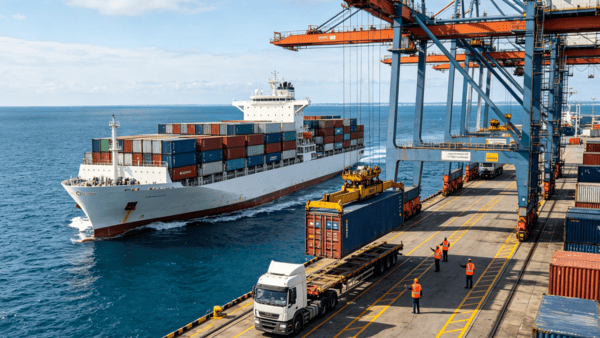
Port infrastructure refers to the physical and operational facilities that support the loading, unloading, storage, and transportation of cargo at ports. It includes berths, terminals, storage areas, and connectivity networks, all working together to ensure smooth cargo flow.
The infrastructure of World Major Ports is a comprehensive system that combines hardware facilities and software services, designed to handle large volumes of cargo and diverse shipping needs. Unlike smaller ports, major ports invest heavily in upgrading their infrastructure to accommodate ultra-large container ships (ULCS), bulk carriers, and specialized vessels, while also integrating advanced technologies to enhance operational efficiency.
Key components of port infrastructure can be divided into several categories, each playing a critical role in the overall functionality of the port. These components are interdependent, and any bottleneck in one area can affect the entire port’s performance, which in turn impacts freight forwarders’ operations.
What Are the Core Hardware Components of Port Infrastructure?
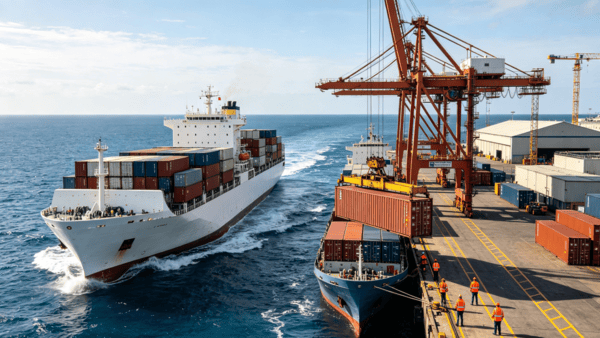
Core hardware components are the physical assets that form the foundation of port operations, including berths, terminals, storage facilities, and handling equipment. These components determine a port’s capacity to handle different types of cargo and vessel sizes.
Berths and Quays: These are the docking areas where vessels moor to load or unload cargo. World Major Ports typically have multiple berths with varying depths to accommodate different vessel types, from small feeder ships to 400,000-ton bulk carriers. For example, Ningbo-Zhoushan Port’s Shulanghu Ore Terminal has a berth length of 945 meters, allowing two 400,000-ton ore ships to berth simultaneously, a feature supported by its upgraded infrastructure.
Terminals: Specialized terminals are designed to handle specific cargo types, such as container terminals, bulk terminals, and liquid bulk terminals. Container terminals are equipped with gantry cranes, rubber-tired gantry cranes (RTGs), and automated guided vehicles (AGVs) to efficiently move containers. Shanghai Yangshan Port’s automated terminal has optimized vessel berthing plans, reducing waiting time by 15% and saving over 100 million yuan in fuel costs annually.
Storage Facilities: These include warehouses, yards, and tanks for temporary cargo storage. Container yards are organized to facilitate quick access to containers, while bulk yards are designed to handle large quantities of commodities like coal, iron ore, and grain. Major ports often have dedicated storage areas for hazardous goods, adhering to international safety standards.
Handling Equipment: This includes cranes, forklifts, conveyors, and loaders that streamline the movement of cargo between vessels, storage areas, and inland transport. Automated cranes at ports like Tianjin Port have a dispatch response time of just 0.1 seconds, significantly improving loading and unloading efficiency.
How Do Software and Connectivity Enhance Port Infrastructure?
Software and connectivity systems are the "brain" of port infrastructure, enabling real-time monitoring, data analysis, and coordination between different port operations. They play a key role in reducing delays and improving transparency for freight forwarders.
Modern World Major Ports increasingly rely on digital technologies to optimize their operations. These technologies include port management systems (PMS), real-time tracking platforms, and data analytics tools that provide insights into cargo flow, vessel schedules, and equipment utilization. For example, Xiamen Port’s Yuanhai Terminal has built a 5G full-scenario application port, with unmanned container trucks achieving centimeter-level positioning accuracy, enhancing operational efficiency and safety.
Connectivity is another critical aspect of port infrastructure, as it links ports to inland transport networks, including highways, railways, and waterways. A well-connected port can efficiently move cargo from the port to its final destination, reducing transit time and costs. Qingdao Port added 5 inland port stations for sea-rail intermodal transport in 2025, with sea-rail intermodal container volume reaching 2.829 million TEUs, a year-on-year increase of 11%.
Forwarders should note that the quality of a port’s software and connectivity directly affects their ability to track cargo, predict delays, and communicate with clients. Ports with advanced digital systems often provide real-time updates on cargo status, allowing forwarders to proactively manage potential disruptions.
What Is Port Throughput, and Why Does It Matter for Forwarders?
Port throughput refers to the total volume of cargo handled by a port within a specific period, usually measured in metric tons for bulk cargo and twenty-foot equivalent units (TEUs) for container cargo. It is a key indicator of a port’s capacity and operational efficiency.
For global freight forwarders, port throughput is more than just a number—it reflects a port’s ability to handle large volumes of cargo efficiently, which directly impacts shipping schedules and costs. A port with high throughput and stable operations is less likely to experience congestion, reducing the risk of cargo delays and additional fees. According to UNCTAD 2026 (Q1) data, port bottlenecks cost the global shipping industry an estimated $55 billion annually, with freight forwarders absorbing 38% of these costs through increased fees, client compensation, and lost business.
Throughput data also helps forwarders make informed decisions about which ports to use for their shipments. For example, ports with growing throughput may indicate expanding trade routes or improved infrastructure, making them attractive options for forwarders looking to optimize their supply chains. Conversely, ports with declining throughput may signal operational issues or reduced trade activity, which forwarders should avoid or approach with caution.
How Is Port Throughput Measured, and What Data Sources Are Reliable?
Port throughput is measured based on the volume of cargo that enters and exits the port, with separate metrics for container and bulk cargo. Reliable data sources include port official websites, UNCTAD, and national transport authorities, ensuring accuracy and timeliness.
Container Throughput Measurement: Measured in TEUs, a standard unit of measurement for container cargo. One TEU is equivalent to a 20-foot-long container, and throughput is calculated by counting the number of containers handled, including both loaded and empty containers. According to 2025 full-year data from port official websites, Shanghai Port ranked first globally with container throughput of 47.3 million TEUs, followed by Singapore Port (45.1 million TEUs) and Ningbo-Zhoushan Port (43.8 million TEUs), with the latter being the only port in the top 10 with double-digit growth (10.2%) for two consecutive years (2024-2025).
Bulk Cargo Throughput Measurement: Measured in metric tons, covering commodities like coal, iron ore, grain, and oil. This metric is critical for forwarders handling bulk shipments, as it indicates a port’s capacity to handle large quantities of raw materials. In 2025, Ningbo-Zhoushan Port handled approximately 1.42 billion tons of cargo, retaining its position as the world’s top port in terms of cargo throughput for 17 consecutive years (2009-2025).
Reliable Data Sources: Forwarders should prioritize data from authoritative sources to ensure accuracy. Port official websites provide the most up-to-date throughput data for individual ports. For global trends, UNCTAD offers comprehensive maritime data, while national transport authorities (such as China’s Ministry of Transport) release data on domestic port throughput. According to China’s Ministry of Transport 2025 data, China’s total port cargo throughput reached 1.81 billion tons, and container throughput reached 342 million TEUs, both remaining the highest in the world.
A common mistake is for forwarders to rely on unsubstantiated throughput data from non-authoritative sources, which can lead to poor decision-making. For example, using outdated or inaccurate throughput data may result in choosing a port that cannot handle the volume of cargo, leading to delays and additional costs.
What Are the Key Factors Influencing Infrastructure and Throughput of World Major Ports?
The infrastructure and throughput of World Major Ports are influenced by a combination of geographical, economic, technological, and policy factors. These factors interact to shape a port’s capacity, efficiency, and competitiveness in the global market.
How Do Geographical Location and Natural Conditions Impact Ports?
Geographical location determines a port’s accessibility to major shipping routes, while natural conditions such as water depth, weather, and coastal geography affect its ability to accommodate large vessels and operate year-round.
Ports located on major shipping routes, such as Singapore Port and Shanghai Port, benefit from high vessel traffic, which drives throughput growth. Singapore Port, situated at the intersection of the Indian and Pacific Oceans, serves as a key transshipment hub, handling a large volume of transshipment containers. In 2025, Singapore Port handled 45.1 million TEUs, a year-on-year increase of 8.6%, though its cargo weight decreased due to the rising proportion of empty container transport.
Natural conditions also play a critical role. Ports with deep water berths can accommodate ultra-large container ships (ULCS), which are increasingly common in global shipping. Ningbo-Zhoushan Port’s deep water channels and berths allow it to handle the world’s largest ore ships, contributing to its high bulk cargo throughput. Conversely, ports with shallow water or frequent storms may face limitations in vessel size and operational continuity, affecting their infrastructure development and throughput.
What Role Do Economic and Trade Trends Play?
Economic growth and trade trends directly impact the demand for port services, driving investments in infrastructure and increasing throughput. Strong global trade activity leads to higher cargo volumes, while economic downturns can reduce throughput and slow infrastructure development.
According to UN Comtrade 2025 data, global merchandise trade volume increased by 2.7% year-on-year, driving growth in port throughput worldwide. China, as the world’s largest trading nation, has multiple ports in the global top 10, with 8 of the top 10 cargo throughput ports and 6 of the top 10 container throughput ports located in China in 2025. The growth of regional trade blocs, such as the Association of Southeast Asian Nations (ASEAN), has also boosted throughput at ports in Southeast Asia, such as Port Klang (Malaysia) and Ho Chi Minh City Port (Vietnam), which saw year-on-year growth of 7.8% and 9.2% in 2025, respectively.
Forwarders should note that economic and trade trends are dynamic, and they should regularly monitor these trends to adjust their shipping strategies. For example, the growth of e-commerce has increased demand for containerized cargo, leading major ports to invest in container terminal infrastructure and faster handling processes.
How Does Technology Drive Infrastructure Upgrades and Throughput Growth?
Technological advancements are a key driver of infrastructure upgrades and throughput growth, as they improve operational efficiency, reduce labor costs, and enhance cargo handling capacity. Modern ports increasingly adopt automation, artificial intelligence (AI), and digitalization to optimize their operations.
Automation is one of the most significant technological trends in port infrastructure. Automated container terminals use AGVs, automated cranes, and AI-powered management systems to reduce human error and increase handling speed. Shanghai Yangshan Port’s automated terminal has achieved a high level of automation, with minimal human intervention in cargo handling processes. According to China’s Ministry of Transport 2025 data, China has 28 built and under-construction automated container terminals, ranking first in the world, reflecting the country’s focus on technological innovation in port development.
The recommended approach for forwarders is to leverage ports with advanced technological infrastructure, as these ports can offer faster cargo handling, better transparency, and lower risk of delays. For example, ports with real-time cargo tracking systems allow forwarders to monitor their shipments closely, providing accurate updates to clients and improving overall service quality.
How Can Forwarders Optimize Operations Using Port Infrastructure and Throughput Data?
Forwarders can use data on port infrastructure and throughput to make informed decisions about shipping routes, port selection, and cargo scheduling, ultimately optimizing their operations and reducing costs.
Select Ports Based on Cargo Type and Volume: Different ports have specialized infrastructure for different cargo types. For example, bulk cargo forwarders should prioritize ports with large bulk terminals and high bulk throughput, such as Ningbo-Zhoushan Port and Qingdao Port. Container forwarders can choose ports with advanced container terminals and high container throughput, such as Shanghai Port and Singapore Port.
Monitor Throughput Trends to Avoid Congestion: Forwarders should track throughput trends of World Major Ports to identify potential congestion. Ports with rapidly increasing throughput may face capacity constraints, leading to delays. According to 2026 (Q1) data from the Freightos Baltic Index (FBX), European ports such as Rotterdam and Antwerp have experienced severe congestion, with vessel waiting times extending to 66-77 hours, highlighting the importance of monitoring throughput trends.
Leverage Infrastructure Connectivity for Inland Transport: Choose ports with strong inland connectivity to reduce transit time from the port to the final destination. Ports with well-developed sea-rail intermodal or road networks can significantly reduce inland transport costs. Qingdao Port’s expansion of sea-rail intermodal services has made it an attractive option for forwarders shipping cargo to inland regions of China.
Use Digital Tools to Access Real-Time Data: Take advantage of digital platforms provided by major ports to access real-time infrastructure status and throughput data. These tools can help forwarders predict delays, adjust shipping schedules, and communicate effectively with clients. For example, UNCTAD’s statistics portal provides free access to global port and trade data, allowing forwarders to make data-driven decisions.
A common mistake is for forwarders to rely on historical data rather than real-time information when selecting ports. Port infrastructure and throughput can change rapidly due to upgrades, policy changes, or trade shifts, so forwarders should regularly update their data to ensure their strategies remain relevant.
What Are the Future Trends for Infrastructure and Throughput of World Major Ports?
The future of World Major Ports will be shaped by continued technological innovation, growing focus on sustainability, and evolving global trade patterns. These trends will impact port infrastructure design and throughput growth, creating new opportunities and challenges for forwarders.
How Is Sustainability Reshaping Port Infrastructure?
Sustainability is becoming an increasingly important focus for major ports, with many investing in green infrastructure to reduce carbon emissions. This includes the use of electric cranes, renewable energy sources, and eco-friendly storage facilities. As of 2026 (Q1), China has 12 near-zero carbon ports in operation, with the proportion of new energy and clean energy applications and green collection and distribution continuing to grow. Forwarders should expect to see more green ports in the future, and may need to adapt their operations to meet sustainability requirements, such as using low-carbon shipping methods.
What Technological Innovations Will Drive Future Port Development?
Technological innovation will continue to drive infrastructure upgrades, with ports becoming more automated and digitalized. The use of blockchain technology to improve cargo tracking and reduce paperwork is also expected to become more widespread, enhancing transparency and efficiency in port operations. According to the 2025 Xinhua-Baltic International Shipping Center Development Index, Shanghai ranks third globally among shipping center cities, with Ningbo-Zhoushan, Qingdao, and Tianjin also rising in rankings, reflecting their progress in technological innovation and infrastructure development.
How Will Evolving Global Trade Patterns Impact Port Throughput?
Global trade patterns are also evolving, with the rise of regional trade leading to increased throughput at ports in emerging markets. For example, ports in Southeast Asia, such as Tanjung Pelepas Port (Malaysia), are experiencing rapid growth, with a year-on-year increase of 14.5% in 2025, making them potential alternatives to traditional major ports. Forwarders should consider diversifying their port options to take advantage of these emerging trends.
In conclusion, the infrastructure and throughput of World Major Ports are critical factors that shape the global supply chain and directly impact the operations of freight forwarders. By understanding the core components of port infrastructure, the factors influencing throughput, and the latest trends, forwarders can make informed decisions to optimize their shipping strategies, reduce costs, and improve client satisfaction. Whether it is selecting the right port, leveraging digital tools, or adapting to sustainability requirements, a deep understanding of World Major Ports is essential for success in the global freight industry.
Last
Incoterms Mastery: Defining Roles Under FOB, CIF, EXW, and DDP
In the dynamic landscape of global freight forwarding, mastering Incoterms—especially FOB, CIF, EXW, and DDP—is critical for clari
Next
Early Planning: How to Mitigate High PSS During Peak Months
Peak Season Surcharge (PSS) is a recurring challenge for global freight forwarders, as it adds unexpected costs during the busiest
