What is HS Code? A Comprehensive Guide for Freight Forwarders
Freight Knowledge
 27-Apr-2026
1. What is HS Code?
The HS Code, short for Harmonized System Code, is a globally-recognized classification system for traded products. It serves as a universal language that standardizes the identification and categorization of goods in international trade. Developed by the World Customs Organization (WCO), the HS Code enables customs authorities, freight forwarders, and traders from different countries to communicate effectively about the nature of goods being shipped.
2. What are the Core Elements of HS Code?
What is the Hierarchical Structure of HS Code?The HS Code is structured in a hierarchical manner, consisting of 21 sections, which are further divided into 99 chapters. Each chapter is then broken down into headings and sub-headings. For example, Chapter 84 pertains to “Nuclear reactors, boilers, machinery and mechanical appliances; parts thereof”. The first two digits of the HS Code signify the chapter, the next two digits represent the heading, and additional digits (up to six in the basic HS Code) denote the sub-heading. This hierarchical structure allows for a detailed and systematic classification of a vast array of products.
Who are the Involved Parties and What are Their Roles?
What is the Role of Customs Authorities?Customs authorities around the world rely on the HS Code to determine the applicable duties, taxes, and trade statistics. It helps them in assessing the economic impact of imports and exports and enforcing trade regulations. For instance, they use the HS Code to calculate the amount of import duty a company needs to pay based on the type of goods being imported.
What are the Responsibilities of Shippers and Freight Forwarders?Shippers and freight forwarders are responsible for accurately assigning the HS Code to the goods they handle. This is crucial for proper documentation, such as commercial invoices, bills of lading, and customs declarations. Incorrect HS Code assignment can lead to delays in customs clearance, incorrect duty calculations, and potential penalties.
What do Importers and Exporters Need to Ensure Regarding HS Code?Importers and exporters need to ensure that the HS Code used for their goods is correct. They rely on the HS Code to plan their trade activities, budget for duties and taxes, and comply with international trade regulations.
Which Document Forms Incorporate HS Code?The HS Code is a vital component of several trade-related documents. In a commercial invoice, it helps in clearly identifying the goods and their value for customs purposes. On a bill of lading, the HS Code provides additional information about the nature of the cargo, which can be useful for carriers and port authorities. Customs declarations, which are submitted to customs authorities, require the accurate inclusion of the HS Code to facilitate the clearance process.
3. How is HS Code Applied in the Real-World?
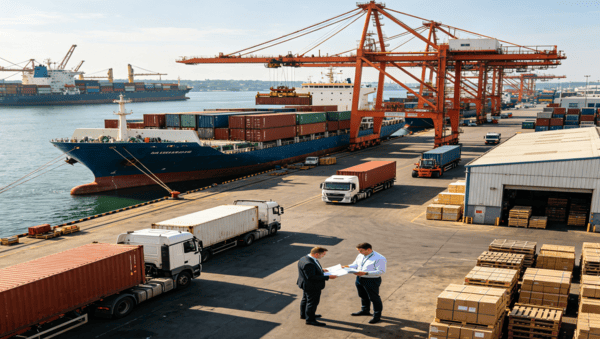
Consider a scenario where a company in Germany is exporting solar panels to Australia. Solar panels fall under HS Code 8541.40, which is for “Photovoltaic cells, whether or not assembled in modules or made up into panels”. The German exporter must include this HS Code on all relevant export documents, such as the commercial invoice, bill of lading, and customs declaration. When the shipment arrives in Australia, the Australian customs authorities will use this HS Code to determine the applicable import duties. If the HS Code is misclassified, say as a different type of electrical equipment, it could lead to incorrect duty calculations. For example, if the correct duty rate for solar panels is 5% based on the proper HS Code, but due to misclassification, a higher rate of 10% is applied, the importer would face an unjustified increase in costs. Additionally, incorrect HS Code usage can cause delays in customs clearance, as customs officers may need to re-classify the goods, resulting in potential demurrage charges for the importer.
4. What are the Key Differences Related to HS Code?
What is the Difference between HS Code and National Classification Systems?Some countries may have their own national classification systems in addition to the HS Code. However, the HS Code serves as the international standard, and national systems usually build upon it. For example, the United States has the Harmonized Tariff Schedule (HTS), which is based on the HS Code but contains additional digits for more detailed classification of goods entering the US market. The HTS may have extra sub-classifications to account for specific US-related trade policies, such as domestic production incentives or environmental regulations. In contrast, the HS Code provides a broad-based, globally-applicable classification framework. While the HS Code ensures a common understanding of product classification across countries, national systems can offer more granularity for a particular country's trade needs.
Why are HS Code Updates Necessary?The HS Code is not a static system; it is periodically updated to adapt to new products and changes in international trade. The WCO reviews and revises the HS Code every few years to ensure that emerging goods and technologies are properly classified. For example, with the rapid development of 3D printing technology, new HS Code sub-headings were introduced to classify 3D printers and their associated materials. These updates are essential to keep up with the evolving nature of international trade. When new products enter the market, such as innovative medical devices or advanced electronic gadgets, the HS Code needs to be adjusted to accurately categorize them. This ensures that customs authorities can apply the appropriate duties and regulations, and traders can correctly identify and classify their goods for seamless trade operations.
5. What are the Common Misconceptions about HS Code?
Is it True that One Product Always Has One Definitive HS Code?A prevalent misconception is that each product has a single, definitive HS Code. In reality, product classification can be ambiguous, especially for complex or multi-functional products. For example, a device that combines a printer, scanner, and copier may fall under different HS Codes depending on its primary function. If the device is primarily used as a printer, it may be classified under the HS Code for printers. However, if it is mainly used as a scanner, the classification may change accordingly. Freight forwarders need to carefully review the product's characteristics, intended use, and the HS Code guidelines to determine the correct classification. This requires a detailed understanding of the product and the HS Code system, as an incorrect assumption of a single-code-fits-all approach can lead to significant issues in trade operations.
Does the HS Code for a Product Remain Static?Some may wrongly assume that once an HS Code is assigned to a product, it remains the same indefinitely. However, as mentioned earlier, the HS Code is updated regularly. New products, changes in manufacturing processes, or evolving trade regulations can all lead to a change in the appropriate HS Code for a particular good. For instance, if a company develops a new type of packaging material that has unique properties, it may require a new or updated HS Code classification. Similarly, if a country introduces new environmental regulations related to a specific type of product, the HS Code may be adjusted to reflect these changes. Traders and freight forwarders must stay vigilant about these updates to ensure compliance.
6.What is the Step-by-Step Process for Determining HS Code?
Why is Understanding Product Characteristics the First Step?The first step in determining the HS Code is to thoroughly understand the nature, function, composition, and use of the product. For example, if it's a food product, freight forwarders need to know if it's processed, what ingredients are in it, and how it's packaged. In the case of a textile product, details such as the type of fabric (cotton, silk, synthetic), the nature of the garment (shirt, dress, pants), and any special features (water-resistant, flame-retardant) are crucial. This in-depth understanding forms the basis for accurate classification.
How Does Referring to the HS Code Structure Help?Next, refer to the HS Code sections and chapters to find the most appropriate category. If it's a textile product, start with Section XI, which deals with textiles and textile articles. The section and chapter headings provide a broad overview of the types of products included. For example, Chapter 52 is for cotton, Chapter 54 is for man-made filaments, and Chapter 55 is for man-made staple fibers. By identifying the relevant chapter, freight forwarders can narrow down the possible HS Code options.
Why is Narrowing Down to Headings and Sub-headings Important?Based on the product details, further narrow down to the specific headings and sub-headings. Look for descriptions that closely match the product. For example, if it's a cotton shirt, find the sub-heading within the textile chapter that specifically pertains to cotton shirts. The headings and sub-headings provide more detailed descriptions of the products, such as “Men's or boys' shirts of cotton” or “Women's or girls' blouses and shirts of cotton”. This step requires careful attention to detail to ensure an accurate match.
What is the Significance of Consulting HS Code Explanatory Notes?The HS Code comes with explanatory notes that provide additional guidance on classification. These notes can clarify any ambiguous points and help in making the correct determination. For example, the explanatory notes may provide specific criteria for classifying a product as a particular type, or they may explain how to handle products with multiple functions. These notes are an invaluable resource for freight forwarders and should be consulted whenever there is uncertainty about the classification.
When Should One Seek Expert Advice for HS Code Determination?If the classification is still unclear, it may be necessary to consult customs experts, trade associations, or other experienced professionals in the field. These experts have in-depth knowledge of the HS Code system and can provide insights based on their experience. For example, they may have encountered similar products in the past and know the correct classification. Additionally, they can keep freight forwarders updated on any recent changes or interpretations of the HS Code that may affect the classification.
7. What are the Fees and Costs Associated with Incorrect HS Code Classification?
Incorrect HS Code classification can result in significant costs for businesses. If the wrong HS Code is used, it may lead to over-payment or under-payment of customs duties. In case of under-payment, customs authorities may impose penalties, which can be a percentage of the duty amount or a flat fee. According to a report by Maersk, misclassification due to incorrect HS Code usage can result in penalty costs ranging from a few hundred to several thousand dollars, depending on the value of the goods and the nature of the error. For example, if a high-value shipment of electronic goods is misclassified, resulting in an under-payment of duties, the penalty could be substantial. Moreover, incorrect HS Code classification can also lead to delays in customs clearance. These delays can cause additional costs such as demurrage charges for holding the goods at the port, lost business opportunities due to late delivery, and potential damage to business relationships.
8. What are the Expert Tips for Dealing with HS Code?
Why Should Freight Forwarders Invest in Training on HS Code?Freight forwarders should invest in training their staff on HS Code classification. This can improve accuracy and reduce the risk of costly errors. Regular training sessions on new HS Code updates and complex product classifications are advisable. Training should cover not only the theoretical aspects of the HS Code system but also practical examples of product classification. For example, case studies of misclassified products and the consequences can be used to illustrate the importance of accurate classification. Additionally, training should include updates on changes in the HS Code system and how they impact different types of products.
What is the Benefit of Maintaining a Database of HS Codes?Keep a database of HS Codes for commonly shipped products. This can serve as a quick reference and help in ensuring consistency in classification. Update the database regularly to reflect any changes in the HS Code system. The database can include details such as the product description, the corresponding HS Code, any relevant notes or exceptions, and the source of the classification. This not only saves time but also reduces the likelihood of errors. For example, if a company frequently ships a particular type of chemical product, having the correct HS Code readily available in the database can streamline the documentation process.
How Does Collaborating with Suppliers and Customers Help in HS Code Determination?Work closely with suppliers and customers to obtain detailed product information. This can assist in making more accurate HS Code determinations. For example, suppliers can provide technical specifications that may be crucial for proper classification. Customers can also provide information about the intended use of the product, which can be a determining factor in classification. By collaborating with these parties, freight forwarders can gather all the necessary information to ensure accurate HS Code assignment. For instance, if a customer is importing a specialized piece of machinery, they may be able to provide details about its function and intended application, which can help in finding the correct HS Code.
Why is it Important to Stay Informed about Regulatory Changes for HS Code?Keep an eye on international trade regulations, as changes in these regulations can impact HS Code classification. Subscribe to relevant trade publications and regulatory updates to stay ahead. International trade regulations are constantly evolving, and these changes can have a direct impact on the HS Code system. For example, new environmental regulations may lead to changes in the classification of certain products. By staying informed, freight forwarders can anticipate these changes and adjust their classification processes accordingly. This can help in avoiding costly mistakes and ensuring compliance with international trade laws.
9. Conclusion and Key Takeaways
The HS Code is an indispensable tool in international trade. It simplifies the classification of goods, facilitates customs procedures, and enables accurate calculation of duties. By understanding its core elements, real-world applications, avoiding common misconceptions, following the step-by-step process for determination, and taking expert advice, freight forwarders can ensure smooth and compliant international freight operations. Remember, the HS Code is the key to seamless global trade classification, and a thorough understanding of it is essential for success in the international freight forwarding industry.
Last
20ft / 40ft / 40HQ Container Dimensions: A Definitive Guide for Freight Forwarders
1. What are 20ft / 40ft / 40HQ Container Dimensions?The 20ft, 40ft, and 40HQ container dimensions refer to the standardized sizes
Next
FOB Trade Term: A Comprehensive Guide for Freight Forwarders
What is FOB Trade Term?The FOB (Free on Board) trade term is an Incoterm (International Commercial Term) pivotal in international
