Comparing regional hub fees to save costs transshipment port routing strategies for entry level forwarders
Freight Experience
 27-May-2026
Entry-level freight forwarders can reasonably compare regional maritime hub tariff benchmarks to save costs transshipment port routing arrangements and build cost-efficient, stable container shipping routes for global cross-border shipments. Regional transshipment hubs serving identical trade corridors feature differentiated tariff structures and ancillary charge clauses, creating viable optimization space for novice logistics practitioners.
Against the backdrop of rising global maritime operational expenditures in 2025, data-driven tariff comparison and scientific port routing selection have become core operational capabilities for emerging forwarding firms to stabilize profit margins and reduce operational risks.
According to UNCTAD 2025 Review of Maritime Transport, global terminal handling fees at major regional transshipment hubs have risen by 8%–13% year-on-year, driven by terminal intelligent transformation and international carbon emission compliance policies. Unlike large-scale integrated logistics enterprises with stable contractual port pricing, small and entry-level forwarding teams face higher cost sensitivity, making refined hub fee comparison a necessary daily operational procedure.
What constitutes the fee structure of regional transshipment hubs?
The fee structure of regional transshipment hubs refers to all chargeable operational items incurred during container transshipment procedures, covering fixed terminal charges and conditional ancillary surcharges that shape total routing logistics costs.
Many novice forwarders only focus on visible terminal handling fees while overlooking variable ancillary charges that vary drastically across regional ports. Full transshipment cost components are divided into fixed standard fees and dynamic conditional fees, both of which determine the final landed cost of containerized cargo.
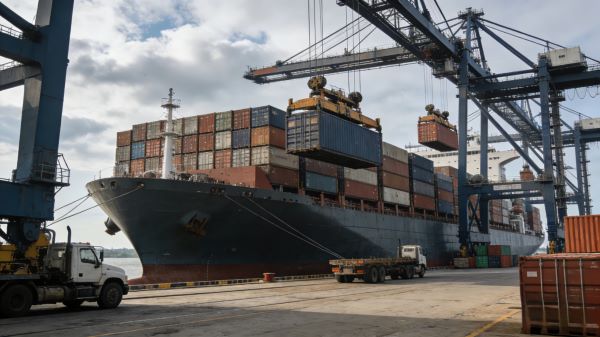
What fixed recurring fees apply to all transshipment hubs?
Fixed recurring fees are officially published tariff standards implemented throughout the year without seasonal fluctuations, forming the fundamental cost baseline for transshipment port selection and route planning.
According to Drewry 2025 Global Terminal Tariff Tracker, mainstream international transshipment hubs impose terminal handling charges ranging from $170 to $620 per container unit. Maritime hubs in Asia and the Middle East maintain relatively lower fixed tariffs compared with European and African regional terminals, creating measurable regional cost differentials for cross-border shipments.
How do dynamic ancillary fees impact overall routing expenses?
Dynamic ancillary fees are conditional charges triggered by cargo specifications, operational schedules and terminal congestion levels, representing the primary source of unplanned budget overruns for entry-level forwarding operations.
A common mistake is that novice forwarders judge port cost competitiveness merely based on fixed terminal tariffs. They fail to account for variable charges including overtime operational surcharges, congestion fees and inspection service charges, which frequently lead to underestimated comprehensive routing costs.
How do regional hub fee gaps deliver viable cost-saving potential?
Regional transshipment hub fee discrepancies generate sustainable cost-saving potential because interchangeable hub ports on overlapping trade lanes adopt differentiated tariff frameworks. Rational port substitution and routing adjustment cut redundant logistics expenditures while preserving service reliability.
Mainstream global trade lanes are covered by multiple alternative transshipment hubs, providing abundant flexible routing options for freight forwarders. Most cross-port fee differentials remain stable in the short to medium term, supporting standardized, long-term cost optimization instead of temporary random savings.
Forwarders should note that regional tariff gaps deliver amplified benefits for enterprises with regular weekly shipment volumes. Cumulative cost optimization from scientific hub matching effectively elevates the gross profit margin of recurring container shipping businesses.
Per Drewry 2025 Regional Port Cost Benchmark Report, Asian transshipment hubs record 15%–22% lower comprehensive ancillary fees than European hubs on Asia-Europe trade corridors. This stable gap offers prominent profit improvement space for small-batch and medium-volume forwarding businesses operated by entry-level teams.
What core tariff indicators should forwarders compare across regional hubs?
Accurate cross-hub cost evaluation depends on four quantifiable core tariff indicators, covering both fixed and variable expense items. These metrics enable forwarders to conduct comprehensive cost auditing and targeted transshipment port routing optimization.
Basic Terminal Handling Charge benchmark: This fixed tariff covers container loading, discharging and yard stowage operations, serving as the core fixed expenditure in transshipment processes. Per 2025 official terminal tariff disclosures, Asian and Middle Eastern hubs charge $150–$210 per 20GP container, while African regional hubs charge $240–$300 for the same container type, creating consistent cross-regional price differentials.
Container dwell time and storage fees: Regional terminals enforce differentiated free dwell time policies for transit containers. Certain hubs provide 72 hours of free storage for transshipment cargo, whereas others only grant 48 hours. Overtime dwell incurs daily storage surcharges, which constitute a major hidden cost for entry-level forwarding operations.
Seasonal congestion and port surcharges: Congestion-prone regional hubs impose temporary congestion surcharges during peak shipping seasons. According to Mombasa Port 2025 tariff update, the port levies $18 per 20GP and $33 per 40GP for inspection-related operational services, directly increasing comprehensive routing costs for Africa-bound transit cargo.
Specialized cargo operational surcharges: Terminal pricing for reefer units, dangerous goods and over-dimensional cargo varies significantly across regions. Chittagong Port’s 2025 tariff schedule stipulates $150 per reefer container and $200 per dangerous goods container for transshipment handling, which is higher than the average level of mainstream Asian alternative hubs.
What practical routing strategies help entry-level forwarders save costs?
Entry-level forwarding teams can formulate executable transshipment routing strategies by aligning regional hub tariff characteristics with cargo attributes. Standardized operational frameworks eliminate routing blindness and maintain stable profitability for daily container shipments.
Classify cargo for differentiated port selection: The recommended approach is to categorize daily shipments into standard dry cargo, time-sensitive cargo and specialized cargo. Standard dry freight prioritizes cost-effective Asian and Middle Eastern hubs, while specialized cargo opts for terminals with transparent specialized operation tariff rules to avoid unbudgeted charges.
Build standardized cross-hub tariff comparison files: Forwarders should compile full-cost tariff data for 3 to 5 alternative hubs on each core trade lane. Biweekly updates on tariff adjustments and new surcharge policies ensure all routing decisions rely on real-time, verifiable industry data.
Adjust port selection during peak shipping seasons: Traditional mainstream hubs commonly introduce seasonal surcharges and tight capacity during peak shipping periods. Entry-level teams can shift shipments to adjacent alternative hubs with stable tariff standards to mitigate peak-season cost increments.
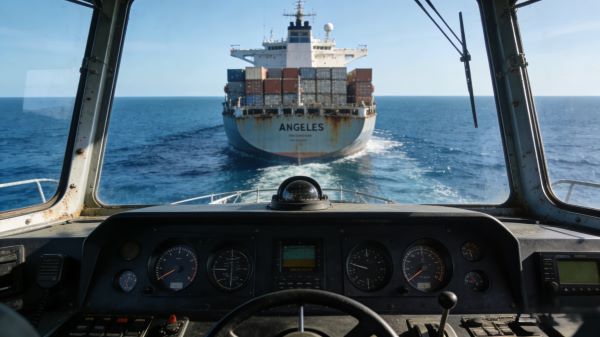
Balance tariff advantages and liner connectivity stability: Low-tariff hubs with insufficient liner connection reliability may trigger vessel miss-connection and cargo rebooking costs. Forwarders should balance cost benefits and transit stability to avoid losses from excessive cost-oriented port selection.
A common mistake is that entry-level forwarders overly pursue single-item tariff minimization without holistic cost and risk evaluation. Blind selection of low-cost yet under-equipped terminals leads to increased hidden operational costs, offsetting expected cost-saving outcomes.
What frequent routing errors trigger unnecessary transshipment expenditures?
Insufficient port resource accumulation and incomplete cost cognition cause entry-level forwarders to make recurring routing errors. These operational flaws create continuous cost wastage and undermine long-term business profitability.
Fail to track policy-driven tariff adjustments: Regional maritime authorities and terminal operators regularly update tariff standards and surcharge items. Failure to monitor real-time policy changes results in outdated routing schemes and unplanned cost increases.
Adopt unified routing for all cargo categories: Applying identical transshipment port solutions for standard and specialized cargo ignores differentiated terminal pricing rules. This one-size-fits-all approach causes unreasonable cost wastage for high-value and special-type shipments.
Overlook cumulative long-term cost differentials: Minor single-container tariff gaps generate substantial cumulative losses for enterprises with continuous shipment volumes. The absence of long-term routing iteration mechanisms restricts sustainable cost optimization.
According to WTO 2025 Trade Facilitation Report, forwarding enterprises with standardized cross-hub tariff comparison mechanisms reduce annual comprehensive transshipment costs by 7%–11% compared with peers relying on empirical routing decisions. This verified data proves the practical value of data-driven port selection and routing optimization.
How to maintain long-term cost advantages via systematic hub management?
Sustained transshipment cost control depends on iterative hub resource management and routing scheme optimization, rather than one-time temporary adjustments. Stable cost advantages derive from standardized daily operational management and data-based decision-making systems.
Update hub tariff databases on a quarterly basis: Summarize seasonal tariff fluctuations, new surcharge policies and free operational rules of core regional hubs. Timely data updates ensure the accuracy and practicability of routing reference standards.
Reserve multiple alternative hubs for each trade lane: Configure 2 to 3 cost-efficient alternative transshipment hubs for every mainstream trade corridor. Diversified hub reserves avoid single-port dependency risks and reserve adjustable space for subsequent cost optimization.
Conduct monthly routing cost accounting and analysis: Track and compare actual transshipment costs generated from different hub selections on a monthly basis. Summarize optimal routing solutions and solidify internal operational SOPs for long-term cost control.
In summary, entry-level global freight forwarders can conduct systematic regional hub tariff comparison and flexible routing adjustment to save costs transshipment port operations, building stable, cost-effective and low-risk shipping solutions for daily cross-border container logistics businesses.
Last
How surveying companies verify container cargo damage evidence chain data during port discharge
Professional marine surveying agencies adopt standardized multi-dimensional validation protocols to audit container cargo damage e
Next
How smart ocean logistics operators save costs transshipment port differences across overlapping trade lanes
Smart ocean logistics operators save costs transshipment port differences across overlapping trade lanes by analyzing operational
