Managing Shipping Risks and Sustaining Growth Amid Geopolitical Shifts: JCtrans Joins the Industry in Exploring the Way Forward
JCtrans News
 16-Jul-2026
Over the past few years, the international logistics industry has undergone unprecedented change.
Shifts in global trade, supply chain restructuring, regional instability and the spillover of shipping risks have led more companies to recognize that business performance is determined not only by market changes, but also by whether they can remain resilient through those changes.
As the drivers of growth change and risk management becomes part of a company’s core operating capabilities, international logistics companies are reconsidering several practical questions:
How can they navigate market cycles?
How can they build long-term competitiveness?
How can they find certainty amid uncertainty?
During transport logistic China 2026, JCtrans held a forum titled “Shipping Risk Control and Business Breakthroughs Amid Geopolitical Shifts.”
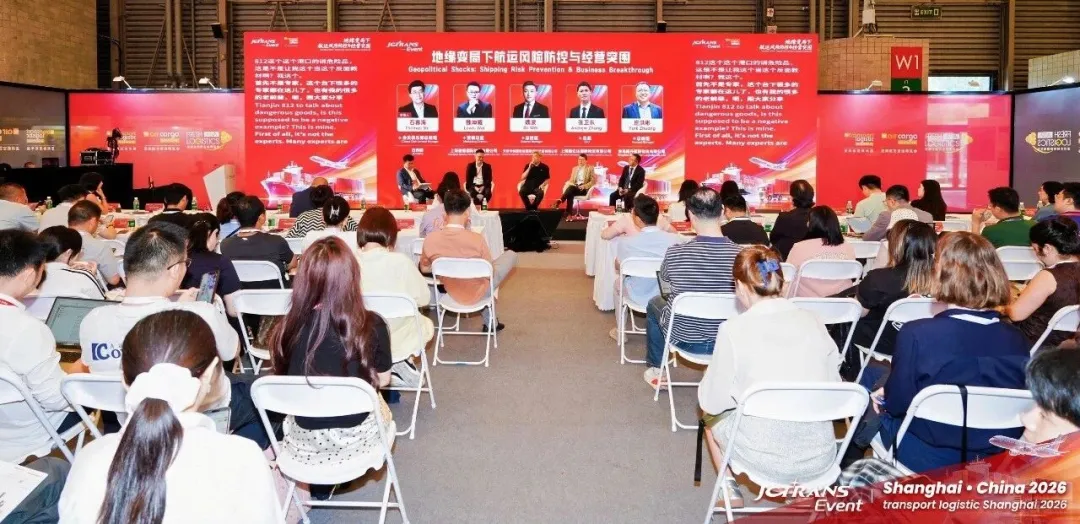
Against this backdrop, the forum brought together guests from different areas of the industry to discuss evolving risks, business resilience and practical approaches to growth, and to explore future development paths for international logistics companies.
The forum was moderated by Thomas Shi, Director of Key Accounts and General Manager of JC Club.
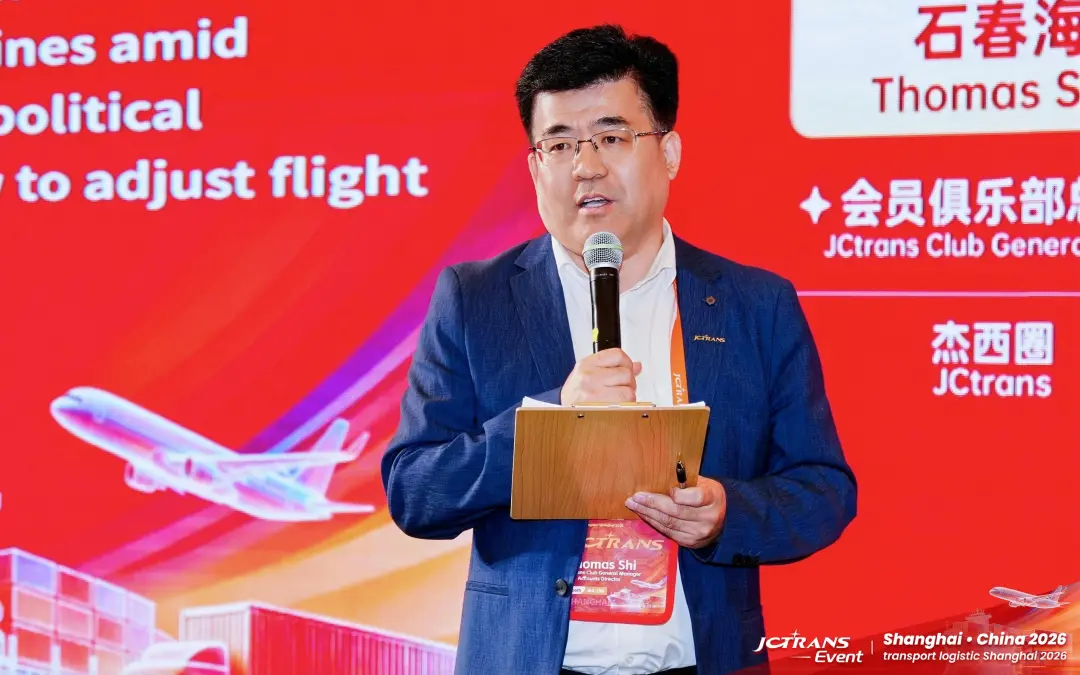
△Thomas Shi, Director of Key Accounts and General Manager of JC Club
The Spillover of Geopolitical Risks Is Reshaping the Industry’s Operating Model
In his opening remarks, Thomas Shi raised a question for the industry to consider: over the past few years, the international logistics industry has faced the pandemic, port congestion, the Red Sea crisis and changes in regional conditions. In the past, the industry focused on the speed of growth. Today, the focus must shift toward more resilient and sustainable growth.
Risk management should not stand in opposition to business expansion. It should form part of a company’s long-term competitiveness. In the current market environment, international logistics companies are reconsidering the capabilities they need to operate successfully in international markets.
Customer Success Manager Tong Ning presented a set of figures illustrating the impact. Geopolitical conflicts have caused ocean carriers’ war risk surcharges to rise by 200% to 400%. Rerouting has added 3,000 to 4,000 nautical miles to voyages and extended transit times by 10 to 15 days. The number of risk-related inquiries received through the JCtrans platform over the past three months increased by 126% year on year. Behind these figures is the pressure being faced by freight forwarding companies.
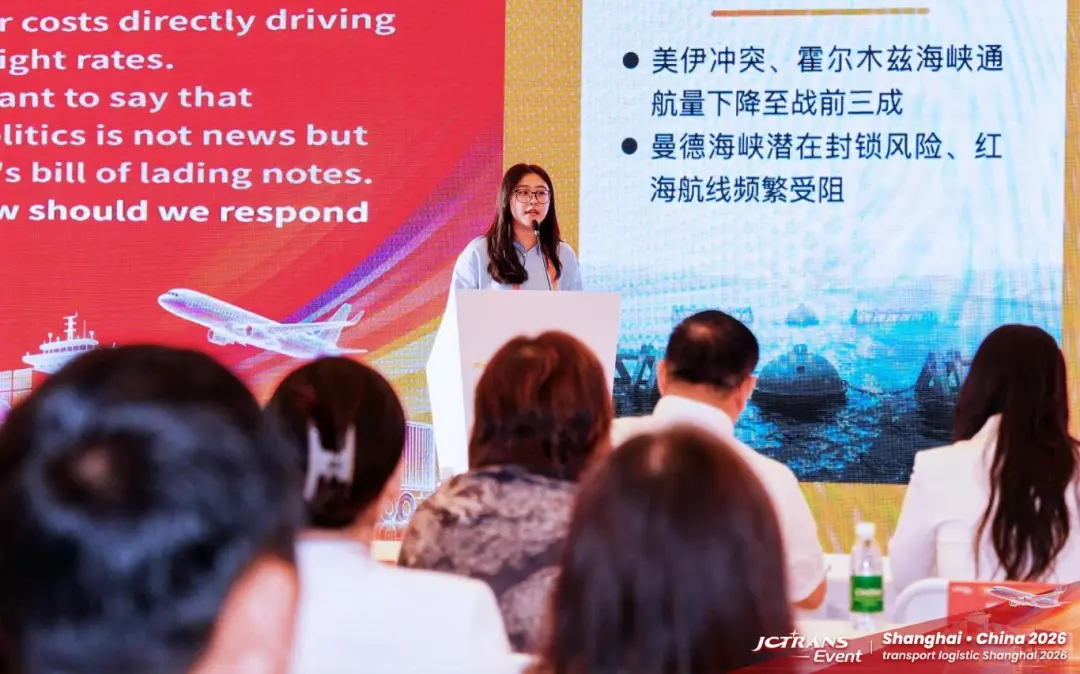
△Customer Success Manager Tong Ning
She further explained that uncertainty across the shipping market continues to affect day-to-day operations. Route adjustments, increased diversions, fluctuations in transit times, changes in surcharges and pressure to meet customer commitments are making business operations increasingly complex.
At the same time, fraud by overseas agents, credit defaults and cash flow risks are also increasing. Industry risks are evolving from isolated operational issues into broader business risks.
The nature of competition in international markets is also changing. Competition is no longer based only on price, but also on stability and the ability to operate consistently.
Risk Management Must Be Integrated into Business Processes
As risks develop from market fluctuations into business issues, relying on experience alone is no longer sufficient in a complex operating environment. Wei Zuocai, Senior Risk Management Expert from the Risk Control Department, delivered a presentation titled “How International Logistics Companies Can Strengthen Their Internal Capabilities and Respond to Risk.”
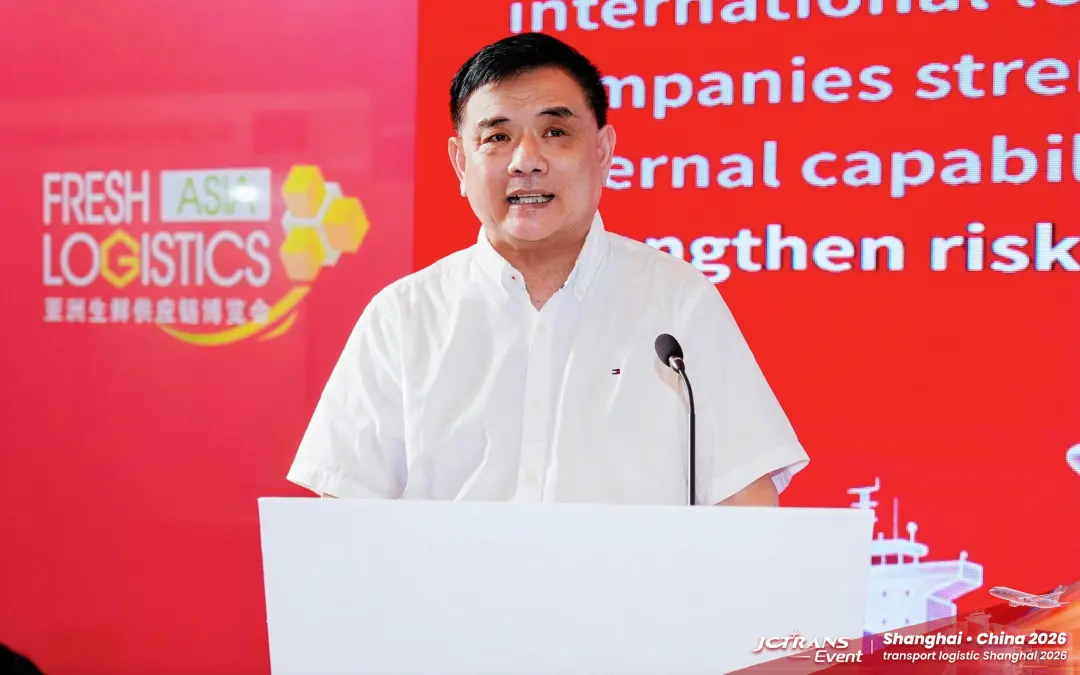
△Wei Zuocai, Senior Risk Management Expert, Risk Control Department
Drawing on actual cases, he reviewed typical business risks in the industry and grouped them into three categories: contract risks arising from geopolitical developments, non-compliant operational risks, and credit risks arising from abandoned cargo.
Based on these cases, he highlighted several key points:
Contractual risk control requires rules to be written into the terms. For cooperation involving sensitive trade lanes, the parties should clearly define how surcharges will be allocated, how charges may be adjusted and where liability for breach of contract lies, so that risks are not transferred without agreement.
Compliance in the destination country is a basic operating requirement. Egypt’s ACID system, for example, leaves no room for procedural flexibility. Any deviation from the required process may result in business losses.
Credit risk control must cover the entire transaction process. Reviewing each shipment instruction, preparing documents, agreeing on charges and defining liability for abandoned cargo should all be documented and incorporated into established procedures in advance.
Experience can help companies understand the past, but a long-term business relationship does not necessarily guarantee long-term security.
Cross-border logistics has moved beyond the era of accepting shipments without adequate controls. Unclear instructions, missing documents or an unconfirmed commitment can all expose a company to greater operational and financial risk.
Compliance is not simply a cost. It is a basic requirement for survival.
Discussion: Business Continuity Matters More Than Predicting Change
Drawing on their respective trade lanes and specialist areas, they discussed practical issues of current concern to the industry, as well as strategies for business operations and growth.
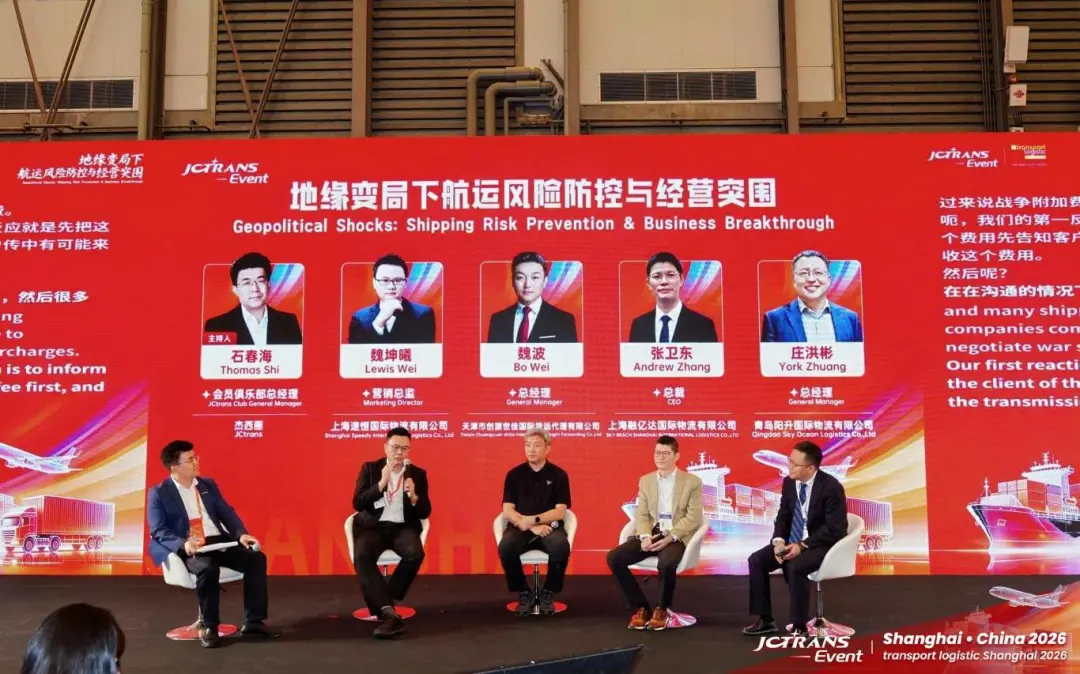
The discussion covered general cargo trunk routes, specialty chemicals, multimodal transport and short-sea direct services, together providing a broad overview of the risks currently affecting the shipping industry. While the industry faces common challenges, different sectors also have their own specific difficulties. Drawing on their practical experience, the four guests offered actionable recommendations covering order classification, supplemental contracts, document verification and agent due diligence. The discussion focused on real operational scenarios and practical issues encountered in day-to-day freight forwarding operations.
One point was repeatedly raised during the discussion: what international logistics companies need for the future is not the ability to predict when risks will arise, but the resilience to keep their businesses running through change. Behind that resilience lies one of the most fundamental priorities for any company—growth.
The Underlying Drivers of Growth Are Changing
The final presentation brought the discussion back to practical approaches to growth. Bai Mengjia of Passion(Shanghai) Shipping Co., Ltd. delivered a presentation titled “Practical Strategies for Online Customer Acquisition in Freight Forwarding.”

△Bai Mengjia, Passion(Shanghai) Shipping Co., Ltd.
Her view was that customer acquisition has become more difficult not because demand has declined, but because customers’ selection criteria are changing. Companies can no longer rely on a single channel or compete on price alone. Long-term growth requires companies to consistently demonstrate their expertise, build customer trust over time and establish an operating model that can be sustained. Growth is becoming less dependent on generating online traffic and closing individual deals, and more dependent on building lasting capabilities and customer relationships.
From Shared Views to Long-Term Collaboration
Following the final presentation, the forum drew to a close.
In addition to the exchange of views, Thomas Shi formally announced the new model and key plans for the upgraded JC Club 2.0. Rather than serving simply as a general business community, it will become a specialized industry platform built around defined sectors, professional expertise and practical collaboration.
A certificate presentation ceremony was also held for the first group of Specialty Membership partners.
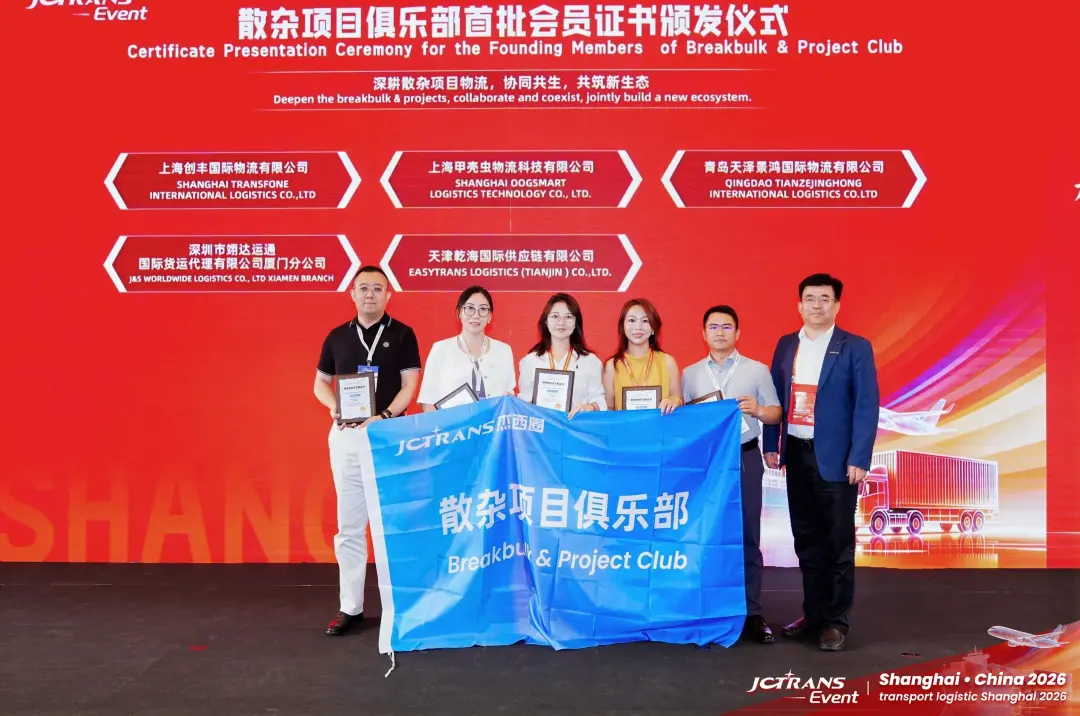
The certificates represent not only membership recognition, but also closer connections in resource coordination, industry exchange and global cooperation.
Risk discussions, operating practices, international expansion capabilities and approaches to growth—this forum did not attempt to provide the industry with a single standard answer. However, one point repeatedly raised during the event is becoming increasingly widely recognized: what international logistics companies need for the future is not the ability to predict change, but the ability to remain resilient, meet their service commitments and achieve steady growth amid change.
Growth and risk are not opposing forces. Companies committed to long-term development are often able both to capture opportunities and to build resilience against volatility.
There is no standard answer to change, but sustaining business operations, continuing to deliver and consistently creating value are becoming a shared direction for a growing number of international logistics companies.

Last
2,000+ Logistics Professionals to Gather in Guangzhou | The 22nd Global Freight Forwarders Conference
From November 15 to 18, the 22nd Global Freight Forwarders Conference organized by JCtrans will be held at Poly World Trade Center
Next
The 20th Global Freight Forwarders Conference has come to a successful conclusion.
Shanghai, October 30, 2025— The 20th JCtrans Global Freight Forwarders Conference, hosted by JCtrans, successfully concluded at th
